Reviews and Comparisons
Pegasus 39 Shield: this is how Nike’s waterproof version works
A complete analysis of its protection against rain, wet traction, and the feel designed for winter.

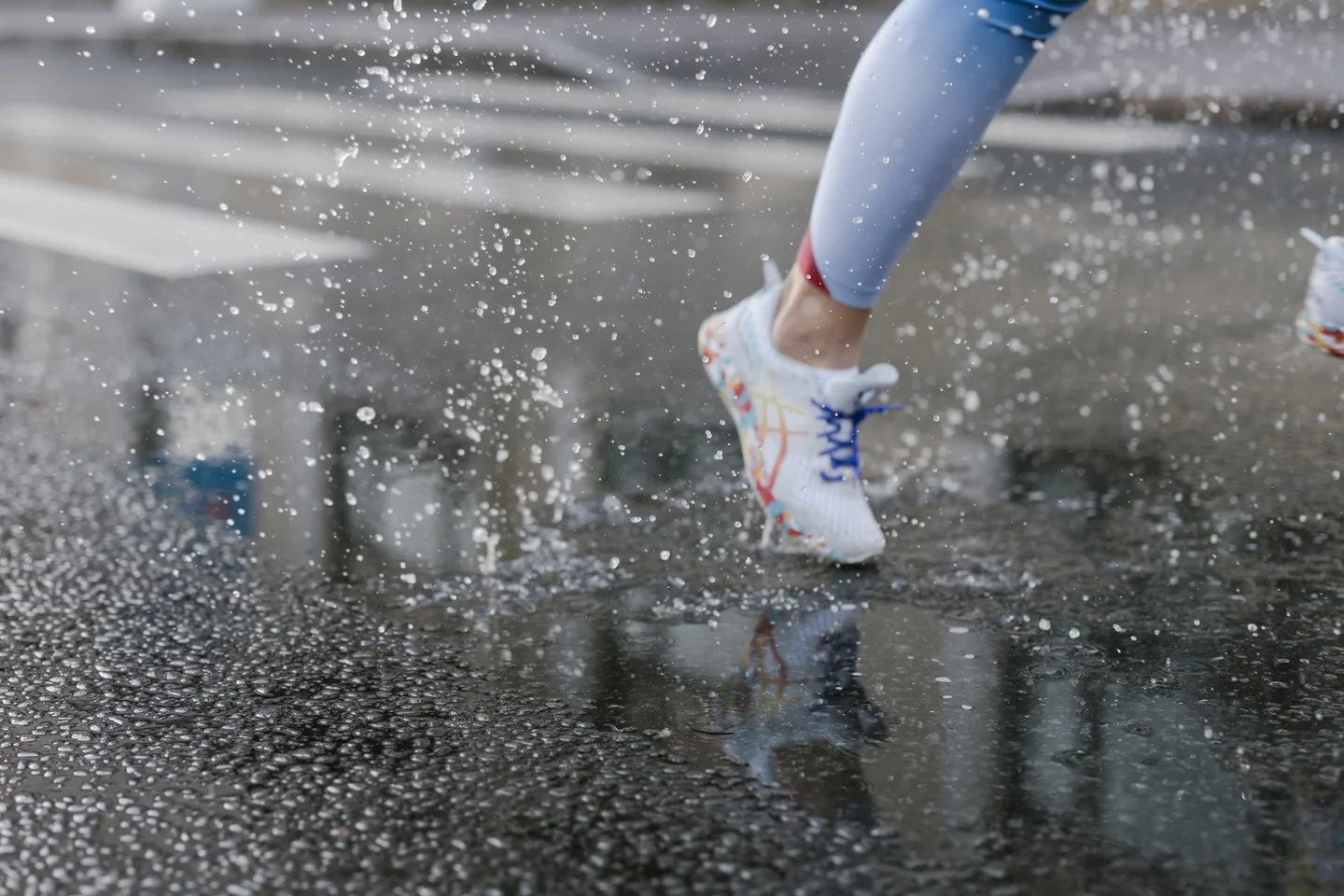
The rain-ready version of the Pegasus line starts from a simple idea: that the training schedule should not stop when the pavement turns shiny and the air bites the face. Nike takes a base already familiar to many runners and covers it with more enclosed materials, a sole with greater security on wet ground, and a warmer fit. The result is not meant to compete with a trail shoe or a racing model, but with something more everyday and valuable: going out for a run when the weather turns bad without every puddle becoming a small drama.
Its appeal lies precisely there, in that gray area between daily comfort and winter protection. It does not change the franchise’s philosophy, which remains focused on regular road use, but it does alter its behavior when rain, fog, or cold wind arrive. In a city, that matters more than it seems: a couple of degrees less, a wet road, or a light storm can turn a normal run into an uncomfortable outing. This model tries to soften that cost.
A familiar base, dressed for bad weather
The appeal of this shoe is that it does not start from scratch. It keeps the logic of a neutral trainer, designed to rack up miles with generous cushioning and a reasonably balanced feel. On that platform, Nike adds a layer of protection that changes the wearing experience. The goal is to preserve versatility in a daily running shoe, but with extra defense against water and cold.
That approach explains why it is so easy to understand for anyone already familiar with the family. The ride remains road-oriented, the geometry does not become aggressive, and the overall character stays friendly. However, the upper takes on a more enclosed, more serious presence, almost like a technical jacket versus a summer T-shirt. It is a useful comparison because it sums up the model’s compromise well: more warmth and more control, in exchange for a bit less freshness and lightness.
In dry conditions, that personality may seem less special. But just one autumn week in a rainy city is enough for it to make sense. Shoes are not always valued for what they promise in the spec sheet, but for what they prevent in the real world: soaked toes, a heavy feeling from moisture, and that cold that settles in when the fabric starts absorbing water and no longer lets it go.
Water protection without leaving the road
One of its clearest strengths is that it does not try to disguise itself as a trail model. Its natural place remains the road, even if it is wet, cold, or splashed by persistent drizzle. That makes it especially logical for urban runners, for parks with firm ground, or for routes where the hardest part is not the terrain technique, but the weather. There are no aggressive lugs or a mud-focused design; instead, there is a much more everyday use case.
The outsole features a pattern that improves traction on wet surfaces and helps shed water more effectively than a conventional base. That difference is noticeable on very urban steps such as a painted crosswalk, a smooth slab, or a stretch of pavement with a thin film of rain. It does not turn the stride into something radically different, but it does reduce the feeling of uncertainty. And in winter, confidence is worth almost as much as cushioning.
Protection is also concentrated in the areas where moisture usually seeps in first: the toe box, the sides, and the midfoot instep area. There is no magical waterproofing, because no shoe of this type can seal the foot like a boot, but there is enough of a barrier to delay the cold and minimize direct water entry. On long days, that difference separates a tolerable outing from one in which the body starts thinking too much about the weather and too little about the pace.
What you gain and what you lose in feel
The trade-off of any protection is obvious: a more closed upper breathes worse than an open mesh. That exchange between warmth and ventilation is not a flaw, but the essence of the product. In return for shielding the foot better, the shoe feels a bit more structured and less airy, with a presence that can resemble a well-fitted windbreaker. On a damp January morning, that is appreciated; on a mild March afternoon, less so.
The sensation while running also changes. The whole package conveys a more contained feeling, with less visual and tactile flexibility than a standard Pegasus. Some people read that as firmness; others, as a hint of stiffness. Both interpretations are reasonable. What matters is understanding that this version is not trying to disappear underfoot, but to protect it. And when the ground is cold and wet, that slight extra presence may be exactly what you want to feel.
There is also an indirect consequence: the runner tends to focus less on the rain and more on the movement. When the foot stops getting cold so quickly, the body relaxes a little and the session flows more normally. That is no small detail. On long runs, any environmental distraction ends up seeping into the stride; that is why a shoe that reduces that external friction has more value than it appears to have when you take it out of the box.
Cushioning designed to rack up miles
At the heart of the model is still an everyday training shoe. The cushioning prioritizes protection over explosive response, so it fits better with easy runs, gentle progression runs, and sessions where the goal is to get the work done, not chase times. That orientation makes it appealing to runners who consistently put in weekly volume and prefer a secure platform to a trampoline-like feel.
The overall behavior sits in a very practical middle ground. It does not sink too much, nor does it feel dry; it supports without demanding too much precision and softens the impact of repetition, which is where comfort is truly won or lost on a long run. For medium- or heavier-weight runners, that base is usually kinder, especially when the ground is cold and the body takes longer to warm up. It also suits heel strikers well, a common mechanics choice at relaxed paces.
More than a shoe to impress, it is a shoe to support. That word, support, sums up its approach well. Support the foot, support the easy pace, and support a winter routine that does not always cooperate. In a training season where the weather can act as a brake, the stability of the platform and the comfort under daily load become weighty arguments.
Discreet stability for compromised surfaces
Stability here does not appear as invasive correction or a flashy system, but as a sense of composure. The platform conveys poise, something that is more noticeable on wet asphalt than on a dry, mild day. On slippery surfaces, any small excess of torsion is noticed sooner, and a chassis that goes with the flow without twisting too much provides peace of mind. It does not solve winter, but it helps you handle it with less caution.
That nuance matters because many waterproof shoes focus only on sealing the foot, forgetting that the real discomfort of bad weather also lies in uncertainty underfoot. Here, traction and the base work together. There is no aggressive character or rigid control, but there is a clear direction that encourages smooth movement. The runner keeps a predictable landing, and that helps maintain technique better when the ground seems to have a varnish-like film.
On urban outings, especially repetitive routes, that predictability is worth gold. It provides a feeling of a well-tuned machine, a tool that does not call attention to itself above the movement, but rather lets it proceed. And in daily training, where consistency matters as much as performance, that discretion is often the best way to be useful.
Fit, warmth, and a sense of refuge
The fit follows the family’s usual logic, with reasonable room for medium-width feet and a toe box that does not narrow excessively. But the protected version changes the experience from the first moment: the foot feels more wrapped, more tucked in, with a sense of refuge that suits cold, damp days. The upper hugs more and vents less, which is consistent with the model’s mission.
That change especially benefits long winter runs. After a few minutes of running, body heat is retained better and the shoe avoids that constant cold feeling that appears when moisture invades the mesh. On the other hand, on mild days or during more lively workouts, it may feel a bit more present, less light on the foot. That is not a flaw; it is the normal consequence of prioritizing protection over freshness.
Heel and midfoot lockdown are adequate for steady-pace training, without intrusive solutions or excessive gimmickry. Runners looking for very firm lockdown might want more precision, but most runners will find honest support here, enough to avoid fighting the shoe with every step. That honesty is part of its appeal: it protects without exaggeration, and accompanies without imposing.
Who it really makes sense for
This kind of model comes into its own when winter stops being a photo and becomes routine. It makes more sense for anyone who trains regularly in cold, rainy months, for those who run before heading to work, or for anyone logging city miles without wanting to depend on the forecast. In those cases, the value is not in a performance leap, but in the continuity of the habit.
It is also interesting for runners who prioritize comfort over medium and long distances. It is not an option for racing, nor for chasing lively sensations from heel to toe, but it is good for steady aerobic base runs, gentle progression runs, and accumulation weeks where every outing counts. In half-marathon or marathon preparation, always under conservative use, it fits as a background piece, not as the star.
By contrast, it makes less sense for someone living in a dry climate, running almost always in the sun, or demanding maximum ventilation. It is also not ideal for anyone wanting a very lively response underfoot. Its logic is seasonal and contextual: the more rain and the more cold, the stronger the case it offers. The milder the weather, the more its specialized nature comes through.
The real difference versus a conventional Pegasus
The comparison with the standard version is not just about a spec sheet. The practical difference lies in how the outing feels. A general-use shoe usually prioritizes ventilation, lightness, and comfort throughout the year; this one, instead, shifts the focus toward water resistance and grip on wet surfaces. It may seem like a small change, but in daily use it completely changes the model’s role.
On a rainy morning, a conventional mesh can behave well at first and then give way once moisture builds up and the foot starts to cool. Here, the idea is to cut off that chain before it starts. It is not about going out to fight the weather, but about making it less important. And that, in terms of perception, changes the session a lot. The runner focuses on pace, not on surviving the storm.
The other side of the coin is ventilation. The more an upper protects, the less air it lets through. That trade-off is inevitable and should be accepted as part of the design. That is why this model fits better in a winter rotation than in an all-year lineup. Its value is not in serving every purpose, but in solving one very specific situation well.
How it behaves in the routine of the recreational runner
In day-to-day use, it leaves a fairly clear impression of reliability. It slips on easily, protects from the first puddle, and maintains a warm feel that any runner who has gone out in wind and drizzle will recognize immediately. It does not require learning any special use or changing mechanics to get the most out of it. Its greatest virtue may be that it does not interrupt the routine; it supports it.
It also has an aesthetic side that broadens its use beyond training. Its more robust profile and dark finish give it a more urban air than other purely technical shoes. That explains why some runners see it as a valid companion not only for running, but also for short trips or daily commutes on rainy days. Its usefulness does not end at the training finish line; it continues on the sidewalk, under an umbrella, with the asphalt glistening.
Still, it is worth not idealizing it. That more enclosed structure can make the feel seem a bit firmer than in other versions of the line, especially on very repetitive routes. For some runners that will be irrelevant; for others, it will be a reminder that they are using a winter tool, not a light shoulder-season shoe. And that honesty, in reality, also works in its favor.
A model that makes sense when winter bites
The usefulness of this version is easier to understand if you think of a real winter, the kind that soaks the asphalt from first light and leaves the air with an almost metallic edge. Its proposal is not to dazzle, but to solve: insulate, protect, and allow training to continue with reasonable normality. In a market full of flashy promises, that sobriety has a value that is not flashy but very solid.
Its profile places it in a very specific corner of the running catalog: for going out even when the weather is not cooperating, without giving up a comfortable ride or cushioning designed for frequent use. It is not a shoe for collectors of sensations or for stopwatch obsessives. It is a sensible solution for those who value continuity, comfort, and a minimum of stability on delicate surfaces.
That is why it deserves to be read beyond its materials or its appearance. What really matters is understanding what problem it solves and in which scenario it does so best. When it rains persistently and the cold bites, a shoe like this stops being a simple accessory and becomes part of the routine. And in that context, its real value is much greater than it appears in a dry storefront.
Este artículo contiene enlaces de afiliado: si compras a través de ellos, se genera una pequeña comisión sin coste adicional para ti. Más información.



Reebok runs large or small: a real fit guide

Hoka Challenger ATR 7 GTX: complete review of the all-terrain shoe

How to clean white sneakers without ruining them

Altus Pirineos 40-liter backpack: analysis, use, and key points

20,000 mm waterproof jacket for men: key points to get it right

Under Armour HOVR Sonic 6: complete review of the shoe

incline treadmills: guide to choosing better

Achilles tendonitis: real recovery time

Pain in the Achilles heel: causes, signs, and relief

What to take for calf pain: real relief and when to worry

 Races3 months ago
Valencia Half Marathon 2026: date and registration

 Reviews and Comparisons4 months ago
Asics Gel-Roadmiles 3 for men: review and current price

 Races3 months ago
Valencia Marathon 2026: entry, ballot and course

 Reviews and Comparisons4 months ago
Asics Gel Sonoma 8 Gore-Tex: complete analysis for trail and rain
- Sneakers3 months ago
Saucony Endorphin Pro 4: full review and verdict

 News5 months ago
Strava API 2026: what changes for clubs, challenges and runner apps?

 Reviews and Comparisons5 months ago
Nike Alphafly 3: opinions, sensations, and real key points

 Reviews and Comparisons4 months ago
Under Armour running shoes review 2025-2026: models and key features

 Sports Equipment4 months ago
Shoe sizes in cm: a clear guide to getting the right fit for your footwear
- Sneakers4 months ago
Adidas Adizero Boston 13 for men: review and verdict
- Sneakers3 months ago
Neutral running shoes with lots of cushioning: the best of 2026

 News4 months ago
Where is the Hoka brand from and why was it born in France