Reviews and Comparisons
Puma Deviate Nitro Elite 4 HYROX: the carbon shoe for competition
PUMA fine-tunes its fastest model for HYROX with carbon, lightness, and traction designed for races and strength stations.

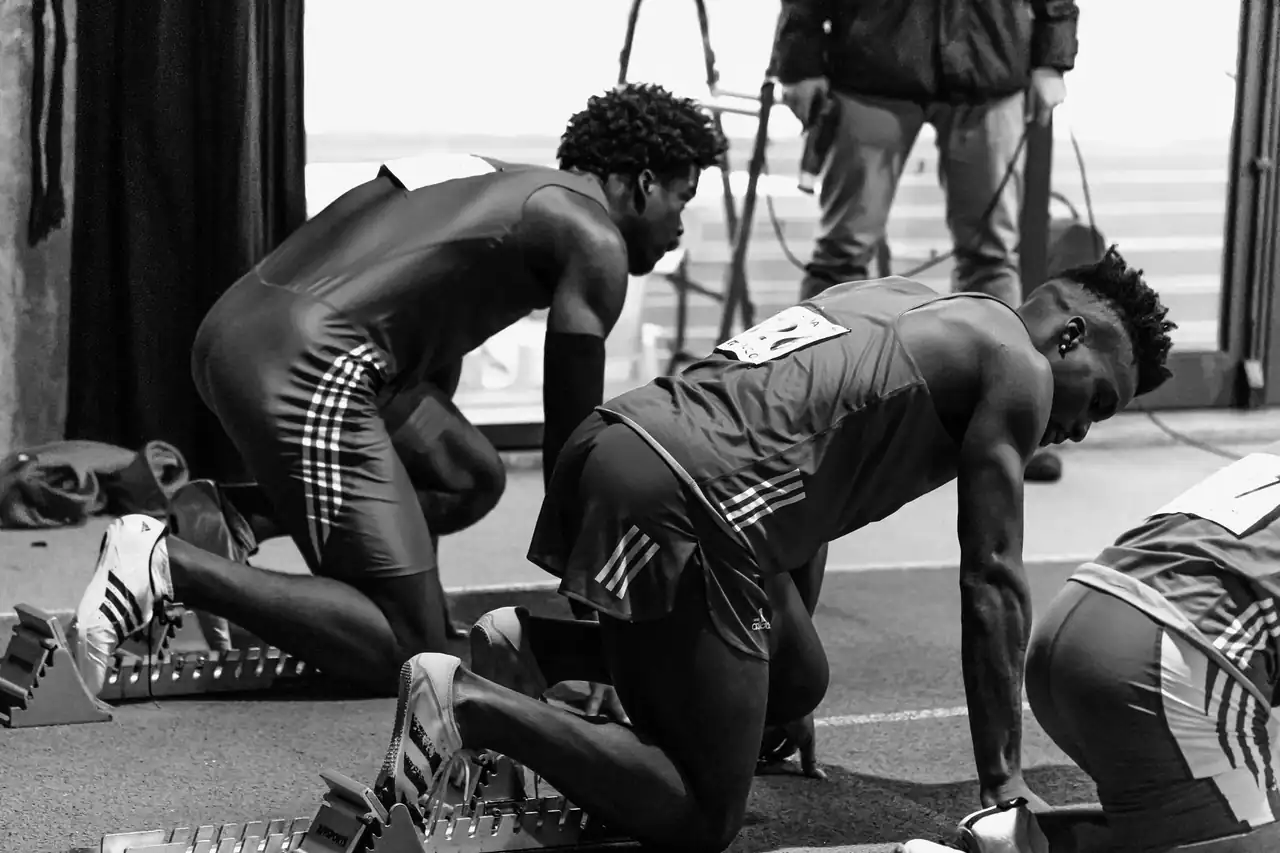
The Puma Deviate Nitro Elite 4 HYROX arrives as a very specific response to a competition that combines running, strength, and accumulated fatigue. It is not meant to be a generic training shoe or a road model adapted halfway. Its proposal is more precise: to offer a very responsive stride in the running segments and, at the same time, a more stable and grippy base in the stations where the floor, the sled, and the changes of direction punish the movement pattern.
That balance is where its appeal lies. At 194 grams, with an 8 mm drop and a 40 mm stack in the heel and 32 mm in the forefoot, PUMA places this shoe in the territory of high-performance racing shoes, but with a fit and outsole designed for the HYROX hybrid format. The combination of NITROFOAM Elite foam, PWRPLATE, and PUMAGRIP rubber draws a race-ready profile with a clear idea: run fast without losing too much composure when the effort stops being linear.
A model designed for a format that punishes more than it seems
HYROX demands more than speed. It demands repeating it after stations that empty the legs, sled pushes, loaded lunges, and exercises where the foot needs firm support. That is where this specific edition finds its reason for being. PUMA has not changed the soul of the model, but rather its reading of effort: more grip in the outsole, a clearer sense of propulsion, and an architecture that seeks to sustain performance when the body starts to lose precision.
The brand presents this shoe as a competition shoe for fitness racing, but behind that label there is a more interesting idea for the everyday runner. It is not just about going fast, but about doing so in an environment where the transition between running and pushing, jumping, or throwing the medicine ball leaves no breaks. That reality explains why the model is not limited to being light: it must also hold the foot, stabilize it, and prevent it from slipping when fatigue turns every landing into a negotiation.
PUMA’s HYROX series has been sharpening that message with every release. This fourth installment takes one of the brand’s fastest racing shoes and reinterprets it for a sport where efficiency is not measured only in pace per kilometer. The shoe is best understood as a transition tool: it helps connect running speed with the functional intensity of the stations without changing mental or technical mode.
The technical foundation: foam, plate, and an outsole that is not limited to asphalt
The most visible part of the performance is in the midsole. NITROFOAM Elite foam is the core of the response, a high-performance compound that aims to return energy quickly without adding unnecessary bulk. In plain terms: each stride tries to give back part of what it receives, as if the shoe retained elastic memory of the previous push-off. That matters in HYROX, where the runner returns to pace again and again, often with legs still loaded from the previous station.
Under that foam appears the PWRPLATE carbon-fiber plate. Its work is less flashy, but decisive. It organizes flexion, improves energy transfer, and creates a sense of decisive forward motion. In an event where runners link eight running segments with eight stations, that plate does more than just accelerate: it helps maintain a cleaner stride when the movement starts to get messy from fatigue. The result is a shoe that wants to feel fast, but also relatively predictable.
The outsole, meanwhile, is the area where the model moves away from a typical marathon racing shoe. PUMAGRIP has been redesigned with greater rubber coverage and a modified lug pattern to favor traction, especially on surfaces that simulate sled work. That detail is more important than it seems. In HYROX, losing a few millimeters of grip on a push can cost more energy than several seconds of pace lost over a flat kilometer.
Fit, volume, and stability when the foot is no longer fresh
The upper keeps a fairly clean line: standard width, rounded toe box, and lace closure. At first glance it sounds conservative, but in reality it responds to a very practical logic. In a high-intensity environment, foot lockdown matters as much as lightness. If the shoe moves too much inside, every change of direction becomes clumsier; if it pinches too much, the runner notices it immediately in a long and punishing competition.
One of the most talked-about features of this family is the feeling of room in the forefoot. That margin helps the toes spread more naturally, something valuable in fatigued strides and in functional movements such as loaded lunges or wall balls. A less restrictive forefoot can translate into more control, not through abstract comfort, but because the foot is better distributed over the platform and stability improves when the body is already at its limit.
Its profile needs to be read carefully. It is not a broad training shoe or an everyday model meant to rack up miles without looking at the clock. It is a racing shoe with competition-minded criteria, and that shows in its behavior: it seeks firmness, energy return, and a constant sense of forward drive. Stability here does not come from a wide base in the style of a stability shoe, but from the combination of structure, plate, and an outsole that tries not to fail when the terrain changes character.
What it really adds compared with a road racing shoe
The underlying question is not whether it runs fast, because that is assumed. The issue is what it adds compared with a fast, conventional road shoe. The answer lies in the nuances. The modified traction and reinforced grip in the outsole give it a clear advantage in hybrid environments, where the surface can shift from asphalt to competition flooring and from there to sled friction or sharp turns between stations.
It also changes the way the shoe manages fatigue. A marathon racer can be brilliant in a straight line, but in HYROX efficiency is not decided by rebound alone. It is decided by the way the foot stays planted when a strength movement arrives, by the security it offers when resuming the run, and by the ability not to become clumsy when the runner is no longer fully fresh. The Puma Deviate Nitro Elite 4 HYROX tries to solve that triangle without sacrificing too much speed.
Compared with other models from the brand or the market, the difference is also in the approach. There is no exclusive obsession with the road stopwatch here. The shoe is born for a specific discipline, and that makes it more interesting than many hybrid launches that promise to do everything and end up with no real identity. In this case, the identity is clear: run aggressively, support the body, and bite into the ground when the format demands it.
The runner profile it suits best
Its natural territory is neutral runners who compete in HYROX or who prepare very intense sessions where the functional component matters as much as the running component. It also suits those looking for a stable racing shoe for specific quality workouts, as long as they accept that its strength is not versatility, but response. It is a shoe with a single character, and that is not a weakness when the goal is clear.
Lightness helps, but it does not explain everything. In a 194-gram shoe, every detail of the geometry matters. The combination of midsole height, plate, and rubber aims for a sense of speed without the structure falling apart as soon as the session stops being linear. That blend may be especially attractive to athletes who alternate running and gym work, or to runners who enjoy threshold sessions, short blocks, and events where the movement still has to stay clean despite the wear and tear.
For anyone coming from pure road running, the change may feel very pronounced. The stride conveys more intent, more direction. It is not a shoe for drifting through training, but for entering it with a specific task. That makes it a niche piece, but a very well-defined one, exactly what an event like HYROX usually demands when the difference between going hard and falling apart comes down to detail.
Price, positioning, and what it says about the market
The observed retail price is around 249.95 euros, a figure fully in line with today’s super shoes for competition. It is not an inexpensive product, nor does it aim to be. The category it belongs to is no longer measured by cushioning alone, but by the sum of technology, lightness, and specific execution. In that context, the cost reflects both the construction and the niche it targets.
The competition market is going through a curious evolution. For years, a fast shoe was basically a tool for running fast. Now, runners want something more: that the shoe responds when effort becomes irregular. HYROX has pushed that transition, and PUMA has read it well with a model that does not aim to please everyone, but to solve a concrete performance problem. That commercial clarity also explains why the model is generating interest beyond the event circuit.
In an increasingly crowded catalog of similar names, this edition stands out for its defined purpose. The HYROX label is not decorative: it conditions the outsole, the sense of support, and the very logic of the fit. That separates it from releases that only add flashy aesthetics without changing the user experience much. Here, there is a visible and measurable sporting intention.
What it conveys in motion and why it matters in practice
The best competition shoes are not only noticeable for their specs. They are noticeable for the way they disappear when racing demands focus. That is one of the virtues this model pursues: to step aside and let execution take over. If the foot responds well, the athlete can think less about the shoe and more about the effort, which in the end is where this kind of event is won or lost.
The propulsive character of the carbon plate, combined with NITROFOAM Elite foam, creates a lively stride sensation. It is not a soft bounce, but a tighter response, more about forward motion than sinking in. That nuance is important for those who do not want a lazy stride in the middle kilometers of HYROX, when the body is already carrying work and the temptation to lose pace is strong.
Traction completes the overall picture. On clean asphalt the outsole works like any other top-tier fast shoe, but it is on the competition surface where the HYROX edition truly makes sense. There, the added rubber and modified tread make it clear that the shoe is not designed for display, but for real wear. It is a performance piece with one foot on the track and the other in the strength room.
A final take on its place within PUMA’s range
The Deviate Nitro Elite 4 HYROX occupies a very specific space within PUMA’s catalog: pure competition adapted to a hybrid sport that leaves no room for improvisation. It does not compete with everyday training shoes, nor does it seek that kind of long-term easy wear. Its mission is narrower and, precisely for that reason, more convincing. Every design decision seems to aim at a single thing: performing when the clock is tight and the body is protesting.
It also shows where the running and fitness racing market is heading. Brands no longer design just for speed, but for speed in complex contexts, where stability and grip matter as much as responsiveness. HYROX has turned that need into a trend, and this shoe is a good example of how a racing shoe can be transformed without losing its essential identity.
At its core, its appeal does not lie only in the technology it packs, but in the way that technology is organized. Very responsive foam, a well-integrated carbon plate, a traction-reinforced outsole, and a snug fit create a coherent combination. The Puma Deviate Nitro Elite 4 HYROX does not try to be a universal shoe; it prefers to be a precise, almost surgical tool for a competition that rewards those who run hard without falling apart between stations.
And that is its strongest argument. In a sport where every kilometer lives alongside fatigue and every station changes the language of effort, footwear like this can make the difference between surviving the pace and truly holding it. It is not an abstract promise: it is a technical answer to a technical event, and that explains why it has drawn so much attention since its arrival.
Este artículo contiene enlaces de afiliado: si compras a través de ellos, se genera una pequeña comisión sin coste adicional para ti. Más información.



Reebok runs large or small: a real fit guide

Hoka Challenger ATR 7 GTX: complete review of the all-terrain shoe

How to clean white sneakers without ruining them

Altus Pirineos 40-liter backpack: analysis, use, and key points

20,000 mm waterproof jacket for men: key points to get it right

Under Armour HOVR Sonic 6: complete review of the shoe

incline treadmills: guide to choosing better

Achilles tendonitis: real recovery time

Pain in the Achilles heel: causes, signs, and relief

What to take for calf pain: real relief and when to worry

 Races3 months ago
Valencia Half Marathon 2026: date and registration

 Reviews and Comparisons4 months ago
Asics Gel-Roadmiles 3 for men: review and current price

 Races3 months ago
Valencia Marathon 2026: entry, ballot and course

 Reviews and Comparisons4 months ago
Asics Gel Sonoma 8 Gore-Tex: complete analysis for trail and rain
- Sneakers3 months ago
Saucony Endorphin Pro 4: full review and verdict

 News5 months ago
Strava API 2026: what changes for clubs, challenges and runner apps?

 Reviews and Comparisons5 months ago
Nike Alphafly 3: opinions, sensations, and real key points

 Reviews and Comparisons4 months ago
Under Armour running shoes review 2025-2026: models and key features
- Sneakers4 months ago
Adidas Adizero Boston 13 for men: review and verdict

 Sports Equipment4 months ago
Shoe sizes in cm: a clear guide to getting the right fit for your footwear
- Sneakers3 months ago
Neutral running shoes with lots of cushioning: the best of 2026

 News4 months ago
Where is the Hoka brand from and why was it born in France