Reviews and Comparisons
US size 7 in Spain: equivalences, measurements, and common mistakes
American size 7 does not always correspond to a single Spanish size: it depends on the system, the item, and the manufacturer.

The American size 7 is usually around a size 54 in Spain when talking about rings, although some charts also approximate it to a Spanish 14 in the internal systems of certain brands. That difference is no whim: it is due to sizing changing depending on the country, the measurement method, and each manufacturer’s commercial criteria.
In practice, the key is not to confuse numbers that seem equivalent but are not always so. Spain usually works with the inner circumference in millimeters, while the United States uses its own numbering. Between both systems there is a margin of variation that can throw off anyone buying a piece of jewelry online or comparing catalogs from different stores.
Why the American size 7 does not always mean the same thing
A ring size is not measured by intuition, but by geometry. What matters is the circumference of the finger and, secondarily, the inner diameter of the piece. In the U.S. system, size 7 usually corresponds to an inner diameter close to 17.3 millimeters and an approximate circumference of 54.4 millimeters, although some charts round differently, which explains much of the confusion.
In Spain, the most widely used system is expressed precisely by that circumference in millimeters. That is why, when a chart indicates that US size 7 equals a European 54, it is using a practical and common conversion. Other references, however, may speak of a Spanish 14 if they follow a different internal scale. Both readings can appear in real commerce, but they should not be mixed without first checking the system used by the store.
That detail is especially important in international purchases, complicated returns, or gifts where there is no room to correct a mistake. A ring can slide on elegantly or get stuck on the knuckle like a stone in a lock. The difference between a correct size and a doubtful one can be only half a millimeter, but on the hand it feels like a clear boundary.
The most useful equivalent for buying in Spain
If the goal is to orient yourself quickly, the most practical reference is this: US size 7 is approximately equivalent to size 54 in Spain. It can also be seen as a circumference of about 54 to 55 millimeters and an inner diameter of around 17.3 millimeters. That is the basis that best matches most modern European charts and the commercial logic used by many jewelers and online stores.
In women’s pieces, the American size 7 often appears as a very popular mid-range measurement. It is neither tiny nor especially large; it sits at that middle point that fits many adult ring fingers. That is why it often appears in everyday rings, gift rings, light wedding bands, or more eye-catching designs with a medium-width band.
That said, it is worth remembering that the number alone does not guarantee the fit. The band width, the shape of the knuckle, and the time of day all affect how the size feels. A thin ring may feel comfortable in one size, while a wide band may require half a size more. The commercial data helps, but anatomy has the final say.
How to measure your finger properly without professional tools
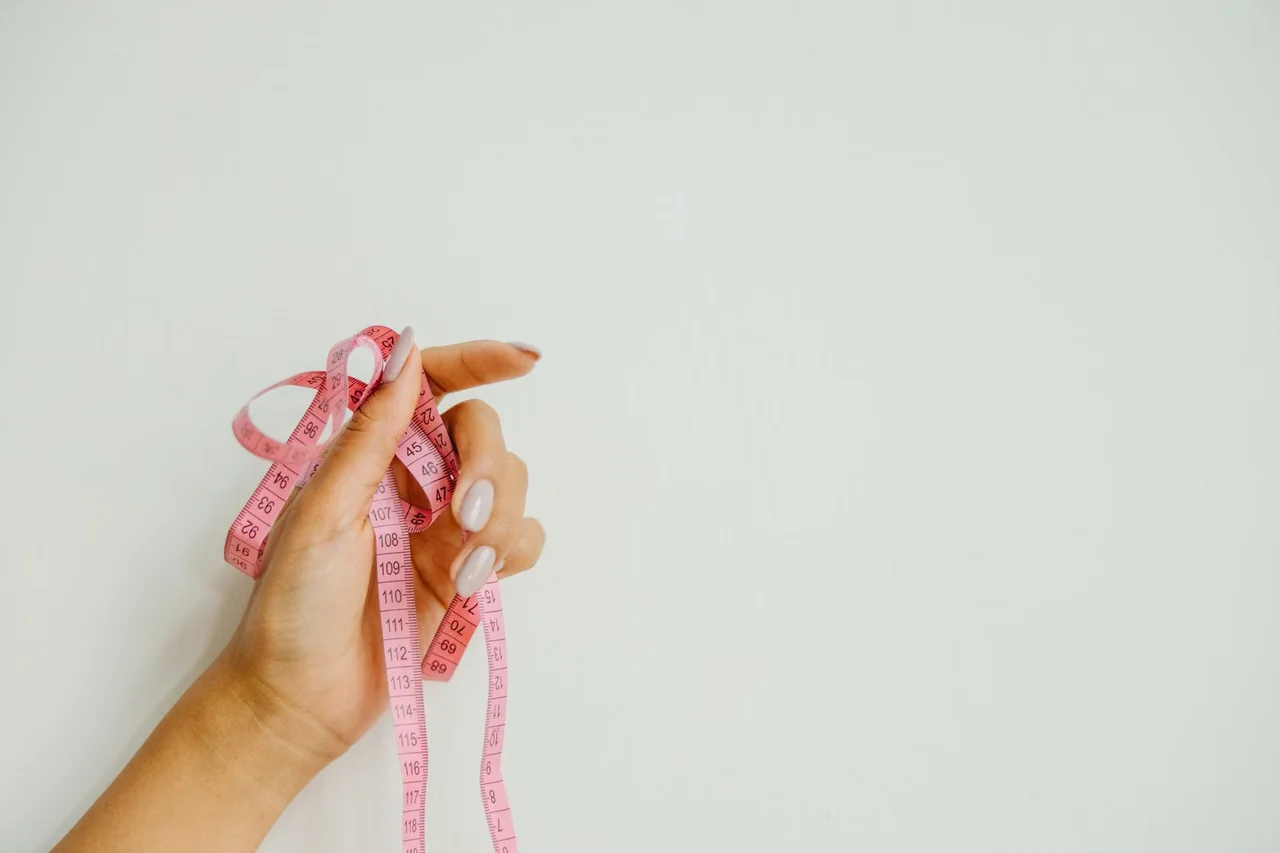
The most reliable home method is still the classic one: a thin thread, a strip of paper, or a flexible tape. The procedure is simple, but accuracy depends on care. The thread should wrap around the base of the finger without tightening it; then mark the overlap point and measure the length in millimeters. That figure is the real circumference and can then be compared with the corresponding chart.
The time of day also matters. In the afternoon, fingers are usually slightly more swollen, so a measurement taken mid-day is often more useful than one taken after waking up. Heat, exercise, and even a salty meal can change finger thickness with a subtlety that seems minimal, but is not. Sometimes, half a size makes the difference between the ring slipping on smoothly or becoming a snag.
Anyone who already has a ring that fits well can use it as a reference. Simply measure the inner diameter with a ruler or caliper and compare the result with a reliable chart. This method avoids many mistakes, especially when the hand does not show large size changes between fingers. Even so, the same finger on which the piece will be worn should be measured, because not all fingers share the same circumference, even on the same hand.
The factors that most affect the real fit
The most common mistake is thinking that a size is a size in any circumstance. In jewelry, that idea does not hold for long. The body changes, the metal responds, and the design matters. A thin silver band does not create the same pressure as a wide yellow-gold band, even if both measure the same in technical terms. The finger, moreover, is neither cylindrical nor uniform; it widens, turns, and leaves a different margin depending on the area.
Ambient temperature plays a notable role. In the cold, the skin contracts and the ring seems looser. In the heat, the opposite happens. There are also differences between the dominant and non-dominant hand, especially in people who use one hand a lot for sports, manual work, or repetitive gestures. That asymmetry can lead to buying a size that fits one hand and fails on the other.
The knuckle deserves special attention. If it is wider than the base of the finger, the ring must pass over that area without forcing it, even if it then sits a bit looser. In those cases, the larger size is usually chosen, because it is easier to adjust a slightly loose ring than to rescue one that cannot cross the knuckle. That rule, simple and almost domestic, prevents more disappointments than it seems.
What happens with charts that mention size 14 in Spain
The apparent contradiction between US size 7 and Spanish size 14 comes from different systems. Some jewelers or catalogs use their own numbering that is not based exactly on circumference, but on internal scales inherited from traditional commerce. In that context, a size 14 may correspond to a physical measurement similar to the European 54, even though the number itself does not mean the same thing in another store.
That is why, when buying a ring, the number should always be accompanied by the specific measurement in millimeters or by the store’s conversion chart. An isolated number is of little use if you do not know which system supports it. Two pieces with the same nominal size can fit very differently if one comes from the U.S. market, another from the European market, and another from a manufacturer with its own catalog.
That precision is especially important in online jewelry, where the product may seem clear but the equivalence is not. Reading the size without checking the circumference is like reading a distance without looking at the unit. It is not a minor detail; it is the entire measurement that supports the purchase.
Which sizes usually share space with American size 7
In ring retail, US size 7 usually falls in a range close to the European 54, although in some conversions it is related to 53 or 55 depending on rounding. That range does not mean a serious error; it means the system is not absolutely rigid and that fitting tolerance exists. One millimeter up or down can still be acceptable if the band design allows it.
The variation is more noticeable in robust designs. Wide rings, over 6 millimeters, usually require a small upward correction because they distribute pressure differently. In contrast, very thin bands may feel more generous to the touch. It is not just about the number, but about how that number behaves on the skin.
That is why the most useful charts are the ones that bring together three data points at once: size, circumference, and diameter. When those three elements match, the margin of error drops a lot. At a jewelry counter, that trio remains more reliable than any eyeballed estimate, no matter how experienced the buyer may be.
Mistakes to avoid before buying
The first is measuring only once and considering the result final. The hand changes throughout the day and also with activity. The second is tightening the thread or paper too much, because that artificially reduces the circumference and leads to a size that is too small. The third is using a chart without checking whether it is intended for Europe, the United States, or a brand’s own system.
Another very common mistake is forgetting the thickness of the design. A wide-band ring, with decorations or a curved inner surface, does not feel the same as a smooth band. That change in feel may seem minor in theory, but in daily use it makes the difference between a pleasant piece of jewelry and one that ends up in a drawer.
It is also wise to be skeptical of overly round conversions when the model comes from another country. The reality of jewelry is that charts guide you, but do not replace trying it on. In reputable stores, a physical ring sizer remains the most solid method, because it removes interpretation and shows the exact measurement.
How to interpret an online purchase without getting lost in the conversion
In a shopping cart, the size may seem like a simple detail, but behind it there is a small map of conversions. If the product is sold in the United States, size 7 should be read through European eyes and according to the system used by the store. The key is to look at the measurement in millimeters when it is available. That figure is what organizes everything else and reduces the margin of error.
If the product page only gives a number, the purchase is more fragile. If it also offers inner diameter or circumference, the buyer gains confidence. And if the piece is for a gift, it is worth remembering that there is no perfect universal size for all hands of the same profile. The hand also has memory: swelling, thinness, heat, exercise, repeated gestures. It all adds up.
With adjustable pieces, the problem is softened, but not completely eliminated. Open or adjustable rings allow more margin, although they still have a real comfort range. They are a practical solution for gifting, yes, but they do not replace measurement when the jewelry is valuable, delicate, or difficult to alter later.
A small equivalent that prevents clumsy purchases
The American size 7, viewed from Spain, represents one of those conversions that seem simple until several systems are compared. Its most useful reference is the European size 54, with a circumference close to 54.4 millimeters and a diameter of about 17.3 millimeters. That base makes it quite safe to orient yourself, as long as the brand’s criteria and the type of ring are checked.
More than an isolated figure, what matters is the relationship between measurement, material, and band shape. A well-chosen ring does not pinch, does not spin excessively, and gives the feeling of being made for the hand, not just for the box. That is the difference between a successful purchase and one that requires correction later.
In jewelry, as in almost everything precise, detail rules. The correct size is not guessed; it is checked, interpreted, and matched with the right system. When that happens, size 7 stops being a confusing number and becomes a useful, concrete, and understandable measurement for someone buying from Spain.
A comfortable ring matters when you run
Ring-size conversions can help you choose a ring, but they do not guarantee it will feel comfortable during a run. With movement and warmth, your fingers may feel more swollen, so a ring that fits well at rest could feel tight or rub while you exercise. Wider bands can also feel more noticeable than slim rings, so consider the design as well as the size.
If you usually run wearing a ring, check that you can move it and take it off easily before heading out. If it feels too tight, bothers you or distracts you, it may be more practical to leave it at home for the session. When buying one, measure your finger carefully and check which sizing system the seller uses: an approximate conversion is no substitute for a comfortable fit on your own hand.



Reebok runs large or small: a real fit guide

Hoka Challenger ATR 7 GTX: complete review of the all-terrain shoe

How to clean white sneakers without ruining them

Altus Pirineos 40-liter backpack: analysis, use, and key points

20,000 mm waterproof jacket for men: key points to get it right

Under Armour HOVR Sonic 6: complete review of the shoe

incline treadmills: guide to choosing better

Achilles tendonitis: real recovery time

Pain in the Achilles heel: causes, signs, and relief

What to take for calf pain: real relief and when to worry

 Races3 months ago
Valencia Half Marathon 2026: date and registration

 Reviews and Comparisons4 months ago
Asics Gel-Roadmiles 3 for men: review and current price

 Races3 months ago
Valencia Marathon 2026: entry, ballot and course

 Reviews and Comparisons4 months ago
Asics Gel Sonoma 8 Gore-Tex: complete analysis for trail and rain
- Sneakers3 months ago
Saucony Endorphin Pro 4: full review and verdict

 News5 months ago
Strava API 2026: what changes for clubs, challenges and runner apps?

 Reviews and Comparisons5 months ago
Nike Alphafly 3: opinions, sensations, and real key points

 Reviews and Comparisons4 months ago
Under Armour running shoes review 2025-2026: models and key features

 Sports Equipment4 months ago
Shoe sizes in cm: a clear guide to getting the right fit for your footwear
- Sneakers4 months ago
Adidas Adizero Boston 13 for men: review and verdict
- Sneakers3 months ago
Neutral running shoes with lots of cushioning: the best of 2026

 News4 months ago
Where is the Hoka brand from and why was it born in France