Sports Equipment
Foot size in cm: how to measure correctly and choose footwear
Measure your foot in centimeters, convert it to your size, and reduce mistakes when buying online or sports footwear.

The measurement of the foot in centimeters remains the most useful reference for getting footwear right, especially when the purchase is made without trying the model in store. The size someone has worn for years does not always match a brand’s actual last, and that is where rubbing, cramped toes, or a heel that slips with every step appear.
In running, that margin matters even more. A shoe that is too tight punishes the forefoot when the foot swells with effort, while one that is too loose reduces stability and can encourage blisters or loss of control. Measuring well is no minor detail: it is the foundation for reading an equivalence chart with judgment and buying with less room for error.
Why the centimeter matters more than the number
Shoe sizes are not universal. A 41 in one brand can feel different in another, even if both use the same European label. The length of the foot in centimeters provides an objective reference and is less subject to commercial variation, which depends on the last, toe-box design, and the interior space each manufacturer leaves.
That is why many reliable guides start with the actual measurement of the foot rather than the usual size. The logic is simple: the foot does not change shape capriciously, but sizing can. In sports footwear, it is also worth remembering that the foot expands during the day and with exercise, so a measurement taken in the morning may fall short when real use arrives.
The European industry usually works with the Paris point system, based on the relationship between millimeters and size points, while other markets use different references. The centimeter acts as a common language across systems, and that is why it is so valuable for comparing models, brands, and countries without relying on intuition or inherited habits.
How to measure the foot at home with reasonable accuracy
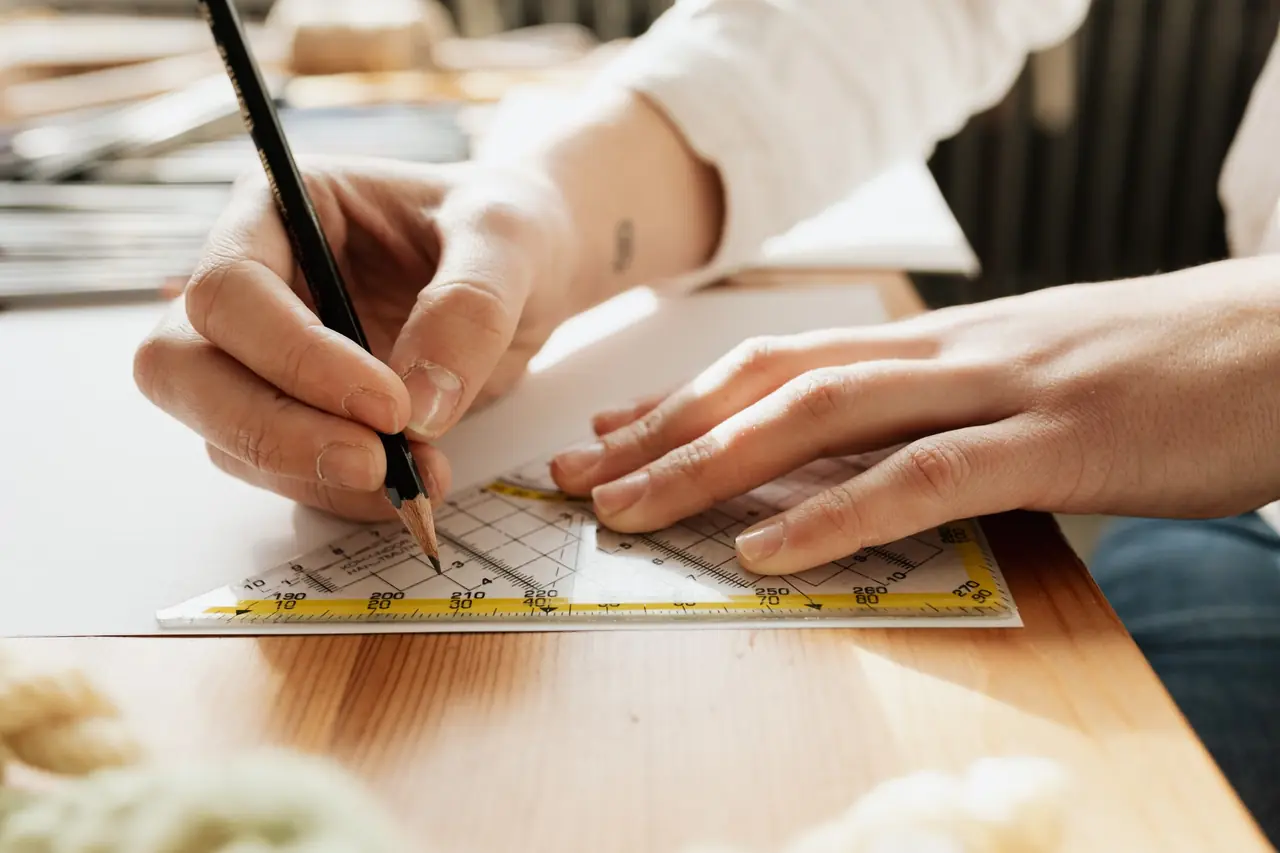
Home measurement does not require complex tools. A sheet of paper, a wall, a pencil, and a ruler are enough. The foot should be placed barefoot, with the heel firmly against the wall and the weight distributed naturally. The mark is taken at the longest toe, not necessarily the big toe, because the contour of the toes changes according to each foot’s morphology.
The time of day matters too. Measuring at the end of the day usually gives a more realistic figure, since feet tend to be somewhat more swollen after hours of activity. If the measurement is being taken for running shoes or for long-distance walking, that small increase in volume is no minor nuance: it can mean the difference between a comfortable fit and an aggressive toe box.
It is also wise to repeat the process on both feet. In practice, many people have a slight, normal asymmetry, of only a few millimeters or more than half a centimeter in some cases. The correct size should be chosen based on the longer foot, because the goal is not to fit the shorter one to the millimeter, but to avoid compressing the other.
The required allowance changes depending on use
Not all shoes require the same margin. In a dress shoe, moderate room is usually enough to walk without tension. In sports footwear, however, and especially in running shoes, it is recommended to leave between 0.5 and 1.5 cm of extra space beyond the actual foot length, depending on the discipline, the duration of the activity, and the type of sock.
That extra space is not arbitrary. During running, the toes need a little room to move and absorb impact without hitting the front of the shoe. A fit that is too precise can end up taking its toll in black toenails, pressure on the big toe, or a feeling of trapped heat. Useful comfort is not a luxury; it is performance.
In winter, socks add millimeters; in summer, the foot expands due to temperature and activity. That is why the ideal measurement includes the context of use, not just the bare length of the foot. The actual purchase size is a sum of measurement, material, and purpose, and that is where the difference lies between choosing well and buying by inertia.
How to interpret a size chart without getting lost
A size chart serves to translate centimeters into European, British, or U.S. sizing. However, its value lies in guidance, not in absolute mathematical precision. Equivalences change according to the brand and the last, so it is best to read them as an approximate map rather than a verdict.
In women’s footwear, for example, a length close to 22.4 cm usually falls around EU 35 or 35.5; from 24 cm onward, many charts place the foot near 37.5 or 38; and around 26.7 cm, size 42 comes into view. In men’s footwear, 27 cm usually corresponds to about EU 42, while 29 cm is close to 45 or 46, depending on the manufacturer.
In children’s footwear, reading is even more delicate because growth is rapid and sizes change frequently. A few millimeters can alter the feel of the fit from one quarter to the next. That is why children’s charts should be used with special caution and always alongside the current foot measurement, not the size that was worn months ago.
The most useful guideline conversion for adults
The comparison between centimeters and European sizing usually falls into ranges similar to these: 23 cm is close to a 36; 24 cm is usually around 37.5; 25 cm around 39; 26 cm close to 40.5; 27 cm to 42; 28 cm to 43.5; and 29 cm to 45. These are practical starting points, not substitutes for each model’s specific guide.
If the footwear is sporty, many people find it more comfortable to go up half a size or even a full size compared with street shoes, especially in high-impact disciplines over longer distances. The length of the foot in cm is not interpreted the same way in a loafer as in a training shoe, because material, structure, and use all change the final feel.
Width also needs attention. A wide foot may require a larger size or a different last, even if the length is correct. In those cases, the problem is usually not the centimeter measurement, but the shape of the shoe. The right length does not make up for a poorly handled width, and that is where many discomforts wrongly attributed to the wrong size begin.
What changes between walking, dress wear, and running
Buying a dress shoe and running shoes using the same criteria often ends in frustration. The first seeks a precise appearance, with less room and a more closed silhouette; the second needs tolerance, ventilation, and a stable stride. The same foot length does not require the same fit in every context.
For everyday footwear, a finger’s width in the toe box can be enough to walk naturally. In contrast, in long runs, intervals, or faster efforts, the foot receives repeated impacts and increases slightly in size. That is why running shoes are usually chosen with a bit more room, especially when training medium or long distances.
The type of terrain also matters. On asphalt, the fit can be somewhat more direct; on trails, support and control become more important because the foot moves over an uneven surface and needs additional stability. The foot’s centimeter measurement does not change, but the demands of the terrain do, and with them the way the size is read.
Common mistakes that still cost comfort
The first is measuring only one foot and assuming the other matches. That seemingly innocent gesture explains quite a few returns and more than one unnecessary discomfort. Asymmetry is normal, and relying on a single length can turn a correct fit into a bad choice.
The second mistake is measuring without considering the type of sock or insole that will be used afterward. A technical running sock does not take up the same space as a thin dress sock. An added insole also reduces interior volume. The size in cm should be read together with the real setup of use, not as an isolated number floating in a vacuum.
The third mistake is trusting that the usual size is enough, as if the body never changed. The foot can vary with age, weight, pregnancy, or periods of greater sports load. Checking the measurement from time to time avoids surprises, especially with online purchases where returns do not always make up for the time lost.
The shoe’s toe box says more than it seems
The front shape of the footwear changes the perception of size. A narrow toe box concentrates the toes and forces you to go up a size sooner than a rounded or anatomical one. A pointed model can seem shorter even if it measures the same inside. Exterior geometry can be misleading; interior length is what matters.
In running shoes, something similar happens with some overlays or side reinforcements that create a sensation of greater structure. The foot may be measured well and still feel squeezed if the design compresses the forefoot. True comfort comes from the sum of size, last, and usable space.
That is why reading shoe size in centimeters is more reliable when it is accompanied by references for the specific model. Generic charts help, but the shoe shape, upper flexibility, and midsole density complete the picture. The number guides; the design decides.
Why running depends so much on a good measurement
When running, the foot acts like a living part, not an immobile block. It expands, sweats, rubs, and absorbs impacts over thousands of strides. A running shoe chosen in the wrong size can turn a good session into an uncomfortable one, even if the rest of the gear is correct.
The best-known risk involves the toenails, which suffer when the toes repeatedly strike the toe box. There is also the feeling of insecurity if the foot moves too much inside the shoe, especially on descents, pace changes, or turns. The right fit protects as much as the right pace.
There is another, less visible point: mechanical fatigue. When the foot is not working comfortably, the runner tends to alter their stride unconsciously, look for compensations, and distribute the load poorly. Over time, that small distortion can be felt in the calves, fascia, or forefoot. Size in cm is also a matter of movement economy.
A practical approach to buying better online
Buying from a distance requires simplifying the process without losing rigor. First measure the foot, then compare it with the manufacturer’s specific chart, and finally check whether the model tends to fit large, normal, or small. That order avoids decisions based on the usual size, which is one of the most common sources of error.
In training shoes, many brands now include the internal length in centimeters or at least a precise equivalence guide. That makes the decision much easier, because the user does not have to mentally translate from one system to another. The cm figure is more transparent and leaves less room for improvisation.
It is also worth thinking about the usage scenario. A runner who trains in heat, wears thick socks, or tends to have significant foot swelling will need extra room. Someone looking for a shoe for more urban use, with fewer hours of impact, may prefer a more snug fit. Size is not an isolated number, but a relationship between body, activity, and material.
The detail that saves returns and discomfort
The foot measurement in centimeters does not solve everything, but it greatly reduces uncertainty. It is the basis for comparing charts, understanding differences between brands, and choosing better without relying on luck. A few tenths of a centimeter can separate a clean fit from a bad purchase.
In a market saturated with models, colors, and technical promises, the most sober number is often the most useful. Measuring well, checking both lengths, adding the necessary margin, and paying attention to the shoe last remains the wisest path. Good choices begin on the floor, with a sheet of paper and a ruler, not on the label.
That simple gesture has a very concrete effect: fewer rubs, fewer doubts, and greater accuracy when walking or running. The right size is not noticed on its own; it is noticed because it stops being a problem. And that is, in the end, the best measure of all.



Reebok runs large or small: a real fit guide

Hoka Challenger ATR 7 GTX: complete review of the all-terrain shoe

How to clean white sneakers without ruining them

Altus Pirineos 40-liter backpack: analysis, use, and key points

20,000 mm waterproof jacket for men: key points to get it right

Under Armour HOVR Sonic 6: complete review of the shoe

incline treadmills: guide to choosing better

Achilles tendonitis: real recovery time

Pain in the Achilles heel: causes, signs, and relief

What to take for calf pain: real relief and when to worry

 Races3 months ago
Valencia Half Marathon 2026: date and registration

 Reviews and Comparisons4 months ago
Asics Gel-Roadmiles 3 for men: review and current price

 Races3 months ago
Valencia Marathon 2026: entry, ballot and course

 Reviews and Comparisons4 months ago
Asics Gel Sonoma 8 Gore-Tex: complete analysis for trail and rain
- Sneakers3 months ago
Saucony Endorphin Pro 4: full review and verdict

 News5 months ago
Strava API 2026: what changes for clubs, challenges and runner apps?

 Reviews and Comparisons5 months ago
Nike Alphafly 3: opinions, sensations, and real key points

 Reviews and Comparisons4 months ago
Under Armour running shoes review 2025-2026: models and key features

 Sports Equipment4 months ago
Shoe sizes in cm: a clear guide to getting the right fit for your footwear
- Sneakers4 months ago
Adidas Adizero Boston 13 for men: review and verdict
- Sneakers3 months ago
Neutral running shoes with lots of cushioning: the best of 2026

 News4 months ago
Where is the Hoka brand from and why was it born in France