Sports Equipment
Scarpa Mont Blanc Pro GTX: review, price, and features
Complete analysis of a robust, warm, and precise alpine boot, with key data on use, fit, and performance.

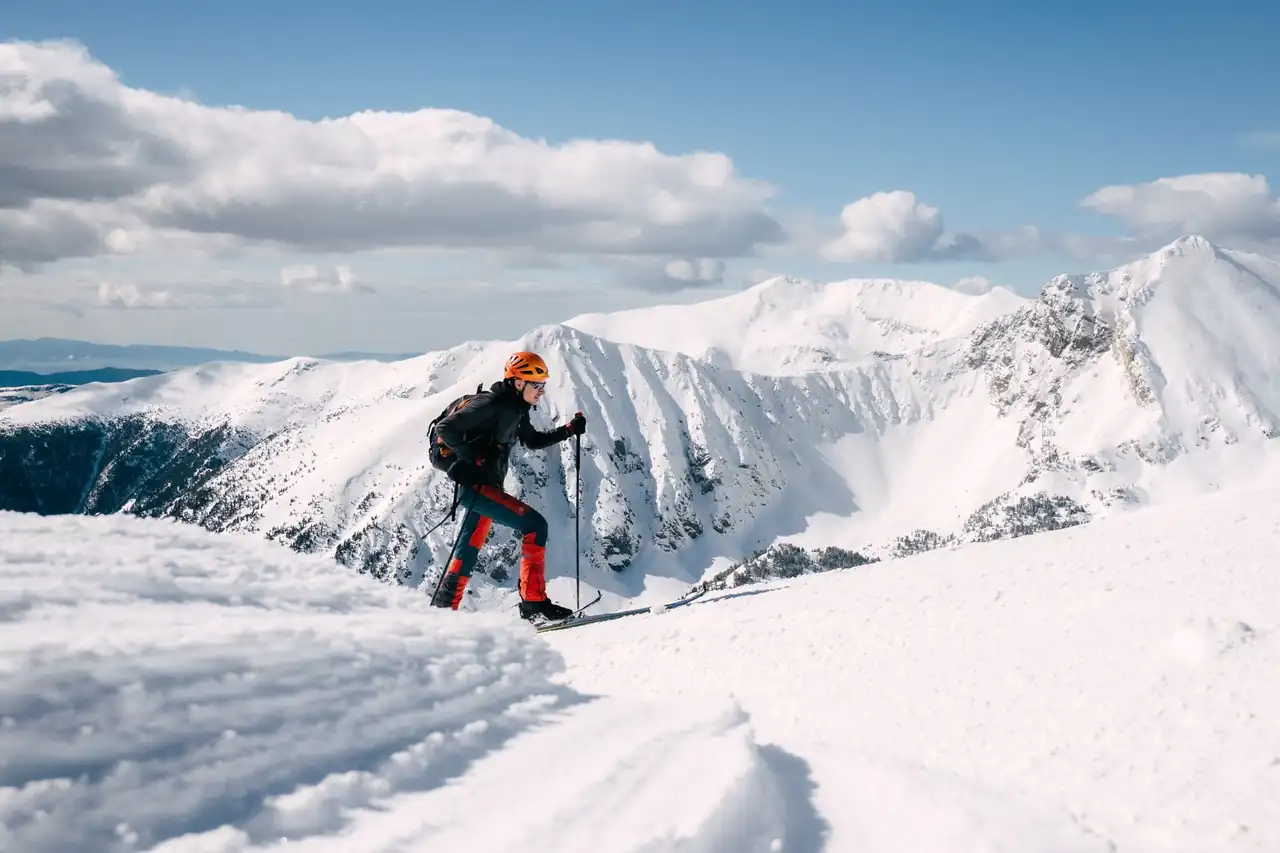
The Scarpa Mont Blanc Pro GTX has established itself as a benchmark alpine boot for cold, mixed, and technical terrain: thick Perwanger leather, an insulating GORE-TEX membrane, and a Vibram outsole designed to provide stability when the ground stops feeling like a path and turns into hard ice, wet snow, or blue ice.
Its approach is clear: to combine classic-cut durability with modern solutions for fit, protection, and compatibility with automatic and semi-automatic crampons. In a category where every detail matters, this boot aims to be a stable refuge for long days, with a structure that prioritizes support over the softness of a trekking shoe.
A high-mountain boot with a very defined DNA
The Mont Blanc Pro GTX belongs to that group of boots that do not try to please everyone. It is designed for mountaineering, ice climbing, and demanding winter routes, not for easy trails or urban uses with a mountain name. The whole package conveys that idea at first glance: 3 mm leather upper, TPU reinforcements, integrated gaiter, and a sole platform that is not looking for flexibility, but control.
That approach explains why it is so recognizable among mountaineers who need a reliable boot in harsh conditions. In snow, the high shaft helps keep out external elements; on cold rock, the stiffness provides precision; on long traverses, the structure reduces the feeling of foot collapse when the load increases and the terrain takes its toll.
There is also a practical side to its design: it does not aim to be light at any cost. With a reference weight of 900 grams per half pair in size 42, it sits in a serious range for boots of this level, enough to maintain a feeling of solidity without becoming excessively clumsy. In the mountains, that difference matters less than a poor fit or an imprecise sole.
Materials, membrane, and outer construction
The heart of this boot lies in its 3 mm Perwanger leather, a leather known for its durability and wear resistance. It is not a delicate surface, nor does it try to look like one. Its job is to protect, withstand rubbing against rock, ice, and gear, and keep its shape over the days. The combination with technical fabric and synthetic reinforcements helps balance protection and weight.
The GORE-TEX Insulated Comfort membrane adds waterproofing and insulation, two especially valuable features in cold environments. It not only blocks water entry; it also helps manage internal moisture so the foot does not turn into a block of ice by the end of the day. In practice, that means a more stable response when temperatures drop and the terrain becomes soaked.
The integrated gaiter and the reinforced collar with TPU structure serve a dual function. On the one hand, they protect against powder snow, blizzards, and persistent splashes. On the other, they add support around the ankle, an area in boots of this type that needs a fine balance between hold and enough freedom to walk naturally. The feeling is not of flexibility, but of firmly embracing the foot.
Fit, closure, and what you notice when putting them on
Scarpa uses a Sock-Fit XT construction on this model, designed to wrap the foot with a more continuous and snug sensation. The idea is for the boot to behave like a compact unit rather than a set of parts moving separately. That kind of fit is especially appreciated when the slope steepens or when you need to step precisely on a small edge or on hard snow.
The lacing system combines two-tone hardware and a progressive closure structure that helps distribute tension. It is not meant to be flashy, but rather to provide more controlled tightening over the instep and ankle. In high-mountain boots, that distribution matters a lot because an uneven closure often leads to heel slippage or uncomfortable pressure on the instep after several hours.
It is important to keep in mind, however, that this type of boot usually requires careful sizing and fitting. On the market, there are reviews suggesting a somewhat snug fit for some users, especially when compared to more voluminous models. That does not mean it is narrow by definition, but rather that its internal volume tends to favor a precise feel, less forgiving than that of a classic trekking boot.
Sole, stiffness, and performance on ice and rock
The Vibram Essential AC platform is one of the most important parts of the package. It is not just about grip; it is about how the sole transmits support, torsion, and stability when the terrain changes texture abruptly. A good alpine boot should behave like a working tool, and here the sole plays that role with considerable competence.
Stiffness is key in this type of product. On ice and mixed terrain, a firm base allows more secure edging and keeps the boot aligned with the crampon. On rock, although it does not replace an approach shoe, it does offer a stable platform for moving over short sections or stretches where you need to alternate between snow, stone, and ice without changing footwear every hundred meters.
The result is a restrained, secure, and fairly serious stride. There is none of that pleasant flex that makes an easy trail comfortable, but there is a structure that reduces fatigue associated with instability. In high mountains, where movement economy matters as much as traction, that combination can be more valuable than a soft and deceptively comfortable feel.
Crampon compatibility and real-world use on technical terrain
One of the strongest arguments for the Mont Blanc Pro GTX is its compatibility with automatic and semi-automatic crampons. That places it directly in the realm of technical mountaineering, where a boot must serve as a reliable anchor for traction systems rather than merely allowing you to walk on compact snow. The connection between toe, structure, and sole is designed to work precisely.
On ice and cold couloirs, this compatibility is essential. When the terrain requires crampons, the boot cannot give way, deform excessively, or offer an irregular base. Here the Mont Blanc Pro GTX bets on consistency, relying on a robust construction and a platform that seeks longitudinal stiffness without entirely losing the ability to walk with some naturalness.
Its natural habitat is serious winter outings, high-mountain mixed routes, hard-snow ridges, and conditions where temperature, wind, and terrain combine to test equipment, technique, and patience. In those scenarios, the boot stops being an accessory and becomes part of the mountaineer’s safety system.
Weight, insulation, and thermal comfort
Insulation is not always measured with exact numbers in real use, because socks, circulation, activity level, and cold from the ground all play a role. Even so, the presence of GORE-TEX Insulated Comfort clearly signals an intention: to keep the foot protected during prolonged cold days. It is not a solution for mild temperatures; it is a tool designed for winter.
That insulation has an obvious advantage in static or low-intensity conditions, such as belaying, waiting at a stance, or moving slowly over very cold terrain. In those situations, a boot without thermal protection can become cruel very quickly. The Mont Blanc Pro GTX responds better when the environment is unforgiving and the body starts losing heat through the feet before any other part.
The price of that comfort is predictable: a more substantial and less airy feel than a lightweight model. However, the overall balance is well suited to its mission. Anyone looking for a winter alpine boot usually accepts that tradeoff; in fact, they expect it. Absolute lightness rarely coexists with serious protection against water, snow, and ice.
Which type of user makes the most sense for
This boot is best suited for mountaineers, alpinists, and winter climbers who need a stable tool for technical terrain. It can also make sense for prolonged work in snow or for activities where durability and insulation matter more than flexibility. It is not a soft compromise boot, but rather a specialized piece with a vocation for hard use.
Its profile appeals to those who value a robust leather construction, a protective shaft, and the peace of mind of a setup ready for crampons. By contrast, those who prioritize long approaches, moderate elevation gain, or a faster mountain shoe will likely find it excessive. The difference between useful and oversized depends a lot on the specific activity and the usual terrain.
From an editorial standpoint, its greatest virtue is coherence. Everything about it responds to a single objective: performing in cold, technical, and demanding conditions. There are no superfluous embellishments or nods to casual users. It is a boot that makes more sense the harsher the mountain in front of it becomes.
Price, positioning, and what it offers compared to other models
The price seen in various stores is around 469.78 euros and can reach higher figures in other markets, with references around 500 dollars or 649 dollars depending on the channel and region. That spread is common in an imported technical product, but it makes one thing clear: it is not intended as an impulse buy, but as an investment in serious gear.
At that price level, the comparison is not limited to the brand. Users usually look at durability, crampon compatibility, insulation, and material quality. The Mont Blanc Pro GTX answers with high-weight leather, an insulating membrane, a Vibram sole, and a construction aimed at longevity. In return, it asks you to accept a weight and stiffness that match its purpose.
Its real value appears when it is used where it belongs. Such a boot may look oversized in a brightly lit store, but in an icy couloir or on a traverse in biting wind its logic becomes obvious. Then the price is no longer measured only in euros and starts being measured in confidence, stability, and protection.
Technical details that help understand it better
Among the details that best explain the product are the available sizes, ranging from 39 to 47 in half sizes and up to 48 in full size. That breadth shows the brand’s intent to cover a reasonable range for a technical model, although the final fit still depends on foot shape and the intended use with thick or thin socks.
The Made in Italy label reinforces an image associated with the tradition of European alpine footwear, with an approach in which craftsmanship, materials, and quality control often play a significant role. It is also worth noting the mention of PFAS materials in the reference technical sheet, a detail that is part of the current conversation about chemical treatments in waterproof products and their evolution in the industry.
Another practical element is the technical insole with nylon and fiberglass reinforcement, designed for stability and torsional efficiency. That kind of structure goes unnoticed by anyone looking only at the outside of the boot, but it is decisive when the foot works on an irregular surface and the energy of each step must be transmitted without unnecessary losses.
What it is worth considering before deciding
The Scarpa Mont Blanc Pro GTX is not a model for everyone, and that is precisely part of its appeal. It offers protection, support, insulation, and a platform ready for high mountains, but it requires accepting a stiffer stride and a no-compromise functional aesthetic. Those who choose it usually do so because they know exactly what terrain they will use it on.
In real use, its performance depends on a simple equation: the colder, more technical, and more mixed the environment, the more sense it makes. By contrast, on gentle routes or in summer mountain use, it may feel excessively sober. That honesty of design is an unflashy but very valuable virtue. It does not promise more than it delivers, and what it delivers is clearly geared toward serious mountain use.
That is why it continues to hold a visible place among high-end alpine boots. It does not try to reinvent the category, but to refine a formula that works: durable leather, an insulating membrane, a stable sole, and crampon compatibility. In a market full of products competing to seem light and versatile, this boot reminds us that sometimes the mountains ask for the opposite: solidity, confidence, and well-resolved protection.
A solid reference when the mountains get tough
The Mont Blanc Pro GTX represents a very classic idea of mountaineering: gear that must be up to the task before, during, and after the activity. Its strength does not lie in a single spectacular feature, but in the sum of well-aligned decisions. Every piece seems designed to withstand, protect, and work with the rest of the system.
In a landscape of ice, rock, and hard snow, that coherence matters more than any launch campaign. The boot fits the logic of those who need real reliability in changing conditions, where a bad step or poor protection is paid for immediately. That is where this model stops being a spec sheet and becomes a practical answer.
By construction, insulation, and technical compatibility, the Scarpa Mont Blanc Pro GTX moves with authority in winter high mountains. It is a serious tool, with character, and with a very specific mission: to provide security when the terrain no longer leaves room for improvisation.



Reebok runs large or small: a real fit guide

Hoka Challenger ATR 7 GTX: complete review of the all-terrain shoe

How to clean white sneakers without ruining them

Altus Pirineos 40-liter backpack: analysis, use, and key points

20,000 mm waterproof jacket for men: key points to get it right

Under Armour HOVR Sonic 6: complete review of the shoe

incline treadmills: guide to choosing better

Achilles tendonitis: real recovery time

Pain in the Achilles heel: causes, signs, and relief

What to take for calf pain: real relief and when to worry

 Races3 months ago
Valencia Half Marathon 2026: date and registration

 Reviews and Comparisons4 months ago
Asics Gel-Roadmiles 3 for men: review and current price

 Races3 months ago
Valencia Marathon 2026: entry, ballot and course

 Reviews and Comparisons4 months ago
Asics Gel Sonoma 8 Gore-Tex: complete analysis for trail and rain
- Sneakers3 months ago
Saucony Endorphin Pro 4: full review and verdict

 News5 months ago
Strava API 2026: what changes for clubs, challenges and runner apps?

 Reviews and Comparisons5 months ago
Nike Alphafly 3: opinions, sensations, and real key points

 Reviews and Comparisons4 months ago
Under Armour running shoes review 2025-2026: models and key features

 Sports Equipment4 months ago
Shoe sizes in cm: a clear guide to getting the right fit for your footwear
- Sneakers4 months ago
Adidas Adizero Boston 13 for men: review and verdict
- Sneakers3 months ago
Neutral running shoes with lots of cushioning: the best of 2026

 News4 months ago
Where is the Hoka brand from and why was it born in France