News
Beer Race 2025: dates, venue, and prices
Dates, venue, prices, and everything offered by the great beer gathering of 2025 in Monterrey.

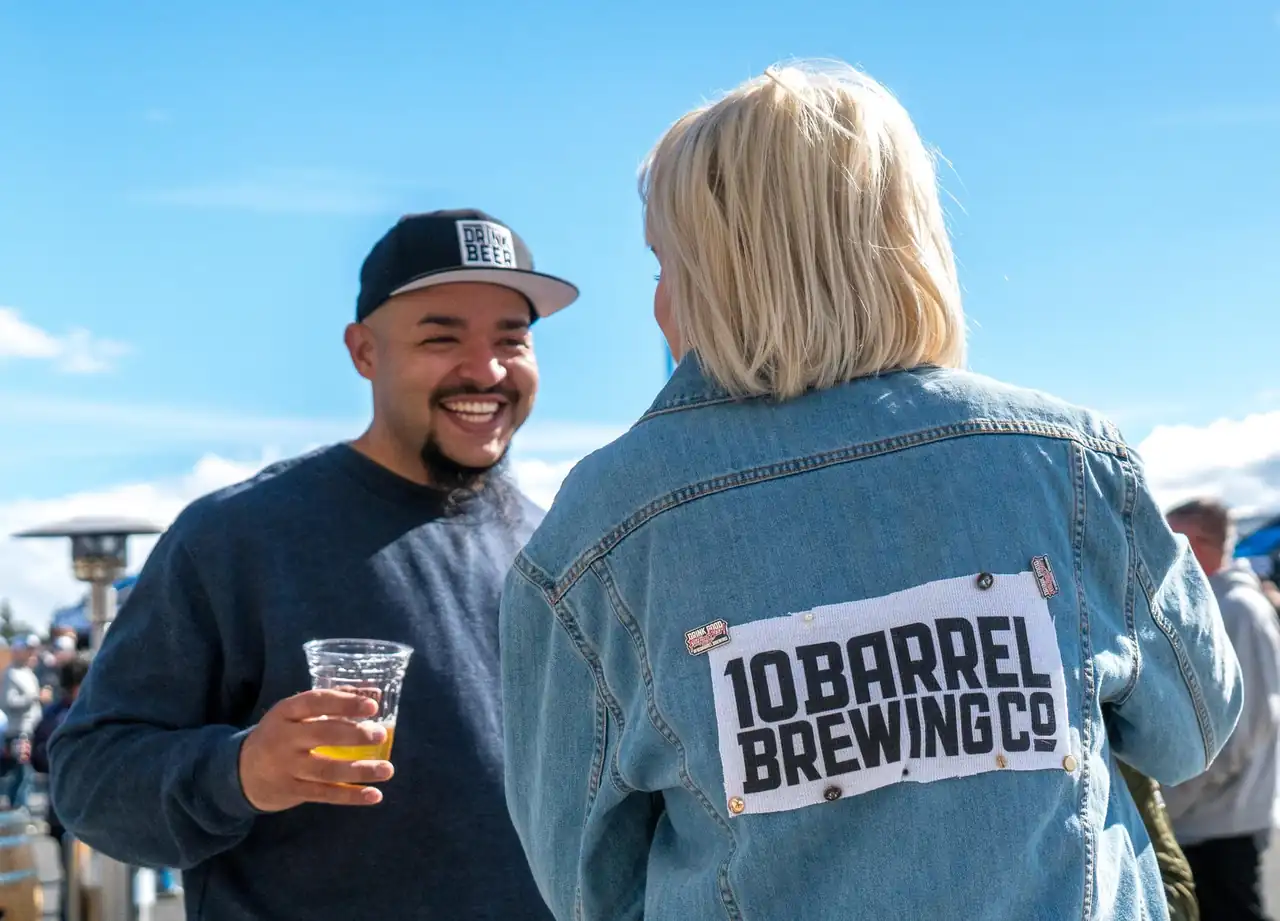
The 2025 beer event in Monterrey arrives bigger than ever: two days at Parque Fundidora, more than 70 breweries, and close to 400 labels for a crowd that mixes the curious, enthusiasts, and true flavor hunters. The event has established itself as one of the major stops on northern Mexico’s gastronomic calendar, with craft beer as its core and live music as its second major draw.
The offering is not limited to drinking. This edition brings together guided tastings, workshops, food trucks, a local-product market, and a music program that ranges from regional Mexican to rock and electronic music. The organizers have opted for a broad format, designed to spend several hours inside the venue without the experience running out after the first toast.
A festival that is already part of the northern beer map
Monterrey has earned its own place in Mexico’s beer conversation thanks to the density of its craft scene and the growth of a more informed drinking culture. Northern Mexico contributes a significant share of Mexican craft production, and the capital of Nuevo León has long served as a meeting point for brewers, distributors, and specialized audiences.
In that context, the 2025 festival does not appear as an isolated idea, but as a continuing tradition. The reference to its twelfth edition suggests a formula that has managed to adapt to the market without losing its identity: well-made beer, a wide offering, and a social setting that combines leisure, food, and the music scene. That mix explains much of its appeal.
Size matters, but so does format. Bringing together more than 70 breweries in one space makes it possible to take a kind of compressed sensory journey: a citrus-forward IPA, a stout with roasted notes, cleaner lagers, experimental offerings, and labels from different origins all in one stroll. For visitors, that translates into real variety; for the industry, into visibility and direct comparison.
Dates, hours, and the real pace of the day
The event takes place on Friday, June 13, and Saturday, June 14, 2025 at Parque Fundidora, with activities scheduled from 2:00 p.m. until midnight on both days. That extended schedule is no minor detail: it allows the flow of attendees to be spread out, avoids excessive crowding in a single time slot, and gives those who want to combine tasting, food, and concerts without rushing some breathing room.
The opening day begins with the Aro Rojo awards at 4:00 p.m. on the Malta stage, a gesture that places the focus not only on consumption but also on technical recognition of beer quality. From there, the atmosphere of the venue unfolds in layers: first the arrival of the crowd, then relaxed tasting, then activations, and as the afternoon progresses, the weight of live music.
The schedule also shapes the type of experience. This is not a quick stop-in fair, but an event designed for staying, walking around, and tasting at leisure. In a setting like this, pauses matter just as much as sips. The commemorative cup, food stalls, and rest areas are part of the day’s narrative, almost like stations along the same route.
What the public finds inside the venue
The craft beer selection is the festival’s main engine. Having gathered nearly 400 labels opens up an unusually broad range, even for a large-scale event. That makes it possible to compare styles, discover producers, and better understand the diversity that exists in the beer world today, from more approachable recipes to brews designed for very specific palates.
The food side is supported by a strong presence of food trucks, plus beer-based cocktail spaces and a local-product market. That combination makes the visit more substantial, because it prevents the event from being reduced to a simple string of tastings. In gatherings like this, food is not a decorative add-on: it acts as a counterbalance and as a guide to pacing consumption.
There is also an educational dimension. Guided tastings and interactive workshops add a layer of context that is often overlooked at more commercial festivals. Concepts such as aroma, body, bitterness, and fermentation appear there, explained in an accessible way for a broad audience. The result is a more complete experience, less superficial, more like a guided tour through beer culture than a simple open-air bar.
Music, atmosphere, and the weight of night
The music lineup gives the festival its own rhythm. In 2025, the bill includes names such as Los Daniels, Los Cadetes de Linares, Sussie 4, ZRDK, Las Moonshiners, and Tropikalizate, a selection that crosses several styles without breaking the event’s logic. There is rock, regional Mexican music, and electronic music, a mix designed to make the venue change character throughout the day.
That kind of programming works like a shifting soundtrack. During the afternoon, the atmosphere tends to be more exploratory; at night, the weight of the concerts pushes the crowd toward a more collective experience. That is when the festival stops being just a beer market and becomes an urban celebration, with lights, a stage, and energy that spreads across the park.
The music does not overshadow the beer; it frames it. In an event of this scale, concerts act as an emotional anchor. They make it possible to stay, alternate moments of conversation with others focused on the stage, and sustain the day for several hours. Visitors are not just buying a tasting ticket, but a complete plan with well-integrated layers of leisure.
Prices, tickets, and what each access includes
The sales information is clear and easy to compare. General admission for one day costs 299 pesos on Friday and 399 pesos on Saturday, and includes a commemorative cup. There is also a two-day general pass for 549 pesos. For those seeking a more complete experience, VIP admission per day is 1,890 pesos and includes a special glass, 20 4-oz samplers, an exclusive area, snacks, private restrooms, and personalized activations.
The difference between basic admission and VIP is not only the price, but the logic of use. The general pass is suited to a conventional visit, enough to explore, listen to music, and taste. The premium access, on the other hand, is aimed at visitors who want to sample more, move around with less friction, and have a more comfortable space inside the venue. The gap between the two options is wide, but both belong to the same ecosystem.
Tickets are available online and at authorized points of sale. That detail matters because it avoids last-minute confusion and keeps sales within official channels. In high-demand events, access traceability becomes almost as important as the program itself. It is also worth remembering that valid official ID is required, a logical rule when consumption is reserved for adults.
Aro Rojo, the most technical part of the celebration
The Aro Rojo awards add a layer of competition and rigor. This is not an institutional ornament, but a space where quality beers are recognized and a culture of responsible consumption is reinforced. The organizers themselves describe it as an international competition that brings together breweries from Mexico and around the world to evaluate professional and amateur categories.
In 2025, the gathering includes judges and participants from Bolivia, Venezuela, Puerto Rico, the Dominican Republic, Paraguay, and Uruguay, with 50 judges in charge of evaluating the samples. That international dimension raises the profile of the awards and places the festival within a broader conversation about styles, standards, and quality criteria in craft production.
For visitors, this technical section adds context. Knowing that there is evaluation, comparison, and style criteria behind a label changes how one looks at what is being drunk. Beer stops being just a cold drink in a wide glass and becomes a product with method, traditions, regional variations, and brewing decisions that are noticeable on the palate and in the aroma.
Why Parque Fundidora fits this edition so well
Parque Fundidora works as a natural stage for an event of this size. Its location, scale, and symbolic importance in Monterrey make it a venue capable of absorbing large crowds without completely losing the feel of an urban stroll. In a city where the heat is intense and movement is constant, having a spacious venue is almost a logistical survival requirement.
In addition, the park has a special relationship with major public gatherings. Its repurposed industrial character gives it a very recognizable visual backdrop: structures, esplanades, pathways, and open areas that fit well with the idea of a festival. Craft beer, with its blend of tradition and modernity, finds a coherent setting there, almost like a reimagined emotional factory made for enjoyment.
The location also makes it easier to read the event as an urban experience. It is not a fair closed in on itself, but an event integrated into the city’s pulse. Monterrey contributes the audience, mobility, food identity, and an expanding beer scene; the park gives physical shape to that energy. Together, they build a celebration that already has a recognizable identity.
What it is worth keeping in mind before entering
The alcoholic nature of the festival requires a strict entry policy. A valid official ID is not just a formality, but a condition for consumption. That check, which may seem obvious, avoids problems at the gate and also reinforces the message of responsible drinking that runs through the entire program.
The breadth of the offering invites visitors to walk through it with intention. With so many breweries and styles available, the temptation to sample quickly is high, but the experience improves greatly when paced carefully. Craft beer is best understood in small tastings rather than hurried accumulation. The palate, like a camera, needs focus to distinguish nuances.
It also helps to see the event as a sum of layers. There is the drink, yes, but also the conversation with producers, the food that accompanies it, the music that changes the atmosphere, and the design of the venue itself. All of that explains why the event has grown and why it continues to attract different audiences: the curious, the specialist, groups of friends, and visitors looking for something different to do in June.
An event that measures the maturity of beer culture
The 2025 edition reflects a broader and more demanding market. It is no longer enough to offer beer; the event must also provide a story, variety, comfort, and content. Monterrey’s festival responds precisely to that new expectation. Its success does not depend on a single big brand or one concert, but on a combination of choices that sustain interest over two full days.
That is why its significance goes beyond the festive side. In a city where beer is part of the social landscape, this kind of gathering acts as a cultural thermometer. It measures how far craft taste has progressed, how much experience matters compared with quick consumption, and what place Monterrey occupies within the national circuit.
At its core, the big attraction lies in that mix of scale and closeness. Many labels, yes, but also an environment where the public can touch the product, talk to the people who make it, and move between stages and stalls as if walking through a small temporary city. That is why the festival has earned its own place: it does not just serve beer, it also shapes a way of experiencing it.
The 2025 edition arrives with the solidity of an event that already knows who it is. Clear dates, defined prices, an emblematic venue, and an offering that combines beer culture, gastronomy, and live music. In a calendar full of similar proposals, that coherence is what ultimately leaves a mark.



Reebok runs large or small: a real fit guide

Hoka Challenger ATR 7 GTX: complete review of the all-terrain shoe

How to clean white sneakers without ruining them

Altus Pirineos 40-liter backpack: analysis, use, and key points

20,000 mm waterproof jacket for men: key points to get it right

Under Armour HOVR Sonic 6: complete review of the shoe

incline treadmills: guide to choosing better

Achilles tendonitis: real recovery time

Pain in the Achilles heel: causes, signs, and relief

What to take for calf pain: real relief and when to worry

 Races3 months ago
Valencia Half Marathon 2026: date and registration

 Reviews and Comparisons4 months ago
Asics Gel-Roadmiles 3 for men: review and current price

 Races3 months ago
Valencia Marathon 2026: entry, ballot and course
 Reviews and Comparisons4 months ago
Asics Gel Sonoma 8 Gore-Tex: complete analysis for trail and rain
- Sneakers3 months ago
Saucony Endorphin Pro 4: full review and verdict

 News5 months ago
Strava API 2026: what changes for clubs, challenges and runner apps?
 Reviews and Comparisons5 months ago
Nike Alphafly 3: opinions, sensations, and real key points

 Reviews and Comparisons4 months ago
Under Armour running shoes review 2025-2026: models and key features

 Sports Equipment4 months ago
Shoe sizes in cm: a clear guide to getting the right fit for your footwear
- Sneakers4 months ago
Adidas Adizero Boston 13 for men: review and verdict
- Sneakers3 months ago
Neutral running shoes with lots of cushioning: the best of 2026

 News4 months ago
Where is the Hoka brand from and why was it born in France