News
Compression bandage for a hamstring strain
A guide to compression, common mistakes and warning signs after an injury to the back of the thigh.

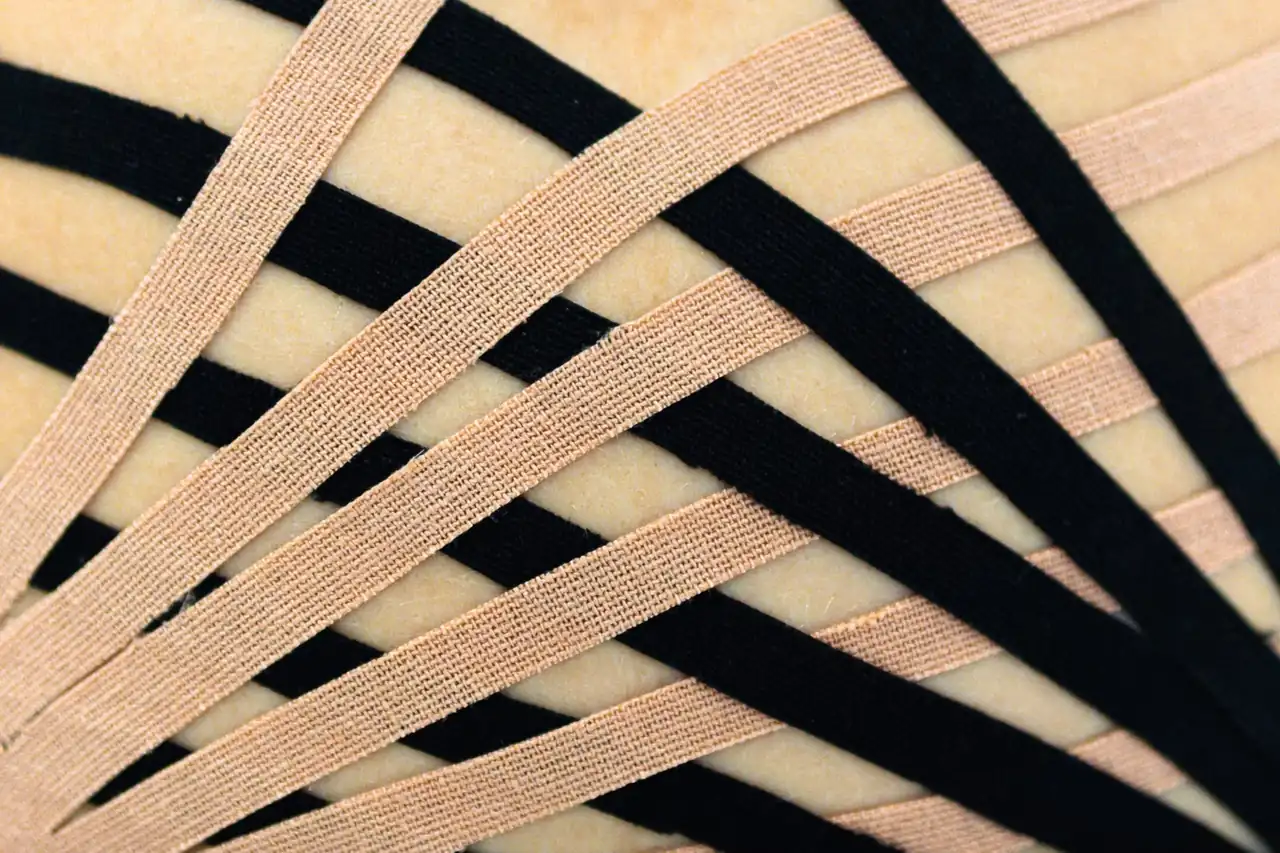
An elastic bandage or compression sleeve may provide temporary support and relief after an overload or strain in the back of the thigh, but it cannot repair a muscle tear by itself. Its main role is to help control some swelling, limit painful movement and provide a sense of security during the first few days. Pressure should be even, moderate and compatible with normal circulation.
Sudden pain while accelerating, changing direction or stretching the leg is often linked to a hamstring strain. These muscles run along the back of the thigh and help flex the knee and extend the hip. Compression is a supportive measure, not a diagnosis or permission to resume running while pain, limping or loss of strength remain.
What compression really does for the thigh
A compression bandage placed around the thigh applies external pressure to the soft tissues. This may help contain swelling and superficial bruising, especially during the first hours, when the area feels warm, tight and sensitive to touch. It may also reduce the sensation of excessive movement, although the effect varies according to the severity of the injury and each person’s tolerance.
A bandage should not be treated as a splint. The hamstrings need some movement to avoid stiffness, but that movement should stay within a range that does not cause pain. A properly fitted sleeve can make walking feel more secure; one that is too tight may compress nerves and blood vessels, irritate the skin or hide a worsening injury.
Available evidence on garments and compression techniques does not show that they independently speed the healing of a muscle tear. They may improve comfort and help manage swelling, but recovery mainly depends on injury severity, applied load and a suitable progression of activity. Muscle tissue does not behave like a part that can simply be fixed with a wrap.
Bandage, thigh sleeve and kinesiology tape are different
A conventional elastic bandage is wrapped around the thigh and allows pressure to be adjusted during application. It can be useful for short-term use, but care is needed to avoid folds and pressure points. A tubular thigh sleeve provides more even compression and is easier to use daily, provided its size matches the thigh circumference.
Adjustable hook-and-loop supports allow tension to be changed and can be removed quickly. They may be practical when swelling changes, but their edges can roll during walking or running. The support should stay in place without digging into the groin or lower thigh. A device that slips, rolls or causes tingling is not being used safely.
Kinesiology tape is different: it adheres to the skin and does not surround the thigh with the same pressure. It is applied with different techniques and tensions, but its proposed effects on muscle tone, circulation and pain should not be equated with a compression bandage. Incorrect application can also irritate the skin and does not replace assessment of an acute injury.
How to apply an elastic bandage without affecting circulation
The skin should be clean, dry and free of cream, heavy sweat or open wounds. The person may lie down or sit with the knee slightly bent in a comfortable position that does not force the back of the thigh. Before starting, check the colour and temperature of the foot, as these provide a baseline for detecting changes while the bandage is in place.
Apply the bandage from the lower thigh upward, overlapping each turn by roughly one-third to one-half of its width. Pressure should be firm but not maximal, and should remain even throughout. The upper end should finish below the groin crease, never directly across it; the lower end should not wrap around the knee if pain is limited to the thigh.
After application, check for wrinkles, folded edges or a particularly tight ring. The most useful functional check is simple: the foot should retain its usual colour, the toes should move normally and there should be no tingling, numbness, paleness or cold sensation. If any of these signs appear, remove the bandage and reapply it more loosely or stop using it.
Sleeping with a newly applied compression bandage is not advisable unless tolerance and instructions from a health professional have already been checked. The sensation of pressure may decrease during sleep, and a sustained position may worsen discomfort. Compression should never increase deep pain or be used to continue a training session that already hurts.
What to do during the first hours
Relative rest is usually more appropriate than staying completely still all day. Stop the activity that caused the pain and walk only within a tolerable level, without testing speed or maximum stretching. When putting weight on the leg is very difficult, temporary crutches may be needed, but this should be determined by a professional after assessing the injury.
Cold wrapped in cloth may ease pain for short periods, commonly 15 to 20 minutes, without placing it directly on the skin. Elevating the leg while seated may reduce pressure and swelling. The skin should remain protected and monitored, particularly in people with reduced sensation or circulation problems.
Anti-inflammatory drugs and painkillers are not suitable for everyone. A history of ulcers, kidney disease, high blood pressure, anticoagulant treatment or allergies requires medical advice before taking certain medicines. Paracetamol also has limits and precautions. Self-medication should not be used to hide pain and return to training early.
During the first days, avoid aggressive massage, forceful foam rolling, deep stretching and explosive exercises over the painful area. These activities may increase local bleeding when a recent tear is present. The absence of visible bruising does not rule out a significant injury; some deep strains cause little skin discoloration.
When a thigh sleeve may be reasonable
A light garment may be reasonable when swelling is moderate, the skin is intact and walking is possible without increasing pain. It may also be used during short trips to reduce vibration in the thigh. Its role is similar to a stable layer reminding the runner to move carefully, not a mechanism that locks the injured fibres in place.
Choose the size according to the manufacturer’s measurements, not the idea that tighter is always better. Useful compression is tolerable and consistent. If the garment leaves deep marks, causes intense itching, rolls up or increases pain, remove it. Breathable fabric can help manage sweat, but it does not eliminate the risk of contact dermatitis or friction.
People with peripheral arterial disease, significant venous insufficiency, a history of thrombosis, diabetes with reduced sensation or skin wounds need individual assessment before using compression. The same pressure that feels comfortable for a healthy runner may be unsuitable for someone else. Circulation and sensation affect bandage safety as much as the type of muscle injury.
Strain severity and recovery time
Mild strains may cause local pain and limited loss of strength without completely preventing walking. A moderate injury may produce clearer bruising, a limp and pain during contraction. Severe tears can cause marked weakness, difficulty bearing weight and sometimes a palpable gap in the tissue or bruising that spreads along the thigh.
Grading provides orientation but does not replace examination. A grade 1 injury may improve within days, while a grade 2 injury may require several weeks and an extensive tear or tendon avulsion may last for months. The timetable should not be based only on pain intensity, because some people can walk reasonably well while still being unready to run.
The location of pain also matters. Symptoms close to the lower buttock crease, especially with a pop, extensive bruising or sudden weakness, deserve particular attention. The proximal tendon may be involved, and a simple thigh wrap is not enough. Ultrasound or MRI is reserved for situations where clinical examination justifies it.
Warning signs that should not be hidden
Medical assessment is needed when pain is severe from the start, a pop is heard, extensive bruising appears or normal weight-bearing is impossible. It is also important to seek care if swelling increases quickly, the area becomes very tense or strength does not improve progressively. An injury that worsens despite rest and compression needs review, not more layers of bandage.
Tingling, numbness, paleness, bluish foot colour or a cold sensation are reasons to remove the bandage immediately. If these symptoms do not disappear, medical attention is required. Swelling of the whole leg, calf pain, marked redness or shortness of breath are different from a simple strain and require urgent care.
It is also sensible to seek advice when pain returns every time speed increases, when a limp persists or when the same thigh is repeatedly injured. Recurrences are common when sprinting resumes before strength and control return. Repeated strains may indicate incomplete progression, excessive load, fatigue, insufficient strength or poorly tolerated running mechanics.
How to return to running without depending on the bandage
Return begins with pain-free daily movements, not a test run. Longer walks, gentle mobility and controlled contractions can then be introduced. Load should increase gradually while monitoring both the immediate response and the following day. If pain intensifies after every advance, the current level is still too high.
Strength work usually progresses from isometric contractions to loaded movement and later to exercises in which the muscle lengthens under load. The hamstrings must tolerate the combination of hip extension and knee flexion that occurs during running. Speed and changes of direction come last, because they demand high force production while the fibres lengthen.
A bandage may accompany a specific phase if it improves confidence, but it should not become a psychological requirement for walking or jogging. Running without pain is not enough: range of motion, comparative strength and pelvic control also need to return. The decision to resume intense training should follow functional assessment, particularly after a moderate or recurrent injury.
A limited aid within a complete recovery
Compression may help manage discomfort and remind the runner to reduce load, but its reach is limited. It cannot grade a strain, reconnect a separated tendon or prevent recurrence if sprinting resumes too early. A bandage supports recovery; it does not replace it.
Even application, correct sizing and constant monitoring of skin and circulation make a wrap a reasonable tool in selected mild cases. Relative rest, progressive loading and medical assessment when warning signs appear matter far more than colour, brand or number of turns. In a muscle injury, suitable pressure may bring reassurance, but recovery is built with time, control and restored strength.



Reebok runs large or small: a real fit guide

Hoka Challenger ATR 7 GTX: complete review of the all-terrain shoe

How to clean white sneakers without ruining them

Altus Pirineos 40-liter backpack: analysis, use, and key points

20,000 mm waterproof jacket for men: key points to get it right

Under Armour HOVR Sonic 6: complete review of the shoe

incline treadmills: guide to choosing better

Achilles tendonitis: real recovery time

Pain in the Achilles heel: causes, signs, and relief

What to take for calf pain: real relief and when to worry

 Races3 months ago
Valencia Half Marathon 2026: date and registration

 Reviews and Comparisons4 months ago
Asics Gel-Roadmiles 3 for men: review and current price

 Races3 months ago
Valencia Marathon 2026: entry, ballot and course

 Reviews and Comparisons4 months ago
Asics Gel Sonoma 8 Gore-Tex: complete analysis for trail and rain
- Sneakers3 months ago
Saucony Endorphin Pro 4: full review and verdict

 News5 months ago
Strava API 2026: what changes for clubs, challenges and runner apps?

 Reviews and Comparisons5 months ago
Nike Alphafly 3: opinions, sensations, and real key points

 Reviews and Comparisons4 months ago
Under Armour running shoes review 2025-2026: models and key features

 Sports Equipment4 months ago
Shoe sizes in cm: a clear guide to getting the right fit for your footwear
- Sneakers4 months ago
Adidas Adizero Boston 13 for men: review and verdict
- Sneakers3 months ago
Neutral running shoes with lots of cushioning: the best of 2026

 News4 months ago
Where is the Hoka brand from and why was it born in France