Races
Benidorm Half 2026: complete guide to the half marathon and 10K
Benidorm’s race returns on November 21 with a 10K, a half marathon, and a very unique nighttime atmosphere.

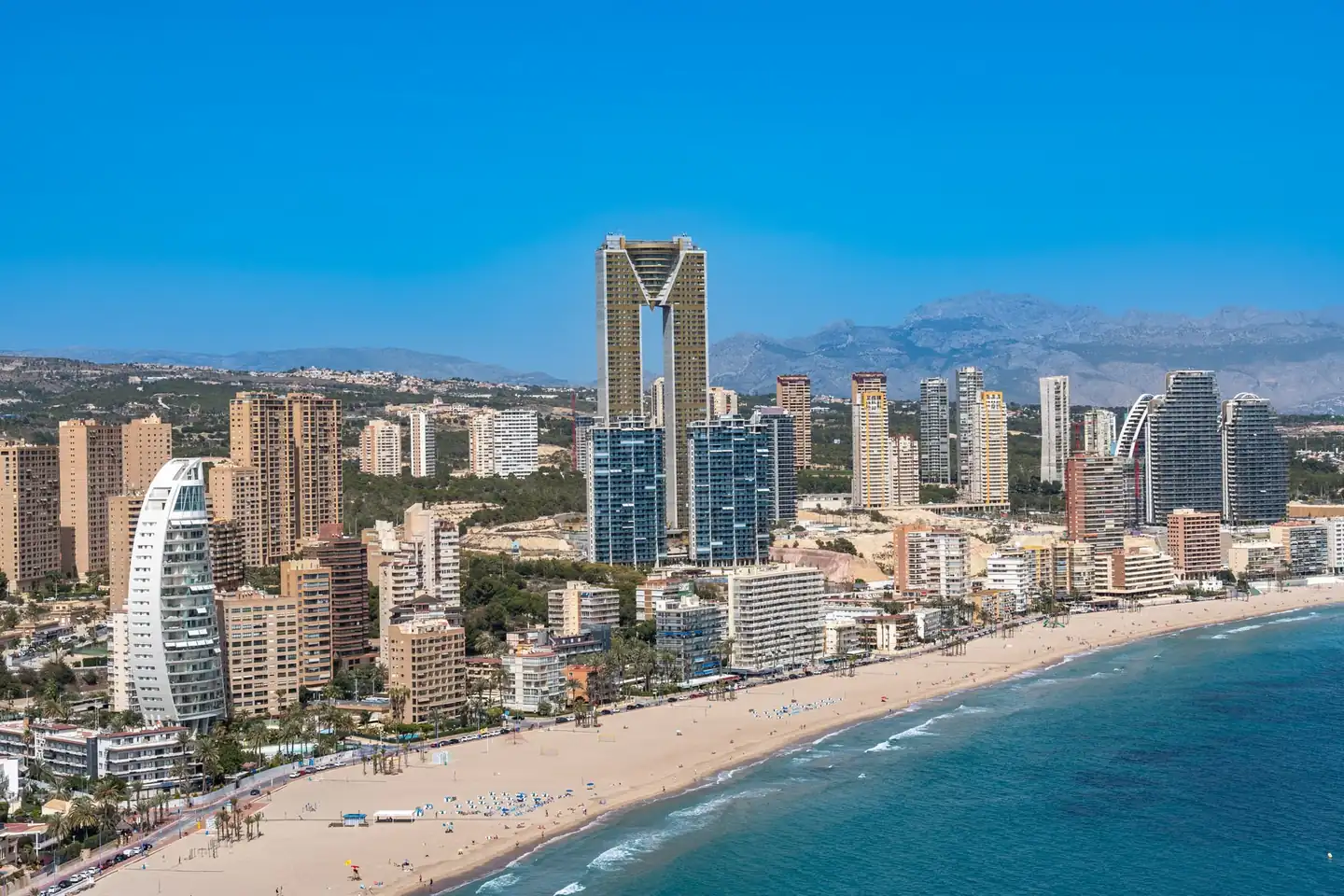
Benidorm Half 2026 arrives on the calendar with an unusual mix on Spanish asphalt: sport, skyline and an afternoon schedule that completely changes the way the race is read. The event is set for Saturday, November 21, 2026, with the 10K starting at 17:00 and the half marathon at 18:00, in a city that has turned its coastline into a showcase of skyscrapers, light and sports tourism.
The race takes place in Benidorm, Alicante, with two official distances, 10 kilometers and 21.1 kilometers, and an organization that stands out for its scenic approach: certified course, passage through the historic center and the seafront promenade, musical atmosphere and a finish that happens already at night, under the city lights. For anyone looking for an event with character, this race offers a postcard that is hard to confuse with any other.
A race that makes the most of Benidorm’s most recognizable side
Benidorm has lived for decades with a very marked urban identity. Its wide beaches, the line of hotels and the density of tall buildings have made the city an icon of coastal tourism, but also a peculiar setting for running. The Benidorm Half takes advantage of that image precisely: an urban circuit, a coastline open to the Mediterranean and a finish that coincides with sunset, when the temperature is usually kinder and the promenade takes on an almost studio-like lighting.
That use of the landscape is not decorative. In a race like this, geography matters as much as the clock. The wide avenues, the continuity of the route and the presence of the public help sustain the pace, while the urban center and the seafront provide visual stimulus. The race has established itself as an event that is not only run, but seen as you go, something increasingly valued by runners who travel to compete, but also to live the full experience.
The appeal is not limited to the postcard. Benidorm has already shown its ability to host major sporting events and handle a high volume of participants in a very concentrated setting. In this race, that logistics translates into a recognizable format, with a large service area, organized bib pickup and a hotel environment that makes the stay easier. The result is an urban race with a festival feel, but without losing the serious side of a certified event.
Timetables, distances and the rhythm of a different afternoon
The evening schedule is one of the event’s strongest hallmarks. The 10K starts at 17:00 and the half marathon at 18:00, a setup that forces you to think about the day differently. It is not about getting up early to run and being back home before lunch, but about managing hours of waiting, pre-race nutrition and warm-up with a wider margin, something that changes the usual rhythm of many popular races.
In practical terms, that choice has clear advantages. November afternoon in Benidorm is usually much more pleasant than the full heat of the Mediterranean summer, and the schedule helps reduce exposure to high temperatures. In addition, running at sunset adds an almost cinematic dimension: the runner moves through the city as the sky changes color and, in some sections, finishes already with the urban lights on. It is not just an aesthetic matter; the solar clock also changes the perception of effort.
The two distances allow for different participant profiles. The 10K usually attracts runners looking for speed, a time, or an intense but short experience, while the half marathon brings together those who want a longer challenge without making the leap to the full marathon. In both cases, the route speaks the same urban and coastal language, so the difference is not so much in the landscape as in the relationship between the runner and time.
Certified course and a city that reveals itself as you run
The organization emphasizes that there are two courses certified by the Royal Spanish Athletics Federation, an important detail for those looking for reliable distance references and, above all, an essential condition if the goal is to compete with ambition or chase a solid time. Certification provides technical security: the route meets the required criteria and reduces the uncertainty that sometimes comes with more recreational urban races.
The route passes through very recognizable parts of the city: the historic center, the seafront promenade and the skyline of skyscrapers. That combination sums up much of what Benidorm represents in the collective imagination. There is no monumental continuity in the style of other Mediterranean capitals; instead, there is a layering of urban strata, with older streets, wide avenues and a hotel front that acts almost like a vertical wall. Running there is moving through a city designed to be seen from below and from afar.
One of the elements most often mentioned by the organization is the five-kilometer coastline, a stretch that allows the sea to remain a reference for much of the effort. In a half marathon, that presence works like a visual metronome. The sea does not speed you up or slow you down, but it orders the mind. And in an asphalt race, where the body tends to negotiate with fatigue, that order matters almost as much as the aid stations.
The route also feeds a very specific kind of race: one that alternates wide stretches with lively sections and points of greater urban density. That alternation avoids the feeling of a loop and keeps a clear narrative. The runner does not enter a closed circuit; they move through a living space, with hotels, avenues and promenades that are part of the city’s everyday landscape. The city does not hide; it becomes part of the bib.
Night atmosphere, music and a very measured staging
The Benidorm Half has also been built around an idea of spectacle. Talking about spectacle, in this context, does not mean frivolity, but a carefully crafted staging: striking lighting, start-line animation, music points and a finish line that feels almost like a small urban stage. That festive layer helps set the race apart from other more sober half marathons, where the spotlight falls almost entirely on individual effort.
The appeal for international runners has a lot to do with that. The race blends competition and holiday atmosphere, a formula that finds fertile ground in Benidorm thanks to its hotel offer, manageable size and reputation as a very accessible destination. According to the organization itself, more than half of the runners are international, which reinforces the cosmopolitan profile of the event and its ability to attract a broad audience.
There is also a social dimension. The race brings together runners traveling in groups, couples, clubs and participants looking for a different experience without giving up organizational reliability. In that sense, the runner is not just buying an entry: they enter a city ritual, with bib pickup, photo service, merchandising and an environment that extends the race beyond the official time. It is no coincidence that the organization insists the experience does not end when crossing the finish line.
Prices, deadlines and useful details for organizing registration
The 2026 edition comes with tiered prices already defined in the event’s public information. The 10K is listed at 28 euros and the half marathon at 35 euros within the range shown by the organization and registration distributors. On the RockTheSport platform, amounts of 28 euros for 10K and 35 euros for 21K are also listed, which matches the published price offer for the edition.
Registration opened on January 15, 2026 and the closing date is listed as November 21, 2026 at 23:59 in the registration information published by RockTheSport. World’s Marathons, on the other hand, indicates a registration deadline of November 15, so in practice it is worth understanding that availability may vary depending on the platform and bib status. In this type of event, the sales calendar is not always identical across all channels.
There are also some relevant logistical details. Bib and race bag pickup is located at Plaza de SS. MM. los Reyes de España, with hours on November 20 from 9:00 to 20:00 and November 21 from 9:00 to 16:00. The start listed in the race sheet is on Avinguda de la Comunitat Valenciana and the finish at Plaza de SS. MM. Los Reyes de España. These are details that seem minor until the date gets closer and they start to organize the whole day.
The change and refund policy is also worth keeping in mind. The organization allows refunds to be requested before November 2 with a medical certificate, deducting a 3-euro processing fee. Bib transfer and distance change share the same November 2 deadline, while T-shirt size changes are accepted until October 1. These are specific deadlines and, therefore, useful for anyone planning ahead.
Runner services and event profile
The race sheet shows a broad service package, closer to that of a major international event than a conventional local race. It includes a finisher medal, T-shirt, race bag, digital certificate, timing chip, aid stations, medical assistance, bag drop, showers, changing rooms, expo access, accident insurance, photography, video and other elements associated with the participant’s full experience.
That accumulation of services responds to a runner profile that is no longer looking for just a bib. In many urban races, perceived quality depends as much on timing accuracy as on how easy it is to move before and after the effort. Here, the environment comes into play: Benidorm has a wide hotel infrastructure, convenient connections and a restaurant offer capable of absorbing the flow of visitors that a race of this size leaves behind. Logistics weighs almost as much as the stride.
The event also uses a multilingual tone in several of its animations and communications, something consistent with its high foreign participation. That international dimension is not a decoration, but part of the race’s DNA. In a city where tourism is a structural industry, a race of this kind fits naturally. The local runner lives alongside the sports visitor, and both find a city used to operating in several registers at once.
In addition, the event’s own presentation uses a language that mixes performance and experience: sunset, stars, animation, skyline. In journalistic terms, that draws a race that is not explained only by the number of kilometers, but by the context surrounding them. The Benidorm Half has understood well that, in today’s calendar, many races compete not only on technical quality, but on memory. And memory is made with sharp images.
Benidorm as a sports and tourist setting
The city did not reach this position by chance. Benidorm became established as a major tourist destination through the hotel development of the 20th century, and its urban planning ended up becoming a brand in itself. For the runner, that translates into wide avenues, a very recognizable seafront and a geometry that makes it easier for thousands of people to move around without the city seeming overwhelmed. That relative order is a competitive advantage for any major urban race.
There is also a climatic component that helps. November in Benidorm usually offers milder temperatures than much of inland Spain, and that favors both those looking to compete and those who prefer to run with less thermal stress. It is not a minor detail in a half marathon at sunset. The weather becomes part of the strategy, not just a background detail.
At the same time, the city’s tourist profile sustains interest in the event throughout the weekend. For many participants, the race is the centerpiece of a short getaway; for others, the main reason for a sports trip. That dual condition explains why the race connects so well with runners traveling from outside the province and with foreigners who find in Benidorm a singular mix of accessibility, coast and atmosphere. Not every city can turn a half marathon into a postcard that sells itself.
A race that brings together times, travel and urban storytelling
The Benidorm Half works because it does not limit itself to offering kilometers. It offers a story: that of a city that lights up at sunset, that of a race run with the sea on one side and the buildings on the other, that of a runner who reaches the finish already at night and with the feeling of having taken part in something bigger than a simple competition. That combination of elements explains its ability to attract both those chasing a time and those looking for a memorable experience.
The combination of 10K and half marathon, together with a very recognizable urban setting, gives the event a clear personality within the national calendar. It does not need to disguise itself as an extreme adventure or an elite gathering. Its strength lies elsewhere: in the mix of certified race, iconic city and carefully produced event. And in a market as saturated as popular running, that mix carries real weight.
The 2026 edition also arrives with a clearly defined time frame, known prices and a consolidated participation structure. That degree of certainty is valuable for the runner, but also for the city itself, which uses the race as a sports and tourist showcase. Benidorm was already a symbol of the most visible Mediterranean; with this race, it adds another layer to its identity. The avenue, the beach and the finish line are linked in a single sequence, as if the city had been designed so the race could finish drawing it.
Benidorm Half is not just another half marathon on the autumn calendar. It is a race that turns the afternoon into a stage, the asphalt into a narrative line and the finish line into an image that is hard to forget. For the runner, that may be the real added value: heading out to run knowing that the city, for once, is running a little with you.
Where to stay in Benidorm
Hotels available 19–22 November 2026.
Affiliate links: if you book through this map we earn a commission, at no extra cost to you.



Reebok runs large or small: a real fit guide

Hoka Challenger ATR 7 GTX: complete review of the all-terrain shoe

How to clean white sneakers without ruining them

Altus Pirineos 40-liter backpack: analysis, use, and key points

20,000 mm waterproof jacket for men: key points to get it right

Under Armour HOVR Sonic 6: complete review of the shoe

incline treadmills: guide to choosing better

Achilles tendonitis: real recovery time

Pain in the Achilles heel: causes, signs, and relief

What to take for calf pain: real relief and when to worry

 Races3 months ago
Valencia Half Marathon 2026: date and registration

 Reviews and Comparisons4 months ago
Asics Gel-Roadmiles 3 for men: review and current price

 Races3 months ago
Valencia Marathon 2026: entry, ballot and course

 Reviews and Comparisons4 months ago
Asics Gel Sonoma 8 Gore-Tex: complete analysis for trail and rain
- Sneakers3 months ago
Saucony Endorphin Pro 4: full review and verdict

 News5 months ago
Strava API 2026: what changes for clubs, challenges and runner apps?

 Reviews and Comparisons5 months ago
Nike Alphafly 3: opinions, sensations, and real key points

 Reviews and Comparisons4 months ago
Under Armour running shoes review 2025-2026: models and key features

 Sports Equipment4 months ago
Shoe sizes in cm: a clear guide to getting the right fit for your footwear
- Sneakers4 months ago
Adidas Adizero Boston 13 for men: review and verdict
- Sneakers3 months ago
Neutral running shoes with lots of cushioning: the best of 2026

 News4 months ago
Where is the Hoka brand from and why was it born in France