Races
Coruña21: keys to the fastest half marathon in A Coruña
The Coruña race adds a record number of registered runners, nine pacers, and a reinforced bib number system.

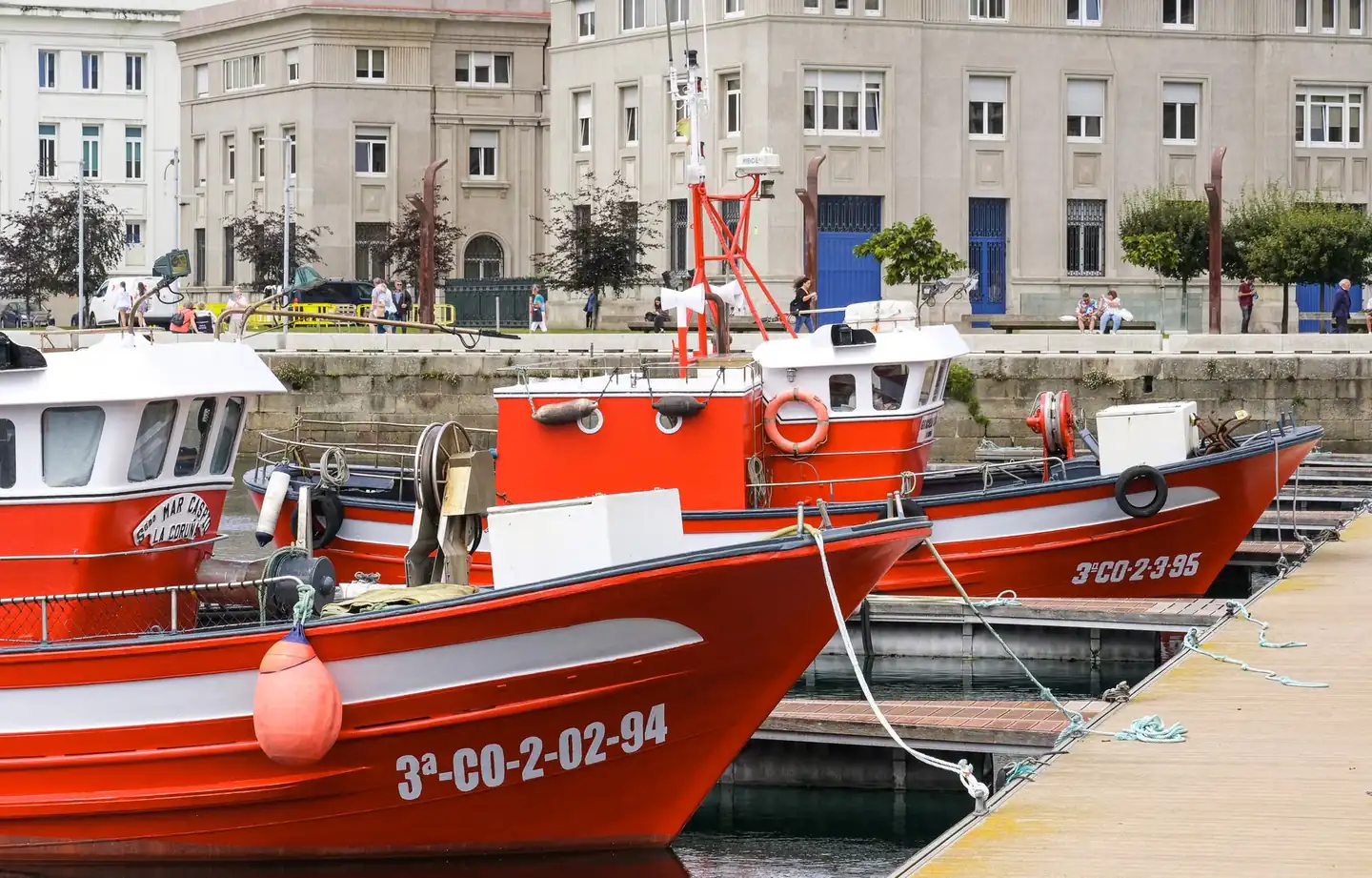
Coruña21 reaches its eighteenth edition with a very clear pulse: to grow without losing its profile as an urban, fast race, very closely tied to the city’s athletic calendar. The event on March 1, 2026 will bring together 3,000 people in the half marathon and another 2,000 in the 5K, a historic cap that confirms the pull of a race that has already earned its own place on the Spanish running map.
The most striking figure is not just the number of bibs handed out, but the structure around it: nine pacers to help those chasing a time, an expanded bib pickup, and a course that concentrates the tension of a big athletic morning into just a few hours. In a city used to looking out to sea, the race once again draws a familiar and effective scene: pace, a range of goals, and a start that brings together ambition, nerves, and strategy.
A half marathon with a taste for fast times
The 2026 edition confirms that the race is not sustained by mass participation alone. Its main appeal lies in the kind of experience it offers: a certified course, a central start, and a setting that favors sustained efforts. The runner who simply wants to finish finds a well-organized event; the one aiming to go faster, on the other hand, finds a particularly rewarding ground to test themselves.
That logic fits the nine pacers announced by the organization. They are not a logistical ornament or a showcase photo. They work as pace references for specific goals and allow many participants not to run blind in the stretches where it is easiest to blow up. There will be groups for 1h20, 1h25, 1h30, 1h35, 1h40, 1h45 and 1h50, a wide range that covers everything from very demanding paces to more cautious finishing marks.
That range says a lot about the race’s personality. Coruña21 is not reserved for a closed elite, but neither does it dissolve into a pure mix of profiles. It seeks a rather uncommon balance: to be a mass race and, at the same time, a race that is genuinely useful for competing. In practice, that means starts with different ambitions sharing the asphalt, each with its own rhythm and its own small inner map of calculation and endurance.
The organization fine-tunes the setup before Sunday
Bib, shirt, and runner’s bag pickup will be concentrated from Wednesday the 25th on the fifth floor of El Corte Inglés on Ramón y Cajal street. The operation runs on Wednesday from 5:00 p.m. to 9:30 p.m. and, starting Thursday the 26th, from 10:00 a.m. to 9:30 p.m. nonstop until Saturday the 28th. The extension compared with previous editions responds to a predictable demand and to a simple reality: when a race exceeds 5,000 registered runners across its two distances, any prior friction multiplies.
That logistical reinforcement matters more than it may seem. A smooth pickup reduces queues, nerves, and unnecessary trips on the eve of a race in which many people arrive from outside the city or fit the start around tight family and work schedules. The gesture of going through a single, clearly identified point with broad opening hours not only organizes the participant’s morning; it also conveys a sense of control that is later felt in the atmosphere on Sunday.
The sponsorship of El Corte Inglés and the involvement of the Coruña brand The Cobardes are part of that same machinery. In races of this size, success does not depend on a single front, but on a sum of small operations: bibs, signage, schedules, aid stations, technical support, and clear communication. When all of that fits together, the race looks simple from the outside. But that apparent simplicity is usually the result of many invisible decisions.
Nine pacers and a shared language of paces
The pacer figure is often explained with a comfortable word: help. But in a half marathon with so much participant density, their role goes far beyond setting a pace. They organize the group, stabilize expectations, and provide a realistic reference in a sport where self-deception appears easily in the first kilometers. The body, when the start is fresh and adrenaline is pulling, lies quite freely.
That is why the time distribution has practical value. Alberto Moris will lead the 1h20 group; Borja Costa, a repeat long-distance pacer after doing so in the latest C10 as well, will lead the 1h25 group; Rubén Sánchez, 1h30; Borja Lage, 1h35; Lucía Fariña and Roi Barros, 1h40; Patricia Martínez and José Manuel García, 1h45; and Carmen Lozano, 1h50. Each of those references defines a small corridor of air, a way of moving within the pack without losing control of the effort.
At heart, pacers make visible a very deep truth in running: running is not always about going faster, but about going better in rhythm. For many participants, following a flag with a clear time mark avoids the swings that cost seconds and, often, minutes. For others, it simply serves as a psychological beacon. In both cases, the race gains precision without losing humanity.
Start at the Obelisk, a symbolic center to measure the city’s pulse
The start will be located at the Obelisk, in Cantón Grande, one of those places where the city seems compressed into a single postcard. That is no minor detail. Starting from the urban heart concentrates the crowd, makes the course easier to read, and turns the race into a scene that is easily recognizable for runners and companions alike. There is no need to explain too much where the race begins: just look at the starting point.
The city also provides a very particular backdrop. A Coruña combines a maritime frontage, open stretches, and an urban density that leaves little room for bland scenery. Even for those racing with the clock ahead of them, there is a visual component that slips in uninvited: the Atlantic air, the proximity of the port, the murmur of the coast, and that feeling of a race set between concrete and salt.
The cutoff will be set 2 hours and 30 minutes after the start, with an intermediate split of 1 hour and 15 minutes for the 10K. These are references that set the real script of the race and force you not to improvise too much. In a half marathon of this kind, the clock is not decoration; it is the true referee. And that limit, far from being an obstacle, helps organize the race for everyone.
The 5K completes a morning designed for different audiences
The big attendance novelty is not only in the half marathon. The 5K has also reached its historic ceiling, with 2,000 registered runners, which reinforces the day’s dual character. Coruña21 is no longer just a half marathon; it is also an entry point for those who want to experience the atmosphere without taking on the long distance, for those returning after a break, or for those approaching the asphalt with a shorter, more manageable goal.
The coexistence of both distances helps the morning have several layers of reading. In the same day, endurance strategy, intermediate experience, and the simple desire to be part of a big event all coexist. That mix does not translate into confusion, but into breadth. The city offers a single event, but each participant interprets it differently, with their own scale of effort and their own relationship with the clock.
There is also an interesting sporting reading: when a race grows like this, the ecosystem around it strengthens. More people on the start line usually means more visibility for popular athletics, more participation habits, and greater continuity between editions. That is no small thing in a calendar where many races struggle to maintain identity and attendance at the same time.
A race that fits the geography and character of A Coruña
The city has always had a special relationship with urban racing. Its terrain is gentle in several areas, its network of open spaces allows for a very visual experience, and the Atlantic wind adds that touch of character runners recognize right away. The Coruña setting rewards steady legs and punishes irregular profiles less than other courses, which explains part of the event’s appeal for those chasing a time.
There is also a very local symbolic dimension. A Coruña understands popular sport as part of its urban life, not as an isolated event. Races become part of the city, intersect with its commercial and social activity, and find an audience that already knows how to read the language of paces, bibs, and aid stations. That shared knowledge raises the tone of the morning, even for those who are not competing.
The temperature in early March usually plays a reasonably favorable role for the race, far from the rigors of heat and still before the harsher depths of winter. There is no guarantee of kind weather in an Atlantic city, but there is a more likely window for running with a sense of freshness. In a half marathon, that detail can make the difference between holding a progression or fading in the second half.
Record registrations and a sign of maturity for popular athletics
Reaching 3,000 registered runners in the half marathon is not just a round number. It is a sign of organizational maturity and runner confidence. Participant loyalty is built over years of predictability: clear schedules, useful information, stable service, and an experience that does not punish more than necessary. When that base works, word of mouth does the rest.
The fact that the race has broken its historic registration record also says something about the state of running in Spain. Demand for well-organized races remains high, but runners are more demanding than before. They look for measurable courses, clean logistics, and an honest relationship between price, experience, and services. Coruña21 seems to have understood that equation well and has taken it into a path of sustained growth.
It is worth not reading that record as a simple burst of popularity. Behind it lies patient construction: a race that has been refining its identity, that has known how to make room for different performance levels, and that has turned the half marathon into a sporting product with internal coherence. That coherence, in popular sport, is worth almost as much as the spectacle.
What this edition leaves on the Galician running map
The 2026 edition leaves a fairly clear idea: Coruña21 now operates as a serious reference on the Galician calendar and not as a secondary event. Its ability to attract 5,000 participants across two distances, organize an expanded bib pickup, and sustain a broad pacer offering places it in a strong position within the urban racing circuit of the northwest.
It also leaves a simpler and more useful lesson. The races that endure are not necessarily the loudest or the ones that promise grandiose experiences, but those that solve the basics well: a clear start, well-marked paces, time control, pre-race services, and a city that supports without getting in the way. On that ground, the Coruña race has found a formula that works and that, for now, keeps growing.
Sunday, March 1 will once again be associated with a very recognizable image: hundreds of runners starting from the center, with the sea on one side and the effort ahead. In races like this, the city does not just host the event; the event gives the city back a compact version of itself, faster, more orderly, and for a few hours entirely taken over by the passage of those who run.
You may also like: Carballo 2026 10K: date, course, registration, and key details.



Reebok runs large or small: a real fit guide

Hoka Challenger ATR 7 GTX: complete review of the all-terrain shoe

How to clean white sneakers without ruining them

Altus Pirineos 40-liter backpack: analysis, use, and key points

20,000 mm waterproof jacket for men: key points to get it right

Under Armour HOVR Sonic 6: complete review of the shoe

incline treadmills: guide to choosing better

Achilles tendonitis: real recovery time

Pain in the Achilles heel: causes, signs, and relief

What to take for calf pain: real relief and when to worry

 Races3 months ago
Valencia Half Marathon 2026: date and registration

 Reviews and Comparisons4 months ago
Asics Gel-Roadmiles 3 for men: review and current price

 Races3 months ago
Valencia Marathon 2026: entry, ballot and course

 Reviews and Comparisons4 months ago
Asics Gel Sonoma 8 Gore-Tex: complete analysis for trail and rain
- Sneakers3 months ago
Saucony Endorphin Pro 4: full review and verdict

 News5 months ago
Strava API 2026: what changes for clubs, challenges and runner apps?

 Reviews and Comparisons5 months ago
Nike Alphafly 3: opinions, sensations, and real key points

 Reviews and Comparisons4 months ago
Under Armour running shoes review 2025-2026: models and key features

 Sports Equipment4 months ago
Shoe sizes in cm: a clear guide to getting the right fit for your footwear
- Sneakers4 months ago
Adidas Adizero Boston 13 for men: review and verdict
- Sneakers3 months ago
Neutral running shoes with lots of cushioning: the best of 2026

 News4 months ago
Where is the Hoka brand from and why was it born in France