Races
EcoRun Environmental Race: date, route, and key details
EcoRun brings together sport, sustainability, and a popular atmosphere in Madrid, with distances for different profiles.

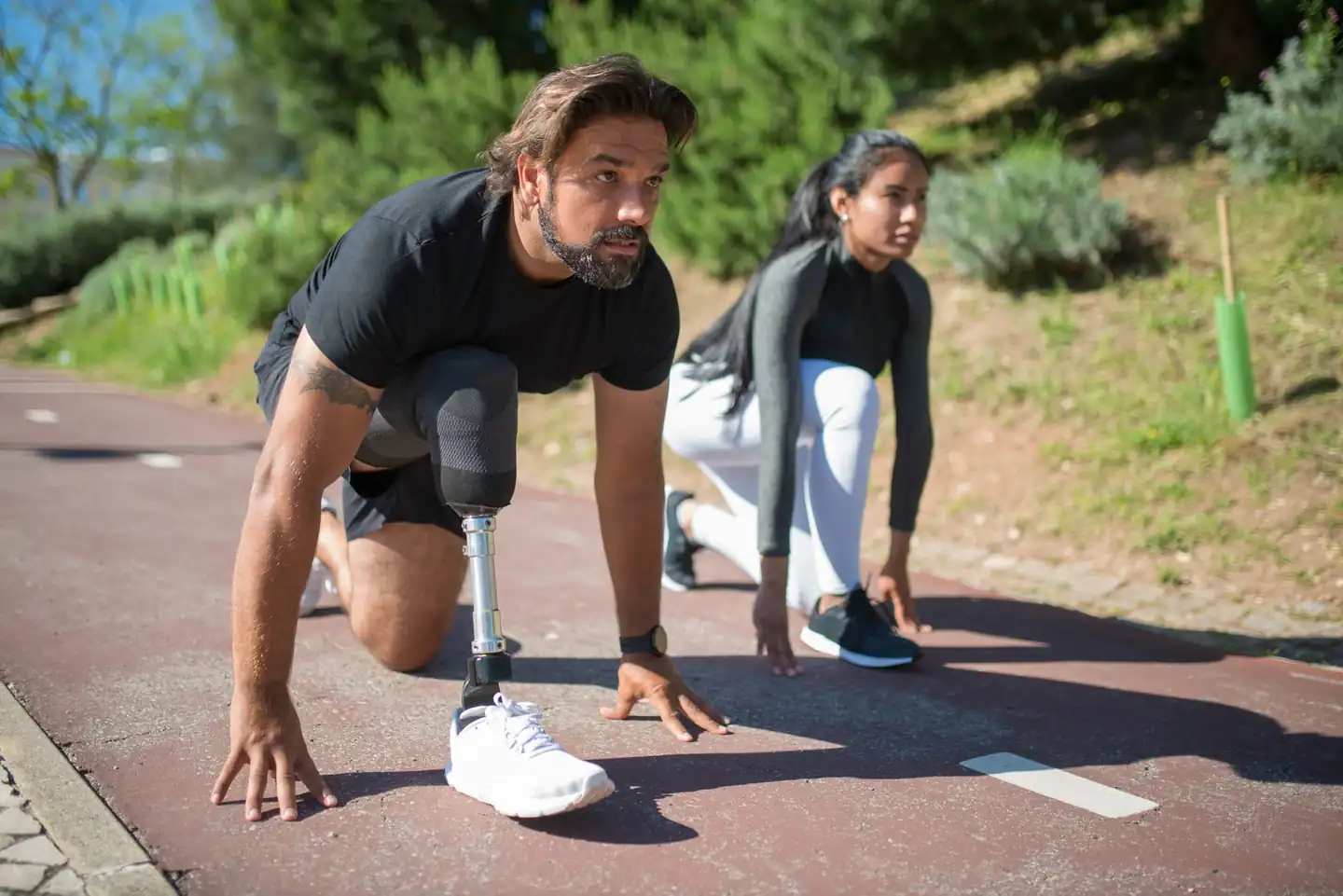
The EcoRun Environmental Race has established itself as one of the most symbolically significant popular events on the Madrid calendar. It was born as a sporting event linked to World Environment Day and, over the years, has ended up becoming a showcase for citizen participation, solidarity, and environmental outreach right in the heart of the capital.
Its appeal lies not only in running, but in what it represents: a festive, open, and accessible day in which regular runners, families, and participants drawn by environmental commitment or sporting curiosity all come together. Casa de Campo, beside the lake, also provides a recognizable, green setting closely tied to Madrid’s runner imagination.
A popular race with an environmental identity
EcoRun is not an ordinary race. Its identity is marked by its connection to June 5, World Environment Day, and by a narrative that combines physical exercise and awareness-raising. That intersection of sport and social cause has given it a distinct place on Spain’s popular racing map, where many events compete on bib numbers, course profile, or atmosphere, but few build such an explicit story around sustainability.
For years, the organizers have maintained a simple and effective idea: to turn a morning of running into a collective action with a message. That is why the race has, in different editions, surpassed 2,000 participants in Madrid, a notable figure for an event of this kind. It is neither an elite competition nor a major urban marathon, but rather a grassroots event designed to attract support without requiring advanced technical preparation.
The solidarity dimension also matters. In different editions, the funds have been allocated to projects promoted by Spanish environmental NGOs, and that charitable layer reinforces the event’s appeal beyond the stopwatch. For many runners, the bib is not just access to a race; it is a way to support a cause through a concrete and recognizable action.
The route in Casa de Campo and the role of the lake
Casa de Campo works as both a natural and logistical setting. Its openness, its paths, and its image as Madrid’s green lung fit the event’s message perfectly. The start and finish are located near the lake, an easy reference point and also one of the places most associated with recreational running in the city.
That setting helps the race maintain a less grueling atmosphere than other urban courses. The landscape changes easily, among wooded areas, wide roads, and open stretches where the sound of asphalt blends with the park atmosphere. The race relies on that combination of nature and city, which in Madrid has a very special force, almost like a breather in the middle of metropolitan noise.
Popular routes are usually accessible, with distances that allow different profiles to find their place. The available information lists 1.5 km, 5 km, and 10 km, and other reference sources note that the 5 km and 1.5 km courses are designed for very broad audiences, while the 10 km includes a somewhat more demanding profile. That diversity explains part of the race’s success: it does not force you to choose between competing or simply taking part, because it accommodates both approaches.
In journalistic terms, the value of the course lies in its balance. It does not aim for mountainous toughness or the pure speed of a completely flat route; instead, it offers an intermediate layout, with enough elevation gain in the longer distance to add sporting interest without excluding those who run for pleasure. It is a recipe that works especially well in events with a family-friendly and open character.
Course & elevation Edition 2024
Per-kilometre table
| Km | Elevation | Grade |
|---|---|---|
| 1 | 691 m | 0.0 % |
| 2 | 675 m | -1.6 % |
| 3 | 665 m | -1.0 % |
| 4 | 666 m | 0.1 % |
| 5 | 662 m | -0.5 % |
| 6 | 668 m | 0.6 % |
| 7 | 650 m | -1.8 % |
| 8 | 667 m | 1.7 % |
| 9 | 688 m | 2.1 % |
| 10 | 687 m | -0.1 % |
Plan your pace on this course →
Route source: OpenRunner
Distances, profiles, and the type of runner best suited to it
The short distance is the most inclusive part. The 1.5 km option is presented as suitable for walking or running without pressure, making it a very useful entry point for those who want to experience the atmosphere without facing a prolonged effort. In many socially oriented races, this format serves a key function: it broadens participation and prevents the event from being reserved for trained runners only.
The 5 km race is probably the most versatile distance. It works for those seeking a measurable, dynamic experience, but also for those who want to participate without specific preparation. It is the measure that best captures EcoRun’s spirit: enough distance to feel that you have run, but without the psychological barrier that a 10 km can sometimes impose on less experienced runners.
The 10 km adds another layer of interest. That is where you find the regular popular runner, the one who wants to push, control pace, or chase an honest time in a friendly setting. The profile described in several editions includes elevation gain, which usually translates into a more strategic and less flat effort, especially in a race that is not solely focused on speed. It is not a race for elite showmanship, but for those who enjoy reading the course and managing their energy.
There is also an important detail to contextualize the event: participation is usually open to both licensed and unlicensed runners, with registration available to people of different ages depending on the distance. That openness fits the race’s educational character and the image of an event that separates runners less by level than by the desire to share a morning of sport with an ecological backdrop.
Registration, services, and what the bib usually includes
Registration has historically been managed online, through the channels provided by the organizers. In the sources consulted, the price appears to vary depending on the period, with a reference figure of around 12.60 euros for competitive races in some recent editions. This tiered pricing system is common in popular races and usually rewards early sign-up, although the exact amount depends on each event.
The bib usually includes elements that are very familiar in this type of race: a commemorative T-shirt, accident insurance, refreshments, and a bag check or cloakroom service. In certain editions, it has also been noted that the technical garment was made with recycled materials, a detail consistent with the event’s philosophy and, above all, with a growing trend in the running sector toward lower-impact materials.
Bib collection has its own protocol. The reference documentation indicates that an ID document must be presented and that, if someone else collects it, they must provide signed authorization and a copy or photo of the runner’s ID. These are simple logistical steps, but important ones, because they prevent last-minute issues and keep a race running smoothly that, due to its popular profile, concentrates much of its activity in a short time window.
Medical service and baggage storage have also been mentioned in the start area. In a race with family participation and many unlicensed runners, these services are not decorative: they are part of the basic infrastructure that allows the event to run normally. When a race is presented as accessible, these details matter almost as much as the course itself.
An event that blends solidarity, sport, and the calendar
EcoRun functions as part of the June calendar with a significance that goes beyond running. Its alignment with World Environment Day gives it media continuity and makes it an easy activity to explain to the general public, even to those who do not usually follow popular races. The narrative is clear: run, participate, and contribute to an environmental cause.
That story has been reinforced by institutional support and well-known figures in different editions. In previous years, the race has featured people linked to the environmental and sporting worlds, such as Fabián Roncero, as well as personalities from media and public administration. It is the kind of support that adds visibility, but also strengthens the image of an event with civic purpose rather than merely competitive intent.
Its impact in Madrid has been the most notable, although the EcoRun brand has also been associated with other Spanish cities at different times. The capital, however, remains the main center in terms of volume, location, and the symbolism of Casa de Campo as a great urban park. That is where the race finds its best setting: central enough to attract participation and natural enough to support its message.
In the current running landscape, where high-performance events, themed races, charity runs, and neighborhood popular races all coexist, EcoRun occupies a unique space. It does not aim to compete with a half marathon for prestige or with a major marathon for size. Its strength lies elsewhere: in making visible that a race can also serve to educate, raise funds, and mobilize thousands of people around a shared cause.
What it offers runners and why it still draws attention
EcoRun’s main contribution is its accessibility. It does not require complex preparation, does not impose an intimidating distance, and is not designed to exclude those who run infrequently or prefer walking. That range of profiles is one of its strongest assets, because it allows the experience to depend not only on performance. The result is a race with less pressure and more life around it.
For regular runners, it also offers a different way to interpret effort. The solidarity component softens the competitive atmosphere and makes the finishing time less important than in other races. That does not remove the desire to improve, but it does place it in the background. Instead of a finish line dominated by anxiety, EcoRun usually leaves a feeling more akin to a shared day out, with the lake in the background and the sense of having taken part in something that goes beyond a simple bib.
There is also symbolic value in the choice of location. Casa de Campo, with its paths, vegetation, and broad scale, acts almost like a reserve of air within the city. Running there in a race linked to the environment has an obvious, almost visual coherence: the message is expressed not only through posters or slogans, but through the setting itself.
That is why the EcoRun Environmental Race continues to attract interest year after year. Not because of the promise of a stratospheric record or extreme technical difficulty, but because of something harder to replicate: a balanced combination of cause, setting, and popular participation. In a calendar saturated with races, that kind of identity is what leaves a mark.
The imprint of a popular race with a message on the Spanish running map
EcoRun represents a very recognizable way of understanding running in Spain: popular sport, community focus, and the ability to connect with issues that go beyond the race itself. Its trajectory shows that an event does not need an elite profile to gain significance; it is enough to build a coherent proposal, well located and capable of creating meaning among those who start the race.
Madrid has provided the setting, Casa de Campo has provided the landscape, and World Environment Day has provided the narrative. The result is a race remembered for what it offers, but also for what it symbolizes. It does not make headlines for records or impossible times, but for keeping alive an event that brings together sport and awareness in a single morning.
In a calendar where transitional races abound, EcoRun endures thanks to its message and its simplicity. And that simplicity, properly understood, is one of the strongest forms of permanence. A bib, an emblematic park, a charitable goal, and a broad community are enough to explain why this race still has its own place among the capital’s popular events.



Reebok runs large or small: a real fit guide

Hoka Challenger ATR 7 GTX: complete review of the all-terrain shoe

How to clean white sneakers without ruining them

Altus Pirineos 40-liter backpack: analysis, use, and key points

20,000 mm waterproof jacket for men: key points to get it right

Under Armour HOVR Sonic 6: complete review of the shoe

incline treadmills: guide to choosing better

Achilles tendonitis: real recovery time

Pain in the Achilles heel: causes, signs, and relief

What to take for calf pain: real relief and when to worry

 Races3 months ago
Valencia Half Marathon 2026: date and registration

 Reviews and Comparisons4 months ago
Asics Gel-Roadmiles 3 for men: review and current price

 Races3 months ago
Valencia Marathon 2026: entry, ballot and course

 Reviews and Comparisons4 months ago
Asics Gel Sonoma 8 Gore-Tex: complete analysis for trail and rain
- Sneakers3 months ago
Saucony Endorphin Pro 4: full review and verdict

 News5 months ago
Strava API 2026: what changes for clubs, challenges and runner apps?

 Reviews and Comparisons5 months ago
Nike Alphafly 3: opinions, sensations, and real key points

 Reviews and Comparisons4 months ago
Under Armour running shoes review 2025-2026: models and key features

 Sports Equipment4 months ago
Shoe sizes in cm: a clear guide to getting the right fit for your footwear
- Sneakers4 months ago
Adidas Adizero Boston 13 for men: review and verdict
- Sneakers3 months ago
Neutral running shoes with lots of cushioning: the best of 2026

 News4 months ago
Where is the Hoka brand from and why was it born in France