Races
Jogja Marathon 2026: date, prices and categories
Yogyakarta repeats its big June event with four distances, official prices, and a route marked by Prambanan.

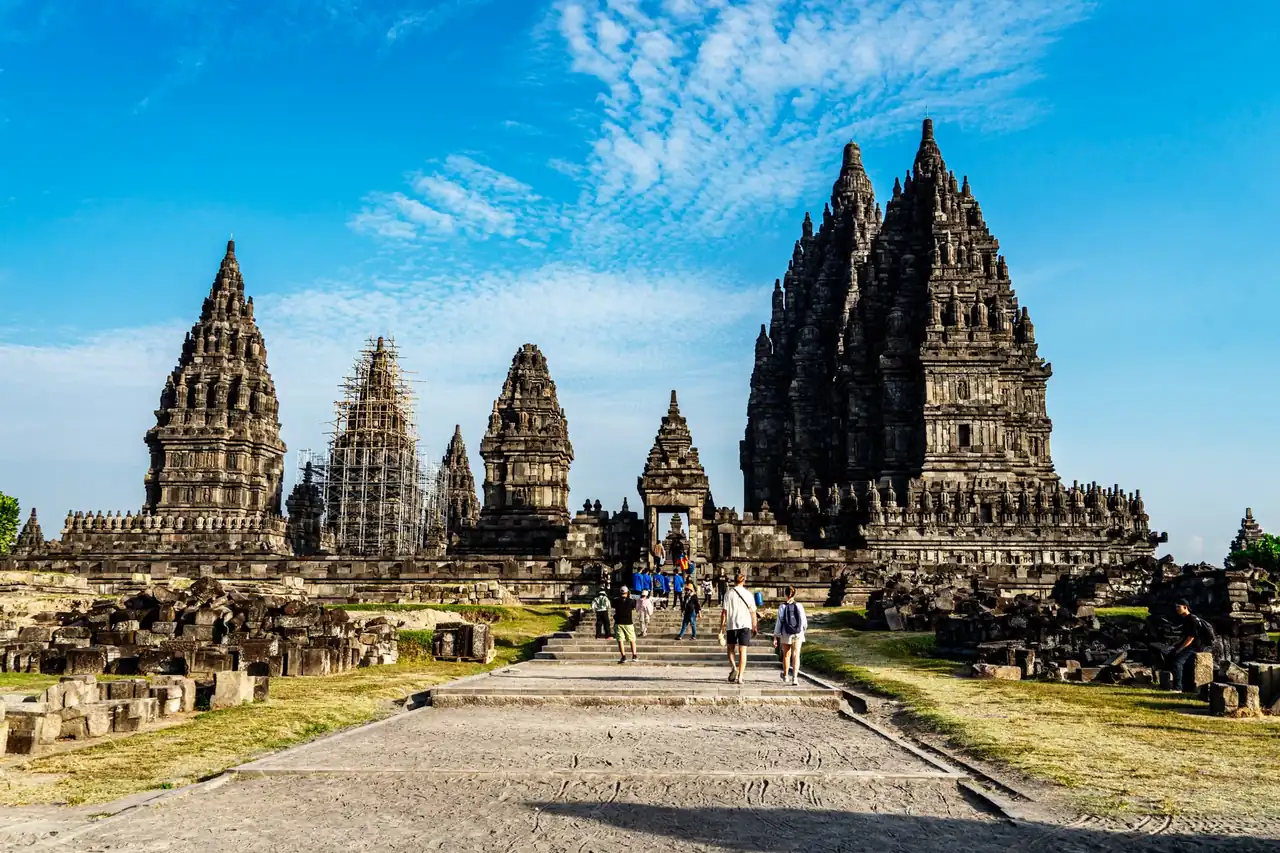
Mandiri Jogja Marathon 2026 once again puts Yogyakarta on the Asian running map with a proposal that blends competition, heritage, and sports tourism. This year’s edition will be held on June 21, 2026 in the surroundings of Prambanan Temple, with four official distances, already fixed prices, and a format that preserves the international pulse of an event that has gained prominence since its debut in 2017.
The appeal is not just about the stopwatch. The race is set against a recognizable landscape at first glance, with the Hindu temple as a backdrop and a start that forces runners to get up early, when the light is still dim and the air retains the freshness of the morning. That combination explains why the event has established itself as one of the most distinctive on the Indonesian calendar: it is not just a race, it is a moving postcard.
An event defined by Prambanan and by the idea of destination sport
Prambanan is not merely a backdrop here, but part of the event’s identity. The presence of the archaeological complex turns each edition into an experience that is immediately recognizable even for those who do not follow the international circuit regularly. The setting conveys an unusual mix of solemnity, spaciousness, and popular energy, a kind of open stage where the noise of the start coexists with the calm of a historic site.
Mandiri Jogja Marathon has successfully leveraged that added value to build a reputation broader than that of a simple half marathon or urban marathon. Yogyakarta also adds the tourism component, with its cuisine, short travel distances, and role as a gateway to one of Indonesia’s best-known cultural sites. This combination of factors makes the race a reference point for anyone looking for a race with a story, not just a distance.
The 2026 edition maintains that logic and strengthens it with an offering that does not exclude any type of runner. There is room for those chasing a personal best, for those who want to complete a demanding half marathon, and also for those who see the weekend as a sporty getaway. This broad appeal explains part of its growth: the race is not aimed at a single tribe, but at several layers of the same running ecosystem.
The official distances and what each one offers
The event features a marathon, half marathon, 10K, and 5K Fun Run, a combination that covers everyone from experienced runners to those approaching the event with a recreational goal. The structure is clear and quite useful for those comparing races: the longer distances preserve the competitive weight, while the 5K serves as an entry point and keeps the festive atmosphere of a major popular event.
In the marathon and half marathon, there are two categories each, Open and Closed, differentiated by the participant profile. In practice, this allows participation to be organized under a broader framework and makes room for both local runners and international visitors. The 10K is also divided into Open and Closed, while the 5K Fun Run remains a single, more accessible option.
The official distances are as follows: Marathon, Half Marathon, 10K, and 5K Fun Run. In standard equivalent terms, the marathon corresponds to 42.195 kilometers and the half marathon to 21.1 kilometers, while the 10K and 5K follow classic road race formats. That structure makes it easier for the event to fit different training phases and seasonal goals.
Official prices and what each registration includes
The 2026 fees are already set and place the race in a range from 450,000 Indonesian rupiah for the 5K to 1,200,000 rupiah for the Marathon Open. For runners, that information matters as much as the date, because it determines real access to the event and allows comparison with other races in the region. The difference between Open and Closed categories is also reflected in the price, something worth reading carefully before registering.
The Marathon Open costs Rp 1,200,000, and the Marathon Closed, Rp 1,000,000. In the half marathon, the Open is priced at Rp 900,000 and the Closed at Rp 800,000. The 10K Open is Rp 800,000, while the 10K Closed costs Rp 650,000. The 5K Fun Run is set at Rp 450,000.
The most complete packages include a BIB number, jersey, finisher medal, and finisher tee for the marathon and half marathon. For the 10K, the package includes the BIB number, jersey, and finisher medal, while the 5K adds the basic participation materials and the medal. In races like this, those elements are not just a detail: they are part of the start-line experience, the finisher photo, and the physical memory the participant takes home after crossing the finish line.
The prices are already stated with taxes and insurance included, although they do not include administrative fees. Insurance coverage is also mentioned under AXA Mandiri, with the exception of the 5K Fun Run for participants under 18. That kind of precision is important in a large race, because it makes clear in advance what is covered and reduces confusing interpretations during registration.
Timetables, starts, and a day that begins before dawn
The clock plays a central role in the Mandiri Jogja Marathon. The starts are scheduled very early to take advantage of the weather and to manage the flow of thousands of runners in an area very sensitive to movement. The marathon starts at 04:45 WIB and has a cut off time at 11:45 WIB, allowing seven hours to complete the course.
The Half Marathon starts at 05:15 WIB and has a limit of 09:15 WIB, four hours in total. The 10K begins at 06:00 WIB and closes at 08:00 WIB, while the 5K Fun Run starts at 06:15 WIB with one hour to complete it, until 07:15 WIB. These are schedules designed for a well-ordered dawn, not for an improvised race.
This early start is no coincidence. June marks the beginning of the dry season in Yogyakarta and, although conditions are usually more favorable than in other months, the morning is still the best time to run with less heat stress. Pre-race hydration and effort control are basic factors, especially in the longer distances, where starting in the dark or near-dark requires adapting to a different kind of race, more tactical and less visceral.
Registration and access: the role of Livin by Mandiri
Registration is handled exclusively through the Livin by Mandiri app, in the Sukha section. There are no other general registration channels, so access to the race depends on that digital environment. For runners, this means that it is not enough to follow the race poster or check a reference website: the process is completed within a specific platform and with very defined steps.
The procedure is simple in appearance: open the app, enter Sukha, locate the event, choose a category, fill in your details, and proceed to payment. The truly delicate part is not technical, but one of accuracy. Once registration is completed, the data cannot be changed—neither the category, nor the name, nor the T-shirt size. In a race with high demand, that detail matters because a small error can become a major inconvenience on race bib pickup day.
Payment can be made via Mandiri Virtual Account using funds from a Tabungan Mandiri account or with a Mandiri credit card, including an option for 0% financing for up to six months in certain cases. In addition, the organizers note that a single Livin by Mandiri account can only be used for one registration, a restriction worth keeping in mind before starting the process. In mass events, these rules help organize demand and prevent duplicate entries.
Travel packages and the ecosystem around the race
Mandiri Jogja Marathon 2026 is not limited to the race bib. The organizers have activated a broad package of combined options including accommodation, train travel, or flights, a formula that is increasingly common in large-scale races. This strategy strengthens the sports tourism profile and makes it easier for runners to turn participation into a full stay rather than a quick visit.
The hotel packages are distributed among different providers and offer two-night stays, breakfast, and transfers from the airport or station. There are also combinations with train travel from cities such as Jakarta, Bandung, and Surabaya in different classes, as well as an air option with round-trip flights between Jakarta and Yogyakarta. Prices start at Rp 1,704,750 for accommodation and rise to Rp 4,468,670 for the flight package, according to information published by the organizers and their partners.
This type of offering illustrates the event’s scale very well. It is no longer just a race being sold, but a complete experience covering logistics, mobility, and accommodation. For many people, that is decisive, because it reduces friction and makes participation easier to plan. In essence, the race behaves like a small weekend festival, with running as the core and the rest of the services orbiting around it.
What makes this race different within the regional calendar
The strength of the Mandiri Jogja Marathon lies in its combination of identity and competitive standard. It is not unusual to find races with good technical organization or a photogenic location. What is less common is to bring both together in the same event with such clear annual continuity. Here, the value of the place does not distract from the race: it enhances it. Running next to an iconic monument changes the perception of effort, as if each stride had a backdrop that amplifies the memory.
In addition, the event has cultivated the image of an international race with diverse participation, something visible in the Open and Closed structure and in the interest it generates beyond the Yogyakarta area. The chance to see runners of different profiles sharing the same start creates a less homogeneous and richer atmosphere. The result is a race that can attract those seeking a personal best, those chasing an experience, and those who simply want to be part of a great running day.
The organizers have also emphasized a cultural landscape narrative, with the slogan Jejak jadi cerita, an idea that fits the character of the race very well. Each edition aims to leave a mark that goes beyond the stopwatch. In a calendar crowded with similar events, that ability to tell a different story is a real asset. Often, runners remember the sound of the atmosphere, the haze at the start, and the silhouette of the temple more than the exact finishing time.
Access rules, safety, and details worth not overlooking
The organizers prohibit strollers and pets both in the Race Village and along the course. The rule may seem obvious in a major mass event, but it is worth emphasizing because it prevents logistical and safety issues. In spaces with concentrated runners, volunteers, families, and visitors, any object that obstructs passage ends up creating unnecessary risks.
It is also established that access and participation are governed by the rules of each category, with special attention to documentation and the match between registered details and the person entered. In bib-based events with insurance and start control, identity verification is not a minor formality but part of the normal operation of the event. That administrative layer, though not very visible, supports the overall order of a day that may seem simple from the outside but is quite complex underneath.
Another relevant detail is the minimum age for the 5K Fun Run, set at 13 years old. This kind of threshold helps define the participation profile more clearly and avoids confusion between a popular race and a family activity without a clear limit. At the same time, the existence of Open and Closed categories organizes registration with a criterion that seeks a balance between accessibility and competition.
What an edition like this leaves in a runner’s memory
A race like this is not measured only in minutes per kilometer. It is also measured by the way the place stays in memory. The asphalt, the early humidity, the runners moving in silence before dawn, and the silhouette of the temple in the background create an experience that is hard to replicate. Those who reach the finish line do not just earn a medal; they collect a whole scene.
Mandiri Jogja Marathon 2026 keeps that promise with a clear offering: a fixed date, known distances, public prices, and a visual setting that is hard to mistake. The event has earned its own place because it understands that contemporary running is no longer driven solely by personal records. It is also driven by destinations, context, and stories. Yogyakarta offers all of that with a naturalness that few cities can match.
In that sense, the race works like a well-built piece: early start, defined logistics, categories for different profiles, and a heritage setting that gives meaning to the effort. The combination needs no embellishment. One only has to see the sunrise falling over Prambanan to understand why this event returns, year after year, to occupy a prominent place on runners’ calendars.



Reebok runs large or small: a real fit guide

Hoka Challenger ATR 7 GTX: complete review of the all-terrain shoe

How to clean white sneakers without ruining them

Altus Pirineos 40-liter backpack: analysis, use, and key points

20,000 mm waterproof jacket for men: key points to get it right

Under Armour HOVR Sonic 6: complete review of the shoe

incline treadmills: guide to choosing better

Achilles tendonitis: real recovery time

Pain in the Achilles heel: causes, signs, and relief

What to take for calf pain: real relief and when to worry

 Races3 months ago
Valencia Half Marathon 2026: date and registration

 Reviews and Comparisons4 months ago
Asics Gel-Roadmiles 3 for men: review and current price

 Races3 months ago
Valencia Marathon 2026: entry, ballot and course

 Reviews and Comparisons4 months ago
Asics Gel Sonoma 8 Gore-Tex: complete analysis for trail and rain
- Sneakers3 months ago
Saucony Endorphin Pro 4: full review and verdict

 News5 months ago
Strava API 2026: what changes for clubs, challenges and runner apps?

 Reviews and Comparisons5 months ago
Nike Alphafly 3: opinions, sensations, and real key points

 Reviews and Comparisons4 months ago
Under Armour running shoes review 2025-2026: models and key features

 Sports Equipment4 months ago
Shoe sizes in cm: a clear guide to getting the right fit for your footwear
- Sneakers4 months ago
Adidas Adizero Boston 13 for men: review and verdict
- Sneakers3 months ago
Neutral running shoes with lots of cushioning: the best of 2026

 News4 months ago
Where is the Hoka brand from and why was it born in France