Races
Lagos de Covadonga Challenge 2027: routes, prices, and key details
Routes, prices, departure, and key details of the great Asturian cycling tour.

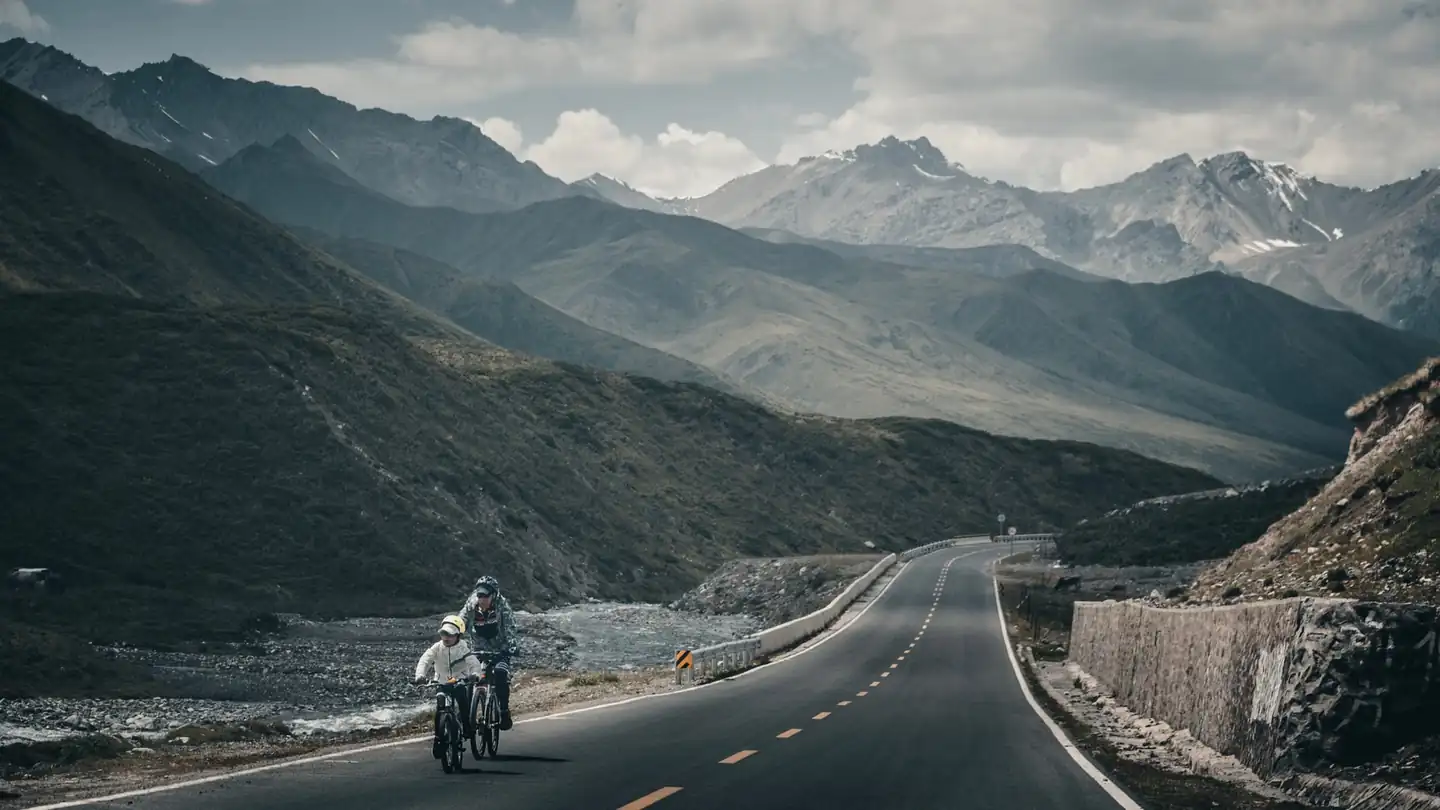
The Lagos de Covadonga Challenge keeps intact its status as one of the major events in Spanish cyclosportive riding: a mountain ride, demanding and full of character, that turns Cangas de Onís into the epicenter of a day marked by elevation gain, history, and roads open only to those who accept a legendary climb. The 2027 edition will take place in early June, with two well-defined options: 99 kilometers for the Medio Fondo and 111 kilometers for the Gran Fondo.
The practical information already outlines a very clearly defined event: start in Cangas de Onís, passage through landmarks in eastern Asturias such as Arriondas, Ribadesella, Nueva de Llanes, or Posada de Llanes, and two different finishes that separate those who prefer a hard but contained effort from those who want to crown the full ascent to the Lakes. The Gran Fondo accumulates 2,340 meters of positive elevation gain; the Medio Fondo, 1,280. In both cases, the ride remains faithful to a formula that blends scenery, cycling tradition, and climbs that force every pedal stroke to be measured.
A ride that weighs more for its name than for its distance
The fame of the Lagos de Covadonga Challenge is not explained by the kilometers alone. The main appeal lies in the context: a start in the heart of eastern Asturias, a route that crosses mountain and coastal landscapes, and a finish that refers to one of the most recognizable climbs in Spanish cycling. It is not just another ride on the map; it is a day that inherits part of the imagery of the Vuelta a España and brings it into the cyclosportive realm.
That is one of the features that sets it apart from other events: the route does not simply add climbs, but gradually builds tension. The early sections allow riders to settle into a rhythm on roads that alternate between valleys and small undulations, but the event slowly tightens the screws. For many participants, the experience truly begins when the first serious ramps appear and the terrain makes it clear there will be no respite until the end.
The surroundings are also part of the challenge. The Picos de Europa are not just scenery here, but a constant presence. The mountains are visible, hinted at in the road profile, and eventually impose themselves in the final meters. That is why this ride attracts both those seeking a fast time and those who want a long day out with a very clear emotional charge: riding across a landscape with a name of its own.
Two routes, two ways of testing the legs
The edition maintains two official distances and that duality explains much of its popularity. The Medio Fondo, at 99 kilometers and 1,280 meters of positive elevation gain, shares the same start as the longer route and concentrates its difficulty in the intermediate climbs. It is a demanding option, yes, but less punishing than the full course, which makes it a very reasonable alternative for those who want to experience the atmosphere of the ride without facing the final climb to the lakes.
The Gran Fondo, with 111 kilometers and 2,340 meters of positive elevation gain, is reserved for those willing to take the full package. The route remains very similar for much of the course, but changes identity after passing Covadonga. That is where the most memorable part begins: the road pitches upward toward a final ascent that leaves its mark, with the sensation that the route compresses and everything revolves around the last effort.
The difference between the two distances is not cosmetic. In the Medio Fondo, the finish is in Covadonga; in the Gran Fondo, the finish climbs to the Lakes, with that mountain finale that has given the event its prestige. The choice depends not only on fitness, but also on the kind of day each cyclist wants to experience. One offers managed difficulty; the other, a complete story of endurance and mountains.
The route, section by section, makes it clear where everything is decided
The start in Cangas de Onís sets the tone from the very first kilometer. It is a municipality closely associated with Asturian cycling and, moreover, a convenient starting point for connecting with the coast and the interior without giving up the mountain identity of the event. From there, the route leads to Arriondas at km 8, Ribadesella at km 23.5, and later to Nueva de Llanes and Posada de Llanes. That first block serves to organize the group and let each rider find their rhythm without burning themselves out too early.
The first truly important moment appears in Porrúa, at km 49.6, where there is a feed station placed at a carefully calculated point of relief. After that, the road tightens again in the timed section at km 52.8, before tackling Alto de La Tornería at km 58.8, a climb that reaches nearly 500 meters above sea level. It is one of those places where the body begins to negotiate with the mind, because the effort is no longer measured by speed, but by controlled survival.
The middle section gives no real rest. After the descent toward Puente Nuevo, where there is also a feed station, comes Alto de Riensena at km 75, another point that forces riders not to relax. From there, the route enters a phase of accumulated fatigue, with Soto de Cangas and La Riera as references before the finale. In the Medio Fondo, the finish is in Covadonga, at km 99; in the Gran Fondo, the big showdown is still ahead: the climb to the Lakes.
That design has a journalistic and sporting virtue: the difficulty does not appear all at once, but in layers. Participants accumulate fatigue almost without realizing it, as if the road were slowly narrowing the doorway until it forces the climb through sheer patience. That is why this ride is remembered both by those who finish it and by those who, years later, still talk about it in almost epic terms.
Registration, prices and deadlines: the practical detail that sets the agenda
Registration for the 2026 edition opened on November 12, and the published prices offer a clear reference for the event’s financial structure. For licensed cyclists, the fee with commemorative jersey is 79 euros until March 15. The option without jersey was set at 69 euros for licensed riders until May 25. Those without a license must add a mandatory one-day insurance policy valued at 14 euros.
The existence of two price windows and the option with jersey is no minor detail, because it reflects the symbolic importance that this ride has. The jersey has become a visible part of the experience, almost a material proof of having completed the day. But the underlying fact is simpler: the final cost depends on license status and kit choice, something worth checking in advance because the fees change according to the deadline.
The registration logic also helps explain the event. This is not an improvised race or a low-logistics start. There is a calendar, specific deadlines, mandatory insurance for non-licensed riders, and a system designed to handle a significant number of participants. That organization, typical of major rides, helps the event maintain its reputation as a serious date, with planning that looks after both safety and rider experience.
Bib collection, start time and race logistics
Bib collection is concentrated in Cangas de Onís, in the parking area located in front of the bus station, on Picos de Europa Street. For the 2026 edition, distribution was scheduled for June 5 and 6, between 4:30 p.m. and 9:30 p.m., and also on race day itself, from 6:00 a.m. to 7:30 a.m. The start was set for Saturday, June 6 at 8:00 a.m.
These are details that go beyond mere bureaucracy. In a ride with two routes, mountains, and long stretches of sustained effort, logistics shape the day from very early on. Arriving with time to spare, knowing the collection point, and having the time slot clear avoids unnecessary tension. In this type of event, queues and disorganization weigh more than they seem, because the cyclist already has enough to manage energy for what comes next.
The early start time also makes sporting sense. June in Asturias can offer plenty of daylight, but the organizers seek a comfortable window to complete the ride with time and safety margin. The morning start reduces exposure to heat and allows the final sections, precisely the hardest ones, to be tackled in somewhat more stable weather. In a race where the profile matters so much, every hour counts.
Why Covadonga carries so much weight in Spanish cycling
Covadonga is not just a stage finish; it is a cultural reference in cycling. Its symbolic weight comes from decades of history, its recurring presence in the Vuelta, and a geography that seems designed for sporting epic. The gradients, the high-mountain setting, and the aura of the sanctuary turn the climb into something more than a pass. It is a place where effort takes on an almost narrative dimension.
In the case of this ride, that historical weight is transferred into the cyclosportive sphere without losing intensity. The difference is that here it is not a professional duel or a TV broadcast, but an experience shared by hundreds or thousands of enthusiasts. That changes the tone, but not the merit. On the contrary: it makes the climb even more personal for many. Each rider battles their own rhythm, their own heart rate, and their own reserve of will.
In this context, the mountain acts as an honest judge. It rewards neither appearance nor fame, only the ability to sustain effort. That is why the Lagos de Covadonga Challenge keeps its appeal year after year. It promises scenery, yes, but above all it offers a very simple truth: on that kind of road, the body does not lie.
What each section contributes to the effort profile
Arriondas and Ribadesella serve to settle in, not to relax. The initial profile can give a false sense of control, especially for those who arrive overconfident because of the distance. However, the early kilometers have an important psychological effect: they allow riders to save energy while at the same time forcing them not to spend more than necessary. In events like this, knowing how to hold back is almost as valuable as knowing when to push.
The area around Nueva de Llanes, Posada de Llanes, and Porrúa introduces a more tactical setting. The group stretches out, visual references change, and the rider begins to feel that the day now depends less on freshness and more on mental endurance. On the La Tornería section, that feeling becomes physical. The climb is not just an obstacle, but a warning that the ride has left behind any trace of a Sunday outing.
Riensena and the surroundings of La Riera complete the transition toward the finish. They are the points that separate well-managed endurance from accumulated fatigue. And in the Gran Fondo, after Covadonga, the leap toward the Lakes turns the second half of the day into a test of patience. The road leaves no doubt: whoever gets there has done so by sustaining effort with a mix of cool head and solid legs.
The value of the jersey, the photo, and the memory of the next day
The commemorative jersey works as a closing item, not just simple merchandise. In a ride this recognizable, the garment takes on meaning because it identifies the edition, recalls the mountain passage, and leaves a visible mark in the participant’s wardrobe. The higher registration fee with jersey fits that logic: you are not just paying for fabric, but for a memory tied to a very specific day.
Images also matter. Event photos are not secondary in a race like this, because they help fix the personal story of the ride. The start in Cangas de Onís, the succession of villages, the climbs, and the arrival at the Lakes build a very powerful visual sequence. Anyone who looks back at those images is not just remembering a route; they are remembering the feeling of having pedaled inside a landscape that closes in around the rider until the mountains become the main stage.
That is a key part of the appeal of the Lagos de Covadonga Challenge. It does not just measure meters climbed. It also creates memory, and that explains why it remains one of the most followed cyclosportive events in Spain. The blend of real effort, powerful surroundings, and established organization keeps it in a league of its own, especially in a calendar as competitive as that of popular cycling.
A date that still speaks the language of great climbs
The Lagos de Covadonga Challenge preserves a formula that is very hard to replace: a well-known route, two clear distances, established logistics, and a finish that still has mythical status. In times when many rides resemble one another, this event maintains a precise identity. It is recognized for its landscape, its difficulty, and the way it turns a cyclosportive day into a challenge with a capital C.
The 2027 edition continues along that line with a proposal that remains very faithful to its history. Anyone heading to Cangas de Onís will find a true mountain ride, with concrete numbers, prices already defined in the reference edition, and a route that does not deceive anyone. There are the facts, yes, but also the reputation of a climb that has earned its place on the Spanish cycling map through elevation gain, patience, and scenery.
That is why interest does not fade. Because here everything is measured so that the experience has real weight: the early start, the passage through villages in eastern Asturias, the feed stations at key points, the option to choose between two routes, and the finish, always so recognizable. In the end, the success of the Lagos de Covadonga Challenge lies in something simple and difficult at the same time: continuing to offer a great day of cycling where the mountain does not decorate the effort, but defines it.



Reebok runs large or small: a real fit guide

Hoka Challenger ATR 7 GTX: complete review of the all-terrain shoe

How to clean white sneakers without ruining them

Altus Pirineos 40-liter backpack: analysis, use, and key points

20,000 mm waterproof jacket for men: key points to get it right

Under Armour HOVR Sonic 6: complete review of the shoe

incline treadmills: guide to choosing better

Achilles tendonitis: real recovery time

Pain in the Achilles heel: causes, signs, and relief

What to take for calf pain: real relief and when to worry

 Races3 months ago
Valencia Half Marathon 2026: date and registration

 Reviews and Comparisons4 months ago
Asics Gel-Roadmiles 3 for men: review and current price

 Races3 months ago
Valencia Marathon 2026: entry, ballot and course

 Reviews and Comparisons4 months ago
Asics Gel Sonoma 8 Gore-Tex: complete analysis for trail and rain
- Sneakers3 months ago
Saucony Endorphin Pro 4: full review and verdict

 News5 months ago
Strava API 2026: what changes for clubs, challenges and runner apps?

 Reviews and Comparisons5 months ago
Nike Alphafly 3: opinions, sensations, and real key points

 Reviews and Comparisons4 months ago
Under Armour running shoes review 2025-2026: models and key features
- Sneakers4 months ago
Adidas Adizero Boston 13 for men: review and verdict

 Sports Equipment4 months ago
Shoe sizes in cm: a clear guide to getting the right fit for your footwear
- Sneakers3 months ago
Neutral running shoes with lots of cushioning: the best of 2026

 News4 months ago
Where is the Hoka brand from and why was it born in France