Races
Mar Menor Backyard Ultra 2027: date and location
A new start every hour, a coastal course and a race that ends only when one runner remains.

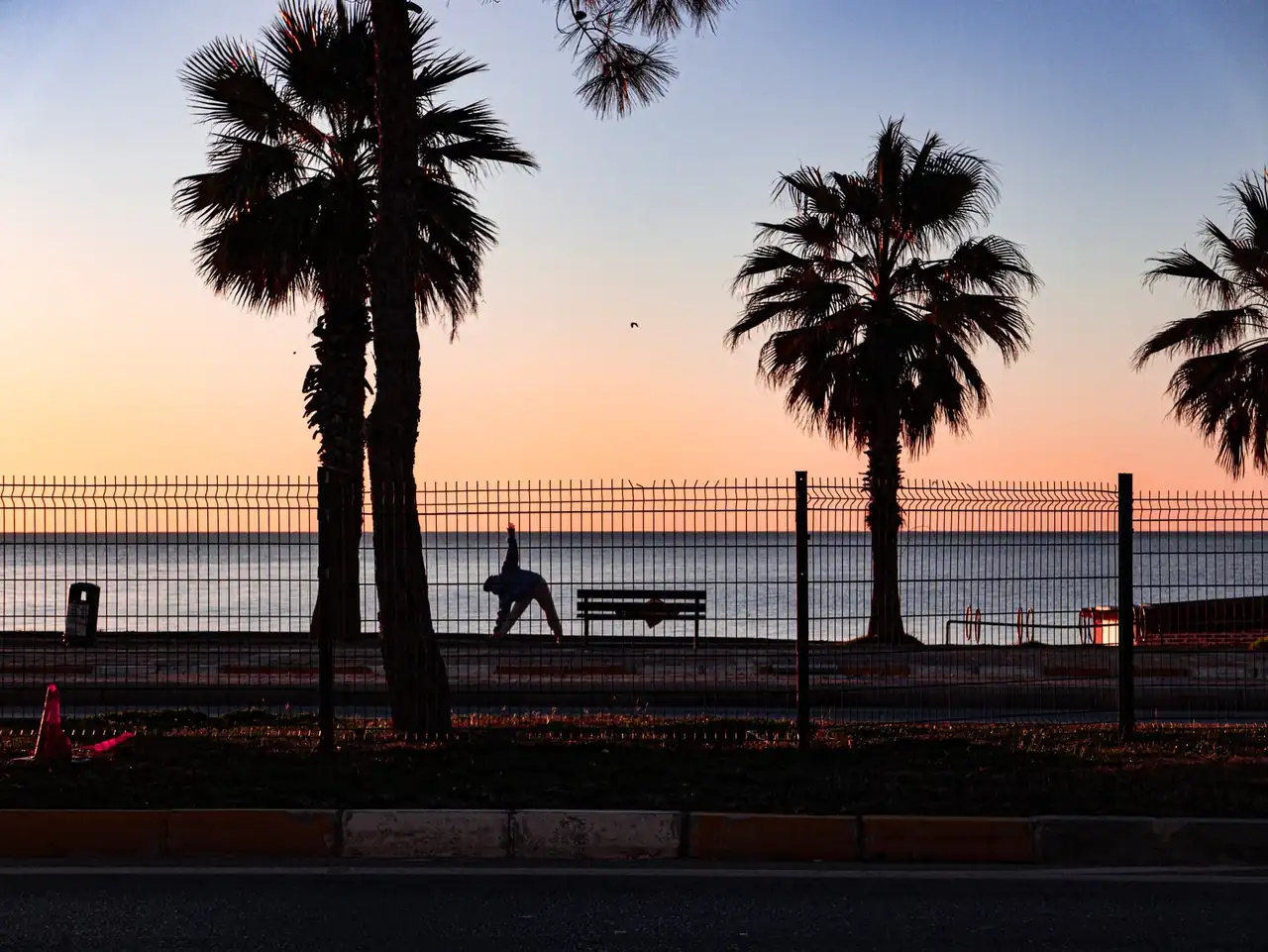
Playa Paraíso, on the coast of Cartagena, will host an ultrarunning event on Saturday, February 13, 2027, with a rule that reshapes the way the race is run: complete a 6.706-kilometre loop before the next start. The first edition of the Mar Menor Backyard Ultra is scheduled to begin at 8 a.m., with a published entry fee of 75 euros.
This is not a race with a predetermined total distance. Participants run repeated loops, with a new start at the beginning of every hour, and can continue as long as they return on time and line up for the next one. The event has no finish line set in advance: the format aims to leave one runner able to complete one more loop than everyone else. Available information places the start and finish at the Playa Paraíso Sports Centre, although practical details should be checked with the organizers before travelling.
A race whose distance is decided one loop at a time
The Backyard Ultra format began as an endurance event in which the clock, rather than simply timing a finish, sets the rhythm of the entire competition. Each participant must cover a 6.706-kilometre loop in less than an hour. Another start takes place when the next hour begins; anyone who has not finished on time or does not line up for the new start is out of the race.
The time left after completing the course is available to catch one’s breath, drink, eat and prepare for the next loop. It is not a long break: it may amount to only a few minutes, especially if a runner spends most of the hour on the course. The effort builds gradually, like a door that opens every 60 minutes and asks the runner to cross it again.
In a conventional race, runners usually know from the start how far they must travel to reach the finish. Here, by contrast, the final distance depends on how many loops each runner completes. One loop adds 6.706 kilometres; several hours turn what may seem a manageable figure into an ultrarunning day, while continuing further requires managing fatigue, food and sleep.
The format is associated with Lazarus Lake and the Big’s Dog Backyard Ultra in the United States. Its apparent simplicity — a course and a start every hour — is part of the challenge: runners do not need to chase a particular finishing pace, but they do have to return to the start within the time limit and save enough energy to repeat the effort. Success depends less on speed over one loop than on sustaining repeated effort.
2027 date, start and published event details
The event is scheduled for Saturday, February 13, 2027, in Playa Paraíso, within the municipality of Cartagena in the Region of Murcia. The entry information lists the start time as 8 a.m. The stated start and finish location is the Playa Paraíso Sports Centre, although organizers may issue further instructions about access, parking or bib collection.
The length of one loop is listed as 6.706 kilometres, often rounded to 6.7 kilometres in event listings. That figure does not represent the total distance any participant will cover: the cumulative distance is only known once their race ends. In this format, results can be expressed in loops and kilometres, but the available information sets no maximum number of hours or distance limit for this edition.
The published entry fee is 75 euros. Payment terms, possible bib transfers, refunds and participation requirements depend on the organizers’ current rules. Availability and registration status may change over time, so the fee and procedures should be checked through the official channel before registering.
There is also a difference between basic listing information and a full set of race logistics. The date, municipality, start time, loop length and fee appear in the information consulted, while some organizational details may not be included in every listing. The latest confirmation of timings and requirements should take precedence over secondary listings or information repeated by third parties.
The course beside the Mar Menor and its shift from day to night
The start and finish are located in Playa Paraíso, beside the Mar Menor shoreline. The published course description refers to a circular route incorporating tracks, paths and sections of seafront promenade. It differs from a mountain loop: the terrain is described as relatively flat and open, with the coastal landscape as its backdrop. Available information does not provide a complete elevation profile, so the exact condition of every section should not be assumed.
In the early loops, daylight can help runners recognize landmarks and judge their effort more clearly. As the hours pass, the course changes character: night falls, visibility decreases and runners rely more on permitted lighting and familiarity with the route. The contrast between a daytime loop and a nighttime one is part of the event description, but the exact sunset time and conditions on race day will depend on the date and weather.
The proximity of the water and exposure to the breeze may affect how the temperature feels, but neither makes it possible to forecast conditions for February 2027. Wind, humidity, rain or a clear night can change how a flat course feels. In a race that repeats for many hours, environmental conditions matter both physically and through their mental toll: each loop may feel different even when the route stays the same.
The published information identifies the general route, but is not enough to reconstruct every turn, the surface of each section or the location of aid stations. Those details should be confirmed when the rules or final map are released. Familiarity with a repetitive course is particularly useful because it reduces uncertainty during fatigue, but it does not replace checking the official instructions.
What makes the Backyard format different
The hourly start imposes a strict structure. If a runner completes the loop in 45 minutes, about 15 minutes remain to recover before the next start; if it takes 58 minutes, only two remain. It is not enough to finish within the limit: runners must also be ready to start again. Being on time for the next start is part of the challenge, just like completing the loop within the allotted time.
Pacing calls for an unusual balance. Running too fast can use energy needed many hours later; moving too slowly can leave such a short break that there is no time to eat or change comfortably. Each loop offers a repeated cycle of movement and recovery, but every cycle begins with more accumulated fatigue. Runners are not racing only against the clock; they are managing the effects of a succession of small decisions.
In ultrarunning, strategy is not only about maintaining a speed. It also involves spacing out food and fluids, deciding how long to spend in the recovery area and managing discomfort that may appear with repetition. In this format, the hourly intervals mean that every break has a visible limit: the next start does not wait because someone needs a few more minutes.
The competition ends when only one person remains able to complete another loop. There is therefore no universal finish time or distance that can be promised before the event. A participant may withdraw by choice or fail to meet the format’s conditions; the last runner to continue will close the competition under the rules. The organizers should specify in their regulations how loops are recorded and results determined.
Preparation and logistics, guided by the rules
Preparing for this kind of race means training for sustained effort, not just a single distance. A 6.706-kilometre loop may seem short compared with a marathon, but repeating it for hours changes the total workload. Long runs, practicing sustainable paces and experience on similar surfaces can help runners understand how their bodies respond, with progression appropriate to each person’s level. The distance of one loop should not be confused with the total demands.
Food and hydration also require planning. Returning to the start area every hour may make it possible to access personal supplies if the rules allow, but runners should not assume a particular service will be provided without confirmation. It is worth checking what refreshments the organizers offer, what may be kept in the recovery area and whether there are restrictions on containers, outside assistance or equipment. People tolerate food differently during prolonged exercise, so any plan should be tested in training rather than introduced on race day.
Night brings another practical consideration. The rules may specify what type of lighting is required, whether reflective clothing is necessary or what safety equipment must be carried. Until those conditions are published, no definitive equipment list can be given. Official guidance on lighting, identification and safety takes precedence over general recommendations, particularly if the course alternates between illuminated areas and darker sections.
Travel also deserves attention: the announced venue is in Playa Paraíso on the coast of Cartagena, not in the city centre. Visitors should check the exact start address, access routes and bib-collection times when they are announced. Anyone needing accommodation may find it useful to plan ahead, although no information has been provided about partner hotels or event-specific transport services.
Details the organizers still need to confirm
Published details identify the date, general location, start time, length of each loop and announced price. However, listings do not all provide the same level of detail: some describe the course and format, while others show only the event listing. A missing detail in one listing does not mean it does not exist; it may not have been added yet or may not appear in that particular source.
Items to check in official communications include the final map, race rules, bib-transfer arrangements, withdrawal and refund policies, and any licence or insurance requirements. Runners should also confirm how loops are timed, what happens if someone misses the deadline and what rules apply to assistance during the event. These details affect both preparation and how results should be interpreted.
Registration listings can change status, show new conditions or update timings as the event approaches. The 75-euro fee is the amount shown in the information consulted, but any later change should be checked through the channel handling registration. The same applies to entry limits and the registration calendar: neither should be inferred from the fee or announced date.
The event listing places the race within the international Backyard Ultra circuit, and its description explains the format’s characteristic hourly start. Even so, participation details, any classification system and associated recognition depend on the rules published for this edition. Useful information for runners will clarify those points without confusing the format’s open-ended nature with a conventional fixed-distance race.
An endurance challenge shaped by the clock and the coast
The Playa Paraíso event brings together two defining features: a 6.706-kilometre coastal loop and a clock that sends everyone out again every hour. The route’s apparent simplicity does not remove the difficulty; it shifts it towards repetition, short recovery periods and uncertainty over how long the competition will last. The challenge is not to cover a known distance, but to be ready for another loop.
For spectators, the number of loops will offer a clearer measure of endurance than a conventional finish line. For those taking the start, the key will be to judge their effort without ignoring physical limits or safety rules. Available information schedules the start for 8 a.m. on February 13, 2027, and identifies Playa Paraíso as the setting; the remaining operational details will depend on official communications completing the event information.
In a Backyard Ultra, the landscape stays almost still as the runner changes: first morning, then afternoon and, if the race continues, night. Each return to the start offers a break and poses the same decision under new conditions. That repetition makes the Mar Menor coast more than a backdrop: it is the setting for a race where endurance is measured hour by hour, with no predetermined final distance.
Where to stay in Playa Paraíso
Hotels available 11–14 February 2027.
Affiliate links: if you book through this map we earn a commission, at no extra cost to you.



Reebok runs large or small: a real fit guide

Hoka Challenger ATR 7 GTX: complete review of the all-terrain shoe

How to clean white sneakers without ruining them

Altus Pirineos 40-liter backpack: analysis, use, and key points

20,000 mm waterproof jacket for men: key points to get it right

Under Armour HOVR Sonic 6: complete review of the shoe

incline treadmills: guide to choosing better

Achilles tendonitis: real recovery time

Pain in the Achilles heel: causes, signs, and relief

What to take for calf pain: real relief and when to worry

 Races3 months ago
Valencia Half Marathon 2026: date and registration

 Reviews and Comparisons4 months ago
Asics Gel-Roadmiles 3 for men: review and current price

 Races3 months ago
Valencia Marathon 2026: entry, ballot and course

 Reviews and Comparisons4 months ago
Asics Gel Sonoma 8 Gore-Tex: complete analysis for trail and rain
- Sneakers3 months ago
Saucony Endorphin Pro 4: full review and verdict

 News5 months ago
Strava API 2026: what changes for clubs, challenges and runner apps?

 Reviews and Comparisons5 months ago
Nike Alphafly 3: opinions, sensations, and real key points

 Reviews and Comparisons4 months ago
Under Armour running shoes review 2025-2026: models and key features

 Sports Equipment4 months ago
Shoe sizes in cm: a clear guide to getting the right fit for your footwear
- Sneakers4 months ago
Adidas Adizero Boston 13 for men: review and verdict
- Sneakers3 months ago
Neutral running shoes with lots of cushioning: the best of 2026

 News4 months ago
Where is the Hoka brand from and why was it born in France