Races
Maybank Marathon: history, distances, and key facts about the Bali event
The Bali race combines a marathon, half marathon, and 10K with an international stamp and a course closely tied to the island.

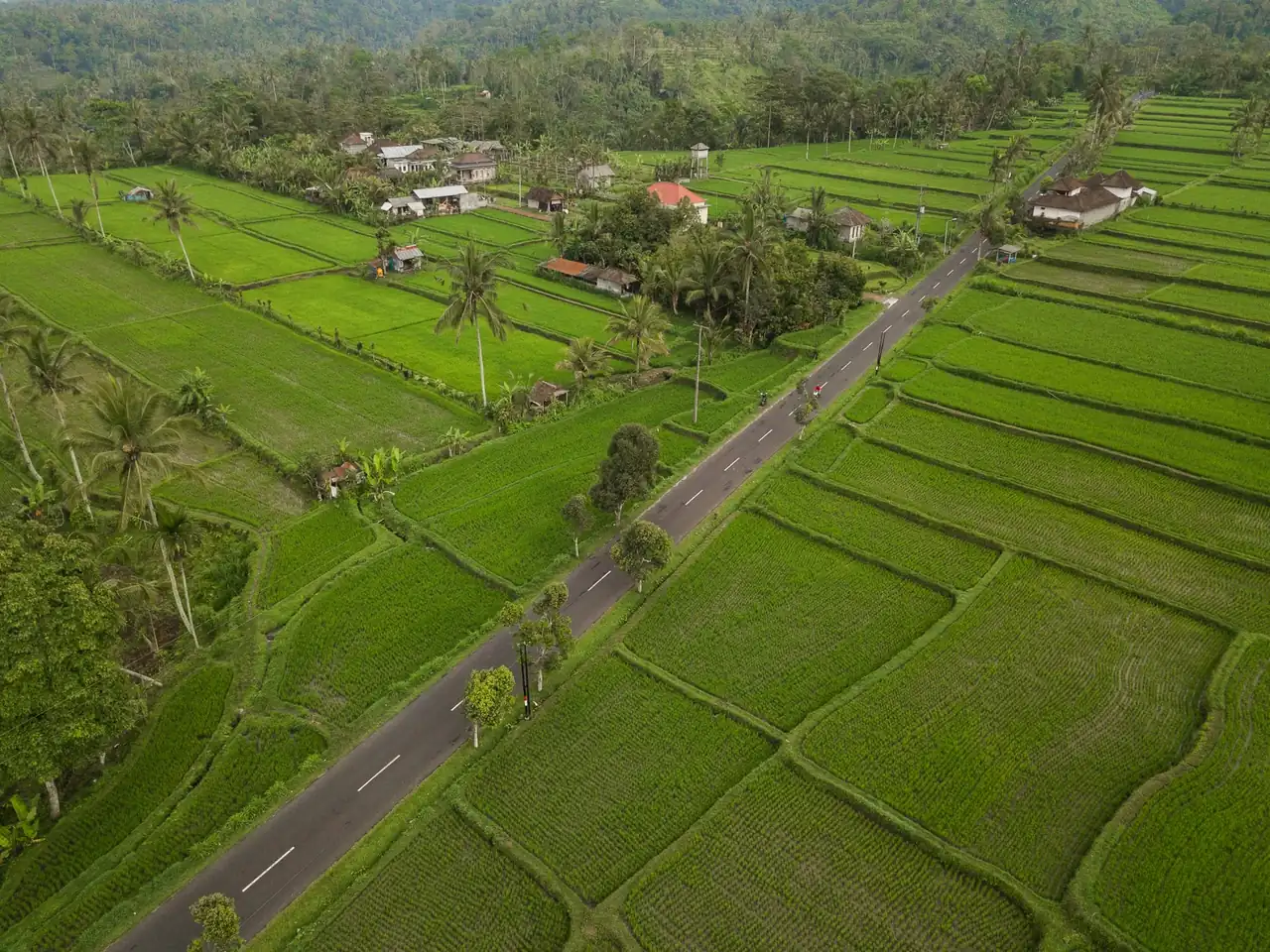
The Maybank Marathon has established itself as one of the most recognizable races on the Southeast Asian calendar: a road race that brings elite runners and amateurs alike to Bali under the same banner. It began in its modern form in 2012, but its roots go back to an earlier history, when the island had already tested the pace of a marathon in 1999. Today it is held in the regency of Gianyar and forms part of the international map of major races with a quality label.
Its appeal depends not only on the sponsor’s name or the island’s tourist draw. The race combines marathon, half marathon and 10K in an environment where heat, humidity and almost nonexistent altitude force runners to race smart. That mix, as demanding as it is photogenic, explains why the event has become a reference point for those seeking a different competitive experience, far from straight avenues and concrete cities.
A race that turned Bali into an athletic destination
The Maybank Marathon did not emerge out of nowhere. The island had already hosted a marathon in 1999, under the name Karangasem Bali International Marathon, with 147 participants and a program that also included a half marathon and 10 kilometers. That first attempt was not an isolated anecdote, but the precursor to an idea that would eventually take hold years later: making Bali a long-distance destination with international reach.
The current version launched in 2012 and has since maintained an upward trajectory in prestige and visibility. It is no coincidence that the race has been recognized as a World Athletics Elite Label Road Race and is also listed within the orbit of the Association of International Marathons and Distance Races. Those distinctions do not by themselves make a race memorable, but they do reveal an organization held to high standards, from course control to the quality of the field.
That institutional leap has given the race its own identity. What was once a tropical race with local ambitions became an event with a corporate name, a stable calendar and a presence that now extends beyond Indonesia. In a world of marathons that are very similar to one another, Bali offers landscape, climate and a geographic narrative that is hard to imitate: running there also means moving through a living postcard, with rice fields, damp roads and stretches where the air feels like a thin blanket.
The official distances and the competitive profile
The event structure is clear and fairly classic. The official program includes a marathon, half marathon and 10K, a combination that opens the door to both experienced athletes and runners looking for a more manageable challenge. That mix is one of the reasons the race has endured with so much personality: it does not depend on a single distance or confine itself to an overly narrow niche.
From a sporting perspective, the full marathon is the heart of the event. Its road course adapts to the island’s profile and environmental conditions, which give nothing away. The half marathon usually attracts a broad field, while the 10K serves as an entry point for those who want to experience the atmosphere without taking the leap to the king distance. Together, the event works like a competitive ladder in which each rung has its own audience.
The race also stands out for the regular presence of elite African runners, especially Kenyans, Ethiopians and Moroccans. The times bear this out: in recent history, very strong marks have been recorded, with performances around two hours and fifteen minutes for men and a little over two hours and thirty minutes in the women’s category. In 2023, for example, Geoffrey Birgen won in 2:15:04 and Sophy Jepchirchir clocked 2:31:04, signs of a level that goes beyond the spectacle.
A course shaped by climate and geography
The island of Bali provides beauty, but also difficulty. Running in Gianyar means dealing with high temperatures, persistent humidity and tropical conditions that clearly alter race strategy. In that context, the clock measures not only physical condition; it also measures adaptability. The runner who arrives intending to set the pace from kilometer one usually pays the price too soon.
That climate factor has given the race a personality very different from that of the great urban marathons in temperate climates. Here, pacing matters as much as raw speed. Hydration, clothing choice, controlling the start and resisting thermal strain are all part of the script, even if they do not make the headlines. It is a race where the body moves as if wearing a second skin of vapor.
The visual setting also matters. Bali’s environment, with its roads, wooded areas and route linked to the local landscape, adds an almost cinematic dimension. It is not just a fast or slow race: it is a race in a place. And that, in today’s running world, is hugely valuable. The most memorable events are usually the ones that could not be held in exactly the same way anywhere else, and the Maybank Marathon fits that category perfectly.
The winners who have shaped the race’s reputation
The list of winners shows a clear constant: the dominance of African athletes. Kennedy Lilan dominated the early editions with three consecutive victories in the men’s marathon, while on the women’s side the winners alternated among major names such as Winfrida Kwamboka, Meseret Mengistu and Elizabeth Rumokol. That competitive continuity helped the race grow in credibility and appeal for elite runners.
Over the years, the times also reflect an interesting evolution. Cosmas Muteti went down to 2:15:25 in 2018, before Geoffrey Birgen lowered the mark to 2:15:04 in 2023, the current men’s reference time cited by the race’s own history. In the women’s race, Sophy Jepchirchir won in 2023 with 2:31:04, a highly competitive mark in conditions that are rarely gentle.
The value of those results is not only in the numbers. It is in the context. Winning in Bali requires managing heat, humidity and, often, a race of attrition rather than continuous acceleration. That is why the winners’ list works like a map of specialists: long-distance runners capable of reading the environment and taking advantage of a course that forgives neither lapses nor overconfidence.
The role of Maybank and the race’s leap into a regional showcase
The link with Maybank has been decisive for the event’s profile. In endurance sport, stable sponsorship is no small matter: it can support logistics, organize communication and ensure continuity in a market where many races are born and disappear quickly. In Bali, the financial institution’s name became tied to a race that gradually built its own identity until it became a recognizable brand in its own right.
That connection also helped raise the level of the organization. The event has served as a showcase not only for sport, but also institutionally and touristically. In a country like Indonesia, where road races have been expanding their international presence, a marathon with elite status brings visibility, attracts foreign participants and places Bali on the calendar of those seeking destinations with genuine weight.
The race has also embraced a very current mix: serious competition wrapped in an aspirational destination. The runner is not just going to run; they are going to an island with a well-established tourist brand, and that combination multiplies the interest. The race thus becomes a sports product that is easy to understand for fans and demanding enough for the athlete who is there to compete seriously.
Dates, the 2026 edition and the interest it generates each season
The usual race window falls between August and September, which fits the racing season in the southern Asian hemisphere and the region’s climate logic. For the 2026 edition, organizers have set the event for August 21 to 23 at the Bali United Training Center in Gianyar, with the three standard distances: marathon, half marathon and 10K.
That time frame matters because it helps explain the scale of the event. This is not a one-day isolated race, but a weekend of activity that combines bib pickup, pre-race atmosphere and different events under a single umbrella. In races like this, the participant experience is built both on and off the road.
Interest in the race grows every year for a simple reason: it offers something the running market values highly, the feeling of being in a big race without losing a very distinct identity. Bali competes not only on times; it competes on memory, on setting and on that blend of toughness and beauty that leaves a more lasting mark than the stopwatch.
Why it still draws attention on the international calendar
At a time when there are plenty of marathons with certified courses, precise aid stations and an almost interchangeable aesthetic, the Maybank Marathon retains an unusual degree of singularity. The identity of a destination merges with sporting demand and produces an instantly recognizable event. Bali does not need to be sold as a backdrop; it is part of the effort, the pace and the narrative of each edition.
The way the race connects with different profiles also matters. For the elite runner, it is a chance to compete and gain visibility in a demanding setting. For the recreational runner, it is a way to combine travel and physical challenge in one experience. And for international athletics coverage, it provides useful data: results, benchmark times and a winners’ list that confirms its consolidation.
From a journalistic perspective, the race captures a powerful idea of contemporary running: major races are no longer measured only by the size of their start line, but by their ability to create identity. The Maybank Marathon has found its own in Bali’s geography, in the weight of its sponsor and in a tradition that, with just over a decade in its modern form, already looks confidently toward established competitions.
A sports brand that has learned to run with its own identity
The history of the Maybank Marathon shows how a race can move from a regional event to a name with international resonance without losing its local roots. The course, the climate, the winners’ list and the location build a coherent, almost organic whole. There is no artifice in that formula, only the sum of well-aligned elements: a recognizable island, a stable organization and a distance that remains the ultimate test of endurance.
That is why the race has earned a place of its own. It is not merely a marathon in Bali, but a race that has made Bali part of its competitive identity. And that difference matters. In modern marathoning, where so many events resemble one another, surviving with personality is almost as valuable as attracting the best athletes. The Maybank Marathon has achieved both with a naturalness that explains its staying power.
From the perspective of international athletics, the event remains a benchmark to watch for its combination of technical quality, landscape and continuity. From the perspective of running culture, it represents the kind of race that leaves behind more than a finishing time: it leaves a scene, a temperature, a light, an entire island compressed into 42.195 kilometers.



Reebok runs large or small: a real fit guide

Hoka Challenger ATR 7 GTX: complete review of the all-terrain shoe

How to clean white sneakers without ruining them

Altus Pirineos 40-liter backpack: analysis, use, and key points

20,000 mm waterproof jacket for men: key points to get it right

Under Armour HOVR Sonic 6: complete review of the shoe

incline treadmills: guide to choosing better

Achilles tendonitis: real recovery time

Pain in the Achilles heel: causes, signs, and relief

What to take for calf pain: real relief and when to worry

 Races3 months ago
Valencia Half Marathon 2026: date and registration

 Reviews and Comparisons4 months ago
Asics Gel-Roadmiles 3 for men: review and current price

 Races3 months ago
Valencia Marathon 2026: entry, ballot and course

 Reviews and Comparisons4 months ago
Asics Gel Sonoma 8 Gore-Tex: complete analysis for trail and rain
- Sneakers3 months ago
Saucony Endorphin Pro 4: full review and verdict

 News5 months ago
Strava API 2026: what changes for clubs, challenges and runner apps?

 Reviews and Comparisons5 months ago
Nike Alphafly 3: opinions, sensations, and real key points

 Reviews and Comparisons4 months ago
Under Armour running shoes review 2025-2026: models and key features

 Sports Equipment4 months ago
Shoe sizes in cm: a clear guide to getting the right fit for your footwear
- Sneakers4 months ago
Adidas Adizero Boston 13 for men: review and verdict
- Sneakers3 months ago
Neutral running shoes with lots of cushioning: the best of 2026

 News4 months ago
Where is the Hoka brand from and why was it born in France