Races
Olla de Tapis: the great trail event in Tapis
Tapis is preparing for a mountain race with two distances, tough sections, and high-altitude scenery.

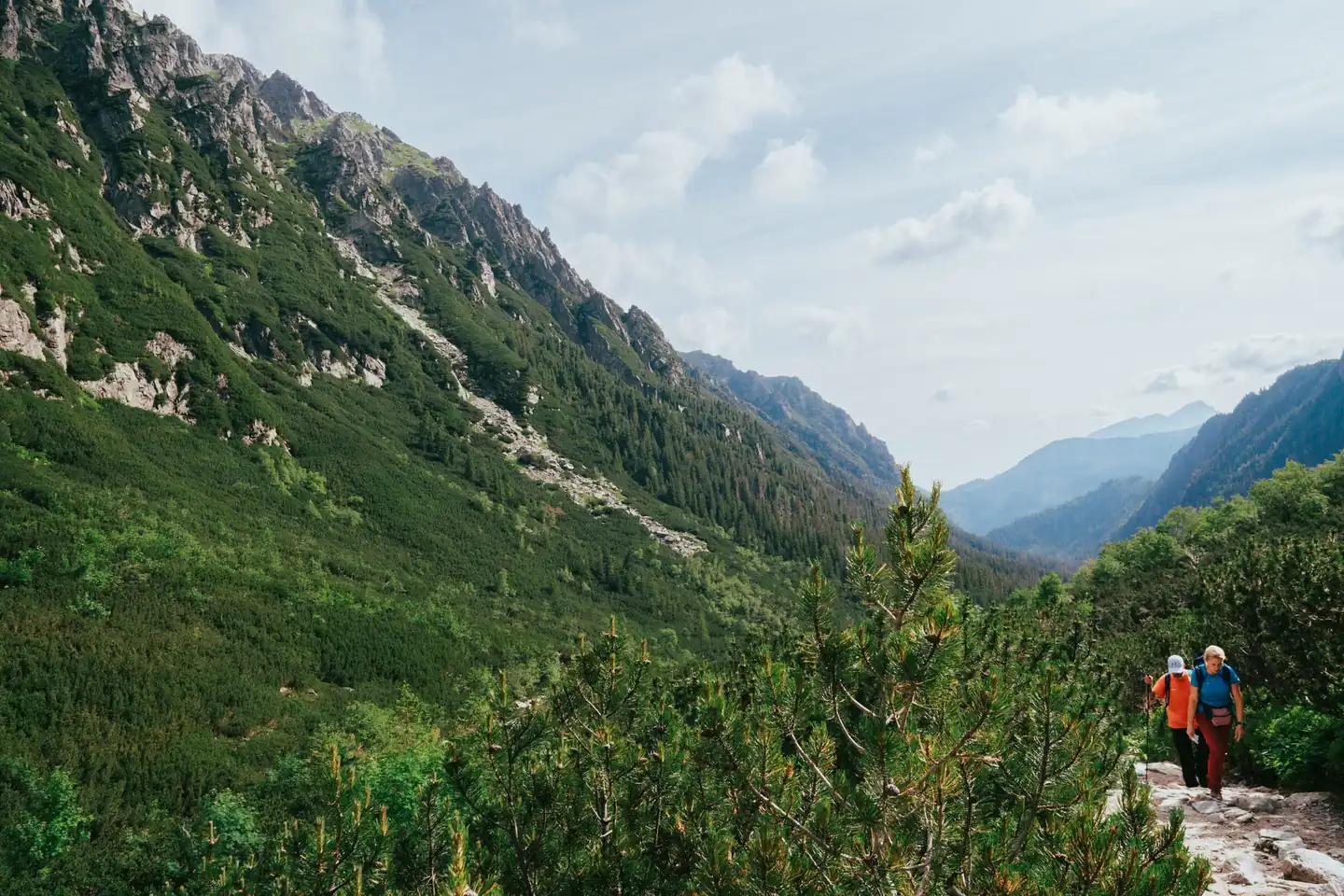
Imagen: Artūras Kokorevas / Pexels
La Olla de Tapis has established itself as one of the mountain races with the most character on the Catalan scene: a wild route, demanding terrain and a landscape that changes at every turn, among narrow trails, rock and open views over Alt Empordà. The 2026 edition arrives marked by two official courses, one long one of 21 kilometers and 990 meters of positive elevation gain and another shorter one of 9 kilometers and 300 meters, a combination that neatly sums up the race’s identity: toughness for those looking for a serious trail day and a more contained version for those who prefer an intense but shorter effort.
The chosen date is June 21, 2026 and the setting will once again be Tapis, in the municipality of Maçanet de Cabrenys, within the Alt Empordà region. This mountain race, with a marked technical character, does not sell itself with inflated numbers or gimmicks: what it offers is real terrain, honest elevation gain and an experience closely tied to the landscape. In an increasingly crowded calendar of races, this one maintains its own profile, almost a refuge for those who value trail running in its purest form.
A course that gives nothing away and, precisely for that reason, leaves a mark
The long course, at 21 kilometers, is the flagship distance and it does not fool anyone. It adds 990 meters of climbing and reaches a maximum altitude close to 1,112 meters, placing the race in that terrain where effort is measured as much in the legs as in the head. The ascent to Puig Falcó concentrates much of the race’s character, with the last 50 meters requiring the use of hands in an area of granite rock, a detail that turns the climb into something more akin to mountain climbing than simple running.
That scrambling section, as the organizers describe it, is not a folkloric embellishment. It is the course’s signature. It creates a very recognizable feeling for anyone who runs on rough Alpine or Mediterranean terrain: the stride stops being a continuous cadence and becomes a sequence of foot placements, balance and small decisions. There is no drama, but there is attention. And that attention changes the way you run, look and measure your body in space.
The 9-kilometer version is not just an appendage. With 300 meters of climbing, it presents itself as a quick and compact option, shorter but equally connected to the character of the place. In trail running, short distances can be elegant traps: the pace rises quickly, heart rates soar and the room for relaxing almost disappears. Here the mountain makes itself felt from the very start, though in a format that is more accessible for those who do not want to spend as much time on the long course.
The organizers themselves sum up that contrast well with two very different and, at the same time, complementary ideas: the long course as a tough and demanding race; the short one as a tastet, a concentrated bite that leaves no one indifferent. That balance explains why the race attracts varied profiles, from elevation specialists to runners who want to test themselves in a serious setting without moving into more extreme distances.
Terrain, technique and landscape: the trio that defines the race
La Olla de Tapis runs through terrain dominated by trails, with a minor presence of road and a base of paths and dirt sections that force runners to constantly read the ground. According to the available technical information, road accounts for barely 1%, while trails make up around 70%, dirt track or path 27% and cross-country 2%. These figures paint a picture of a race clearly oriented toward trail running, not flat speed or the comfort of a uniform surface.
That becomes clear in how the effort is distributed. There are moments of smooth running, yes, but also changes in footing, tight turns, sections where grip matters and others where the stride has to shorten to avoid losing precision. The mountain here is not only looked at; it is touched with the feet and measured with balance. In a race like this, the body works like a fine instrument, capable of alternating drive and control with very little room for improvisation.
The landscape adds a layer that goes beyond the stopwatch. From the high points, wide views open over Alt Empordà, part of Vallespir and very recognizable landmarks in the area, such as Canigó or Bassegoda. That visual breadth has an almost cinematic effect: after the narrowness of the trails, the horizon opens like a door. And in that contrast lies much of the race’s appeal, because it is not just tough; it also creates a complete aesthetic experience.
The Tapis mountain also has a quality that is uncommon in mass events: it retains a certain air of remoteness, of a place that is not exhausted by the sporting event. The race takes place in an environment that already invites hiking, exploration and permanent routes, so the runner does not enter a set built for the occasion, but a landscape with a life of its own. That changes the tone of the day and places it in a category closer to genuine trail running than to a simple urban competition moved into the mountains.
The 2026 edition: date, times and the importance of the schedule
The main event is set for Sunday, June 21, 2026, with the long race starting at 8:00 and the short one two minutes later, at 8:02. The schedule is early, and that is no coincidence. In the mountains, starting early helps take advantage of the gentler light, avoid some of the heat and give more room to a race that, by its nature, requires time for organization and careful development in aid stations, safety and checkpoint control.
The program also includes a bib pickup window the day before, on Friday, between 6:00 p.m. and 8:00 p.m., as well as a pre-start check-in period on the morning of the race, from 6:45 a.m. to 7:45 a.m., with a strict cutoff at 7:45. These are details that may seem minor, but in reality they are part of the ritual of any well-organized mountain race: no margin, no improvisation and a clear sequence to avoid queues and unnecessary rushing before the main effort.
Arrival times and prize ceremonies are also tightly grouped: Tupí de Tapis is scheduled to present its awards at 11:00 and close at 12:00, while La Olla de Tapis has its prize ceremony at 11:02 and closes at 1:00 p.m. That schedule reflects a competition designed to accommodate two different rhythms, but under a single event logic. It is not just about running; it is about making the day work as a whole, from the first bib to the last round of applause.
The organizers have also explained that the sixth edition changes the direction of the route compared with the previous five. In a mountain race, that kind of modification has a very specific effect: it alters the perception of effort, reshapes the climbs and descents and forces runners to reassess sensations that regular participants already took for granted. In trail running, changing direction is not a minor detail; it is almost like debuting a new race while still remaining the same one.
A competitive profile rooted in place, not in artifice
La Olla de Tapis is part of the Valls Catalanes Trailrunning Challenge 2026, a framework that places it within a broader logic of mountain races with territorial identity. This affiliation not only adds competitive context; it also underlines that the race does not exist in isolation, but as part of a network of events that share philosophy, landscape and a specific way of understanding trail running in the northeast of the Iberian Peninsula.
In the technical sheet published by the organizers and specialized aggregators, there are four liquid and four solid aid stations, a timing chip, food or a sandwich at the finish, and a trophy for the winners, plus a prize draw. These are standard services in races of this kind, but in this case they fit the type of runner they are aimed at: someone who accepts the mountain as the main stage and expects enough logistics to focus attention on the course, not on other distractions.
It has also been described as a competitive race, something worth emphasizing because the presence of a short distance does not turn it into a leisure walk. Even the shorter option keeps the pulse of a serious competition, with a start, control points and rankings. The experience is supported by nature, but does not dissolve into it: there is a bib, there is order and there is clear sporting tension, even if the landscape remains the visual protagonist.
The rules, registrations and entrants have been appearing on the organizers’ channels and on race-tracking platforms. That flow of information indicates an already established event, with a base of loyal participants and an ecosystem of clubs, local runners and visitors that gives it continuity. In races like this, loyalty counts almost as much as novelty: runners return because the place leaves a mark, not because the poster changes every year.
Tapis, Maçanet de Cabrenys and the value of running away from the noise
Tapis belongs to that kind of place where geography rules. There is no large city nearby absorbing the spotlight or a finish line designed for a quick postcard. What exists is mountain, stone, trail and a sense of natural borderland that fits well with long-distance races in rough terrain. Maçanet de Cabrenys, in Alt Empordà, adds the component of an inland municipality and a gentle Pyrenean landscape in which every bit of elevation gain feels more intense than the altitude might suggest.
That context explains part of the race’s appeal. It is not just about covering kilometers, but about doing so in an environment that has its own weight. The best-regarded trail races often share one quality: the final memory is not summed up by the standings. What remains is the morning humidity, the smell of earth after the first climb, loose stone underfoot, the gasp of air when the valley opens up. A mountain runner’s memory is very physical, almost tactile, and Tapis plays precisely in that league.
The race name has also become a small mark of identity within the Catalan mountain calendar. The combination of Tapis and Olla works because it does not sound generic; it points to place, terrain and a specific kind of effort. In a sports market where interchangeable events abound, that territorial anchoring is worth a lot. This is not a race that can be moved elsewhere without losing its meaning. It needs that ground, that rock and that exact distance between forest, stone and natural viewpoint.
There is also an element of continuity in the community around it. The presence of well-known clubs in the entrant lists and the follow-up on specialized platforms show that the race has managed to generate its own conversation. It does not depend on major media spotlights, but on something more stable and harder to manufacture: a reputation built on the ground.
What a race like this leaves in the trail calendar
Mountain races with their own personality perform a clear function within the calendar: they remind us that trail running is not just about distance, but about the relationship with the landscape and elevation. La Olla de Tapis fits that idea with a proposal that combines a technical course, serious elevation changes, rocky sections and a very clear reading of the surroundings. It does not need to exaggerate to attract attention; it just needs to be consistent with its terrain.
That is why its appeal is measured not only by the number of entrants or the difficulty of the elevation profile. It is measured by the quality of the experience it offers. Those who race here are not only looking for a time, but for a complete day in which the mountain has the final word. And that word usually comes in the form of sustained effort, guarded descents, high breathing on the climbs and a finish that tastes like a job well done.
The 2026 edition once again reinforces that underlying idea: two distances, one shared passion for trail running and an environment that does not act as a backdrop, but as the main character. Tapis is not a race to look at from afar. It is a date to be read with the legs, with the eyes and with the kind of attention only honest courses awaken. In an era of races that increasingly resemble one another, that is where its real strength lies.
In the end, what remains is the image of an early June morning, with the air still fresh and the valley slowly waking as the mountain begins to impose its law. La Olla de Tapis lives on that: on carefully measured toughness, on a landscape that never runs out and on an identity that, far from softening with the years, seems to sharpen. That is its hallmark and also its best argument.
You may also like: Trencacims Paüls 2026: dates, routes, and key trail details.



Reebok runs large or small: a real fit guide

Hoka Challenger ATR 7 GTX: complete review of the all-terrain shoe

How to clean white sneakers without ruining them

Altus Pirineos 40-liter backpack: analysis, use, and key points

20,000 mm waterproof jacket for men: key points to get it right

Under Armour HOVR Sonic 6: complete review of the shoe

incline treadmills: guide to choosing better

Achilles tendonitis: real recovery time

Pain in the Achilles heel: causes, signs, and relief

What to take for calf pain: real relief and when to worry

 Races3 months ago
Valencia Half Marathon 2026: date and registration

 Reviews and Comparisons4 months ago
Asics Gel-Roadmiles 3 for men: review and current price

 Races3 months ago
Valencia Marathon 2026: entry, ballot and course
 Reviews and Comparisons4 months ago
Asics Gel Sonoma 8 Gore-Tex: complete analysis for trail and rain
- Sneakers3 months ago
Saucony Endorphin Pro 4: full review and verdict

 News5 months ago
Strava API 2026: what changes for clubs, challenges and runner apps?
 Reviews and Comparisons5 months ago
Nike Alphafly 3: opinions, sensations, and real key points

 Reviews and Comparisons4 months ago
Under Armour running shoes review 2025-2026: models and key features

 Sports Equipment4 months ago
Shoe sizes in cm: a clear guide to getting the right fit for your footwear
- Sneakers4 months ago
Adidas Adizero Boston 13 for men: review and verdict
- Sneakers3 months ago
Neutral running shoes with lots of cushioning: the best of 2026
 News4 months ago
Where is the Hoka brand from and why was it born in France