Races
Ribera Run Experience 2026: route, dates and key details
Peñafiel hosts another edition with sport, scenery, and wine in a format that is gaining competitive and cultural significance.

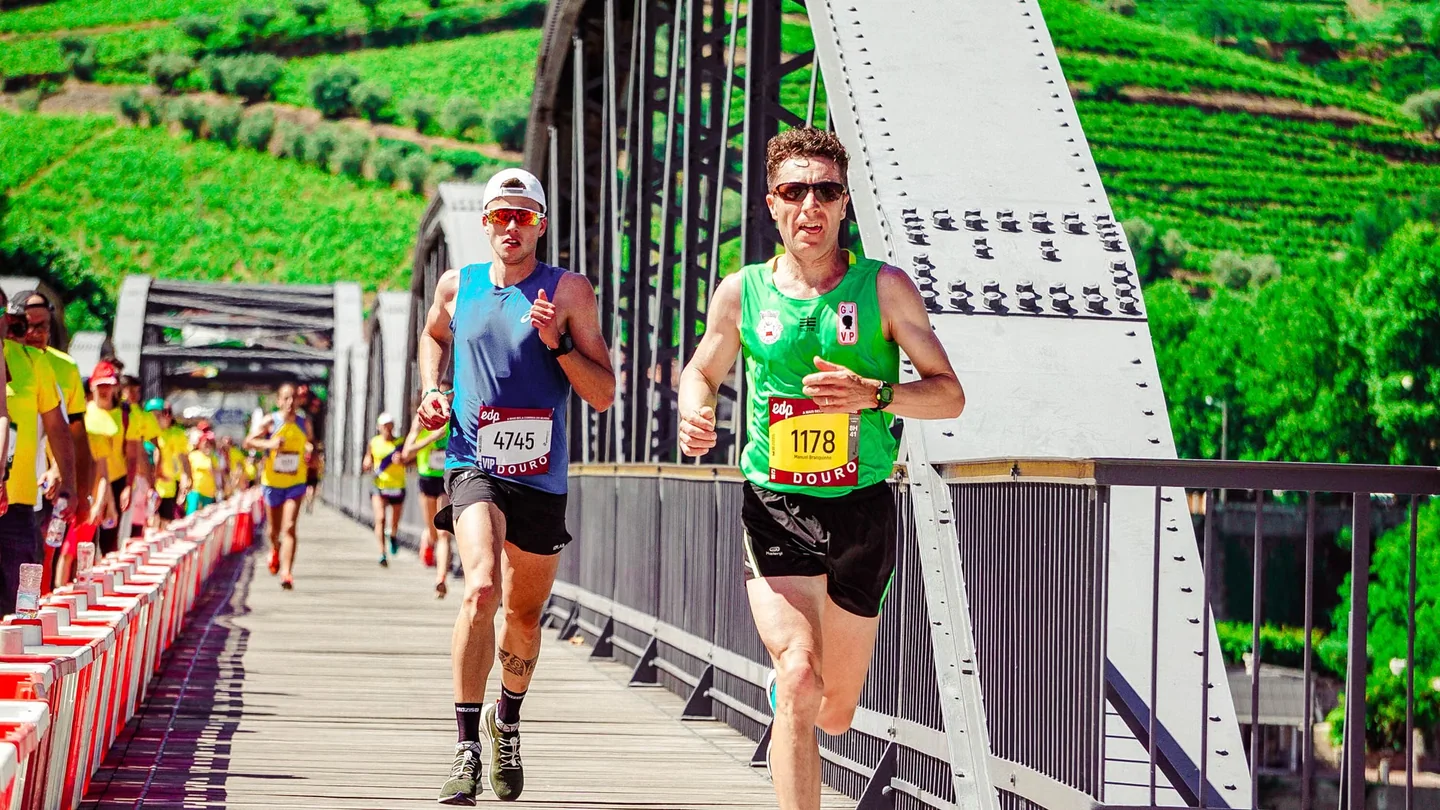
Peñafiel will once again bring the sporting and tourist spotlight on September 19, 2026 with an event that mixes running, hiking, and wine tourism in the very heart of the Ribera del Duero. Plaza del Coso will once again be the start and finish point, a choice that is not merely decorative: it places the race in a living medieval setting, with Peñafiel Castle dominating the horizon and the Wine Museum as part of the emotional landscape of the event.
The 2026 edition comes with a clearer role for the long distance, which becomes the competitive centerpiece of the day, while the other formats are aimed at faster or more contemplative participants. The organization maintains the spirit of a shared experience, but fine-tunes the structure so that each participant finds a route that fits their way of understanding trail running, walking, or a day centered on wine and nature.
An event where the territory matters as much as the bib number
Ribera Run Experience does not function as an isolated race, but as a window into the region. The event draws on the identity of the Ribera del Duero, an area where vineyards shape the landscape and set the pace for tourism, gastronomy, and even the way people move between towns. That is why the event has been consolidating its own personality: it does not sell only kilometers, it sells context.
Plaza del Coso, with its wooden geometry and traditional façades, provides a start and finish with strong visual impact. The event’s energy is concentrated there, but the story goes beyond the town center. Peñafiel Castle, with more than five centuries of history, acts as a symbolic beacon while the course follows the Senda del Duero and links up with sites tied to wine, wineries, and the rural heritage of Valladolid.
That combination of sport and culture explains much of its appeal. In other races, the route is the sole protagonist; here, the course shares the stage with tastings, visits, dining, and parallel activities that turn the day into a small map of the territory. The runner is not just moving toward a finish line: they move from one texture to another, from stone to vineyard, from local pavement to the open earth of the valley.
The 2026 distances and the new distribution of prominence
The 2026 edition is organized around three main formats: 30 kilometers, 17 kilometers, and 7 kilometers. The 30-kilometer distance is strengthened as the flagship competitive event and takes on the most ambitious part of the program. The 17-kilometer route is reserved for the hiking format, while the 7 kilometers maintain a shorter, faster, and more accessible proposal, designed for those seeking an intense experience without entering the prolonged effort of the long distance.
That distribution is no accident. The organization has explained that it wants to boost the sporting component of the day without giving up the fun atmosphere that has accompanied the project since its earliest editions. In design terms, the change is significant: the long race ceases to be just one option among several and becomes the narrative axis of the day, with a larger registration quota and a broader route.
The start of the 30-kilometer race is scheduled from the Carramimbre winery, a location that already introduces participants to the event’s logic before they even begin running. The route expands the area of exploration and allows for a more complete passage through some of the points of interest along the Senda del Duero, with a greater presence of wineries and spaces linked to the riverside environment. It is a way of extending the experience without losing the connection to the territory.
The 7-kilometer format starts in the hamlet of Mélida, from the Vinos de La Luz winery, and ends in Peñafiel with a more direct profile. It is the shortest distance in the program and, by design, the clearest entry point for those who prefer a concentrated effort, with the same emblematic finish in Plaza del Coso. The 17-kilometer walk, for its part, starts from Bodegas Emilio Moro in Pesquera del Duero and establishes itself as a hiking option, without the competitive demands that alter the reading of the surroundings.
A route that blends effort, landscape, and wineries
The Ribera del Duero route is rarely presented as empty. Here, each section is accompanied by references that speak of wine, heritage, and agricultural landscape. The vineyards act as a useful backdrop and also as a sign of identity: they mark out paths, change color with the season, and give runners a sense of open space that is not common in urban events.
The link with wineries is especially important in this event. It is not just about sponsorship or logistical support, but about a structural relationship with the territory. Carramimbre, Vinos de La Luz, and Emilio Moro appear as starting points or connection points, and that presence helps build a different narrative, closer to a journey than to a simple competition. The race moves forward, yes, but it also visits, observes, and links places with memory.
For participants, that changes the perception of effort. A tough stretch in a conventional race can feel like a battle against the clock; in this case, the same stretch becomes part of a sequence of images and cultural stops. The body keeps working, but the mind receives stimuli of another kind. There are viewpoints, wineries, old stone, dust on the path, and the murmur of an environment that does not ask for haste, even if the day remains fundamentally sporting.
Registration, deadlines, and what defines the 2026 edition
Registration opened on March 19, 2026 at 7:00 p.m. on the event’s official website, with limited spots and a closing date set for September 6 at 11:59 p.m., unless all bibs sell out earlier. That registration window structures much of the pre-event interest and reflects a constant in this type of race: demand is concentrated, but the quota decides.
The organization added a specific incentive for those who registered before June 30 at 11:59 p.m.: the chance to get the #RiberaRunner T-shirt. It is a small detail on the surface, but useful for understanding how the race calendar is managed. Not everything is left until the last minute; there is a timetable strategy that spreads attention between the opening of registration and the final closing phase.
The 2026 edition also shows clearer logistical maturity. After seven editions, the event presents itself as established and with the ambition of deepening participants’ knowledge of the territory. That adjustment does not mean abandoning the festive character, but rather reorganizing priorities: more weight for the 30-kilometer challenge, more space for hiking, and a parallel program that strengthens the stay in the region beyond the race itself.
The experience around the bib: music, families, and active tourism
Plaza del Coso will be more than just a finish line. It will also host the final refreshments, children’s activities, and the awards ceremony, as well as live music. In 2026, the band in charge of the atmosphere will be Nunca Jamás, an element that helps complete the portrait of a day designed to last longer than the timed effort. The finish is not understood as a full stop, but as a place of shared time.
That mix of participants, companions, and visitors is one of the event’s most interesting features. The race does not rigidly separate those competing from those watching, but instead opens up a shared scene. Children have their own space, families can stay in the urban setting, and the runner returns to the square like someone coming back to a temporary civic center. The start disperses; the finish gathers.
The weight of wine tourism also shapes the experience. Guided tours, tastings, samples, and dining are part of the complementary program that wineries will activate around the event date. That mosaic turns the day into a wide-ranging sports getaway, where physical activity coexists with a leisurely reading of the territory. It is not an ornament: it is a substantial part of the proposal.
That is why Ribera Run Experience has ended up occupying a unique place in the Spanish race calendar. It does not compete only on toughness, or speed, or elevation gain. Its argument is different, more transversal, almost literary: running among vineyards, entering and leaving towns with history, crossing a landscape that already has flavor before the glass is even raised.
How it fits into the trail and popular running calendar
The Peñafiel event moves between several worlds. It has something of trail running because of its contact with nature and its relationship with the Senda del Duero, but it also retains a popular running dimension, more social and less obsessed with the clock. To that it adds a hiking component that broadens participation and prevents the race from being confined to the language of elite sport or pure performance.
In an increasingly crowded calendar, that mixed approach gives it a clear advantage. Some runners seek effort and elevation gain; others want a shared day with friends or a partner; others are looking for an excuse to discover a region with a powerful identity. Ribera Run Experience accommodates those three readings without forcing any of them. That flexibility explains why it keeps growing and why its eighth edition arrives with a more defined structure.
The time of year also matters. September usually offers more stable temperatures than the height of summer and, at the same time, retains the light and late-season color of the vineyards. For an event of this kind, that detail is not minor. The weather can refine or ruin an experience, and here the calendar works in favor of a day in which the landscape has a lot to say.
The result is an event that naturally moves between several registers. It is sporting, but not only. It is tourist-oriented, but without losing the language of the bib. It is local, although it attracts participants from elsewhere. And above all, it is consistent with the place that supports it: a historic town that has turned its heritage into part of the race, not just a backdrop.
Peñafiel, wine, and the art of running at a different pace
The strength of Ribera Run Experience lies in that ability to unite elements that usually move separately. The race and wine; midday in the square and morning on the paths; physical effort and the post-race social gathering; the finish line and the museum. Everything coexists in a delicate but highly recognizable balance for anyone who knows the Ribera del Duero: here, identity is not explained, it is walked on.
Peñafiel brings a human scale that favors that coexistence. It is neither overwhelming nor sprawling, and it does not force visitors to get lost in endless logistics. Its historic center makes it possible to concentrate the event’s sensations within a manageable area, and that helps runners experience the race as a compact event. The square, the castle, the finish, the refreshments, and the complementary activities form a circuit that is understood at a glance and remembered for a long time.
In 2026, the event arrives with a maturity that no longer needs exaggeration. It has defined routes, a clear date, a stable identity, and a very recognizable narrative. The interest lies not in inventing a major novelty every year, but in perfecting a formula that has already found its place. That is probably the strongest sign of its growth: when an event stops feeling like a one-off idea and starts working as a tradition in the making.
In a season packed with road races, trail events, and popular walks, Ribera Run Experience maintains its own tone. It does not try to sound like the others. It prefers to rely on stone, vineyards, and the clean air of the Ribera del Duero to build a day that is run, seen, and also remembered. And in that balance, more than in any isolated number, lies much of its journalistic and sporting value.



Reebok runs large or small: a real fit guide

Hoka Challenger ATR 7 GTX: complete review of the all-terrain shoe

How to clean white sneakers without ruining them

Altus Pirineos 40-liter backpack: analysis, use, and key points

20,000 mm waterproof jacket for men: key points to get it right

Under Armour HOVR Sonic 6: complete review of the shoe

incline treadmills: guide to choosing better

Achilles tendonitis: real recovery time

Pain in the Achilles heel: causes, signs, and relief

What to take for calf pain: real relief and when to worry

 Races3 months ago
Valencia Half Marathon 2026: date and registration

 Reviews and Comparisons4 months ago
Asics Gel-Roadmiles 3 for men: review and current price

 Races3 months ago
Valencia Marathon 2026: entry, ballot and course
 Reviews and Comparisons4 months ago
Asics Gel Sonoma 8 Gore-Tex: complete analysis for trail and rain
- Sneakers3 months ago
Saucony Endorphin Pro 4: full review and verdict

 News5 months ago
Strava API 2026: what changes for clubs, challenges and runner apps?
 Reviews and Comparisons5 months ago
Nike Alphafly 3: opinions, sensations, and real key points

 Reviews and Comparisons4 months ago
Under Armour running shoes review 2025-2026: models and key features

 Sports Equipment4 months ago
Shoe sizes in cm: a clear guide to getting the right fit for your footwear
- Sneakers4 months ago
Adidas Adizero Boston 13 for men: review and verdict
- Sneakers3 months ago
Neutral running shoes with lots of cushioning: the best of 2026
 News4 months ago
Where is the Hoka brand from and why was it born in France