Races
Segovia Race 2025: route and schedules
The charity race returns with route changes, a popular walk, and children’s races in the heart of Segovia.

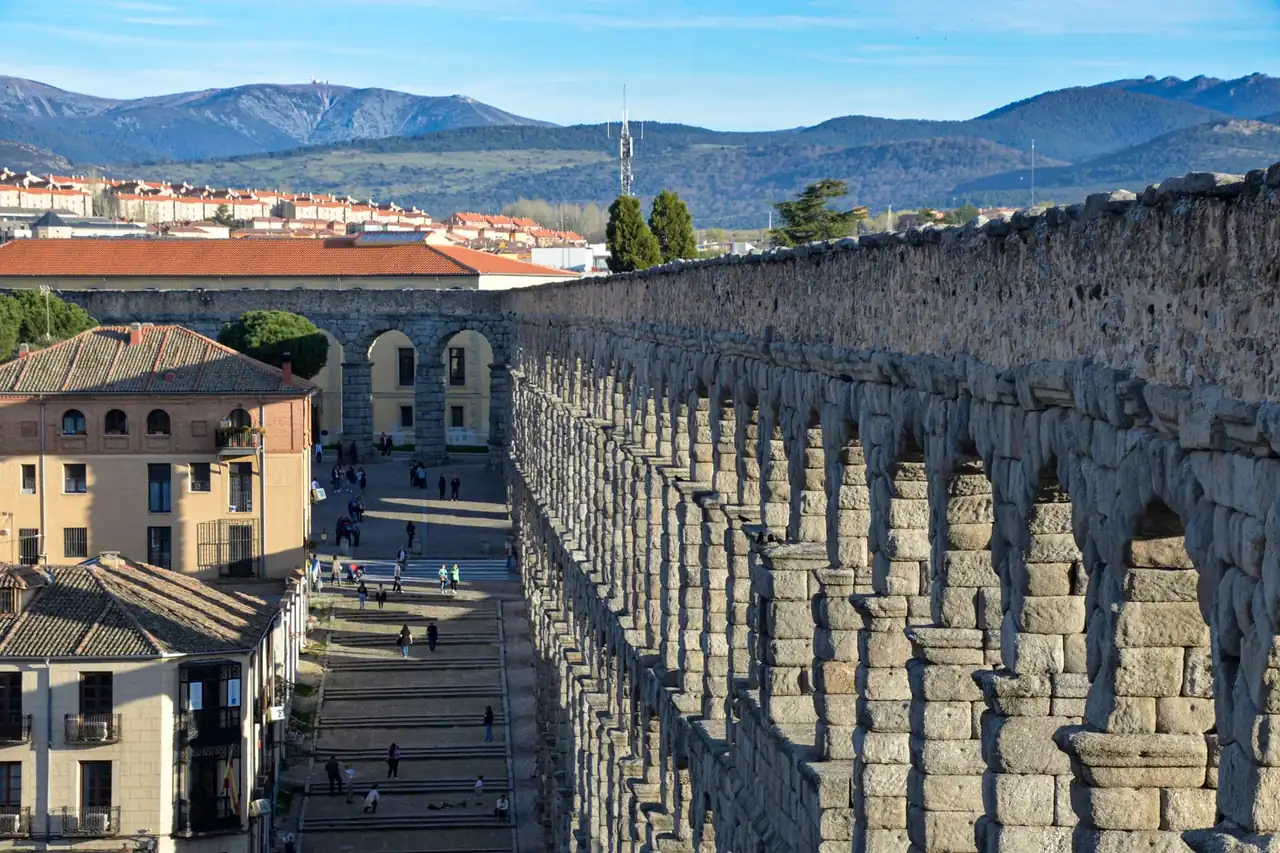
The charity event linked to Caja Rural Segovia reaches 2025 with the weight of a well-established tradition, but also with the imprint of a race that has changed over time to adapt to the city, traffic, and the growth of participation itself. What began as a popular race and charity walk has become one of the most visible Sundays in Segovia’s calendar, with a start in the urban heart and an atmosphere that blends sport, volunteering, and fundraising for social causes.
The most recent reference places the event in October, with the format of a race and charity walk, and with a course design that in 2024 had already moved toward a 10-kilometer circular circuit through Segovia, as well as a short 4.2-kilometer option and a program with events for minors. That evolution helps explain the outlook for 2025: a day designed to bring together everything from runners with competitive ambition to families and walkers seeking a more accessible participation.
An event that has ceased to be just a race
The strength of this event is not only in the stopwatch. Its appeal comes from the combination of solidarity, heritage, and popular sport, a mix that in Segovia works almost like a moving postcard. For a few hours, the city becomes a living circuit, with bibs, volunteers, groups of friends, and families occupying an avenue that normally belongs to traffic and routine.
In recent editions, the day has also included popular walks, children’s races, and a very strong social component, with the Food Bank as the usual destination for the funds raised. That nuance changes the perception of the event: it is not just about covering kilometers, but about taking part in a collective activity with local impact, in which the finish line has as much symbolic value as sporting value.
There is also a distinctly Segovian dimension in the choice of setting itself. The Aqueduct axis, the old town area, and the connection with the historic city turn the event into a kind of tourist and sporting corridor at the same time. Few popular races can boast such a backdrop without becoming an empty set; here, heritage is part of the story.
What is known about the 2025 format from the latest editions
The public information from previous editions points to a main 10-kilometer race in Segovia, with a start on Avenida del Acueducto, opposite the church of San Millán, and a popular walk with a different start time. That detail matters because it defines the event’s logic: it is not a half marathon or a major road race completely closed off to the elite, but an open, urban day with different levels of demand.
The 2024 edition introduced a 10-kilometer circular route through Segovia and a short 4.2-kilometer option to the first pass through the finish line, a format useful for broadening the profile of participants. That adjustment responds to a very common reality in established urban races: when the event grows, organizers look for ways to ensure it is not limited to trained runners while still maintaining sporting interest.
In 2025, therefore, the reasonable expectation is continuity of that model, with a main 10K race, a walk, and the presence of youth categories. The key lies in the coexistence of mass participation and logistical control, something that in a city with a historic street layout requires more precision than in an industrial estate or on an open avenue.
Course, start, and the role of Avenida del Acueducto
Avenida del Acueducto has become the great gateway to the race. From there the atmosphere begins, bibs are collected there in some editions, and the most visible moments of the morning are concentrated there. The location is no coincidence: it is a recognizable, spacious point with the capacity to organize the arrival of runners, walkers, spectators, and organizers.
In the 2024 edition, bib pickup was scheduled for 08:45, the popular walk started at 10:30, and the main race at 10:40. That sequence, even if it may vary in 2025, reveals a very specific structure: first the human setup of the day and then the staggered starts, which reduces chaos and allows each format to find its place without competing for the road.
The urban race in Segovia also has a very powerful visual character. The route, by linking city areas and heritage surroundings, creates that unmistakable contrast between the breath of effort and the ancient stone in the background. It is an event where the course is not just a technical detail, but part of the appeal.
Distances, popular walk, and children’s races
The most recent edition structured the day into three very clear layers: the main 10-kilometer popular race, a short 4.2-kilometer version, and the popular walk, as well as children’s events. That structure is one of the reasons the event keeps growing, because it does not force all attendees into the same physical profile or the same level of effort.
The children’s races, with separate starts for toddlers, under-10s, under-12s, and under-14s in 2024, add a sporting-festival feel that often defines this type of event. They are not just an ornamental addition: they help the day be experienced as a city gathering rather than a one-off competition. The presence of children and families brings noise, excitement, and a very different energy from that of an adult race.
The walk, for its part, plays a decisive role. It allows the event to retain its inclusive and charitable character, opens the door to those who are not looking to compete, and maintains the participant volume needed for the event to have visibility. In races of this profile, the walk is almost as important as the main race, because it broadens the event’s social base.
Timetables that shape a long morning
Charity events with multiple distances need a well-tuned clock. In 2024, the schedule made it clear that the event occupied much of the morning and extended into the early afternoon, with the children’s starts concentrated between 12:30 and 13:05. That time span turns the event into something like a multi-hour athletic festival, not a quick, fleeting race.
For runners, this has practical consequences. It is not enough to know the start time of the main race; you have to factor in bib collection, access, warm-up time, and the logistics beforehand. For families, the broad program is an advantage because it allows attendance without rushing and makes it possible to choose when to participate or cheer.
In 2025, everything points to a similar organization, with staggered timings and a concentration of activity around the Aqueduct. Time discipline is one of the reasons these events work: without it, the mix of walkers, runners, and minors would become unmanageable.
Registration, price, and participant profile
The clearest economic reference from the latest editions was a price of 10 euros. It is a modest amount, consistent with the event’s popular and charitable character, and one of the reasons the race is attractive to a wide audience. That cost places the event in an accessible range for regular runners, families, and occasional participants.
Registration here does not follow the logic of a major urban marathon with premium services, but rather a community model where the price strikes a balance between accessibility and sustaining the organization. That detail matters because it helps explain the type of runner who usually attends: people who value the social cause, the urban setting, and a distance that is manageable without complex preparation.
Participation recorded in recent editions exceeded 1,200 entrants among adults, minors, and walkers, a very solid figure for a local event. The volume shows that the event has managed to build a loyal base and, at the same time, preserve the open-day character that is so appealing in popular athletics.
A race with social and sporting identity
Segovia does not just host a sporting event; it sustains a story of a city that is involved. The charitable dimension, linked to the Food Bank, gives the race a meaning that goes beyond rankings and finishing times. The runner does not just cross a finish line: they become part of a support chain connecting clubs, institutions, sponsors, and citizens.
That charitable component is what largely explains the public’s loyalty. Popular races multiply across Spain, but not all of them achieve that balance between philanthropic gesture, pleasant setting, and an organization that does not intimidate. Here the tone is friendly, the format is easy to understand, and the experience does not require being an expert athlete to feel included.
In addition, the event has fit well into Segovia’s calendar because it does not clash destructively with other major sporting products, but rather adds to the agenda as a date with its own personality. Its value does not depend on being the longest or hardest race, but the most recognizable one for its community.
What changes for the runner in an urban race like this
Urban 10-kilometer races in Segovia require something different from a flat closed-circuit event. The route, while accessible, requires reading the city, pacing effort, and accepting that elevation changes, turns, and surface conditions can have more influence than on a straight avenue. That affects both the fast runner and the participant aiming to finish the distance without watching the clock.
The 2024 edition already hinted at that logic with the route change, a sign that the organization prioritizes safety and compatibility with the city. In this kind of event, the asphalt is not neutral: the heritage surroundings, the streets, and the breadth of the course create a very different experience from that of a standard race in an industrial estate or on a ring road.
That is why the Caja Rural Segovia 2025 race should be understood as a moderately paced event, with a popular vocation and a toughness that is more relative than absolute. Anyone taking it on would do well to think of it as an urban race with its own character, not as a flat, laboratory-style 10K.
Segovia’s place on the map of popular races
Segovia has managed to turn its heritage into a sporting advantage. Not all mid-sized cities can sustain an event that combines visibility, historic traffic, tradition, and such a stable local participation base. The Caja Rural Segovia Race benefits from that context, but it also feeds it: each edition reinforces the image of a city that embraces sport without separating competition too much from community.
The event also connects with a broader trend in Spain, where popular races increasingly seek to include walks, adapted distances, and complementary activities. The model no longer relies solely on the runner with a chip and bib, but on the family, the group of friends, and the occasional participant. This shift has broadened the audience and made many events more sustainable.
In Segovia, that evolution fits especially well because the city offers a very powerful natural setting and a human scale that favors personal treatment. The result is a race that does not need to disguise itself as a major marathon to be relevant. It is enough for it to maintain its identity, its cause, and its organic relationship with the city.
What to look at in an edition like 2025
The October date, the start next to the Aqueduct, the 10-kilometer format, and the charitable aspect are the four pieces that define the essence of this event. From there, the 2025 edition will be read in the details: whether the short race remains, how the starts are distributed, how much weight the children’s categories retain, and whether the route continues to favor a more controlled urban circuit.
It will also be worth watching whether the registration fee remains the same or whether the organization adjusts the price to the costs of such a broad day. In popular events of this profile, those changes are usually small but meaningful. They speak to the balance between mass participation, economic sustainability, and the willingness to keep access open.
What is most relevant, in any case, is that the race remains an event with its own story. It does not depend on a major international brand or a media wave. It is sustained by a simpler and at the same time harder combination: city, solidarity, sport, and a community that returns every autumn to occupy the road with a shared purpose.
An event that still says a lot about Segovia
The Caja Rural Segovia Race 2025 is not just a reference for runners. It is a barometer of civic participation, a way to see how physical activity blends with local life, and a reminder that popular races remain a very effective way of telling the story of a city from the inside. In Segovia, that story is written with stone, hills, bibs, and a charitable backdrop that has not faded over the years.
The event has shown that it can adapt without losing its essence. It has changed routes, expanded formats, and kept the door open to different participant profiles. That ability to adjust explains its continuity. In an increasingly crowded calendar, the races that survive best are those with soul and social usefulness.
That is why 2025 is presented as another edition of a now recognizable event, with a clear identity and a base of interest that goes far beyond the sporting result. Segovia will once again put hundreds of people to run, walk, and look toward the same point. And that, in popular athletics, remains top-level news.



Reebok runs large or small: a real fit guide

Hoka Challenger ATR 7 GTX: complete review of the all-terrain shoe

How to clean white sneakers without ruining them

Altus Pirineos 40-liter backpack: analysis, use, and key points

20,000 mm waterproof jacket for men: key points to get it right

Under Armour HOVR Sonic 6: complete review of the shoe

incline treadmills: guide to choosing better

Achilles tendonitis: real recovery time

Pain in the Achilles heel: causes, signs, and relief

What to take for calf pain: real relief and when to worry

 Races3 months ago
Valencia Half Marathon 2026: date and registration

 Reviews and Comparisons4 months ago
Asics Gel-Roadmiles 3 for men: review and current price

 Races3 months ago
Valencia Marathon 2026: entry, ballot and course

 Reviews and Comparisons4 months ago
Asics Gel Sonoma 8 Gore-Tex: complete analysis for trail and rain
- Sneakers3 months ago
Saucony Endorphin Pro 4: full review and verdict

 News5 months ago
Strava API 2026: what changes for clubs, challenges and runner apps?

 Reviews and Comparisons5 months ago
Nike Alphafly 3: opinions, sensations, and real key points

 Reviews and Comparisons4 months ago
Under Armour running shoes review 2025-2026: models and key features

 Sports Equipment4 months ago
Shoe sizes in cm: a clear guide to getting the right fit for your footwear
- Sneakers4 months ago
Adidas Adizero Boston 13 for men: review and verdict
- Sneakers3 months ago
Neutral running shoes with lots of cushioning: the best of 2026

 News4 months ago
Where is the Hoka brand from and why was it born in France