Races
Torrevieja Half Marathon 2026: date, route, and key details
The Torrevieja race returns with an urban circuit, 21.097 km, and a start on Paseo de la Libertad.

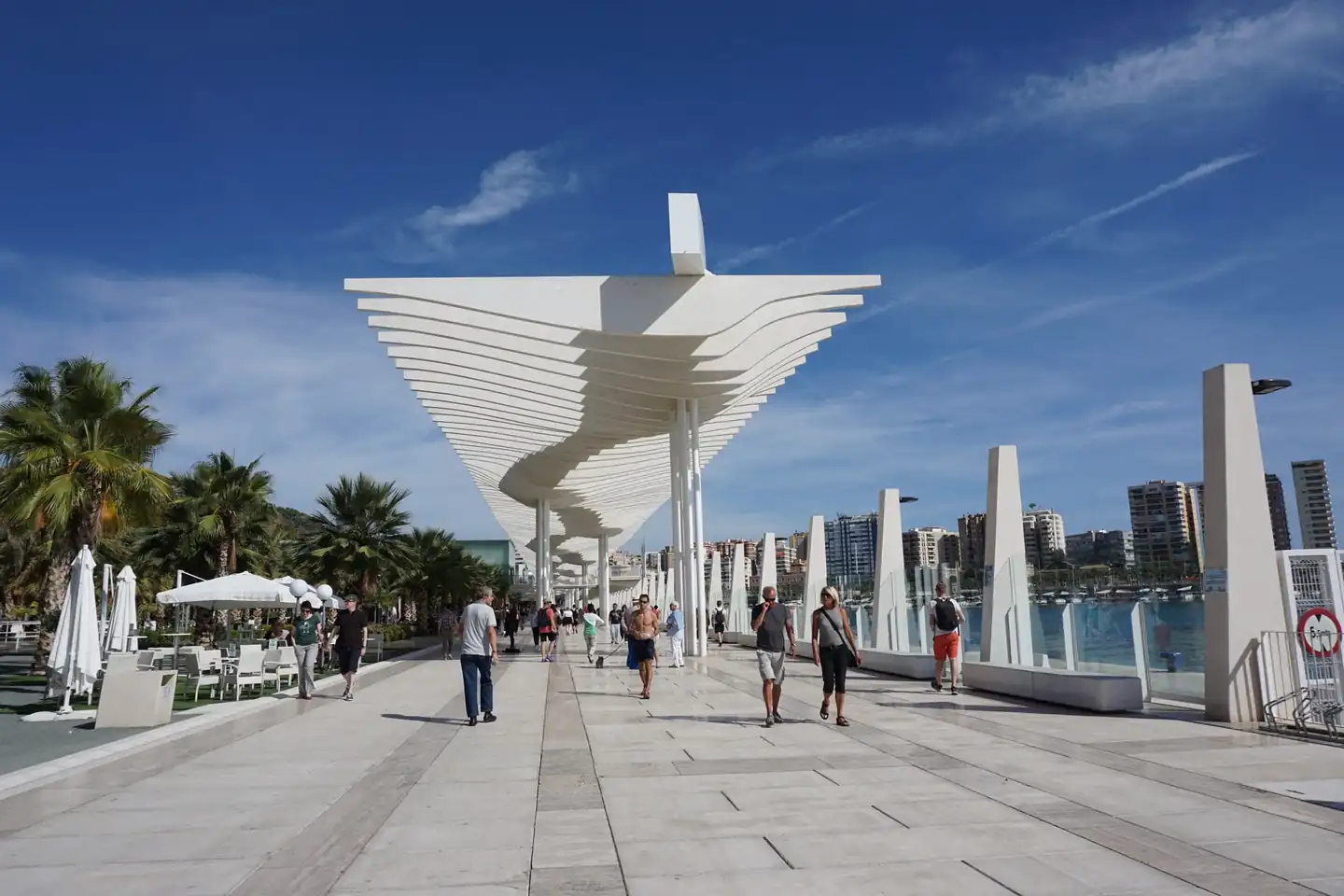
Torrevieja’s half marathon keeps its profile as a very recognizable urban race: 21.097 kilometers on asphalt, start and finish on Paseo de la Libertad, and a route that crosses some of the most visible streets and spaces in the city. The event, organized by the Torrevieja Athletics Club and the City Council, returns for a new edition with its usual appeal: a coastline that accompanies the race without turning it into a leisure stroll, but rather into a measured, steady, and fairly demanding effort.
The event is set for October 19, 2025, at 09:30 and participation is limited to 2,000 runners, a figure that shapes both the atmosphere and the logistics. There will be official timing, aid stations at kilometers 5, 10, and 15, plus post-finish service, and a maximum time of 2 hours and 45 minutes to complete the course. These are details that define a race designed for those looking to compete, pace themselves, or simply finish a well-organized half marathon with confidence.
An urban race with its own identity on the Costa Blanca
Torrevieja has turned its half marathon into a local benchmark on the popular race calendar, supported by a route that mixes wide streets, familiar passing areas, and the convenience of a central start. Paseo de la Libertad acts as the symbolic axis of the race: it concentrates the start, the finish, and much of the pre-race movement, as runners gather with that all-too-familiar mix of nerves, half-finished coffees, and warm-ups by the sea.
The organization is handled by the city’s athletics club together with the local council, a formula that usually brings continuity and knowledge of the course. In races like this, that detail matters more than it seems: an urban route requires well-coordinated road closures, medical coverage, clear passing areas, and a reasonable coexistence with traffic. Torrevieja’s half marathon relies precisely on that structure to offer an experience that is easy to understand and easy for runners to follow.
The sporting value is not only in the distance, but also in the setting. Running 21.097 meters in a coastal city, on asphalt and with visible urban landmarks, usually helps maintain a relatively steady pace in the early kilometers. Even so, this should not be read as a scenic stroll. The distance is still that of a full half marathon, with its usual muscle toll in the second half and the added challenge of managing fatigue without being carried away by the pleasant appearance of the surroundings.
Date, time, and participation limits
The start is scheduled for 09:30 on Sunday, October 19, 2025. That time slot works well for an autumn race in Vega Baja, when the heat no longer hits as hard as in the peak summer months, though it is still wise to arrive with the body awake and properly hydrated. The calendar also helps attract runners looking to close the year with a half marathon in conditions less stifling than in other parts of the country.
One of the most relevant details is the entry cap: 2,000 runners. That number not only defines the size of the event, it also gives a clue about the kind of race participants will find. This is not a mass event on the scale of the major capitals, but rather a race with a still-human scale, where crowds exist at the start without losing the feeling of a manageable race.
The maximum time to complete the course is 2 hours and 45 minutes. That sets a reasonable benchmark for most recreational runners, though it does require slower participants not to abandon pace management too early. This is not a minor detail: that limit defines safety, race closure, and the way the organization manages aid stations, staff, and road traffic along the route.
Course, surface, and race pace
The circuit is entirely urban and paved, with a certified distance of 21.097 meters. The reference to passing through representative parts of Torrevieja’s streets suggests a route designed to showcase the city without extreme elevation changes or surface transitions that would complicate the race. For runners, that translates into a half marathon with a recognizable profile: fast start, controlled middle section, and a finish where the legs are already asking questions.
The asphalt helps maintain cadence, but it also punishes more if the stride loses efficiency. That is why this race tends to favor those who know how to run by feel without getting carried away by the enthusiasm of the first kilometers. The urban setting, with its straights and turns, demands attention to cornering and group positioning; it is not a mountain route or an obstacle race, but rather a test where running economy matters more than drama.
Official timing adds value to a personal best. For many runners, that detail turns participation into a useful chance to validate pace or establish a reliable reference for other races. Not all half marathons offer the same sense of timing precision. Here, the official nature of the event provides order and gives every second the weight expected in a certified competition.
The start and finish on Paseo de la Libertad also simplify pre- and post-race logistics. When an event places both the beginning and end at the same central point, runners gain clarity: fewer transfers, less uncertainty, and a smoother transition from waiting to racing. That does not reduce the sporting challenge, but it does make everything surrounding the effort more comfortable.
Refreshments, services, and bib pickup
There will be aid stations at kilometers 5, 10, and 15, plus service at the finish. That distribution follows the classic pattern of a well-organized half marathon: an early boost as the body settles in, another at the halfway point, and a third in the most delicate phase of the effort, when blood sugar, temperature, and concentration can start working against the runner if they lose focus.
The organization also provides bag drop, medical service, changing rooms, showers, and restrooms, with the latter located at the Tavi and Carmona Sports Palace on Monge y Bielsa Avenue. In a popular race, these services make a very concrete difference to the overall experience. They may not make headlines, but they support the feeling of being at a serious event, designed to handle not only the competition but also the participant’s morning.
Bib pickup will take place on Saturday, October 18, from 17:00 to 20:00, at the Youth Information and Animation Center, located on Paseo Juan Aparicio, or on race day itself between 8:00 and 9:00 at the start area. This twofold window makes things easier for local runners and for those arriving from other parts of the Valencian Community or nearby provinces. In a half marathon, that pickup window is often more important than it seems: removing that errand from race morning reduces stress and leaves more time to warm up calmly.
Registration, price, and bib: what you should know
The registration fee ranges from 20 to 32 euros, depending on timing and event conditions. That is a typical range for a half marathon with solid basic services, a technical T-shirt, a runner’s bag, and certified timing. In the popular race market, that places the event in a competitive range without becoming overpriced.
Entries will close once the 2,000-participant limit is reached. That makes availability a practical factor, not just an administrative one. In a race with a tight cap, runners not only look at the price, but also at the closing date and their real chance of securing a bib before the list fills up. The maximum number also helps preserve a certain level of comfort at the aid stations and start.
The runner’s bag will include a commemorative technical T-shirt and sponsor gifts, in addition to the bib and the usual logistics. In a race of this kind, those items are not the core of the experience, but they do form part of the ritual. The T-shirt, in particular, often becomes the most tangible reminder of a race where memory tends to hold on to both the suffering of the final meters and the atmosphere at the start facing the Mediterranean.
Prizes, categories, and competitive appeal
The half marathon will award trophies to the top three male and female finishers in each category. That structure broadens the field and ensures the race is not reduced to the battle for the overall standings. In recreational athletics, categories play an important role: they widen the competitive focus and make effort meaningful at different performance levels.
In addition, there will be cash prizes for the overall winners. That always adds a layer of tension at the front of the race and places the event on a slightly more ambitious level than a simple recreational outing. It does not change the popular essence of the event, but it does underline that this is a real race, with standings, official times, and rewards for those who set the pace from the beginning.
The parallel 5,000-meter race broadens participation and offers a shorter entry point for less committed athletes or for those who want to join the day without taking on the full distance. In an increasingly fragmented calendar, this combination of formats is smart: it makes the event more open and lowers the barrier for those who are not yet ready for 21 kilometers.
What this event means within the Valencian running calendar
Torrevieja holds a comfortable place on the half marathon map of the Valencian Community. It competes not only in size, but in identity: a coastal city, a recognizable course, and an organization that has managed to sustain the race for decades. In a region with a strong race culture, that kind of continuity matters just as much as elite fields or an expansive route.
Its October date also places it in a strategic part of the calendar. After summer, many runners resume middle-distance goals with better temperature conditions and more room to train without the wear of the heat. A race like this works well as a block finale or a serious fitness test, especially for those preparing other autumn or winter races.
The city also offers an environment that helps turn the competition into a full day out. The promenade, the salty air, and the openness of certain urban stretches create an atmosphere very different from an inland race. It is not just scenery: it is also a way of running. The body notices the climate, the ground, the humidity, and the passage of time on a route that, although paved, preserves that close relationship between sea and effort so typical of the Levant.
That is why this half marathon appeals both to those chasing a time and to those who prioritize the experience. There are faster races and harder ones, but few combine logistical order, urban course, and Mediterranean atmosphere so naturally. That mix explains why Torrevieja keeps appearing on many runners’ calendars when October begins to arrive with its lower light and more forgiving mornings.
A race that gains strength through well-executed details
The strength of Torrevieja’s half marathon lies in the sum of small, well-aligned elements: a reasonable schedule, an asphalt course, official timing, clear aid stations, a participant cap, and useful services before and after the race. None of these, on their own, seems extraordinary. Together, however, they build a solid, understandable, and fairly reliable race for recreational runners.
The organizational context also helps. When a race is backed by the local club and the city council, it usually feels more integrated into the city and less like an isolated event. In Torrevieja, that integration is visible in the choice of Paseo de la Libertad as the start and finish axis, in the presence of support services, and in the way the race is anchored in the autumn calendar.
Torrevieja’s half marathon does not need embellishment to explain its appeal. It speaks the language of well-run races: exact distance, clear route, closed field, and basic services handled logically. For runners, that means a lot. Often, the best race days are not the ones promising the most spectacle, but the ones that let you run with a clear mind and the feeling that every meter has a recognizable purpose.
And in a city like Torrevieja, where the sea seems to be alongside you even beyond the asphalt, that feeling takes on a special texture. The stopwatch will tell one story; the memory, probably, another. Between the two lies the heartbeat of a half marathon that remains, above all, a serious fixture on the Valencian running scene.
Este artículo contiene enlaces de afiliado: si compras a través de ellos, se genera una pequeña comisión sin coste adicional para ti. Más información.



Reebok runs large or small: a real fit guide

Hoka Challenger ATR 7 GTX: complete review of the all-terrain shoe

How to clean white sneakers without ruining them

Altus Pirineos 40-liter backpack: analysis, use, and key points

20,000 mm waterproof jacket for men: key points to get it right

Under Armour HOVR Sonic 6: complete review of the shoe

incline treadmills: guide to choosing better

Achilles tendonitis: real recovery time

Pain in the Achilles heel: causes, signs, and relief

What to take for calf pain: real relief and when to worry

 Races3 months ago
Valencia Half Marathon 2026: date and registration

 Reviews and Comparisons4 months ago
Asics Gel-Roadmiles 3 for men: review and current price

 Races3 months ago
Valencia Marathon 2026: entry, ballot and course

 Reviews and Comparisons4 months ago
Asics Gel Sonoma 8 Gore-Tex: complete analysis for trail and rain
- Sneakers3 months ago
Saucony Endorphin Pro 4: full review and verdict

 News5 months ago
Strava API 2026: what changes for clubs, challenges and runner apps?

 Reviews and Comparisons5 months ago
Nike Alphafly 3: opinions, sensations, and real key points

 Reviews and Comparisons4 months ago
Under Armour running shoes review 2025-2026: models and key features

 Sports Equipment4 months ago
Shoe sizes in cm: a clear guide to getting the right fit for your footwear
- Sneakers4 months ago
Adidas Adizero Boston 13 for men: review and verdict
- Sneakers3 months ago
Neutral running shoes with lots of cushioning: the best of 2026

 News4 months ago
Where is the Hoka brand from and why was it born in France