Routes
Easy routes near Madrid for a hassle-free walk
Eight simple getaways among waterfalls, reservoirs, and forests to disconnect near the capital.

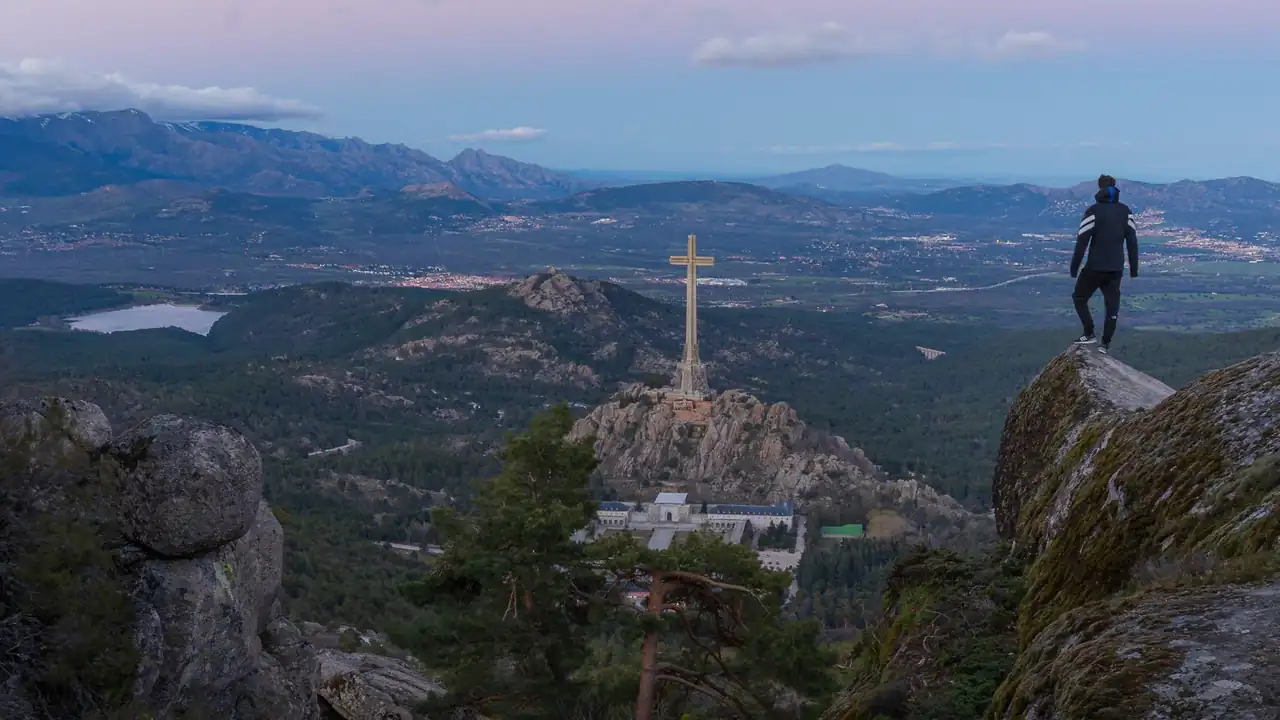
The network of trails around Madrid offers a rare balance between easy access and genuine landscape: short paths, manageable elevation gain, and settings of water, pine forest, and rock that completely change the feeling of being so close to a major city. For a half-day or full-day escape, the region and its neighboring provinces concentrate routes with very modest demands and a high visual payoff, which explains why these trails keep appearing again and again among the most searched for.
The key is not just the distance. On this kind of outing, the continuity of the terrain, shade, trail surface, and the ease of finding the starting point without wasting time all matter. That is why routes such as La Hiruela, Rascafría, Patones, Manzanares El Real, or the Northern Sierra of Guadalajara stand out, where the walk has the rhythm of a peaceful excursion rather than a technical trek. The result is a welcoming geography, very suitable for those who want to walk without turning the day into a physical challenge.
The map of the easiest getaways that work best
In practice, the best routes near Madrid for a comfortable profile usually share several features: circular or linear routes of just a few kilometers, visible signs, uncomplicated road access, and points of interest that justify the outing even if the walk is short. That is a big part of their success. They do not require getting up too early or carrying special gear; sensible footwear, water, and a bit of planning are enough if the plan falls in spring or summer, when the heat hits less gently than in the mountains.
The landscapes matter a lot too. In an environment dominated by the big city, a stream, a waterfall, a clear pool, or a reservoir surrounded by pines becomes the center of the experience. It is not just walking: it is changing scale. The noise of the M-30 fades into the background and another kind of time appears, slower, more about the edge of water and damp stone. That transformation explains why easy trails are, in reality, some of the most valuable for disconnecting without mounting an expedition.
Among the areas that best concentrate these outings are the Sierra de Guadarrama, the Lozoya Valley, the Northern Sierra, and several places in Guadalajara and Soria that, although outside the region, are still within reach of an escape from Madrid. The label easy does not mean a total absence of elevation gain, but rather a sensible combination of distance, slope, and terrain. And there is a big difference between a comfortable walk and a day that ends with tired legs.
Chorrera de San Mamés: the most photogenic waterfall in the mountains
Chorrera de San Mamés neatly sums up what many people look for in an easy outing: a hike of about 11 kilometers and around four and a half hours that ends at a waterfall roughly thirty meters high. The route is circular and starts in San Mamés, in an area where the landscape opens up among oaks, holly, ash, yew, pine, and holm oak. It is not a highly demanding trail, but it is one of the ones that most strongly conveys the feeling of being in the real mountains.
Its appeal does not depend solely on the waterfall. Along the way you will find the Chorro stream, views of the Montes Carpetanos, and the Riosequillo reservoir, a combination of water and horizon that makes the walk feel broader than the kilometers suggest. The variety of vegetation reinforces that impression of a complete yet welcoming route. Some stretches accompany you, others invite you to stop and look, and in some sections the silence carries more weight than the trail itself.
It is an especially rewarding excursion in mild months, when the forest gains nuance and the water becomes more prominent. It should not be mistaken for a lack of interest: precisely because it does not require notable fitness, Chorrera de San Mamés is one of the best entry points into Madrid hiking for anyone who wants to walk without drama or technical overload.
Hornillo Waterfall: a short hike with the feel of a hidden valley
The Hornillo Waterfall route has a very similar philosophy, though slightly shorter in distance: about 10 kilometers and around four hours, with a circular layout and departure from Robledondo. Senderismo Madrid describes it as suitable for everyone, and that fits its character. The path advances among the Robledondo stream, the Aceña bridge, and the Hornillo stream, which gives its name to the main waterfall, about ten meters high.
The surroundings add many of those elements that turn a simple route into a memorable escape. There are oaks, rockrose scrub, poplars, and Valsaín pine, along with open views toward the Aceña reservoir and the Sierra de Gredos. The landscape changes with the light, which is why this outing works just as well on a clear morning as on an afternoon when the forest becomes damper and darker. The route impresses not by its difficulty, but by its balance.
That balance is precisely what makes the Hornillo Waterfall interesting for anyone coming from Madrid with the intention of walking without complications. There are no major physical rewards, but there is a sequence of serene, almost intimate images that allow you to return to the city with the feeling of having been far away. In hiking, that feeling sometimes matters more than the exact number of kilometers.
Villar Reservoir: water history and an unhurried walk
In Berzosa de Lozoya, another very attractive route appears for a relaxed plan: the Villar Reservoir, a circular itinerary of 14 kilometers and about four and a half hours that combines landscape, hydraulic heritage, and pine forest vegetation. Its value is not only natural, but also historical. The reservoir is the oldest in the Community of Madrid, and its spillway was the first waterfall of this type built in Europe. That gives it substance, not just decorative appeal.
The Casasola pine forest, made up of black pines or resin pines, provides the plant framework for a walk that has something of a classic mountain route about it, with a calm atmosphere and a very clear progression. The water sets the pace, and the landscape is organized around it, as if the route wanted to remind us that engineering and nature can coexist without noise. For those looking for easy routes near Madrid with cultural content and not just pretty views, this is one of the most complete options.
In addition, the start on Calle Real, number 30, makes the logistics relatively simple. On outings like this, that ease of access matters as much as the beauty of the setting. A clear starting point, a well-defined circuit, and a recognizable goal turn any excursion into a straightforward plan, even on days when you do not feel like making things complicated.
La Charca Verde: emerald water and rock shaped by the river
La Charca Verde, in Manzanares El Real, is one of those routes that alone justify the short trip from Madrid. Its circular route of 11 kilometers and about four hours runs through one of the most spectacular corners of the Sierra de Guadarrama. The name of the place comes from the emerald-green color the water takes on from the pigmentation of the rocks at the bottom and the reflections on the surface. The result feels like a liquid jewel, clean and instantly recognizable.
The trail follows the Manzanares River among birches, willows, poplars, ash trees, and pines, with common wildlife including golden eagles, griffon vultures, storks, mountain goats, foxes, and roe deer. This is not an urban route disguised as nature; here the sense of being in the mountains is authentic, even if the difficulty remains manageable for most walkers with basic experience. The landscape has an almost narrative quality, as if each bend in the river were opening a different page.
La Charca Verde usually works especially well on clear days, when the water reflects the tones of the surroundings more strongly and the rock shows its nuances. It also stands up well to repetition, which is no small thing: some routes are exhausted after one visit, while others change with the season. This one belongs to the second group. That is why it continues to appear among the most recommended for anyone seeking easy routes near Madrid without giving up a setting of strong presence.
Peñalara Lagoon and the great classic that never fails
Among the best-known escapes, Peñalara Lagoon remains almost timeless. The route, in the Sierra de Guadarrama and very close to the border with Segovia, covers just 5.6 kilometers round trip, with about two hours of walking, 187 meters of elevation gain, and an easy difficulty for anyone accustomed to walking a bit. The starting altitude, at 1,830 meters, already suggests a different atmosphere, cooler and distinctly mountainous.
Its appeal depends as much on the landscape as on accessibility. In spring and during cold periods with remnants of snow, the route becomes especially beautiful. The lagoon, set in the high mountains, offers a scene that feels much farther from the capital than it really is. Peñalara is a short route but not a minor one; it condenses the essence of the mountains into a reasonable distance, with a geographical clarity that explains its constant presence in any serious roundup.
It is best understood as a classic that keeps working because it brings together what people look for: a well-defined path, a very recognizable destination, and the feeling of having climbed just enough for your body to notice, but not so much that the plan becomes a burden. In Madrid, that is already a lot.
La Hiruela, Buitrago, and Puebla de la Sierra: villages that support the walk
The Route of the Trades in La Hiruela, the trail to the Puentes Viejas reservoir in Buitrago de Lozoya, and the Route of the Centuries-Old Oaks in Puebla de la Sierra share a rare virtue: they combine short routes with strong heritage interest. In La Hiruela, the path intertwines with a flour mill, a charcoal kiln, and other remnants tied to the village’s traditional life. In Buitrago, the route crosses pine forest and viewpoints before reaching a body of water that gives meaning to the walk. In Puebla de la Sierra, the centuries-old oaks impose the scale of an ancient forest that alone justifies the visit.
The Route of the Trades, at just 2.5 kilometers and around an hour and a half, is a perfect example of a short outing that does not feel too brief. The route has an almost ethnographic tone, as if each element explained an older way of living in the mountains. Walking through a place like this is not just exercise; it is reading the territory with your feet. For its part, the Buitrago route, about 11 kilometers and four and a half hours, opens up a panorama of reservoir and historical memory, with remnants of the Civil War and viewpoints framing the village from above.
Puebla de la Sierra, with its 2.8-kilometer path and about an hour’s duration, has a more intimate feel, almost like a forest stroll. The Cerradillo pond, views of peaks such as Peña La Cabra or El Porrejón, and the density of oaks turn the outing into a very modest plan, ideal for those who prioritize setting over effort. Together, these three routes show that proximity to Madrid does not reduce interest; on the contrary, it often concentrates it.
Rascafría, Canencia, and the damp valleys that change the tone of the day
Rascafría and Canencia are almost always part of the conversation when discussing easy routes in the Community of Madrid. The Purgatory Waterfall route in Rascafría reaches 11.8 kilometers and about three and a half hours, starting next to the Bridge of Forgiveness, in front of the monastery of Santa María del Paular. The route runs alongside the Aguilón stream and passes through very recognizable places, such as the Poza de los Pintores or the Los Abedules hostel. It is not a demanding outing, but it is long enough to feel complete.
Shorter is the Finnish Forest, also in Rascafría, with about 6 kilometers in a circular route and low difficulty. Its popular name, closely linked to the look of the landscape, evokes birches, poplars, fir trees, a wooden cabin, and a small dock. That Nordic feel within the Madrid mountains has something of a suspended scene, as if the climate had taken liberties. For a relaxed getaway, it is one of the most distinctive and recognizable settings in the whole area.
The Ecological Birchwood Trail of Canencia and other routes in that area reinforce the same idea: small trails, lots of green, and a sense of humidity that changes the tone of the outing. On hot days, these valleys are especially rewarding. The forest absorbs noise, cools the air, and turns a simple walk into a much richer experience than its length suggests.
Paths of water, snow, and pine that do not ask too much
Outside the best-known core, there are other routes that broaden the map without greatly increasing the difficulty. The Manzanares Environmental Corridor lets you walk without leaving the Madrid municipal area, with about 7.5 kilometers alongside the river as it passes through El Pardo. The Tajuña Greenway offers a much longer route, but with comfortable and accessible stretches, and the Pontón de la Oliva in Patones provides a pleasant walk beside the Lozoya, with the oldest dam in the Community of Madrid as its central landmark.
The Hervidero Waterfalls in San Agustín de Guadalix also offer a circular route of just 5.5 kilometers with a lake and two waterfalls, a very practical option for those with limited time. Closeness does not reduce the reward: in this area, the combination of water and forest makes a two- or three-hour plan feel like a serious excursion. Added to that, many of these routes allow a flexible pace, something appreciated by both families and occasional walkers.
This group also includes somewhat more distant but perfectly manageable routes for a day trip from Madrid, such as the Hoz de Pelegrina, the Chorrera de Despeñalagua, the Hayedo de Tejera Negra, the Río Lobos Canyon, or the Puente Ra waterfalls. Not all of them belong to the Community of Madrid, but they are part of the real radius of escapes that usually interest anyone looking for easy trails without complex logistics. The administrative border matters less than the driving time and the quality of the route.
What to check before heading out to walk
The simplicity of these routes should not lead to total improvisation. The season, time of day, and type of ground all change the experience quite a bit. An easy trail with mud feels different; a path under the full July sun demands more than it seems; a water route can become slippery on rocky sections. Basic caution is worth more than any enthusiasm, especially on outings marketed as suitable for everyone.
It is also worth adjusting expectations. Easy does not mean flat, and short does not mean empty. Some of the briefest routes in this selection concentrate great geological, historical, or scenic interest. Others, a bit longer, rely on a very comfortable progression that allows you to keep a steady pace without noticeable fatigue. That is the real value of these getaways: they do not force you, but they do not bore you either. The body works, the mind loosens up, and the landscape does the rest.
Madrid, seen from the logic of hiking, is less a city and more a starting point. As soon as you leave the asphalt behind, gorges, waterfalls, reservoirs, valleys, and forests with their own identity begin to appear. The best easy routes near the capital are not a minor plan; they are the most accessible version of a territory that often goes unnoticed because of haste and noise.
When the mountains return silence to the city
The success of these routes is explained by the fact that they solve several needs at once: fresh air, moderate effort, clear scenery, and a reasonable distance from Madrid. In an environment where time is often measured in commutes and obligations, these outings work as an unobtrusive pause. They are walks that restore scale. What you gain is not only fitness, but perspective, a slower and more human way of looking at what surrounds the capital.
Perhaps that is why they are repeated so often. Because they do not require major preparation, yet they also do not offer a generic experience. Each has its own tone: the murmur of Chorrera de San Mamés, the precise drop of the Hornillo, the hydraulic memory of the Villar, the almost mineral color of La Charca Verde, the high stillness of Peñalara, the forest intimacy of La Hiruela, or the texture of ancient woodland in Puebla de la Sierra. They are easy routes, yes, but none of them feels flat in memory.
Madrid needs that kind of getaway with almost therapeutic frequency: manageable trips, readable nature, and a beauty that does not require decoding. That is where their strength lies. Within a relatively short radius, the region and its surroundings offer paths to walk without complications and return with the feeling of having gone much farther than the odometer shows.



Reebok runs large or small: a real fit guide

Hoka Challenger ATR 7 GTX: complete review of the all-terrain shoe

How to clean white sneakers without ruining them

Altus Pirineos 40-liter backpack: analysis, use, and key points

20,000 mm waterproof jacket for men: key points to get it right

Under Armour HOVR Sonic 6: complete review of the shoe

incline treadmills: guide to choosing better

Achilles tendonitis: real recovery time

Pain in the Achilles heel: causes, signs, and relief

What to take for calf pain: real relief and when to worry

 Races3 months ago
Valencia Half Marathon 2026: date and registration

 Reviews and Comparisons4 months ago
Asics Gel-Roadmiles 3 for men: review and current price

 Races3 months ago
Valencia Marathon 2026: entry, ballot and course

 Reviews and Comparisons4 months ago
Asics Gel Sonoma 8 Gore-Tex: complete analysis for trail and rain
- Sneakers3 months ago
Saucony Endorphin Pro 4: full review and verdict

 News5 months ago
Strava API 2026: what changes for clubs, challenges and runner apps?

 Reviews and Comparisons5 months ago
Nike Alphafly 3: opinions, sensations, and real key points

 Reviews and Comparisons4 months ago
Under Armour running shoes review 2025-2026: models and key features

 Sports Equipment4 months ago
Shoe sizes in cm: a clear guide to getting the right fit for your footwear
- Sneakers4 months ago
Adidas Adizero Boston 13 for men: review and verdict
- Sneakers3 months ago
Neutral running shoes with lots of cushioning: the best of 2026

 News4 months ago
Where is the Hoka brand from and why was it born in France