Routes
Running on Sorolla Beach: practical tips for running better
The 1908 scene condenses sea, childhood, and Mediterranean light into one of Sorolla’s most vibrant images.

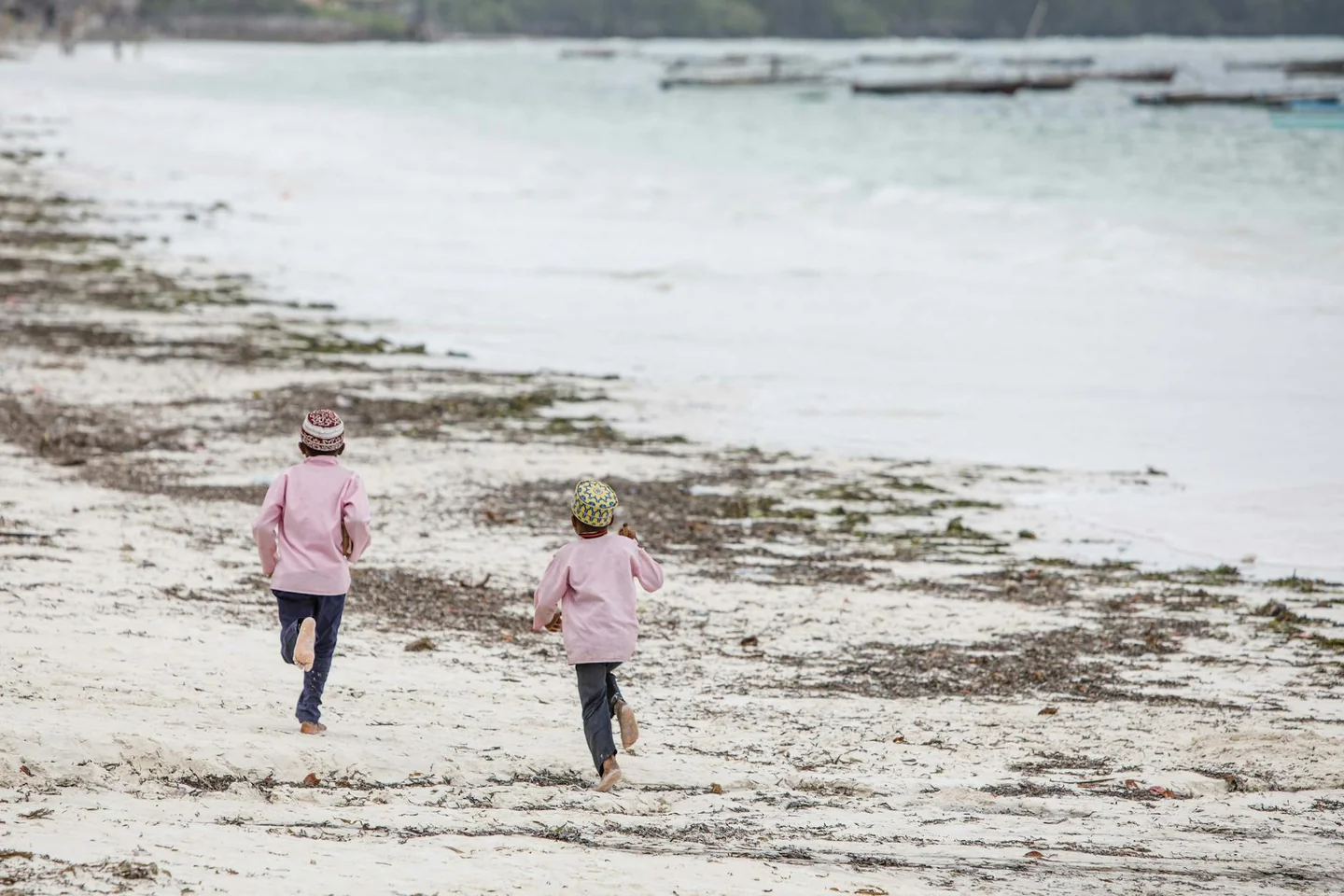
Imagen: PhotoByMau PhotoByMau / Pexels
Running on the Beach occupies a central place in the brightest stage of Joaquín Sorolla, when the painter turned the Valencian coast into a laboratory of light, color, and movement. Created in 1908, the canvas condenses his mastery of open-air painting, the child scene, and the glow of the Mediterranean into a composition that even today retains an almost physical energy.
The work shows three child figures moving along the water’s edge, with other bathers in the background, on a shoreline where the sea and the sand seem to breathe at the same rhythm. It is painted in oil on canvas and measures 90 by 166.5 centimeters. Today it is preserved in the Museum of Fine Arts of Asturias, in Oviedo, and its reading remains one of the most recognizable in the Sorollist universe: summer, childhood, breeze, and a radiance that never fades.
A decisive summer for Sorolla’s painting
The summer of 1908 was especially fertile for Joaquín Sorolla. Settled with his family on the beach of Valencia, the artist worked with the coast as if it were an open studio, with no walls or roof, the sky as a skylight and the sea as an unstable mirror. From that period came some of his most celebrated scenes, pieces in which everyday life is transformed into a kind of luminous snapshot.
everyday life is transformed into a kind of luminous snapshot.
The key to that moment lies not only in the subject, but in the way of looking. Sorolla understood that the shape of things changes under light, that the clarity of midday dissolves outlines, and that colors never appear in isolation. That intuition, very close to Impressionist sensibility, is translated here into a painting that does not describe the beach as a postcard, but as a sensory experience. One almost hears the murmur of the water and feels the hot sand underfoot.
The scene also responds to a very Mediterranean idea of happiness. It is not elegant leisure or a beach domesticated by the urban promenade, but a living, open space where bodies move freely. In that setting, childhood does not function as sentimental decoration, but as a visual engine: the children introduce speed, spontaneity, and a human scale that makes the whole painting vibrate.
The composition that sustains the movement
The balance of the work rests on a very precise architecture. Sorolla places the three protagonists in the foreground and reserves the background for the play of other bathers, so that the eye moves from the shore toward the water without losing the sense of breadth. The result is a harmonious composition, but by no means still; rather, it seems like a scene captured at the exact instant when something is about to change place.
The removal of the horizon is one of the most powerful devices in the canvas. By erasing that line that usually separates sky and sea, Sorolla concentrates attention on the relationship between figures, water, and sand. The sea occupies almost the entire upper half of the painting and expands with horizontal brushstrokes, while the lower strip of dry and wet sand acts as a visual counterweight. That dialogue between masses gives stability to an image that, because of its subject, could otherwise have slipped into mere disorder.
The composition also has a narrative virtue. It does not show a closed action, but an open race, a forward impulse. The girls move ahead in light dresses that catch the light, while the naked boy, more exposed to the sun, intensifies the chromatic contrast with the surroundings. There is no drama, but there is a very subtle tension: the speed of the bodies confronts the powerful calm of the sea, as if the painting were measuring two different rhythms of summer.
Mediterranean light and color in its pure state
If Sorolla remains unmistakable, it is because he knew how to turn light into narrative matter. In this painting, the blue of the water is not uniform, but a weave of tones ranging from deep blue to violet and ochre, with reflections that recall the sand and the transparency of the surf. Everything seems built by successive layers of luminosity, as if the sea were made of dense air and wet pigment.
The chromatic palette is designed to create contrast without harshness. The white and pink of the dresses stand out against the deep blue; the children’s skin introduces warm flesh tones that seem to return the sun’s heat; the sand provides the visual rest needed so that so much brightness does not become flat. Sorolla does not compose through abrupt clashes, but through correspondences. Each color seems to answer the one beside it, as happens in a well-tuned conversation.
On the surface of the painting, one can also perceive a quick, lively, almost nervous brushstroke, especially in the waves and the folds of the clothing. That speed does not imply carelessness. On the contrary, it reveals a very assured technique, capable of suggesting the moisture of the skin, the trembling of the water, and the lightness of the fabric with just a few gestures. The viewer does not see only a beach; they see the air that surrounds it.
Childhood, summer, and an idea of modern happiness
The child figures are the emotional heart of the work. Sorolla paints them naturally, without solemnity and without turning them into rigid symbols. They run, play, chase one another, get wet. That simplicity is precisely what gives the painting its strength. At a time when painting could tend toward the monumental or the excessively narrative, the artist chooses a minimal scene and elevates it through light.
Childhood in Sorolla is not a minor motif. It appears again and again in his work because it allows him to unite innocence, energy, and visual truth. Small bodies become decisive within the landscape: they introduce scale, create rhythm, and humanize the immensity of the sea. Here, moreover, their presence refers to an idea of well-being that critics of the time linked to the Mediterranean character of the Levantine coast and to a cultural past with Greco-Latin resonances.
That link with the Mediterranean should not be understood as patriotic decoration, but as a way of placing everyday life within a framework of historical continuity. The sea, the beach, and the children form a contemporary scene, yes, but they also evoke an ancient relationship with climate, the body, and light. Sorolla does not paint an academic allegory; he paints a concrete, almost tactile joy that belongs to the present and, at the same time, seems to come from very far back.
An open-air technique that changes the gaze
The work belongs to that territory of plein air, painting done outdoors, which Sorolla brought to a very personal intensity. His method required observing quickly, resolving precisely, and accepting that the scene changed every minute. Light does not wait, nor does water. That is why his beach paintings have a special vibration, as if they were always on the verge of dissolving and being made again.
In this canvas, one can see a very modern understanding of perception. Sorolla knew that the eye does not register things in isolation, but within an environment of reflections, reverberations, and moving shadows. That idea allows him to break the rigidity of certain outlines and merge figure and atmosphere into the same visual pulse. What seems spontaneous is, in reality, calculated with a highly refined workshop intelligence.
The painter’s quick hand does not only capture the instant; it also conveys the fleeting nature of the child’s gesture. There is something almost photographic in the sense of immediacy, but without losing the handmade warmth of painting. Faced with the coldness of a mechanical capture, Sorolla offers a memory of movement made with color. And that explains why his coastal scenes still feel so close: they do not freeze life, they let it run.
The museum’s reading and the material history of the painting
The Museum of Fine Arts of Asturias preserves the work as one of the standout pieces in its collection, and its provenance points to the Pedro Masaveu Collection. That detail matters because it reminds us that a painting’s journey does not end with its creation. It passes through private hands, institutions, exhibitions, and successive gazes until it settles in a specific space, where it acquires new contexts of interpretation.
The scale of the canvas helps explain its effect. Its 166.5 centimeters in width allow the scene to expand without turning it into a panoramic narrative; the 90 centimeters in height preserve the closeness of the bodies and the feeling of being before a stretch of coast captured at ground level. It is not a view from above or a distant postcard, but a point of observation almost embedded in the scene itself.
The materiality of oil paint also matters. In a beach painting, shine, transparency, and pigment density sustain much of the visual impact. Sorolla takes advantage of that condition to alternate areas of looser touch with others of greater definition, especially in the wet bodies and in the zones where the sun seems to bounce back with greater force. The result is a surface that does not merely represent water: it seems dampened by it.
From picturesque anecdote to icon of Spanish modernity
A superficial reading could reduce this work to a pleasant scene of children on the beach. That would be a mistake. Precisely because there is no theatrical artifice or moralizing, the painting becomes more modern. Sorolla turns away from the grand heroic narrative and opts for an everyday image in which sensation matters as much as narration. In that sense, the canvas anticipates a visual sensibility very close to that of the 20th century.
The modernity of Sorolla does not consist in breaking with the past as a rule, but in looking with a new freedom. The beach becomes a place where painting explores rhythm, luminosity, and perception. The figures are not placed there to prove a thesis; they are there because life, in that instant, happens that way. And that fidelity to the instant, far from being minor, is one of the reasons the work continues to be so compelling.
There is also a broader cultural reading. At the beginning of the 20th century, the Levantine coast was charged with meanings linked to Mediterranean identity, emerging tourism, and the idea of a country seeking to modernize its image without losing ties to tradition. Sorolla, through painting, offered a powerful synthesis: a sunny, bodily, and open Spain, but built with plastic rigor and without explicit propaganda.
The magnetism of a scene that still breathes
There are paintings remembered for their subject and others that endure for the feeling they leave behind. Running on the Beach belongs to both groups, but stands out above all for its ability to make the air visible. The sand, the water, and the bodies do not appear as separate pieces, but as elements joined by the same temperature. That effect of unity is difficult to achieve, and Sorolla reaches it with a naturalness that deceives.
The image preserves intact a rare quality: it seems joyful without frivolity, technical without coldness, and decorative without superficiality. Perhaps that is where its lasting strength lies. The painter turns a simple instant into a complex visual experience, and he does so without raising his voice. The work does not need to impose itself; it imposes itself on its own, like certain summer mornings that leave a precise mark on memory.
What remains in the painting is not only the child scene, but the way Sorolla manages to make light become almost audible. The sea advances, the figures run, the sun strikes, and the viewer’s gaze ends up trapped in that triangle of movement, color, and radiance. It is a painting that does not age because it does not depend on fashion, but on a very elemental visual truth: the beach, when Sorolla paints it, is not a backdrop. It is the very heartbeat of the work.



Reebok runs large or small: a real fit guide

Hoka Challenger ATR 7 GTX: complete review of the all-terrain shoe

How to clean white sneakers without ruining them

Altus Pirineos 40-liter backpack: analysis, use, and key points

20,000 mm waterproof jacket for men: key points to get it right

Under Armour HOVR Sonic 6: complete review of the shoe

incline treadmills: guide to choosing better

Achilles tendonitis: real recovery time

Pain in the Achilles heel: causes, signs, and relief

What to take for calf pain: real relief and when to worry

 Races3 months ago
Valencia Half Marathon 2026: date and registration

 Reviews and Comparisons4 months ago
Asics Gel-Roadmiles 3 for men: review and current price

 Races3 months ago
Valencia Marathon 2026: entry, ballot and course

 Reviews and Comparisons4 months ago
Asics Gel Sonoma 8 Gore-Tex: complete analysis for trail and rain
- Sneakers3 months ago
Saucony Endorphin Pro 4: full review and verdict

 News5 months ago
Strava API 2026: what changes for clubs, challenges and runner apps?

 Reviews and Comparisons5 months ago
Nike Alphafly 3: opinions, sensations, and real key points

 Reviews and Comparisons4 months ago
Under Armour running shoes review 2025-2026: models and key features

 Sports Equipment4 months ago
Shoe sizes in cm: a clear guide to getting the right fit for your footwear
- Sneakers4 months ago
Adidas Adizero Boston 13 for men: review and verdict
- Sneakers3 months ago
Neutral running shoes with lots of cushioning: the best of 2026

 News4 months ago
Where is the Hoka brand from and why was it born in France