Training
Pool exercises for runners: benefits and how to use them
Aquatic routines to build strength, mobility, and cardio with less impact and more freshness.

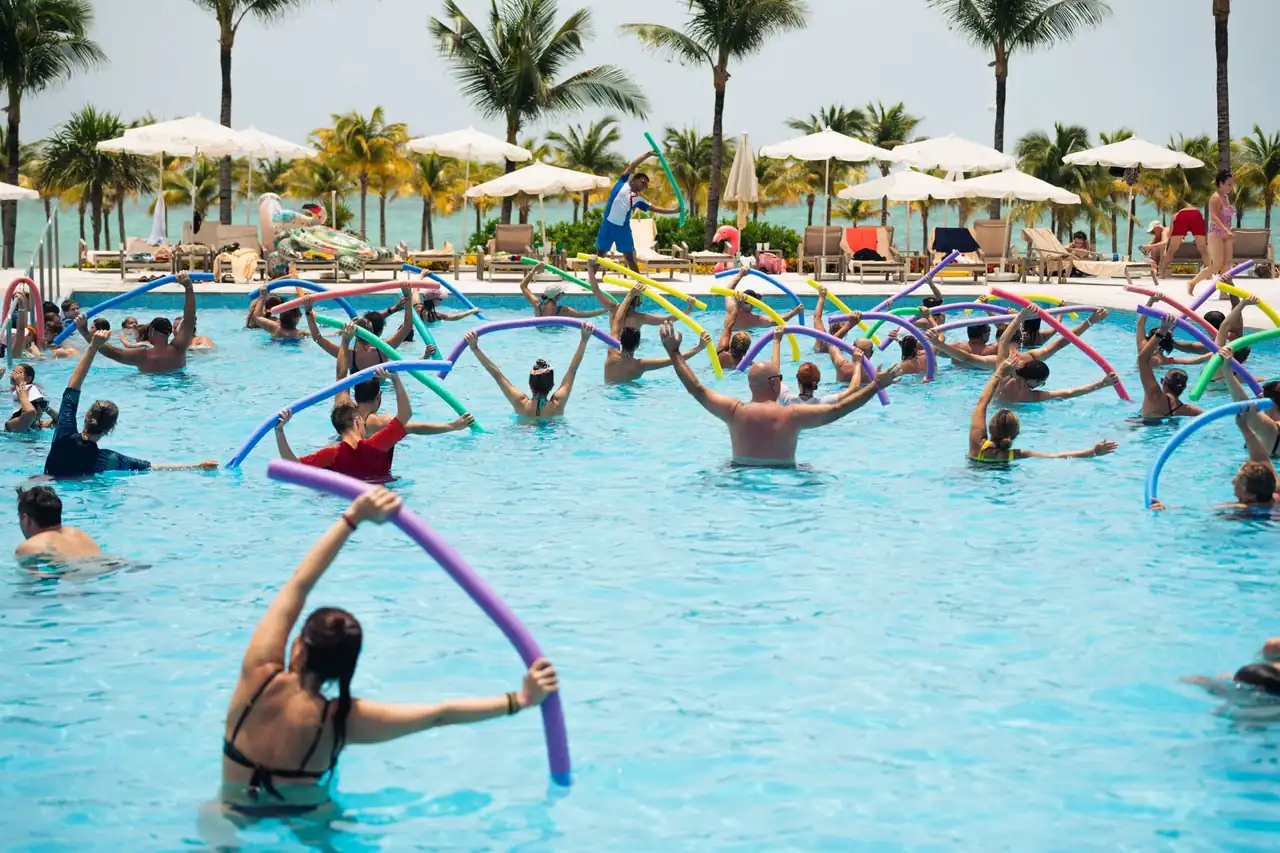
For runners, water can become a kind of silent gym: it cushions impacts, provides constant resistance, and lets you move with less load on your knees, ankles, and back. Aquatic exercises can therefore help you stay active without putting as much strain on your body, return to training, or vary your workouts in summer.
The appeal is not just in the coolness. The pool adds a mechanical component that is hard to match on dry land: every movement costs more because the water slows, accompanies, and demands control. That double effect means that a walk, a lunge, or a simple jump can become a full-body workout for the legs, core, and arms, with a different kind of effort—gentler on the joints but very demanding for the muscles.
Why the pool changes the way you train
Training in water reduces impact without necessarily reducing intensity. That is the big difference compared with a conventional workout on land. Buoyancy takes some of the body weight off, making movement kinder to the joints, but the resistance of the water forces you to hold posture better and activate more muscle groups at the same time.
In practice, that opens the door to sessions that are very useful for different profiles. Someone with knee pain finds a more tolerable environment. Someone who has gone weeks without moving can start with simple movements without feeling overwhelmed. And a runner used to asphalt can use the pool as an alternative training field for strength, coordination, and cardio, especially during hot periods when the body appreciates a few degrees less in temperature.
The advantage is also metabolic. Water forces you to spend more energy than a similar movement on dry land, because every stroke, every change of direction, and every push against the liquid’s resistance requires a small technical battle. That battle, repeated over several minutes, raises the heart rate, improves aerobic capacity, and activates the muscles very fully, without the harshness of repeated impacts.
What equipment is worth bringing to the pool
Most aquatic exercises can be done using your own body weight. You do not need to bring an arsenal to get started. All you need is space, a safe area where you can stand, and the will to keep your technique clean. That starting point matters because it avoids the false idea that training is only worthwhile if you have specific equipment.
Even so, some accessories help vary the session and increase the challenge without complicating the movement. Kickboards make leg work easier and improve body position. Foam noodles help maintain buoyancy in core exercises or water cycling. And some dumbbells designed for the pool add resistance for the arms and shoulders, although they should be used in moderation so as not to lose control of the execution.
Less is more when the goal is to move with quality. A pool full of objects does not guarantee a better session. In fact, the most effective exercises are often the simplest: walking, lifting the knees, doing squats, or jogging in the water with good alignment. Equipment adds value, but it does not replace technique or common sense.
The basis of a useful session: warm up, organize, and breathe
An aquatic routine works better when it starts progressively. Water can be misleading: it cools, relaxes, and makes you feel less fatigued than you actually are. That is why it is advisable to begin with broad, slow movements, let the body adapt to the temperature, and save the more intense movements for when breathing has already settled.
Walking through the pool for a few minutes is an effective way to warm up. After that, a gentle version of running in place or short movements with firm steps help wake up the hips, ankles, and core. Once the body has settled into rhythm, the more decisive repetitions come: high knees, lunges, jumps, or arm pushes. The key is not improvisation, but chaining movements logically.
Hydration remains mandatory even though the water is all around you. The body loses fluids just the same, or even more than it seems, because the temperature sensation is misleading and sweating goes unnoticed. Depth also matters: for most standing exercises, working at waist or chest height offers enough resistance without losing stability. If you are not a confident swimmer, it is best to avoid deep areas and always prioritize safety.
Low-impact exercises that really work
Walking in water seems simple, but it is not. Every step meets constant pressure that forces you to push more deliberately, stabilize your torso better, and use the glutes and core as if they were the cables that keep the movement upright. Taking long steps, with an upright back and a slightly engaged abdomen, turns that gesture into a very complete workout.
Raising the knees adds a touch of intensity without complicating the technique. It can be done in place or while moving forward, bringing one knee up and alternating legs at a steady pace. That movement activates the core, improves coordination, and raises the heart rate quickly. It is also useful for those who need a gentle transition toward a more dynamic workout.
Aquatic jogging is one of the most valuable pieces of any routine. Running without moving forward much, or moving with short strides inside the pool, forces you to maintain proper posture and move your legs more frequently than usual. In water, that light run does not punish the body like asphalt does, but it still works cardiovascular capacity and muscular endurance very effectively.
Underwater squats have a deceptively simple feel. Lowering the hips, keeping the chest open, and rising again against the water’s pressure strengthens the thighs and glutes, and also teaches better control of knee and hip alignment. If you add a small jump when coming out of the squat, the movement gains power without becoming a harsh impact.
Lunges inside the pool also deserve a fixed place. The water stabilizes less than it seems, so every step forward requires concentration. That slight instability improves proprioception, strengthens the quadriceps and glutes, and forces the torso to stay firm. For those looking for functional work, it is one of the most interesting movements in the aquatic repertoire.
Arms, shoulders, and back: the upper body works too
It is not all legs and cardio in the pool. The resistance of the water makes the arms have to push in every direction with a feeling similar to moving a lever heavier than normal. Front and side raises, with or without water dumbbells, activate the shoulders and upper back progressively and without sudden jolts.
That work becomes more valuable because it often goes unnoticed. On land, many arm exercises depend on weight or equipment; in the pool, the liquid itself provides resistance from the very start of the movement. Raising and lowering the arms slowly, while keeping the scapulae under control, improves posture and helps offset hours of sedentary behavior or running sessions in which the upper body is left aside.
Pushes and openings also have a stabilizing function. When the arms work against the water, the torso responds so it does not fall out of alignment. That reaction engages the back, core, and shoulders in a single movement, which is especially useful for anyone looking for a complete session without needing machines or an enclosed gym setting. In that sense, water turns the space into an open-air training room.
Jumps and livelier rhythms without punishing the joints
Jumps in the pool offer intensity without the penalty of dry-land impact. Jumping in water raises the heart rate, activates the legs and glutes, and adds a playful component that makes it easier to sustain the session with less sense of monotony. The cushioning of the aquatic environment reduces the harshness of landing, which is valuable for the knees and ankles.
Among the best known are jumping jacks, which open and close the legs and arms in the style of a jumping jack, and repeated vertical jumps, which work power and coordination. In both cases, water imposes a different rhythm—slower than on land but more resistant—which forces each repetition to be done with intention and not just speed.
The underwater jump squat deserves a special mention. It is one of those movements that seems simple until it is repeated several times. Moderate depth helps control the landing and maintain balance, while the glutes and thighs handle the hard part of the effort. If performed carefully, it offers a very interesting balance between power and joint protection.
Core and midsection: the least visible and most useful work
The abdomen is activated much more than the calm surface of the pool suggests. Every time the body wants to stay stable, the center responds. That is why knee raises, water cycling, or controlled floating movements are so effective for the core. They are not about sudden effort, but about continuous, clean tension.
Bicycling in the water is a classic for a simple reason: it works. By simulating pedaling in a floating position or with the help of a noodle, you get continuous work for the abdomen and legs that improves endurance and coordination. There is no need to exaggerate the speed; just keep a steady pace and orderly breathing and the exercise becomes a very complete block.
Shorter, more precise core exercises can also be done. Bringing the knees to the chest, holding the position for a few seconds, or alternating arm and leg movements with the back well aligned forces the abdomen to stabilize without rest. That kind of effort, less flashy than a jump, is often more useful for anyone who wants to truly strengthen without relying on impact.
How to fit these movements into a realistic routine
An effective session does not need to be long to be serious. Between 20 and 30 minutes are enough to combine warm-up, main block, and cool-down. The important thing is not to turn the pool into a chaotic succession of isolated movements. When there is order, the body understands the stimulus better and responds more clearly.
A logical structure usually starts with walking and light running in the water, continues with squats, knee raises, and lunges, and ends with jumps or water cycling. In between, arm and shoulder exercises add balance to the whole session. You do not need to do everything every day; even selecting four or five well-executed movements can make for a very solid session.
Consistency matters more than spectacle. Training three times a week in the pool, with moderate intensity and clean technique, usually provides more than one punishing session. Water rewards consistency because it lets you repeat without as much accumulated fatigue, and that makes it easier to build a habit for people who tire quickly of classic training.
Who tends to benefit most from aquatic training
The pool is especially well suited to recovery phases or moderate workloads. People with joint pain, runners in deload weeks, active older adults, and beginners find in water an environment where the body feels lighter, but not therefore less challenged. The perception of effort changes, yes, although the actual work is still there.
It is also a very useful alternative in summer, when the heat punishes exercise adherence and any outdoor activity becomes harder. Water cools you down, lowers the thermal sensation, and allows you to keep your routine without turning every session into a battle against the sun. That combination of usefulness and comfort explains why so many training plans include the pool as support and not just for leisure.
For runners, the value is twofold. The pool helps maintain aerobic capacity, supports mobility, and lets you work on strength without repeated impacts. On tired days or when the miles are starting to pile up, alternating with aquatic work can be a smart way to keep adding stimuli without wearing down the muscles so much.
What to keep in mind before entering the water
Safety comes first, even in a friendly environment. It is advisable to choose areas where you can stand steadily, avoid sudden movements if the bottom is slippery, and not push the intensity in the first few minutes. Water can give a false sense of control, but balance changes and technique matters more than on dry land.
It is also important to listen to simple warning signs: dizziness, excessive fatigue, shortness of breath, or joint discomfort that does not fit normal exertion. The pool is a gentle medium, not a shortcut for ignoring the body. That is why the best session is usually the one that ends with the feeling of having worked, but without having forced the body into too much struggle.
The real value of these exercises lies in their balance. They let you move, get stronger, and burn energy with less impact, but they are still training, not a stroll. That mix of gentleness and demand explains why they work so well for different profiles and why, when used properly, they turn any pool into a workspace that is as serious as it is pleasant.
How pool sessions can complement a runner’s training
For runners, pool sessions offer a way to work on aerobic fitness, strength, and coordination with less impact than a workout on land. Walking against the water, lifting your knees, or performing controlled lunges asks you to push and stabilise your body. These movements can also add variety on hot days. They do not reproduce the demands or technique of running exactly, so treat them as a complement rather than a permanent replacement for your runs.
Start with a few minutes of easy walking and broad movements to get used to the water. Then alternate simple leg exercises with arm movements and core work, keeping your posture steady and breathing regularly. If you want to imitate a running action, choose an area where you can stand and stay in control. You do not need equipment to begin: a kickboard or pool noodle may help, but should not compromise your technique. Keep the effort manageable, particularly if your week already includes demanding training.
Watch for a loss of posture, breath-holding, effort that feels out of proportion, or pain. Ease off or stop if the movement no longer feels comfortable; do not try to make up in the pool for a running load that feels excessive. Follow normal pool safety precautions and use an area suited to your experience. If pain or any other symptom persists, consult a healthcare professional.
The pool as a training ground, not just a refuge from the heat
Water does not eliminate effort; it transforms it. Where there are impacts on land, there is continuous resistance here. Where there is load on asphalt, there is buoyancy. And precisely because of that change in rules, aquatic exercises have gained ground as a tool for physical conditioning, recovery, and maintaining fitness during the hardest months of the year.
The pool offers something unusual: the chance to train with a pleasant feeling and, at the same time, get a complete workout for the legs, arms, and core. It is an environment that softens without overindulging, that protects without canceling effort. Its value rests on that border, as fine as it is useful. And that is why, for anyone looking for a different, safe, and well-used workout, it remains one of the most effective settings there is.



Reebok runs large or small: a real fit guide

Hoka Challenger ATR 7 GTX: complete review of the all-terrain shoe

How to clean white sneakers without ruining them

Altus Pirineos 40-liter backpack: analysis, use, and key points

20,000 mm waterproof jacket for men: key points to get it right

Under Armour HOVR Sonic 6: complete review of the shoe

incline treadmills: guide to choosing better

Achilles tendonitis: real recovery time

Pain in the Achilles heel: causes, signs, and relief

What to take for calf pain: real relief and when to worry

 Races3 months ago
Valencia Half Marathon 2026: date and registration

 Reviews and Comparisons4 months ago
Asics Gel-Roadmiles 3 for men: review and current price

 Races3 months ago
Valencia Marathon 2026: entry, ballot and course

 Reviews and Comparisons4 months ago
Asics Gel Sonoma 8 Gore-Tex: complete analysis for trail and rain
- Sneakers3 months ago
Saucony Endorphin Pro 4: full review and verdict

 News5 months ago
Strava API 2026: what changes for clubs, challenges and runner apps?

 Reviews and Comparisons5 months ago
Nike Alphafly 3: opinions, sensations, and real key points

 Reviews and Comparisons4 months ago
Under Armour running shoes review 2025-2026: models and key features
- Sneakers4 months ago
Adidas Adizero Boston 13 for men: review and verdict

 Sports Equipment4 months ago
Shoe sizes in cm: a clear guide to getting the right fit for your footwear
- Sneakers3 months ago
Neutral running shoes with lots of cushioning: the best of 2026

 News4 months ago
Where is the Hoka brand from and why was it born in France