Training
Running helmets: how to train it without mistakes with practical keys
Keys to choosing sports headphones with a good fit, sweat resistance, enough battery life, and a reasonable price.

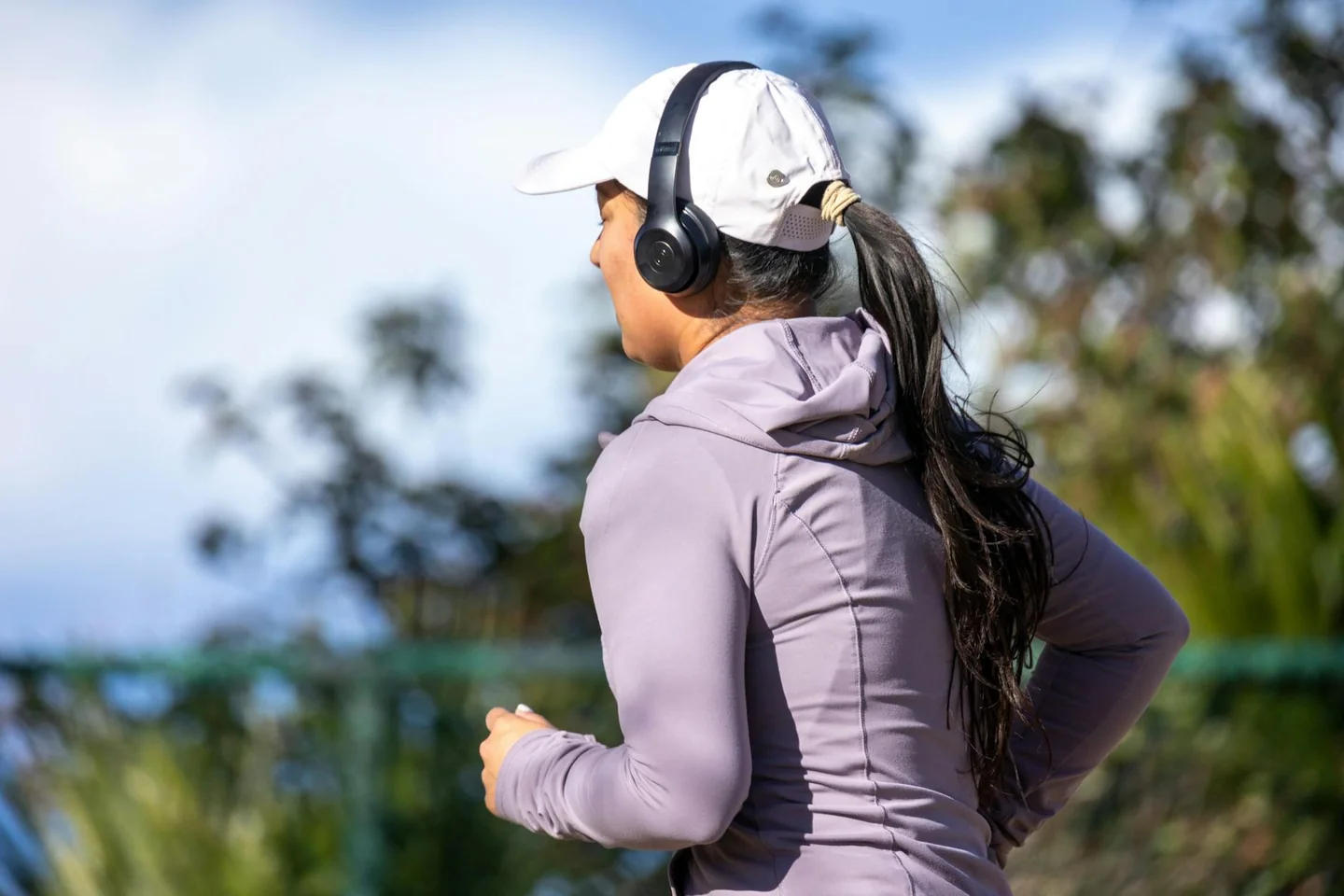
Imagen: David Brown / Pexels
Running headphones have stopped being a secondary accessory and have become one more piece of gear for many runners, whether on the treadmill, on asphalt, or on dirt. The range is huge and, precisely for that reason, the most common mistake is to look only at the price or battery life. In practice, what makes the difference is the fit, the level of openness to the surroundings, sweat resistance, and comfort when the pace picks up and the body starts moving like a fine, repetitive pendulum.
The 2026 market confirms a clear trend: wireless models dominate, with prices in Spain ranging from around 15-20 euros in basic ranges to more than 150 euros in advanced sports options. Open-ear designs and bone conduction ones have also gained ground, aimed at those who prioritize hearing traffic, bicycles, or other pedestrians without isolating themselves completely. At the same time, classic in-ear models still have their place, especially for their tighter fit and more enveloping sound.
What really separates a useful model from a frustrating one
The starting point is not the brand, but the way the headphones behave in motion. When running, any piece that rubs, bounces, or slips ends up becoming a distraction. That is why support matters more than sound power or a dazzling battery on the spec sheet. A very light but unstable model forces you to readjust it often; a very closed one can feel pressuring; one that is too large is noticeable from the first kilometer.
Ergonomics, moreover, are not measured only in grams. The ear cushions, stabilizing fins, over-ear hooks, and the way the whole set responds when the body sweats also matter. In this segment, models with IPX4, IPX5, IP55, IP67 or IP68 are common, but those acronyms do not tell the whole story on their own. IPX4 is usually enough for sweat and splashes; IP55 or IP57 adds an extra layer against dust and moisture; IP67 or IP68 already points to higher resistance, useful for training in the rain or for users who are very demanding about durability.
It is also worth understanding that the ideal sound for running is not always the most isolating one. On a gym treadmill, active noise cancellation can be useful because it reduces environmental noise. By contrast, on a street with traffic or on a busy seafront promenade, a design that is too sealed can reduce situational awareness. That nuance explains why open-ear models have grown: they do not aim to lock you in, but to accompany you without erasing the world around you.
Fit, weight and stability: the foundation of a good choice
In running, the stability of the earbud works like shoes on a long run: if you do not notice it at the beginning, it is probably well sorted. Models with an ear hook and those that include fins usually offer a firmer hold than simple in-ear ones. Neckband or rear-band models, less common today, are still practical for those who value a more rigid body between both sides of the earphone and a somewhat larger battery.
Weight also matters, though not in isolation. There are very light models, even under 30 grams in bone conduction, that are comfortable during medium or long sessions. Others, a little heavier, make up for it with better battery life, better physical controls, or a more solid build feel. The trick is balance: a headphone that barely weighs anything can end up falling off if the geometry does not help, while a slightly more robust one can feel natural if it distributes pressure well.
That is why many runners end up preferring systems with micrometric adjustment, physical buttons, and non-slip surfaces. LED displays, now so common in e-commerce, help monitor charge, but they do not replace proper support. And in a run with pace changes, roundabouts, or uneven terrain, a good anchor matters more than any visual flourish.
Bone conduction and open ear: why they have gained so much ground
Bone conduction has gone from being a rarity to becoming a very visible format in sports shopping. Its logic is simple: it transmits sound through the bones of the head and leaves the ear canal free. That idea has an obvious advantage for running in the city or on shared routes: it lets you keep awareness of your surroundings without giving up music, a podcast, or a short call entirely.
Open-ear designs, on the other hand, aim for a similar experience through different technology. Instead of sealing the ear, they place the sound close to the outer ear, often with hooks or temples. That reduces the feeling of being closed off and usually appeals to those who train many hours a week and do not want to end up feeling like they are wearing earplugs. In commercial listings they often appear as headphones for running, cycling, or fitness, because the usage pattern is very similar: continuous movement, sweat, and the need for environmental awareness.
That said, there is a trade-off. Anyone who wants deep bass and a very immersive listen will usually find better results in a well-sealed in-ear model. Bone conduction is not trying to compete on the same ground; it offers a different experience. It is the sonic equivalent of training with the curtain raised instead of pulling the blind down.
Water, sweat and dust resistance: the detail that confuses people most
Protection against water has become a kind of language of its own. Many ads promise waterproofing, but not all certifications mean the same thing. In practice, IPX4 covers splashes and sweat; IPX5 withstands light jets; IPX7 handles temporary immersion; IP67 and IP68 add a higher level of protection against dust and, depending on the case, water. For running, most users do not need to go as far as immersion, but it is worth avoiding products with no serious reference at all.
Constant moisture wears down moving parts, charging ports, and acoustic meshes sooner. A cheap sports headphone may seem sufficient during a dry first week, but lose consistency when summer runs arrive. Sweat, moreover, is a silent enemy: it seeps into the foam, leaves residue, and punishes the finish if the material is not well resolved. That is why many manufacturers incorporate resistant coatings, recycled materials in part of the shell, or seam-free designs in the most exposed areas.
The user experience in Spain reinforces this point. In summer, with heat and high humidity in much of the country, a poorly protected headphone ages quickly. In winter, rain and cold add another kind of wear, less obvious but just as real. Water resistance is not a technical luxury; it is a policy for everyday use.
Real battery life, fast charging and the myth of giant figures
The battery has become one of the most inflated selling points in the sector. There are entry-level models that advertise 40, 50, 60 and even 80 hours combined with the case, a figure that serves marketing more than it helps interpret a specific outing. What matters for running is not the total number on the packaging, but how many hours the headphones last in continuous use, with real volume and Bluetooth active.
In moderate-impact sports, an autonomy of 6 to 10 hours per charge is usually enough for the vast majority of workouts. If the headphone lasts less, it can still be a valid purchase, but the user will depend more on the case. If it lasts longer, there will usually be some compromise in weight, size, or charging time. The trade-off is always there, it just shifts from one side to the other.
Fast charging has also gained importance. In practice, being able to recover several hours of use with just a few minutes plugged in fits a runner’s real routine better than an endless battery under theoretical conditions. Some current models add USB-C connectivity, now standard, and small LED indicators to avoid surprises before heading out. They are modest details, almost invisible, but they solve very specific frictions.
Which sound technology fits each type of training
Sound quality depends on more things than usually appear in an ad. Drivers, fit, audio profile, and the usage environment all matter. In sports models, Bluetooth 5.3, 5.4 and 6.0 connections are common, improving stability and energy efficiency compared with older generations. They do not work miracles, but they reduce dropouts, pair better with multiple devices, and consume less.
For an easy run with background music, almost any competent model will do. For interval sessions or treadmill workouts, a profile with pronounced bass can add a bit more punch. For podcasts, audiobooks, or calls, the priority shifts to voice clarity and wind-noise reduction. That is why some headphones include multiple microphones, ENC environmental noise cancellation, or transparency modes that let some outside sound through without sacrificing too much listening quality.
It is worth not falling into the trap of thinking that more isolation equals a better experience. Outdoors, especially, hearing too little can be uncomfortable or outright unsafe. The smart choice is not the most spectacular one, but the one that fits the place where you actually run: a footbridge, a park, a track, the gym treadmill, or the sidewalk of a busy avenue.
Price ranges and what to expect in Spain
The price range is wide and, in this case, the spread really does help explain the market. In general stores and e-commerce platforms, the cheapest models sit around 12 to 30 euros. They usually offer decent Bluetooth, sweat resistance, and enough battery for basic training, though with simpler materials and less acoustic refinement.
In the mid-range, between 40 and 80 euros, you find the most interesting zone for many runners. There you can already find more reliable fits, better finishes, and more serious water certifications. It is also the range where recognized sports brands compete and where the difference between a product designed to last and one that only aims to sell well in season becomes more noticeable.
Above 100 euros, more polished technology comes into play, better microphones, more refined sound profiles, and, in some cases, designs specifically aimed at bone conduction or open-ear use. They are not always necessary, but they do make sense for those who train daily, combine several sports, or value a more durable build. The boundary, in reality, is not set only by price; it is set by the accumulated hours of use.
What details are worth checking on the spec sheet before deciding
The technical sheet is full of useful signals, as long as you read it with judgment. The water resistance certification, fit type, weight, battery life, and audio type should matter more than the aesthetics or the seasonal hook. It is also worth considering whether the model offers physical controls, because in running they usually work better than touch controls when there is sweat, rain, or urgency.
Another important point is material quality. Polycarbonate shells, EPS foams in certain products within the sports ecosystem, and silicone parts are not decorative details; they affect durability and feel. Manufacturers that publish information about traceability, quality control, or inspection of the finished product usually offer an extra layer of confidence compared with poorer or more ambiguous spec sheets.
Compatibility with a rear light, voice assistant, or specific usage modes also deserves attention. They are not essential, but they can be practical for those who run at night, use the watch as a music source, or switch frequently between phone and watch. In a saturated market, these small nuances help separate the accessory that truly accompanies you from the one that only looks complete on the sales page.
Safety is also part of the purchase
Outdoors, the best music does not make up for losing awareness of your surroundings. That is why many runners choose designs that do not fully close off the ear. Traffic, bicycles, crossings, and other users of public space turn attentive listening into a practical matter, not a secondary preference. Open-ear and bone conduction respond precisely to that need for balance.
On the treadmill or in a gym room, the scenario changes. There, active noise cancellation can be an ally, as long as it does not prevent you from paying attention to what is happening nearby. A headphone that is too isolating can also isolate you from instructions, alarms, or conversations. Technology helps, yes, but context matters more than the commercial label.
That is why the sensible question is not which model is the most complete on paper, but which one fits best with the place and the way you train. A city runner, a light trail runner, and a gym runner do not need exactly the same thing. Sometimes the difference between getting it right and getting it wrong lies in accepting that there is no perfect headphone for everything, just as there is no single shoe that works for every surface.
The sports market is moving toward more open and practical formats
The recent evolution of the sector points to a clear idea: less enclosure and more versatility. Open models, more stable hooks, reasonable battery life, and better-specified water resistance are displacing generic proposals that used to be enough. Even in mass retail in Spain, there is a growing number of references with IPX7, newer Bluetooth, and designs aimed at running, cycling, and fitness.
Behind that trend there is a change in habit. More and more runners combine music with environmental awareness, and look for materials that can withstand daily use without demanding too much attention. The perfect headphone, in that context, is not the most eye-catching one, but the one that disappears during the stride and keeps working weeks later with the same naturalness with which it started.
There is also an element of user maturity. People no longer buy only for sound; they buy for coexistence. For how it feels in a long session, whether it can be cleaned easily, whether the case fits well in a pocket, and whether it does not force you to keep an eye on the battery every two days. That sum of small decisions is reshaping the sports market more strongly than any one-off campaign.
A useful purchase is noticeable in the first kilometer and also months later
The best running headphones are not the ones that promise the most, but the ones that solve best the repeated gesture of putting them on, running, sweating, stopping, and heading out again. A good fit, real water resistance, enough battery life, and listening adapted to the environment are worth more than an endless list of functions that have little to do with training. When the design works, it disappears; when it fails, it becomes a constant annoyance.
The market today offers solutions for almost any profile, from the runner looking to spend little to the one who prefers a technical and robust product. The key is understanding that value does not depend on a single data point, but on the sum of several: comfort, stability, protection, battery life, and safety. In an accessory meant to accompany movement, that balance is worth as much as the music itself.
In the end, the best choice is the one that keeps pace without asking for the spotlight. Like good breathing on a climb, you notice it more when it is missing than when it is there. And in that territory, the sports headphones that survive sweat, noise, and continuous use are the ones that truly leave a mark.
Este artículo contiene enlaces de afiliado: si compras a través de ellos, se genera una pequeña comisión sin coste adicional para ti. Más información.



Reebok runs large or small: a real fit guide

Hoka Challenger ATR 7 GTX: complete review of the all-terrain shoe

How to clean white sneakers without ruining them

Altus Pirineos 40-liter backpack: analysis, use, and key points

20,000 mm waterproof jacket for men: key points to get it right

Under Armour HOVR Sonic 6: complete review of the shoe

incline treadmills: guide to choosing better

Achilles tendonitis: real recovery time

Pain in the Achilles heel: causes, signs, and relief

What to take for calf pain: real relief and when to worry

 Races3 months ago
Valencia Half Marathon 2026: date and registration

 Reviews and Comparisons4 months ago
Asics Gel-Roadmiles 3 for men: review and current price

 Races3 months ago
Valencia Marathon 2026: entry, ballot and course

 Reviews and Comparisons4 months ago
Asics Gel Sonoma 8 Gore-Tex: complete analysis for trail and rain
- Sneakers3 months ago
Saucony Endorphin Pro 4: full review and verdict

 News5 months ago
Strava API 2026: what changes for clubs, challenges and runner apps?

 Reviews and Comparisons5 months ago
Nike Alphafly 3: opinions, sensations, and real key points

 Reviews and Comparisons4 months ago
Under Armour running shoes review 2025-2026: models and key features
- Sneakers4 months ago
Adidas Adizero Boston 13 for men: review and verdict

 Sports Equipment4 months ago
Shoe sizes in cm: a clear guide to getting the right fit for your footwear
- Sneakers3 months ago
Neutral running shoes with lots of cushioning: the best of 2026

 News4 months ago
Where is the Hoka brand from and why was it born in France