Training
Running pace calculation: a clear guide to running better
Master the rhythm, translate marks into real times, and adjust your outputs with a useful and precise guide.

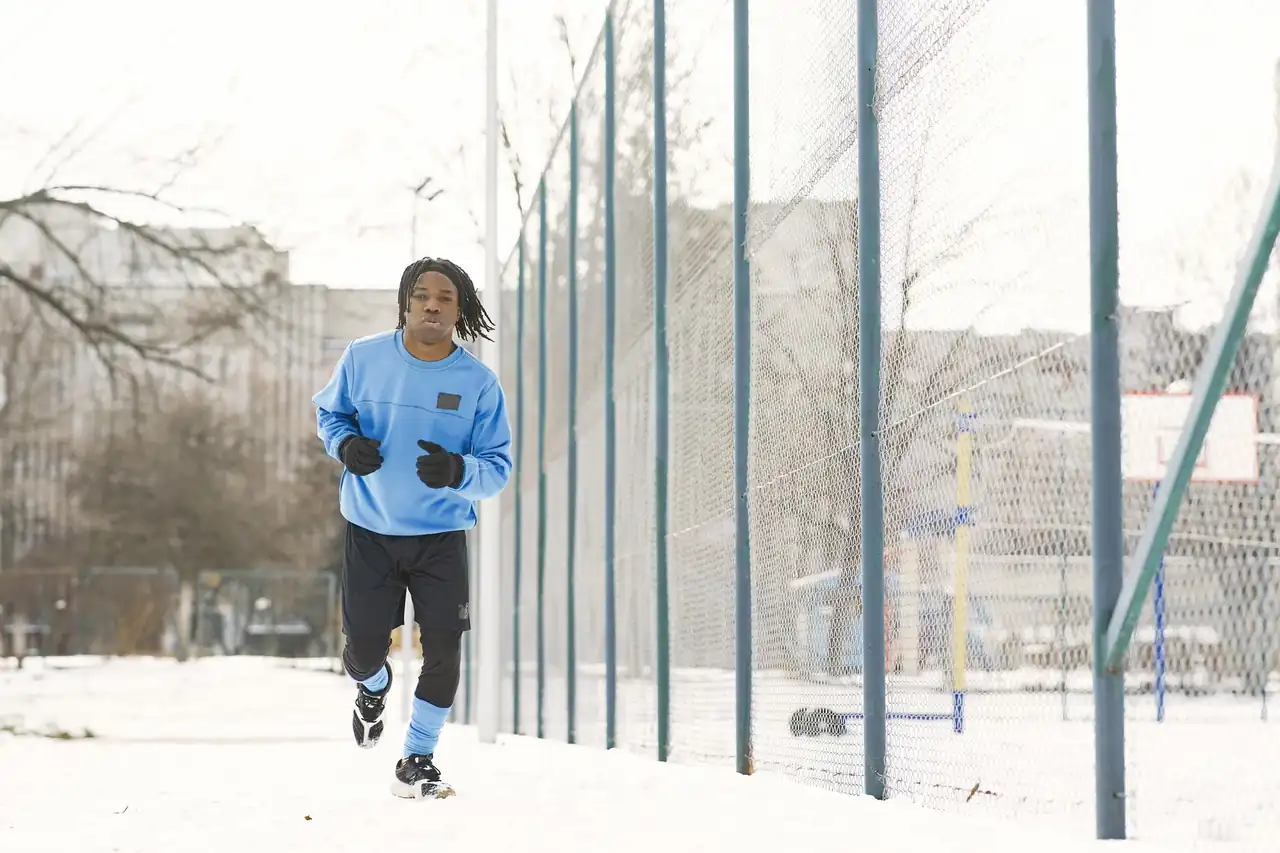
Pace is the silent compass of any runner. It sets the pace, organizes the strategy, and prevents a promising effort from falling apart too soon. A correct calculation lets you know how long a kilometer takes, how much is left to reach the finish, and what real margin remains in 5K, 10K, half marathon, or marathon. In practice, it is not a decorative figure: it is the difference between running in control or going in blind.
In running, precision matters as much as legs do. A small change in pace per kilometer noticeably alters the final time, especially as the distance grows. That is why it is worth understanding the relationship between distance, time, and speed well, and not confusing pace with average speed, which, although connected, do not mean the same thing. That distinction avoids calculation errors and helps read any mark more accurately.
The relationship between pace, time, and distance
The calculation starts from a simple idea: if you know the distance and time, you can obtain the pace; if you know the pace and distance, you can estimate the finish time. The most commonly used formula in racing is pace = total time / distance. In runner language, that means how long, on average, it takes you to cover a kilometer or a mile. It is a very useful measure because it speaks the language of everyday effort.
Speed, on the other hand, expresses how many kilometers are covered per hour. That is why a pace of 5:00 min/km is equivalent to 12 km/h, while 6:00 min/km would drop to 10 km/h. When the runner’s watch sets the pace, pace is usually more intuitive; when thinking about traffic, cycling, or endurance sports, speed feels more familiar. Both are useful, but it is best not to mix them up as if they were the same thing.
There is also an important practical difference. Pace helps plan a race with kilometer-by-kilometer precision, while speed can be more useful on a treadmill or as a general performance reference. In a half marathon, for example, a variation of just 5 seconds per kilometer can shift the final time by more than a minute. In a marathon, that small margin becomes a much more serious time difference.
How a result translates into a real pace
The most direct way to calculate it is to divide the total time by the distance covered. If a runner completes 10 km in 50 minutes, the result is an average pace of 5:00 min/km. If that same person runs 5 km in 25 minutes, the calculation again gives the same pace. There is no mystery: the final number tells the story better than any fleeting sensation felt during the run.
The nuance lies in the unit of measurement. A time of 1 hour and 45 minutes in a half marathon is not calculated the same way as 45 minutes in a 10K, because the distance completely changes the meaning of the data. Often the mistake is not in the formula, but in converting hours, minutes, and seconds. That is why pace tools make it so practical to enter the values exactly as they appear on the stopwatch and let the calculation do the rest.
It is also possible to reverse the operation. If the goal is to finish a 10K in 48:00, the required pace will be 4:48 min/km. In a half marathon of 1:40:00, the average pace is around 4:44 min/km. That figure is useful not only for the race itself; it also organizes training, especially long blocks and pace changes. The body understands a specific cue better than a goal that is too abstract.
Why pace changes so much depending on distance
Not all paces are equally sustainable. A pace that feels comfortable over 5 km may become too demanding after kilometer 12 or 15. Physiology is decisive: the effort you can maintain for a few minutes is not the same as what you can hold for more than an hour. That is why race prediction models adjust the expected result to the distance instead of simply copying speed as is.
In shorter events, the pace is usually more aggressive and closer to the anaerobic threshold; in longer distances, the runner needs greater control to avoid paying for it later. That is why a 30:00 5K does not translate linearly into a 1:00:00 10K. The body does not work like a flat calculator: fatigue, hydration, heat, and terrain all tip the balance.
Recreational runners usually notice this effect when they move from a flat workout to one with elevation gain or wind. The average pace changes even though the perceived effort is similar. In those cases, the useful data is not only the number on the watch, but the interpretation of it. A steady time on a hard day is worth more than a brilliant mark in very favorable conditions.
Reference paces to guide training and races
There are widely used reference ranges to place a runner’s level, although they should always be taken as guidance. In general terms, a comfortable pace for recreational runners is usually between 6:00 and 8:00 min/km. In the 5K, a beginner may be between 35:00 and 40:00; an intermediate level often drops to 22:30-27:30, and an advanced runner gets close to or enters the 18:45-22:30 range. In the marathon, the margins widen even more because endurance matters a great deal.
These references serve to bring order, not to impose a rigid boundary. Age, sporting background, weight, technique, and endurance experience all affect the result. A person may have great speed over short distances and yet lose consistency when the effort is extended. Another, with less explosiveness, may sustain steadier paces over more kilometers. Running is full of nuances that do not fit into a single label.
That is why pace calculation is so valuable: it provides an objective basis for comparing sensations, results, and progress. A runner who covers 5 km in 25 minutes knows their average pace is 5:00 min/km; if a few weeks later they go down to 24:15, they are no longer dealing with a vague impression, but with a concrete improvement. The stopwatch, when read properly, puts things in their place.
How to use pace to run with better judgment
A well-planned outing begins long before the starting gun. Someone who knows their target pace can distribute effort better, avoid starting too fast, and save energy for the final stretch. On the road, that control usually translates into more even splits; in races with elevation, it helps anticipate the sections where the pace will break down and prevents panic when the watch stops cooperating.
The smartest use of the calculation is not only on race day. It also helps structure steady runs, intervals, and blocks at a constant pace. A runner who knows their target 10K requires 4:45 min/km can work out training at a similar intensity, adjust recovery, and avoid turning each session into a chaotic test. Consistency, in that sense, matters more than momentary enthusiasm.
In addition, pace guides the comparison between different outings. Running 6 km on a track is not the same as doing it on an urban circuit with traffic lights, turns, and hills. The number may look the same, but the context changes the reading. That is why the useful data is not only the final figure, but the combination of pace, terrain, temperature, and perceived effort. Running well is not just running fast; it is running with judgment.
Speed, treadmill, and useful conversions
The treadmill adds another layer of calculation. There, speed is usually expressed in km/h, which means pace must be translated if you want to reproduce a specific result. A pace of 10 km/h is equivalent to 6:00 min/km; 12 km/h is equivalent to 5:00 min/km; 14 km/h is close to 4:17 min/km. These are simple conversions, but very useful for not training above or below the intended effort.
In controlled sessions, this equivalence prevents common mistakes. Many people start on the treadmill at a speed that seems manageable for a few minutes, but ends up being too high for a long run. The difference between 11.5 and 12 km/h may seem minimal, although in a 40-minute session it can feel like an invisible hill. The body does not negotiate with decimals; it charges them in fatigue.
It is also useful to master basic conversions between kilometers and miles if you consult international references. A pace of 8:00 min/mile does not correspond to a modest pace in km, but to approximately 4:58 min/km. That kind of adjustment prevents misunderstandings when reading foreign charts, comparing plans, or using watches configured in another unit.
Time predictions: useful, but never exact
Finish-time estimates for 5K, 10K, half marathon, and marathon are a very valuable help, although they should not be taken as a verdict. They work best when the runner already has a recent, stable reference in a known distance. From there, the calculation projects a reasonable forecast for longer events, always with the idea that fatigue grows differently depending on the course.
Predictions lose accuracy when there are abrupt changes in terrain, heat, humidity, wind, or lack of experience at the distance. A well-measured 10K on a track can be projected with fairly high reliability; a marathon, on the other hand, introduces variables of nutrition, hydration, and mental endurance that greatly alter the result. The predicted mark is a map, not the territory.
That is why it is worth reading these estimates carefully. If a formula places a half marathon at 1:44:30, but the runner has barely linked long outings together, the figure serves as guidance, not as a promise. Ultimately, pace calculation works best when it complements accumulated experience rather than trying to replace it.
The role of pace in race strategy
Most races are won or lost in the distribution of effort. Starting too fast is an error as old as it is common. The pace calculated beforehand allows you to start closer to the real goal and not the excitement of the first kilometer. In popular races, where adrenaline pushes like a tide, that discipline makes a huge difference.
A good race plan does not need complex formulas, but it does need a solid reference. Knowing that a target 10K requires 4:50 min/km helps you get through the first kilometer calmly, avoid latching onto a group that is too fast, and save your legs for the final stretch. In longer races, keeping a steady pace is usually worth more than a flashy start. The stopwatch rewards patience.
Even in shorter events, calculated pace helps decide when to push. A runner who knows their average can immediately tell whether they are above or below target. That information, captured in real time by the watch or by trained sensations, is extremely valuable. Running well is, in part, knowing how to read signals before fatigue distorts them.
Common mistakes when interpreting pace
One of the most common mistakes is confusing average pace with sustainable pace. A one-off mark over a short stretch does not mean that pace can be maintained over the whole distance. Another frequent error is ignoring seconds and making overly optimistic rounding. In running, five seconds per kilometer seem like a small thing until they add up over 21 or 42 kilometers.
People also often assume that an improvement on the treadmill automatically carries over to the road. That does not always happen. The lack of wind, the constant cushioning, and the absence of route changes can make the pace feel easier indoors than outside. The data is still useful, but it must be interpreted in context, not read as if it were universal.
Another classic stumble is setting overly ambitious goals based on a single good outing. Pace calculation exists precisely to avoid that leap into the void. A history of several results allows much finer tuning than one brilliant session. Consistency, in the end, matters more than an inspired afternoon.
What a good calculation reveals about fitness
Beyond competition, pace calculation offers a fairly clear reading of physical condition. If someone can comfortably sustain a pace that used to require too much strain, there is progress. If the pace stays the same, but heart rate and perceived effort go down, there is also improvement. The watch does not replace the body, but it does help interpret it with less noise.
In sensible training, progress does not always come in big jumps. Sometimes it appears as a reduction of 3 or 4 seconds per kilometer, better tolerance to pace changes, or the ability to finish a race without falling apart. These details, small in appearance, build a stronger foundation than an isolated result. Running is built this way, with fine, repeated bricks.
Race pace calculation, properly understood, is not a technological ornament. It is a reading tool, a way to organize effort and give each outing a concrete meaning. Turning time into pace, pace into speed, and a result into a forecast allows you to run with more control, compare better, and make cleaner decisions. In a sport where every second counts, understanding the number is the first step to using it intelligently.
Este artículo contiene enlaces de afiliado: si compras a través de ellos, se genera una pequeña comisión sin coste adicional para ti. Más información.



Reebok runs large or small: a real fit guide

Hoka Challenger ATR 7 GTX: complete review of the all-terrain shoe

How to clean white sneakers without ruining them

Altus Pirineos 40-liter backpack: analysis, use, and key points

20,000 mm waterproof jacket for men: key points to get it right

Under Armour HOVR Sonic 6: complete review of the shoe

incline treadmills: guide to choosing better

Achilles tendonitis: real recovery time

Pain in the Achilles heel: causes, signs, and relief

What to take for calf pain: real relief and when to worry

 Races3 months ago
Valencia Half Marathon 2026: date and registration

 Reviews and Comparisons4 months ago
Asics Gel-Roadmiles 3 for men: review and current price

 Races3 months ago
Valencia Marathon 2026: entry, ballot and course

 Reviews and Comparisons4 months ago
Asics Gel Sonoma 8 Gore-Tex: complete analysis for trail and rain
- Sneakers3 months ago
Saucony Endorphin Pro 4: full review and verdict

 News5 months ago
Strava API 2026: what changes for clubs, challenges and runner apps?

 Reviews and Comparisons5 months ago
Nike Alphafly 3: opinions, sensations, and real key points

 Reviews and Comparisons4 months ago
Under Armour running shoes review 2025-2026: models and key features

 Sports Equipment4 months ago
Shoe sizes in cm: a clear guide to getting the right fit for your footwear
- Sneakers4 months ago
Adidas Adizero Boston 13 for men: review and verdict
- Sneakers3 months ago
Neutral running shoes with lots of cushioning: the best of 2026

 News4 months ago
Where is the Hoka brand from and why was it born in France