Training
What a rowing machine can do for your running
Cardio, strength, and less impact: this is how a machine that is gaining space at home and in the gym works.

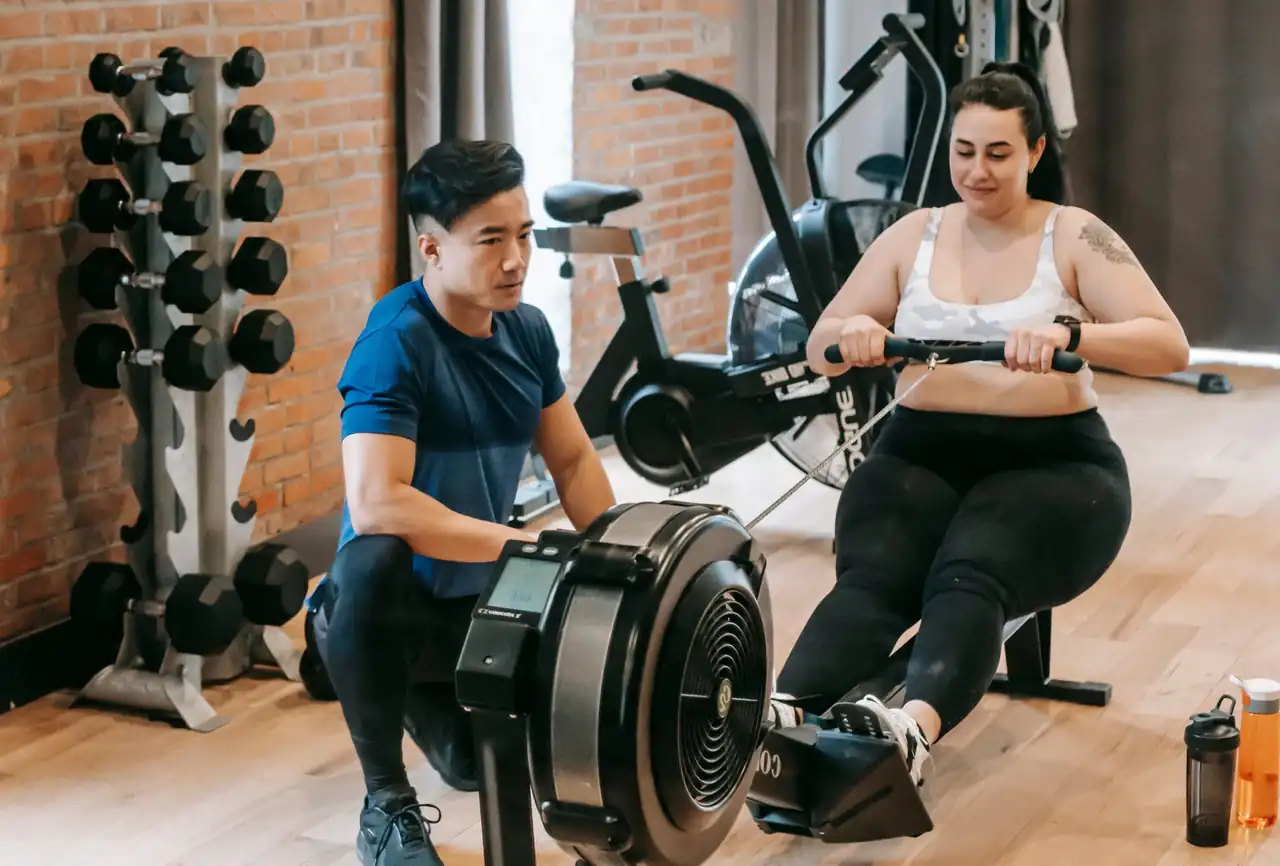
The rowing machine can complement a runner’s training: as well as raising your heart rate, it engages the legs, trunk, back, shoulders, and arms in one coordinated movement. This blend of endurance and muscular work can support overall fitness, contribute to fat loss when paired with an appropriate diet, and add training with less repetitive impact than running.
In practice, its greatest virtue lies in the economy of movement. Each pull turns effort into a full-body exercise, with a much more evenly distributed load than running or a stationary bike. That is why it is appearing more and more in gyms, functional training boxes, and homes where people want a complete, versatile, and relatively joint-friendly machine.
A machine that combines cardio and strength in the same movement
Indoor rowing works like a bridge between two worlds that are often trained separately. On one hand, it quickly raises the heart rate and sustains aerobic work for minutes or even hours at moderate intensity. On the other, the stroke forces you to produce force in the drive phase and to maintain posture with the abdomen and back, bringing it closer to a global exercise than to a simple seated walking machine.
That mixed nature explains why it is so useful for people with little time. In a single session, you can stimulate cardiovascular endurance, activate the posterior chain, and burn a significant amount of energy. It is not a secondary accessory, but a rather well-rounded training solution when the goal is to do a lot with little equipment.
It also fits well into physical preparation routines outside the gym. Runners, cyclists, and endurance athletes find rowing a way to add aerobic work without repeating the same impact pattern as pavement running. The body keeps working, but the mechanical stress is different and, in many cases, more tolerable.
To lose fat, but not as a miracle shortcut
One of the most sought-after answers about this machine has to do with weight loss. Rowing helps burn calories efficiently because it involves a large muscle mass and allows for sustained long or intense efforts. In a vigorous session, a person weighing around 70 kilos can burn several hundred calories in half an hour, although the actual figure changes depending on intensity, technique, and fitness level.
That energy expenditure should not be read as an automatic promise. Fat loss depends on overall energy balance, training frequency, and diet. The machine adds to the plan, but does not replace it. In other words, rowing can be a good ally for burning more, but it does not by itself make up for a sustained calorie surplus.
Its advantage over other cardio options is that the effort does not fall only on the legs. By recruiting the back, arms, and trunk, energy demand stays high without having to run or jump. For many people this has clear practical value: it allows them to train hard without the same degree of repetitive impact as steady running, especially if there are already issues with the knees, ankles, or hips.
A very valuable tool for the heart and lungs
Regular rowing improves aerobic capacity because it forces the cardiovascular system to work consistently. The heart pumps more blood, the lungs manage oxygen intake more effectively, and the muscles learn to use it more efficiently. That effect does not appear overnight, but it does build up with frequent, well-dosed sessions.
The very mechanics of the exercise encourage that adaptation. By involving more muscle groups than a bike or treadmill, the heart rate rises easily and stays in ranges useful for endurance training. It is full-body cardio, and that makes it especially efficient when the goal is to improve stamina, effort tolerance, and recovery between repetitions.
It also offers plenty of possibilities in interval training. Short, demanding sets with brief rests are a common way to work on aerobic power and anaerobic capacity. The movement is measurable, repeatable, and easy to compare, which helps monitor progress without needing complex equipment. You just have to look at distance, pace, or split time.
Why it is gentler on the joints than running
One of the reasons rowing has gained such a reputation is its low impact. In running, each foot strike receives repeated load that can be especially hard on the ankles, knees, and hips. On the rowing machine, the body glides and drives more smoothly, with fewer hits against the ground and a softer distribution of effort.
That does not mean there is no risk at all. If technique is poor, the lower back can take more load than it should, and a poorly guided seat or a sudden pull can also cause discomfort. Even so, compared with other more aggressive cardio options, the margin of tolerance is usually greater for people who want to move without aggravating a sensitive joint.
For this reason, it is often seen in gradual return-to-exercise plans, as long as the professional overseeing recovery considers it appropriate. The movement cadence itself makes it possible to adjust intensity, shorten sessions, or lower resistance with quite a bit of precision. It is not an absolute guarantee of safety, but it is a gentler option than the repeated impact of other modalities.
The muscles that actually do the work
The image of someone sitting and pulling on a handle can make it seem like almost exclusive arm work, but the reality is very different. In a well-executed stroke, the legs generate much of the initial drive, the trunk transmits force, and the upper body finishes the pull. The workload is usually clearly tilted toward the lower body, with major involvement from the glutes, quadriceps, and hamstrings.
Then the back and arms come into play, with the lats, trapezius, rear deltoids, and biceps taking center stage. The abdomen acts as a stability belt so the movement does not break down and the spine stays aligned. There is no single dominant muscle; there is a chain of work that requires coordination.
That muscle distribution has an interesting consequence for people coming from running. Runners are used to repeating a very specific leg pattern, with little emphasis on upper-body pulling. Rowing introduces the opposite: it forces you to pull, stabilize, and coordinate, which can help balance overall physical conditioning better.
More useful than it seems for correcting postural habits
Spending many hours sitting leaves a clear mark on the body. The back switches off, the shoulders round forward, and the hips lose useful mobility. Rowing, when performed with proper technique, can act as a kind of reminder to open the chest, activate the back, and restore prominence to hip extension and trunk control.
It does not magically correct poor posture or make up for a badly adjusted desk. But it does offer a repeated way to work posterior muscles that are often undervalued in people who spend the day between a chair, a car, and a sofa. The back wakes up, and with it some of the tension accumulated in the front of the body is rebalanced.
This is especially noticeable when the machine is used consistently. The sense of alignment and the work of the posterior chain can help everyday posture feel less closed off. It is not physiotherapy, but it is an interesting tool within a sensible, well-executed training program.
Why it also helps build endurance and effort tolerance
The usefulness of rowing does not end with calorie burn. It is also very effective for raising the effort threshold, expanding work capacity, and helping a person handle longer sessions better. In that sense, it is like a long road: at first it demands effort, but over time it lets you go farther without falling apart.
People who train regularly often notice that they can keep their technique for more minutes and that fatigue shows up later. That happens because the heart, lungs, and muscles learn to coordinate better. Endurance is not just about lasting; it is about lasting without breaking down the movement, and rowing provides a pretty complete school for that.
That is why it works well both in long, easy sessions and in harder blocks. It is possible to do 20 or 40 continuous minutes at a moderate pace, but also short high-intensity intervals with active rests. The same machine speaks two different languages of effort, which greatly increases its value within a weekly plan.
What role it plays for runners, cyclists, and other athletes
In running, rowing is doubly interesting. First, it adds cardiovascular load without increasing the mechanical stress of running more miles. Second, it strengthens areas that are often neglected, such as the upper back and posterior chain, both essential for maintaining posture during a long run. In other words, it can be a useful complement for runners looking to vary their stimuli.
It also fits sports where trunk power matters a lot. In martial arts, racket sports, or explosive disciplines, the ability to transfer force from the legs to the torso is very valuable. The rowing movement teaches you to push and pull, two basic actions that show up in very different athletic movements.
For cyclists and triathletes, it also adds something that is often missing from their routines: arm, shoulder, and back work in the same session. That combination helps training avoid becoming just a catalog of tired legs. The body works in a more distributed way, and over time that usually translates into a more balanced physical base.
The techniques most often seen and the mistakes that ruin the exercise
The machine’s usefulness depends a lot on how it is used. A correct stroke begins with the legs, continues with the trunk, and ends with the arms. On the way back, the order is exactly the opposite. That sequence is not arbitrary: it allows you to make use of leg power and avoid turning the pull into a disorganized movement that overloads the lower back.
One of the most common mistakes is rowing with the arms only. Another is leaning back too far as if the extra impulse came from arching the back. It is also common to speed up too early, lose rhythm, and turn the session into a string of short, inefficient pulls. Technique matters more than rushing.
When the body falls out of alignment, the exercise is no longer as complete. The movement gets smaller, the range shortens, and part of the leg and trunk work is lost. That is why, in journalistic terms, the real value of rowing is not in having one at home or in the cardio room, but in using it with clean mechanics that allow the effort to be shared as it should be.
What changes between resistance types and why it matters when choosing one
Not all rowing machines feel the same. Air rowers respond with a progressive feel and usually appeal to people looking for intensity and a behavior closer to real athletic effort. Magnetic rowers stand out for their quietness and smooth glide. Water rowers offer a more organic experience, with a fluid sensation that many users perceive as more natural. Hydraulic rowers, for their part, are usually the most compact and affordable, although generally less refined.
The choice depends a lot on space, budget, and sensitivity to noise. In an apartment with nearby neighbors, silence matters. For someone who wants to make the most of interval sessions, responsiveness matters more. For those who value the feeling of truly rowing, water has a clear appeal. The resistance does not change the goal, but it does change the experience and adherence to training.
That nuance matters because the rowing machine should not only work on paper, but also invite you to use it often. A machine that is uncomfortable, noisy, or too short ends up pushed aside. One that fits the user well becomes a regular-use tool, and that is where results begin to appear.
How much it can contribute in a realistic routine
The underlying question is not just what it is good for, but how much it can really add. And the answer comes down to consistency. Three 20- to 40-minute sessions per week can already make a noticeable difference in aerobic capacity and energy expenditure. If the habit is maintained, you also notice better coordination, less feeling of breathlessness during moderate efforts, and greater tolerance for continuous work.
For people who already train strength, rowing can take the place of cardio without turning the session into a marathon. For those coming from a sedentary lifestyle, it can be the gateway to a more complete activity that is less hostile than other machines. It works for starting, but also for progressing, which is exactly what basic machines do not always achieve.
It also has a less visible virtue: it allows progress to be measured quite clearly. Distance, time, pace, and consistency are simple parameters to track. That objective feedback helps maintain interest and understand that the body changes through accumulation, not through a single heroic day of effort.
How rowing can complement your running training
A rowing machine lets runners add cardiovascular and muscular work without repeating the impact of their usual runs. It can be a useful way to vary your training, do cardio indoors, or stay active when you need to temporarily cut back on running. It does not, however, replicate the specific demands of running: it cannot fully replace your runs or the technique, strength, and impact adaptation that running requires.
Use it with a clear purpose. An easy effort can add aerobic work without turning every session into a race; harder intervals may complement your training if they fit your weekly workload and recovery. Start with a resistance that lets you keep a smooth stroke and stable posture. Drive first with your legs, swing your torso, then finish the pull with your arms. On the way back, reverse that sequence without rounding your back. Build effort gradually rather than simply increasing the machine’s resistance.
Pay attention to how you feel during the session and afterwards. Fatigue that affects your runs, loss of control over your technique, or discomfort in your back, knees, or shoulders are signs to ease off or stop. Account for rest, and avoid letting rowing compromise recovery from a long run or hard workout. If pain or symptoms persist, consult a healthcare professional. Used sensibly, rowing adds variety and a full-body workout; to improve as a runner, keep enough running in a balanced training plan.
A machine that is worth what it does and what it avoids
The rowing machine helps you lose weight, build endurance, improve coordination, and strengthen a large part of the body, but it also helps avoid certain stresses that other exercises do impose. It does not force you to choose between cardio and strength, or between intensity and control. It brings several goals together in a single machine and, when used well, offers a very efficient ratio between time invested and physical benefit.
Its greatest value lies in the fact that it does not merely burn calories. It builds a more useful, more evenly distributed, and in many cases more sustainable physical base. It is a global work machine, not just a warm-up accessory, and that is why it has moved from being secondary to becoming one of the most respected pieces of indoor training equipment.
In an era of quick routines and fragmented workouts, rowing retains something almost classic: the idea that a well-done movement can move much more than calories. It can move posture, endurance, strength, and physical confidence. And that explains why it continues to gain space among those looking for a serious, discreet machine capable of performing for a long time.
Este artículo contiene enlaces de afiliado: si compras a través de ellos, se genera una pequeña comisión sin coste adicional para ti. Más información.



Reebok runs large or small: a real fit guide

Hoka Challenger ATR 7 GTX: complete review of the all-terrain shoe

How to clean white sneakers without ruining them

Altus Pirineos 40-liter backpack: analysis, use, and key points

20,000 mm waterproof jacket for men: key points to get it right

Under Armour HOVR Sonic 6: complete review of the shoe

incline treadmills: guide to choosing better

Achilles tendonitis: real recovery time

Pain in the Achilles heel: causes, signs, and relief

What to take for calf pain: real relief and when to worry

 Races3 months ago
Valencia Half Marathon 2026: date and registration

 Reviews and Comparisons4 months ago
Asics Gel-Roadmiles 3 for men: review and current price

 Races3 months ago
Valencia Marathon 2026: entry, ballot and course

 Reviews and Comparisons4 months ago
Asics Gel Sonoma 8 Gore-Tex: complete analysis for trail and rain
- Sneakers3 months ago
Saucony Endorphin Pro 4: full review and verdict

 News5 months ago
Strava API 2026: what changes for clubs, challenges and runner apps?

 Reviews and Comparisons5 months ago
Nike Alphafly 3: opinions, sensations, and real key points

 Reviews and Comparisons4 months ago
Under Armour running shoes review 2025-2026: models and key features

 Sports Equipment4 months ago
Shoe sizes in cm: a clear guide to getting the right fit for your footwear
- Sneakers4 months ago
Adidas Adizero Boston 13 for men: review and verdict
- Sneakers3 months ago
Neutral running shoes with lots of cushioning: the best of 2026

 News4 months ago
Where is the Hoka brand from and why was it born in France