Health and Nutrition
How to ease sole-of-foot tightness when running
Plantar tension improves with relative rest, gentle mobility, massage, and stable footwear, without pushing through the pain.

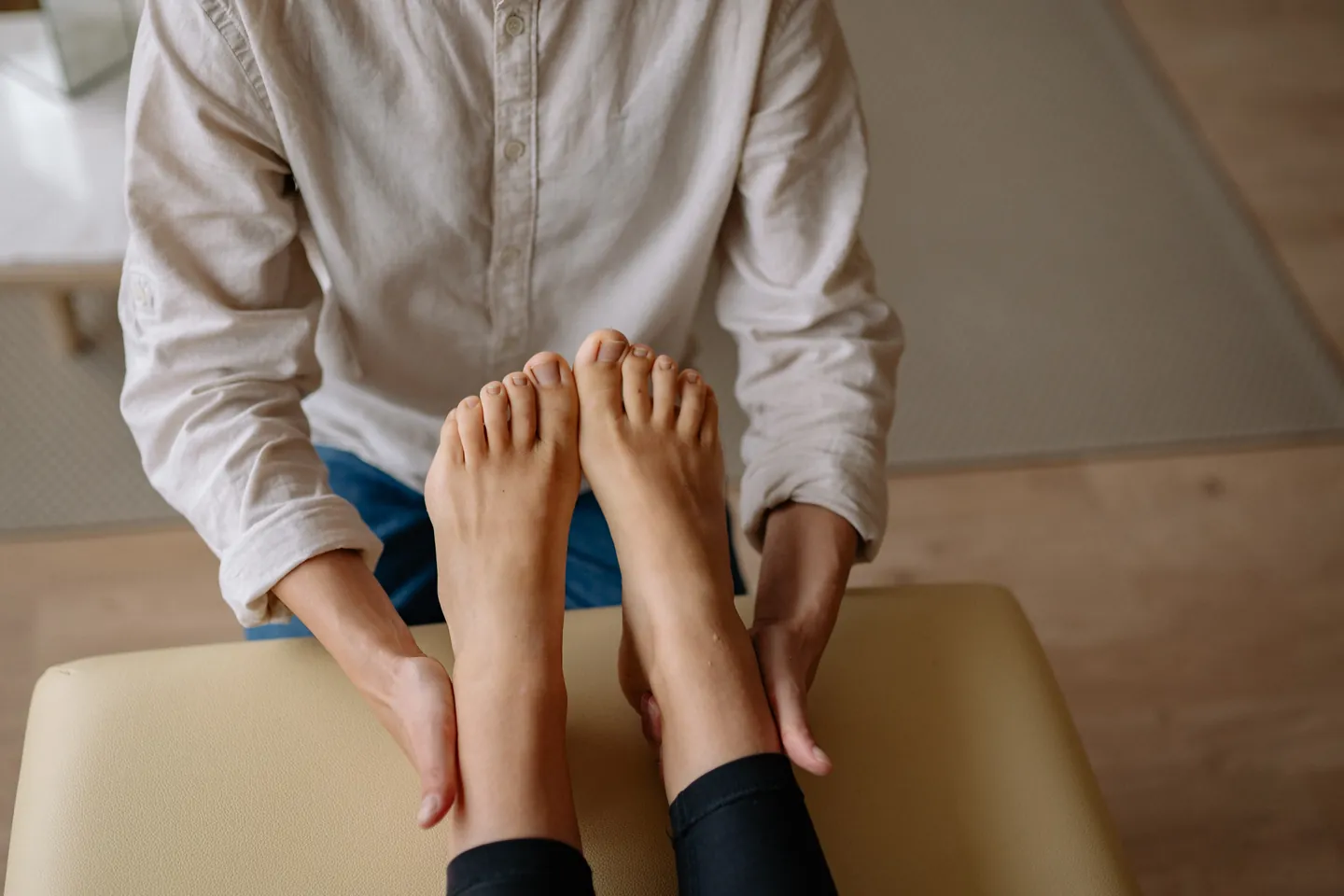
Imagen: Yan Krukau / Pexels
A contracture in the sole of the foot rarely appears on its own. For runners, it is often linked to repeated overload, footwear with poor support, or a muscle chain that has gradually tightened the fascia until it feels hard, sensitive and awkward. Walkers and people who spend many hours on their feet can be affected too: the area takes the strain with every step and may eventually protest at each stride.
Getting rid of that discomfort requires more than waiting for it to pass. What works best, in most cases, is reducing the load, restoring mobility without force, and unloading the muscles involved, especially the plantar fascia, calves, and soleus. When the foot stops receiving the same mechanical punishment for days or weeks, stiffness gradually eases and pain stops setting the pace of the day.
What lies behind plantar tension
In the sole of the foot there is a resilient fascia, small but decisive muscles, and tendons that absorb impact with every step. If one of these elements becomes irritated, the body responds with a very recognizable defense: more tone, less elasticity, and a feeling of a knot or tight cord under the arch or near the heel. It is not a classic muscle contracture, like the one in the neck, but in practice it feels similar: the tissue stiffens and loses glide.
The cause is usually multifactorial. An extra day of walking, a sudden increase in mileage, worn-out shoes, a hard surface, or unstable foot strike can be the starting point. A high arch, flat feet, limited ankle mobility, and shortening of the posterior chain also play a role. In athletes, repeated overload is especially treacherous because pain does not always appear during exertion; sometimes it shows up afterward, when getting out of bed or taking the first steps in the morning.
It is worth distinguishing this tension from other problems that can seem similar. Plantar fasciitis usually concentrates pain in the heel or inner arch, while a neuroma, tendinopathy, or nerve irritation can cause burning, tingling, or more diffuse pain. If the discomfort changes location, is accompanied by visible swelling, or causes loss of strength, the picture is no longer that of simple overload. The foot speaks in nuances and, at times, calls for a more serious clinical assessment.
What to do in the first 48 hours
The first goal is not to force the sole to loosen up, but to reduce the stimulus keeping it contracted. That means cutting back unnecessary walking, stopping impact training, and avoiding flat or very soft shoes, because both extremes usually worsen the condition. A shoe with some cushioning, a stable base, and good midfoot support unloads better than sandals or a model worn down to the sole.
Cold can be useful if the area is very reactive, especially after a long day or a session that has triggered the pain. There is no need to dramatize it or turn it into an aggressive ritual: 10 to 15 minutes is enough, always with skin protection. The goal is to calm, not freeze. In parallel, gentle mobility of the ankle and toes helps keep the area from becoming fixed, as if the foot were rusting at rest.
It is also helpful to observe when it hurts most. If the worst moment comes on waking, the problem is usually closely linked to fascia stiffness and reduced elasticity in the calf complex. If, instead, the discomfort appears at the end of the day, accumulated mechanical fatigue carries more weight. That difference matters because it guides treatment and helps avoid insisting on actions that only add friction to irritated tissue.
Self-massage and unloading without making it worse
Self-massage can be a good tool, but it should not be done with the same intensity as pressing a roller onto a back contracture. The sole of the foot is sensitive and responds better to moderate, sustained, and regular pressure. A small ball, a cold bottle, or a smooth roller allow the fascia to glide without beating it up. The right sensation is closer to deep release than to painful pounding.
A useful sequence is to roll the sole for one or two minutes, rest, and repeat calmly. If the tissue is very hard, it is better to start at the arch and avoid going straight at the most painful spot. The idea is to restore mobility, not trigger a defensive reaction. When the foot feels threatened, it contracts more; when it perceives a reasonable load, it begins to release. That boundary is fine and deserves patience.
The massage becomes more effective if it is accompanied by work on the calves and soleus. These muscle masses are often involved even when pain is felt lower down, in the foot. A stiff calf complex pulls on the posterior chain like a taut cable and transfers part of the load to the fascia. For this reason, gentle work on the calf followed by a brief stretch can have more effect than focusing only on the painful area of the sole.
Stretches that truly unload
Useful stretches are those that restore length without tearing tissue or triggering pain. For the sole of the foot, gently extending the toes upward while keeping the heel planted works very well, as it tensions the fascia in a controlled way. The posture should feel firm, not aggressive. If the movement makes you clench your jaw, it has already gone too far.
Stretching the calves and soleus against the wall also helps, with the knee straight in one set and bent in another. That detail makes a difference because each muscle pulls on a different area of the tendon and heel. In runners, this combination is often more useful than working only on the plantar area. The posterior chain needs to be treated as a unit, not as separate pieces on an anatomy table.
Consistency matters more than extreme duration. Two or three short blocks a day are usually more effective than one long, sporadic session. The sole of the foot responds better to a repeated, gentle signal than to a heroic stretch. Injured tissue hates excess; what it appreciates is the quiet, almost domestic consistency of someone giving it time to reorganize.
The role of footwear and foot strike
A significant part of these problems is decided before the foot even touches the ground: in the shoe. An excessively flat, worn-out, or overly flexible model leaves the fascia exposed to greater traction. By contrast, footwear with reasonable cushioning, a stable base, and a proper fit reduces the violence of impact and distributes the load better. For someone who walks a lot or runs frequently, that change can be the difference between improving and relapsing.
Foot strike also matters. Overpronation, flat feet, or a very high arch alter force distribution and make support less efficient. There is no need to obsess over every biomechanical detail, but it is important to accept that the foot does not work in isolation. What happens in the ankle, knee, or hip eventually filters down, like a vibration traveling through the floor of a house.
In running contexts, alternating surfaces helps. Asphalt punishes with its hardness; sand demands more from the stabilizing muscles; mountain terrain distributes loads differently. No surface is magical, but it can provide relative rest from the pattern that maintains irritation. Changing terrain without suddenly changing the total load is usually a wiser strategy than insisting on the same environment all the time.
When pain stops being simple overload
There are signs that require a more precise diagnosis. Very localized heel pain that worsens on standing up, a persistent burning sensation, tingling that runs toward the toes, or swelling that does not subside with relative rest suggest the story may be more complex. In those cases, the label of contracture falls short and may hide plantar fasciitis, nerve entrapment, or tendinopathy.
Duration also provides guidance. Discomfort that lasts for days and improves with rest is usually manageable overload. If it drags on for weeks, returns easily, or begins to alter the way you walk, the tissue has already entered a protective pattern that should be addressed quickly. When the body feels threatened, it does not negotiate delicately: it changes foot strike to avoid pain, and that change eventually shifts the problem elsewhere.
Self-medication does not solve the mechanics. It may mask the symptom for a few hours, but it does not correct the tension keeping the condition alive. That is why the correct approach is not to chase pain until it disappears, but to understand which gesture, habit, or load is feeding it. That approach saves relapses and avoids turning a simple overload into a more stubborn problem.
What techniques are usually used when the discomfort persists
In physical therapy, manual therapy, myofascial release, therapeutic exercise, and instrumental techniques are often combined when the case requires it. Manual therapy aims to restore tissue glide; exercise teaches the foot to tolerate load without entering a defensive state; and instrumental techniques, such as shock waves or electrotherapy, may be used in more persistent cases. The point is not to choose a single tool, but to tailor the mix to the tissue’s real situation.
Shock waves are used mainly when pain is chronic and the fascia seems to have stayed in a rigid mode. In certain profiles, they help reactivate the area and break inflammatory or degenerative inertia. Dry needling, for its part, can be useful if the problem coexists with tension points in the calf muscles. Each technique has its place, but none replaces correcting load and movement.
Recovery rarely depends on one brilliant maneuver. More often, it comes from a sequence of small corrections: reducing impact, restoring mobility, strengthening the foot muscles, and reviewing footwear. That sum, which may seem modest, is often far more effective than trying to erase pain with a single intervention. The foot appreciates detail-oriented engineering, not flashy gestures.
Habits that reduce relapses in runners and walkers
The best antidote to a new plantar contracture is respecting load. Increasing mileage, time on your feet, or training intensity abruptly turns the foot into a reservoir of micro-irritations. Gradual progression remains one of the most sensible rules in running and prolonged walking. The tissue needs to adapt to tension, not receive it with a hammer.
It also helps to care for recovery outside training. Sleeping little, alternating very long days with equally long ones, and always using the same worn-out shoes end up adding noise to the system. The foot does not get injured only by running; it also gets injured by never stopping the load. For active people, relative rest is part of performance, not laziness.
A simple measure is to alternate shoes, monitor wear, and pay attention to the signal of the first steps in the morning. If, when getting up, the sole feels rigid as a board, the body is warning you before the problem becomes more obvious. Paying attention to that early warning is worth more than waiting until pain turns every walk into a rough chore.
Looking after your foot and adjusting your training
If the sole of your foot feels tight or painful, do not try to loosen it by running more or pressing hard on the area. Temporarily cut back on impact training and long walks, especially if discomfort builds during a session or afterwards. Stick to activity that does not make your symptoms worse, and notice how the foot feels in the hours after exercise and during your first steps in the morning. This can help you judge whether the current training load is still too much.
When you return to running, avoid making up missed mileage with a long run or several sessions close together. Build back gradually, and shorten or stop a run if the pain increases or changes the way you land. Gentle ankle and toe movement may help prevent stiffness. If you try self-massage, keep the pressure moderate; it should not cause intense pain. Do not force stretches when the area is very sensitive.
Check your footwear too: a worn, unstable shoe or a sudden change in support may affect the load on your foot. Choose a comfortable, supportive pair and avoid switching to a very different model just before a race or a demanding training week. Seek advice from a healthcare professional if you develop tingling, loss of strength, visible swelling, worsening pain, or symptoms that persist despite reducing your training load. Recovery takes patience. The aim is to return to running without every foot strike bringing the discomfort back.
When the foot asks for patience, not heroics
The sole of the foot does not relax in a hurry. It recovers when the environment stops pushing it to the limit and when the tissue receives signals of reasonable load, mobility, and enough rest. That process may seem slow, but it is usually quite predictable: morning pain fades, the foot no longer feels dry when stepping, and pressure under the arch loses prominence. Improvement usually comes first as a brief truce and then as a more stable normality.
The key is not to confuse relief with healing. If pain drops in two or three days, that does not mean the foot can already tolerate the same load as before. If you return to the same pace too soon, stiffness comes back like a door closing on its own. That is why real treatment combines caution and consistency, an unflashy but very effective blend when the problem is mechanical and persistent.
In the end, easing a contracture in the sole of the foot means listening to a small area that carries a lot. There, under the arch, impact, tension, and poorly distributed habits accumulate. When the source is corrected, the tissue is unloaded, and impossible demands stop, the foot returns to what it does best: supporting without complaint, step by step, with the quiet effectiveness of something that works.
Medical reference: Foot pain and problems, Johns Hopkins Medicine.



Kilian Jornet Wants to Run 100 Metres in Under 11 Seconds

Spin bike: How to choose one and train at home

Valencia Half Marathon 2027 Ballot: 68,430 Applicants

Beatrice Chebet to Be Guest of Honour at Great Ethiopian Run

Therese Johaug to make her marathon debut in Valencia on 6 December

How to ease sole-of-foot tightness when running

Women’s triathlon suit: how to choose one for all three sports

Cidade de Lugo Half Marathon 2027: date, distances and certification

Plus-size sports bras: how to choose one for running

Where to stay for the Vienna City Marathon 2027: areas, metro and real prices

 Races4 months ago
Valencia Half Marathon 2027: date and registration

 Races4 months ago
Valencia Marathon 2026: entry, ballot and course

 Reviews and Comparisons4 months ago
Asics Gel-Roadmiles 3 for men: review and current price

 Reviews and Comparisons4 months ago
Asics Gel Sonoma 8 Gore-Tex: complete analysis for trail and rain

 Sneakers4 months ago
Saucony Endorphin Pro 4: full review and verdict

 News5 months ago
Strava API 2026: what changes for clubs, challenges and runner apps?

 Reviews and Comparisons5 months ago
Nike Alphafly 3: opinions, sensations, and real key points

 Reviews and Comparisons5 months ago
Under Armour running shoes review 2025-2026: models and key features

 Sports Equipment4 months ago
Shoe sizes in cm: a clear guide to getting the right fit for your footwear

 News5 months ago
Valencia Marathon 2026 route: key tips to train and run better

 Sneakers3 months ago
Skechers GO RUN Consistent 2.0 analysis: comfort and limits

 Sneakers4 months ago
Adidas Adizero Boston 13 for men: review and verdict