News
Valencia Marathon 2026 route: key tips to train and run better
Start, finish, profile and key points of the Valencian 42K: this is how the confirmed route for 2026 is drawn.

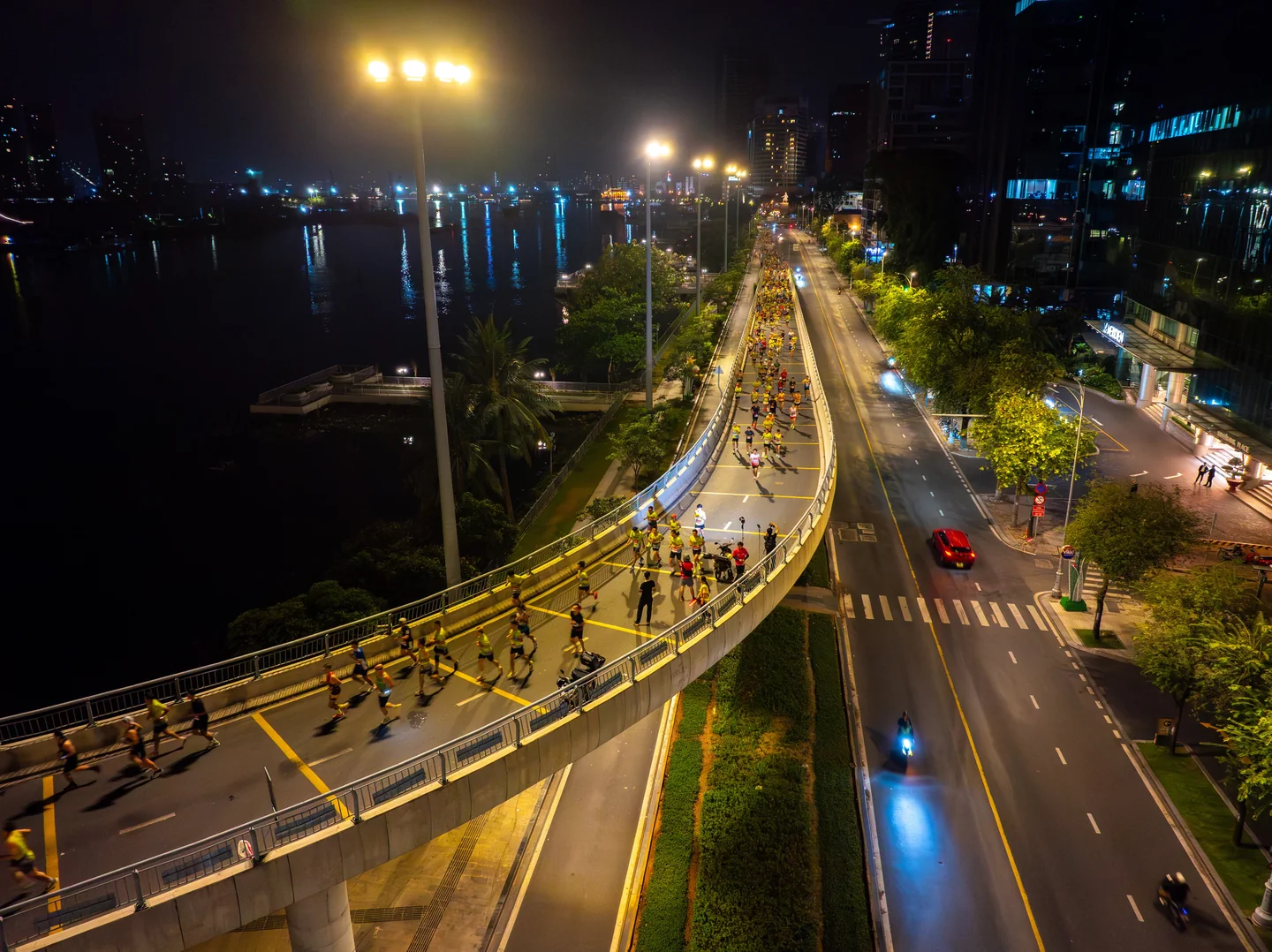
The Valencia 42K keeps its most recognizable identity in 2026: a fast course, with almost no elevation gain, designed so the city becomes a carpet of asphalt. The start will remain at Plaça de la Marató and the finish will return to the walkway over the water at the City of Arts and Sciences, a finale that is already part of European athletics memory.
The confirmed circuit preserves the logic of recent editions: wide avenues, a passage through the historic center, broad areas to avoid bottlenecks, and a final straight that pushes you to keep going when the legs are already heavy. It’s a marathon that combines the urban postcard with sporting efficiency, a valuable rarity in a 42.195-kilometer race.
A course made for running fast
Valencia has not built its prestige by chance. The city has earned its label as a fast stage through a very specific combination of factors: minimal altitude, mild December temperatures, wide streets, and an organization that has known how to fine-tune every detail of the route. In 2026, the race once again relies on that same formula, with a circuit that favors steady paces from the first kilometers.
The marathon runs practically at sea level, something that not only helps physiologically, but also offers a feeling of a clean race, without sudden changes in gradient or sections that break your stride. Over such a long distance, that continuity matters almost as much as fitness. The runner is not fighting the terrain; they are fighting the clock and themselves.
The start at Plaça de la Marató places the opening in an environment already familiar to the race. From there, the route makes its way along wide avenues and through some of the city’s most recognizable spaces before steering the race toward the modern area of the Valencian capital. The result is a circuit that allows you to run in stable groups, with better flow and fewer surprises.
Start, finish and the geometry of the race
The start at Plaça de la Marató is no small detail. That point sets up the first surge of adrenaline in the race, when thousands of runners start moving at the same time and the city begins to beat to a very different rhythm than usual. The area is designed to absorb volume, organize starting pens, and give space to a launch that, in such a massive race, needs precision.
The finish on the walkway over the water at the City of Arts and Sciences adds an almost symbolic layer to the end. It’s not just a photogenic place; it’s a finish that rewards the effort with a powerful image, between contemporary architecture and a sheet of water. In the runner’s imagination, that final stretch works like a magnet: a visual reference that appears when there’s almost nothing left and turns suffering into celebration.
The route design responds to a very clear idea: make the difficult feel easy. The city offers axes wide enough to sustain the flow of the race and, at the same time, central enough for the event to have an urban identity. It’s not a circuit locked inside a park or a tourist stroll; it’s a long-distance route that crosses Valencia with competitive ambition.
The sectors that most shape the pace
The first kilometers are usually deceptive. The sense of control, the atmosphere, and the start-line music push you to go faster than you should, but the Valencian route rewards the exact opposite: patience, economy, and a stride that doesn’t break too early. The opening avenues let you settle in without so much tension, though it’s worth remembering that the marathon is decided long after the applause at the beginning.
As the race goes on, the passage through the historic center adds a visual element that can distract, but also lift morale. Valencia offers recognizable buildings, lively streets, and an urban landscape that never falls into monotony. Even so, the key is not to get carried away by the postcard. The clock doesn’t care about monuments, and the 2026 route reminds you of that again with its mix of beauty and demand.
Later on, the area near the City of Arts and Sciences and the more open sectors at the end allow you to recover a sense of spaciousness that becomes valuable once fatigue starts to set in. The runner who reaches those kilometers with something left finds an excellent psychological track: space, clear references, and the destination getting closer and closer. In Valencia, the finish doesn’t hide; it appears head-on, like a bright wall inviting you to empty the tank.
Refreshments, paces and energy management
The structure of the aid stations helps read the effort quite clearly. The organization keeps liquid stations at kilometers 5, 10, 15, 20, 25, 30, 32, 35, 37.5 and 40, plus a final liquid and solid aid station at the finish. That pattern reveals a race logic very much designed for the modern marathon, where hydration and replenishment stop being a complement and become an essential part of the strategy.
The presence of a point at 32 and another at 37.5 is no coincidence. They are two markers that fall in the stretch where the marathon really starts to weigh on you, when the body demands attention and the mind is already working by approximation, kilometer by kilometer. Having such clear references at those moments can be a discreet, almost invisible help, but a decisive one.
The route favors an intelligent distribution of effort. It doesn’t demand constant pace changes or introduce gradients that punish unevenly. That makes it possible to think in more even splits, an advantage for those chasing a personal best and also for those who want to finish feeling good. In a race like this, going out too hard costs dearly; running with your head usually pays off.
Why this circuit matters so much to both elites and everyday runners
Valencia has become a global reference because it serves two audiences at once. Elite runners find a favorable setting for fast times and, in some cases, historic ones. Everyday runners, meanwhile, see in the route a real chance to complete a demanding marathon without the added punishment of a tough profile. Few races balance those two ambitions so well.
The recent history explains much of that reputation. The marathon has been the stage for hugely significant performances, and the city has learned to live with the label of a circuit suited to running fast. But the merit is not only in the stopwatch. It also lies in the feeling of flow, the crowd support, and the visual continuity of a race that doesn’t fall apart into erratic sections.
For the recreational runner, that stability is almost an emotional safety net. When the circuit doesn’t force you to brake, restart, push, and brake again, mental management becomes easier. Valencia offers that kind of linearity that, far from feeling cold, inspires confidence. It’s the kind of route that lets you think less about the terrain and more about your own pace.
Temperature, December and the value of the weather
The December date is no logistical coincidence. In Valencia, the marathon is usually held in temperatures that fall within a very favorable range for the distance, typically between 12 and 17 degrees, a range that often appears in the organizers’ forecasts and explains part of the race’s appeal. For a 42-kilometer effort, that thermal window is pure gold.
The mild climate reduces thermal stress and makes the second half of the race more manageable, just when the body starts to empty out and every small excess takes its toll. In other races, heat can ruin entire plans; here, by contrast, the weather usually plays on the runner’s side. It’s not a guarantee of success, but it is a very serious ally.
That combination of mild air, low altitude and flat terrain explains why so many people travel to Valencia looking for a first big mark or a serious attempt to beat their best time. Over such a long distance, the environment is not decorative: it’s part of performance. And Valencia, year after year, offers an environment that adds value.
The city as part of the route
One of the most recognizable features of the Valencian marathon is that the city is not left on the sidelines. It doesn’t just host the race; it supports it and shows itself through it. The route crosses wide areas, passes through spaces with historical character, and finishes in one of the most powerful urban images in the country. Running there is also a way of reading the city at a different speed.
That athletic tour through Valencia shows contrasts that are very well resolved: the weight of the historic center, the breadth of the avenues, the presence of modern areas, and the closeness of settings that are part of the capital’s visual landscape. The runner doesn’t visit the city like a tourist at a slow pace. They cross it at a very specific human speed, the speed of endurance, which turns every street into a sequence.
There is something very valuable in that kind of route: it doesn’t reduce the city to a backdrop. It integrates it into the race, makes it part of the story. And that explains why so many participants remember the marathon not only for the time, but for the full experience: the sound, the light, the changes in atmosphere, and the feeling of running inside a city that has prepared itself for it.
Refreshments, starting pens and staggered starts
The organization once again opts for staggered starts to better distribute the flow of runners. In 2026, the planned waves are arranged according to target times, beginning at 8:15 for those aiming for under 2 hours and 50 minutes and then staggered until 9:35 for those projecting around 4 hours and 10 minutes. That system reduces crowding and makes the start cleaner.
The logic is simple: not everyone runs at the same pace, and mixing very different profiles in a single start can affect both elites and recreational runners. With a distribution by target times, the circuit breathes better in the first kilometers. It’s a measure that is almost invisible to the spectator, but very tangible for the runner who needs to find their place from the first minute.
There is also a practical reading in the placement of the aid stations. The race assumes that hydration needs to be close, accessible, and repeated regularly. That not only helps preserve energy, it also provides a framework of confidence. Knowing that every few kilometers there will be a support point lets you run with a clearer mental margin, less focused on uncertainty.
A marathon with international weight and record ambition
The circuit’s reputation is not limited to the Spanish calendar. For years, Valencia has ranked among the long-distance races with the greatest international profile, backed by World Athletics Platinum Label status and by a chain of results that have placed it in the spotlight of the major European marathons. That status is not achieved through marketing, but through repeated good conditions.
The city has managed to build a story of speed without giving up the spectacle. The 42K has become a destination for fast times, but also a race where the crowd participates with a very recognizable closeness. There is a rare balance between technical precision and popular atmosphere, a mix that gives the route prestige among high-level athletes and appeal for those looking to finish their first big challenge.
The 2026 route inherits that fame and puts it to the test again. Everything points to it remaining a very favorable route for running fast, with a clear identity and few surprises. Deep down, that is Valencia’s great virtue: it doesn’t promise miracles, it offers conditions. And in the marathon, sometimes that is worth more than any grand speech.
What the map reveals for those who look beyond the stopwatch
The route map tells a simple and effective story. The city opens up, organizes itself, and lets itself be crossed. The route connects the start at Plaça de la Marató with a succession of avenues and urban sectors that eventually lead to a spectacular finish. Not a single kilometer seems placed by whim; everything responds to an idea of continuity.
That map also shows why so many people consider this race an ideal marathon for a debut or for consolidating serious progress over the distance. It’s not an easy race, because 42.195 kilometers never are, but it is one of the races that introduces the fewest traps. The terrain helps, the route flows, and the logistics are very finely tuned.
In the end, Valencia’s route works like a well-adjusted piece. It doesn’t stand out for being extravagant, but for its coherence. And that coherence, in long-distance running, translates into confidence, into times, and into a very valuable feeling: having run an entire city without the city breaking your stride.
What the runner sees when crossing the final walkway
The most powerful image of the marathon arrives almost like a cinematic reward. After hours of effort, the walkway over the water at the City of Arts and Sciences turns the finish into a memorable shot. The body arrives battered, the breathing shortens, but the view opens up. It’s an elegant way to close a tough race without dimming its epic feel.
That finish sums up much of the race’s appeal: architecture, water, crowd, effort, and a finish line that doesn’t hide. For many runners, crossing it means more than completing a distance. It means entering one of the most recognizable images in Spanish running, a postcard where fatigue and beauty coexist without getting in each other’s way.
The 2026 route confirms that Valencia remains faithful to its original idea: a fast, flat, urban, and perfectly recognizable marathon. Whoever looks at the map will see a route. Whoever runs it will understand why this city has become one of the capitals of long-distance running in Europe.



How to prevent thigh chafing: causes and real solutions

Women’s running windbreakers: seven jackets and how to choose

Do more workouts get rid of soreness? A guide for runners

Jaén Half Marathon 2026: Record 3,800 Runners Registered

Men’s short running tights: how to choose the right pair

World Triathlon confirms data breach involving medical data

Izan Edo targets podium at Miyazaki World Cup

María Pérez ranks ninth in World Athletics’ 2026 top ten

Dos Santos, Duplantis and Sawe: World Athlete of the Year finalists

San Silvestre Vallecana 2026: 42,000 places, prices and start times

 Races4 months ago
Valencia Half Marathon 2027: date and registration

 Races4 months ago
Valencia Marathon 2026: entry, ballot and course

 Reviews and Comparisons4 months ago
Asics Gel-Roadmiles 3 for men: review and current price

 Reviews and Comparisons4 months ago
Asics Gel Sonoma 8 Gore-Tex: complete analysis for trail and rain

 Sneakers4 months ago
Saucony Endorphin Pro 4: full review and verdict

 News5 months ago
Strava API 2026: what changes for clubs, challenges and runner apps?

 Reviews and Comparisons5 months ago
Nike Alphafly 3: opinions, sensations, and real key points

 Reviews and Comparisons4 months ago
Under Armour running shoes review 2025-2026: models and key features

 Sports Equipment4 months ago
Shoe sizes in cm: a clear guide to getting the right fit for your footwear

 Sneakers3 months ago
Skechers GO RUN Consistent 2.0 analysis: comfort and limits

 Sneakers4 months ago
Adidas Adizero Boston 13 for men: review and verdict
 Sneakers3 months ago
Neutral running shoes with lots of cushioning: the best of 2026