Sports Equipment
How to put a treadmill upright without damaging it
Save space safely: what to check, how to move it, and what mistakes to avoid when storing a treadmill upright.

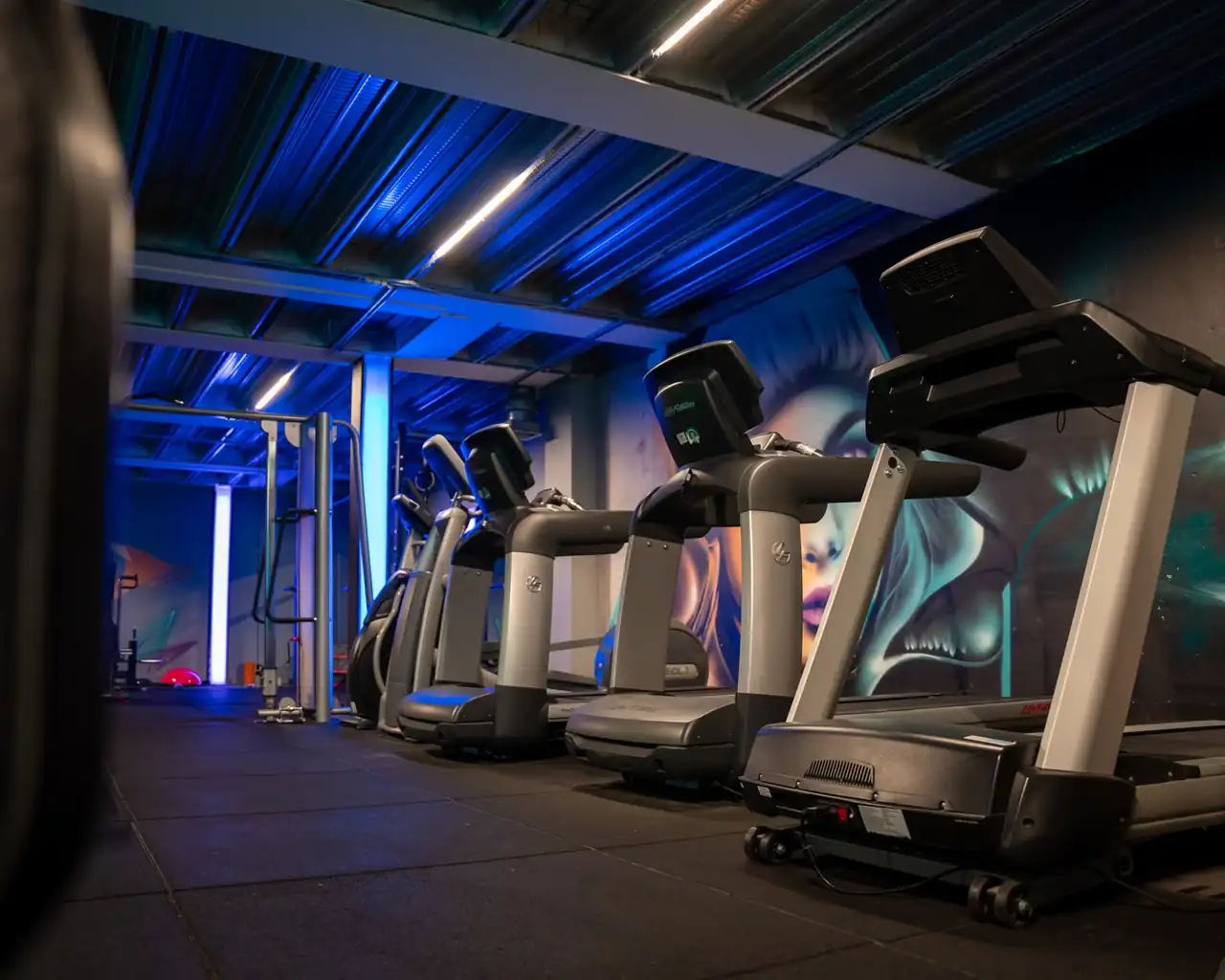
Folding it and leaving it upright seems like a simple solution when the hallway narrows and the living room takes over. But a treadmill is not something you improvise: its weight, folding system, and load distribution change completely when it goes from use position to storage position. Storing it vertically can work, yes, but only on models designed for it and with strict control of stability.
In today’s market, there are plenty of folding treadmills with locking systems, transport wheels, and frames designed to save space, but not all of them allow the same posture. The key is to distinguish between folding and propping up: a machine can close in on itself and still not be safe if it is left completely vertical without anchoring or a firm base. That is where hidden damage, belt misalignment, or worse, an unexpected fall, usually appear.
What a treadmill must have before standing upright
The first filter is not aesthetic or about convenience, but structural. The treadmill must be foldable and have a real locking mechanism, designed to hold it when it is not in use. In many home models, folding reduces height, but does not guarantee that the unit can be stored as if it were a board leaned against the wall. The difference matters because the motor, console, and front roller are not designed to bear continuous lateral forces.
It is also worth checking the manual, although in practice many people only open it once there is already a problem. The relevant information is usually found in the transportation, storage, and maintenance instructions. If the manufacturer does not authorize the vertical position, it should not be forced. The feet, shock absorbers, and lifting system may tolerate folding, but not necessarily prolonged support at an unstable angle.
In mid-range and high-end treadmills, it is common to find sturdier structures, wheels, and hydraulic or assisted mechanisms that make folding easier. Even so, the fact that a machine is robust does not automatically make it suitable for vertical storage. Weight matters not only because of the effort needed to move it; it also matters because poorly distributed mass can act like a lever on the base and end up deforming sensitive components.
Preparing the machine before moving it
Before touching a treadmill, the sensible thing is to switch it off and unplug it. It may seem obvious, but it is still the step that prevents the most accidents. An active console, a taut cable, or a belt that still has inertia increase the risk exactly at the moment when precision is needed. If the equipment includes a safety key, it is worth removing it and storing it separately to prevent accidental starts.
Then comes basic cleaning. Dust, moisture, and built-up sweat do more than just make things dirty; they also make surfaces slippery, irritating, and promote poor seating of the structure. A treadmill that is about to be moved should have a clear base, with no debris under the deck or objects around it. A small screw or a poorly placed rug can throw off the support more than it seems at first glance.
If the equipment is heavy, do not rely on a quick burst of momentum or a pull from the upper end. The movement should be short, controlled, and, if the model requires it, with another person’s help. Your back and hands will appreciate a slow maneuver, especially when dealing with machines that often easily exceed 50 kilos and in some cases come close to much more.
The correct maneuver to leave it upright
The folding process should be completed first, always following the system intended by the manufacturer. Then the treadmill is moved to the chosen area and gently set down, without knocking it against the wall or the floor. The ideal is for the final position not to depend on precarious balance, but on a lock, a strap, or a support point that limits movement.
The area where it is stored matters as much as the machine itself. The floor should be firm, level, and free of moisture. A corner with a baseboard, a room with frequent traffic, or a hallway with constant vibration are not good candidates. A treadmill in vertical position needs space around it, because any accidental bump, even from passing a vacuum cleaner or opening a door, can shift its center of gravity.
Once the treadmill is in place, it is worth checking stability twice. If it moves with slight lateral pressure, it is not properly seated. If the lock gives way easily, neither is it. Safety does not depend on it not falling at that moment, but on it not doing so after hours or days at rest, when nobody is watching it. That difference is what separates a practical solution from a household risk.
Risks that are not always visible at first glance
The most obvious danger is falling, but it is not the only one. A poorly stored treadmill can stress the motor, shock absorption system, or running belt because of an unusual weight distribution. Mechanical damage is usually silent: first comes a strange noise, then an irregular vibration, and later a loss of precision while running. What seemed like an innocent gesture ends up becoming an expensive repair.
It is also necessary to consider the moving parts and the frame structure. If the treadmill rests on an area not intended for that purpose, the casing may suffer pressure and deform slightly. That kind of deformation is not always visible to the naked eye, but it does affect later use. A small misalignment changes the running feel and can cause rubbing, tension changes, or premature wear of the belt.
Another factor is environmental safety. In a home with children, pets, or little free space, a vertical treadmill becomes a bulky and eye-catching object. It may seem stable until someone pushes it out of curiosity or brushes against it while passing by. The most convenient place is not always the safest, and in this case it is better to think in terms of real circulation, not just saved space.
Which models usually handle this use better
Foldable home treadmills with a locking system, wheels, and a moderate running surface usually adapt better to vertical storage than heavy or semi-professional equipment. Compact walking models or low-speed models are, as a rule, easier to reposition and control. By contrast, a machine with a large motorized incline or a wider frame can be much less manageable when standing upright.
Technical sheets provide useful clues: folded width, folded height, folded depth, maximum user weight, and incline type. These are not decorative data. A treadmill with a factory-designed vertical fold usually specifies its resting behavior better, whereas another with a horizontal fold may reduce volume but not necessarily allow a prolonged standing position. Reading those numbers saves you from scares and avoids optimistic interpretations.
The intended use also matters. Someone who runs daily and needs a solid machine should not force a storage solution meant for light equipment. Someone who walks, jogs at low speeds, or uses the treadmill occasionally usually has more room to maneuver with compact models. Portability is not the same as fragility, but both conditions require a stable environment to avoid paying the price of saving space.
More sensible alternatives when space is the priority
In many homes, the best option is not to leave the treadmill vertical, but to fold it and store it horizontally in a clear area. That position usually reduces extra stress on the structure and makes full support easier. If the machine fits closed without forcing corners or walls, it is safer and better preserved in the long run. The difference may be just a few centimeters, but those centimeters are what determine stability.
Another option is to reserve a fixed space, even if small, so it does not have to be moved every time. A roomy storage room, a secondary-use room, or a laundry area may work better than an improvised corner of the living room. The fewer repeated maneuvers, the less wear. Domestic use takes a bigger toll from going back and forth than from the workout itself.
For small apartments, the most rational long-term decision is to choose a truly compact treadmill. They do not all have to offer high speeds or a huge running deck. The right size is the one that fits the available space and the real usage pattern. A well-chosen machine ends up taking up less room, because it places less demand on the home and on the person moving it.
Basic maintenance so folding does not strain the machine
A treadmill that is folded often needs somewhat closer attention to hinges, latches, screws, and wheels. Repeated use loosens parts and, over time, can create small gaps. Checking tightness and alignment prevents surprises such as squeaks, imbalance, or locks that no longer fit as firmly.
Regular cleaning also has real importance. Dust build-up under the deck, around the motor area, or on the rails interferes with movement and accelerates wear. It is advisable to wipe with a dry cloth, vacuum carefully, and check that nothing rubs against the belt. Lubrication, when recommended by the manufacturer, extends service life and keeps movement smoother, something you notice after several weeks of use.
Vertical storage should not become an excuse to ignore the machine. If the treadmill makes noise, leans more than it should, or has a lock that feels increasingly loose, the problem is not the wall but the unit as a whole. A well-maintained machine shows in the details: it goes up and down without a fight, stabilizes quickly, and keeps the solid feel you expect when you unfold it again.
Storing a treadmill at home without turning the living room into a workshop
The cleanest home solution is not the most eye-catching one, but the one that lets the home breathe. In a small apartment, a treadmill can live alongside the rest of the furniture if it is accepted from the start that its place is not just anywhere. The order around the equipment matters as much as the equipment itself. A free wall, a dry corner, and clear access are worth more than a clever but awkward position.
The final decision usually depends on three very concrete variables: design, weight, and actual use. If the model is meant to fold, if the environment is firm, and if the locking system provides reliable support, the vertical position can be useful. If one of those pieces fails, the space saving stops being worth it. In sports equipment, as in most domestic things, what seems simple usually is only simple because someone designed it that way.
That is why the most sensible recommendation is to be skeptical of shortcuts. A treadmill does not become safer by leaning against a wall; it becomes safer when its architecture, locking mechanism, and maintenance allow that posture without added stress. That is the difference between storing a machine and leaving it badly supported like just another piece of furniture.
Este artículo contiene enlaces de afiliado: si compras a través de ellos, se genera una pequeña comisión sin coste adicional para ti. Más información.



Reebok runs large or small: a real fit guide

Hoka Challenger ATR 7 GTX: complete review of the all-terrain shoe

How to clean white sneakers without ruining them

Altus Pirineos 40-liter backpack: analysis, use, and key points

20,000 mm waterproof jacket for men: key points to get it right

Under Armour HOVR Sonic 6: complete review of the shoe

incline treadmills: guide to choosing better

Achilles tendonitis: real recovery time

Pain in the Achilles heel: causes, signs, and relief

What to take for calf pain: real relief and when to worry

 Races3 months ago
Valencia Half Marathon 2026: date and registration

 Reviews and Comparisons4 months ago
Asics Gel-Roadmiles 3 for men: review and current price

 Races3 months ago
Valencia Marathon 2026: entry, ballot and course

 Reviews and Comparisons4 months ago
Asics Gel Sonoma 8 Gore-Tex: complete analysis for trail and rain
- Sneakers3 months ago
Saucony Endorphin Pro 4: full review and verdict

 News5 months ago
Strava API 2026: what changes for clubs, challenges and runner apps?

 Reviews and Comparisons5 months ago
Nike Alphafly 3: opinions, sensations, and real key points

 Reviews and Comparisons4 months ago
Under Armour running shoes review 2025-2026: models and key features

 Sports Equipment4 months ago
Shoe sizes in cm: a clear guide to getting the right fit for your footwear
- Sneakers4 months ago
Adidas Adizero Boston 13 for men: review and verdict
- Sneakers3 months ago
Neutral running shoes with lots of cushioning: the best of 2026

 News4 months ago
Where is the Hoka brand from and why was it born in France