Sports Equipment
Sport compression boots: accelerate your muscle recovery at home
What are they, how do they work, how much do they cost, and what should you consider before choosing recovery compression boots?

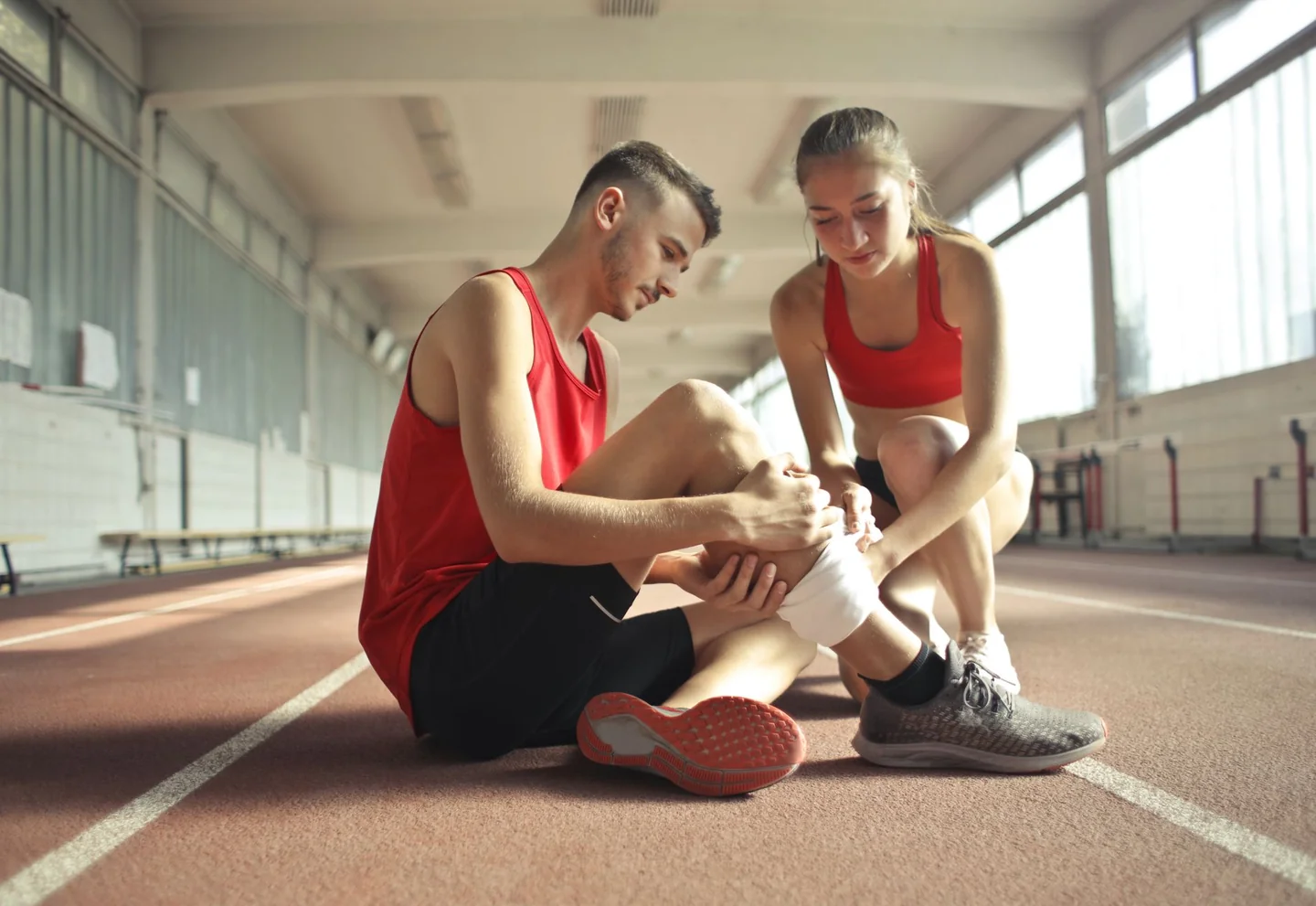
Sports recovery boots have gone from being a resource reserved for clinics and top-level teams to taking up space in living rooms, home gyms, and car trunks. Their appeal is obvious: they compress the legs sequentially, promote venous return, and can relieve that feeling of heaviness that appears after hard intervals, long runs, or demanding training days. In the Spanish market, the range has also exploded, with models ranging from basic equipment for under 200 euros to advanced systems that easily exceed 800 or 1,000 euros.
The underlying interest is not aesthetic, but functional. Anyone who runs, cycles, or chains strength sessions together usually looks for a more orderly recovery between efforts. That is where these inflatable sleeves gain ground: they do not replace rest, sleep, or sensible planning, but they can become a useful complement to reduce the feeling of load in the legs and arrive at the next workout with better sensations.
What they actually do and why they have gained so much space in sport
The technical idea is simple: a pump sends air into several internal chambers that inflate and deflate in phases, usually from the foot toward the upper part of the leg. That sequence creates rhythmic compression that partly mimics the drainage provided by a manual massage. The intended effect is to help the movement of fluids, promote return circulation, and reduce the feeling of buildup in the calves and thighs.
In sports terms, this translates into a recovery tool that fits well during weeks with heavy training load. A runner preparing a half marathon, a cyclist with accumulated mileage, or a triathlete in volume blocks often notices that the legs feel less stiff after using this type of pneumatic compression. It is not magic or pseudo-physiology; it is a mechanical aid that acts on external pressure and on subjective comfort, two factors that matter a great deal when the body is pushed to the limit.
The expansion of this technology is also linked to convenience. Compared with other recovery methods that require more time, travel, or additional equipment, compression boots can be used at home while resting, reading, or reviewing the next day’s training. That ease of use explains part of the commercial leap made by specialized brands and mainstream sales platforms.
How they work inside and what chambers, pressure, and programs mean
The heart of the system lies in the air chambers. The simplest models usually work with four chambers per leg, while others go up to six, eight, or even sixteen individually adjustable segments. The more chambers and control the user has, the more precise the pneumatic massage tends to be. Coverage also changes: some models stop at the feet and calves, while others extend to the thighs or glutes, such as the so-called pants.
Another important detail is pressure, usually expressed in millimeters of mercury. In online retail, references range from moderate levels to equipment with settings from 0 to 240 mmHg. This figure should not be read as a competition of power. More pressure does not always equal better results; in fact, compression that is too high can be uncomfortable or even counterproductive for certain users. The sensible approach is to assess the range, the precision of the adjustment, and the possibility of using different programs depending on the moment.
Sequencing also matters. Some devices inflate the chambers continuously and upward, while others use more rhythmic massage modes or alternate zones to simulate a gentler pumping effect. Mobile app-enabled systems have taken this a step further: they allow routines to be created, settings to be saved, and sessions to be adapted to specific disciplines. At that point, the technology is no longer limited to inflating a boot, but instead aims to organize a more refined and reproducible recovery experience.
What to look at before buying: from sizing to portability
The first filter should be sizing. It seems obvious, but it is not always so. A fit that is too loose loses effectiveness; one that is too tight can be uncomfortable and limit use. Brands usually offer sizes by height or circumference, and it is worth checking the guides because a purchase of this type is not handled like a T-shirt. It is also a good idea to check whether the system covers only the legs or includes the abdomen and arms, which is common in more complete equipment.
The second filter is the actual use it will receive. Some devices are designed to stay fixed at home, while others prioritize portability, with built-in battery, carrying case, or hose-free design. The portable version has clear advantages for travel and competitions, but it usually requires closer attention to battery life, weight, and available power. By contrast, corded equipment usually opts for more stable sessions and a sense of continuous operation.
There are also differences in ease of use. A physical remote may be more straightforward for someone who wants to turn it on and adjust it without distractions; an app offers customization and tracking, although sometimes it adds an unnecessary layer of complexity for users who only want a short routine. In any case, the most useful criterion is usually this: a good system is the one you end up using regularly, not the one that promises the most on the spec sheet.
Price ranges and what you get at each level
The current market is very tiered. In Spain and in international stores, entry-level models can be found for around 100 to 200 euros, especially with four chambers, fewer modes, and limited coverage. Between 200 and 400 euros, more capable equipment appears, with better build quality, more programs, and sometimes a battery or better portability. From 500 euros upward, you are usually looking at the range aimed at more intensive use, with eight chambers, more control, and more carefully selected materials.
The prices seen across competitors and major platforms confirm that range. There are corded home boots for around 169.99 euros, portable equipment at about 199.99 euros, models with full coverage that rise to 299.99 euros, and premium systems that move between 699 and 1,299 euros, depending on chambers, power, and accessories. In specialized brands, some full packs reach 899, 989, or even more than 1,000 euros, while certain discounts temporarily bring them below their usual price.
It is worth reading the price together with the warranty. A device with a 30-day trial and return period, three years of warranty, or available spare parts is not the same as one with opaque support. The difference between a reasonable purchase and an expensive one often lies not in power, but in service, the manufacturer’s reliability, and the clarity of technical support. In a product that combines air, electronics, and mechanical wear, that backing counts almost as much as the sales sheet.
Most cited benefits and what the available evidence says
The most repeated benefit is the feeling of faster recovery. After intense efforts, sequential compression can help reduce heaviness and promote the perception of less-loaded legs. It is also associated with fewer post-workout aches and with a feeling of greater freshness the next day. That explains why many runners use them after long runs or during blocks of intervals and hills.
On the physiological side, compression may promote venous and lymphatic return, helping mobilize fluids and metabolites. Some manufacturers cite improvements in the removal of lactate and other byproducts of effort. The cautious reading is this: presotherapy can provide favorable conditions for recovery, but it does not erase fatigue on its own or replace the foundations of performance, which remain rest, nutrition, well-distributed training load, and sleep.
There is also a practical component that often goes unnoticed. After competing or training, it is not all biology; ritual also matters. Sitting down, putting on the sleeves, letting the compressor do its work, and noticing the gradual drop in pressure has a useful pause effect, almost as if the body were shifting gears. In disciplines with repeated impact, that mental transition is also part of recovery.
When they fit best into a runner’s routine
Their best role appears during high-load phases. A recreational runner who trains four or five days a week does not get the same use as a marathoner in peak week, but both can benefit if the session is placed where it belongs. After intense workouts, on double-session days, or after racing, pneumatic compression becomes more interesting than on full rest days with no accumulated fatigue.
In trail running, the usefulness is usually more noticeable after long descents, accumulated elevation change, and eccentric efforts that punish the quadriceps and calves. On the road, it fits well after intervals, long runs, and races where the legs reach the limit of their usual tolerance. There is no need to overdo the frequency: sometimes 20 or 30 minutes are enough, while other people prefer sessions of up to 45 minutes, as long as the fit is comfortable and does not cause numbness.
Recovery is not measured by the clock alone. There are days when a short session, combined with gentle mobility and good hydration, is worth more than prolonged, heavy use. Recovery boots deliver their best version when they are part of a broader strategy, not when they are expected to take the place of everything else.
Contraindications, precautions, and limits that should not be ignored
The apparent gentleness of the massage can be deceptive. Not everyone should use this type of compression, and in some cases its use is not recommended. Among the situations most frequently cited are deep vein thrombosis, thrombophlebitis, certain heart conditions, open wounds, active infections, and some cancer treatments. During pregnancy, caution is also recommended, with exclusions that may vary depending on the trimester and medical assessment.
Beyond those formal contraindications, there are signs of caution that the user should respect. If a leg shows unusual swelling, persistent pain, local heat, redness, or sudden changes compared with normal, the device is not the first response. Mechanical compression does not replace a clinical evaluation and should never be used as a shortcut to ignore symptoms that point to something more serious.
It is also important to keep expectations realistic. Presotherapy does not fix poor load planning, does not make up for insufficient sleep, and does not turn a poorly structured week into a perfect one. Its value lies in fine-tuning the margin, not in creating performance from nothing. That difference, small at first glance, separates a useful tool from inflated marketing.
Which models and configurations usually make the most sense by profile
Four-chamber systems are usually the entry point. They are more affordable, lighter, and sufficient for anyone looking to relieve tired legs without moving into intensive use. They usually suit recreational runners, gym-goers, or people who spend many hours on their feet and want simple home support. If budget is the main factor, this range serves a clear purpose.
Eight-chamber systems or more offer a more precise sensation and better distributed compression. That difference is noticeable for users who repeat sessions several times a week, athletes with high training volumes, or profiles that value customization more than simplicity. The more granularity, the more control, but also the higher the price and, sometimes, the greater the weight or complexity.
Then there are full pants, which cover from the feet to the glutes and expand the working area. They are not essential for most runners, but they may make sense in disciplines that heavily punish the lower body or for people who prefer broader coverage. The editorial judgment here is clear: the biggest model is not always the best, but it can be the most logical for certain very specific uses.
What they offer compared with other recovery methods
The most useful comparison is not with a cream or a gadget, but with the rest of the recovery ecosystem. Compared with manual massage, presotherapy offers repeatability and independence; compared with cold therapy, it follows a different logic, more centered on compression than on vasoconstriction; compared with simply elevating the legs, it adds an active sequence that can be more effective at relieving heaviness. Each tool has its own place.
That is why some brands combine compression and cryotherapy in their catalog. The mix is no accident: modern sport tends to add resources that address different problems. Cold is associated with relief and control of subjective inflammation in certain contexts, while compression seeks order in return circulation. The difference between the two is not minor, even though in commercial language everything is sometimes bundled together under the umbrella of recovery.
For the runner-profile reader, that distinction matters a lot. A long run does not leave the same trace as a gym session or a mountain race. Recovery, therefore, should not be identical either. Compression boots are one more piece, especially useful when the goal is to train again with less stiffness and a more forgiving perception of the prior effort.
The recovery you buy and the one you build
The commercial success of these boots says a lot about today’s sport. More and more technology is being bought to make visible something that has always mattered: recovering well takes time, discipline, and consistency. Sports presotherapy fits right there, in the territory where the body needs a push and daily routine leaves little room for long massages, clinical sessions, or more cumbersome solutions.
Its real value is not in promising miracles, but in offering a concrete experience: sequential pressure, perceived relief, ease of use, and a relatively comfortable way to wind down after effort. The market has turned them into objects of desire, yes, but their journalistic and sporting interest lies elsewhere: in how they are changing the idea of home recovery for runners, cyclists, and athletes who train hard and want to reach the next day with less weight on their legs.
In the end, the key is to understand them for what they are: a mechanical aid, useful if used well, limited if asked to do too much. Between skepticism and blind faith, there is a much more interesting space. That is where these boots find their purpose, as a sober piece within intelligent recovery that is nothing flashy, but effective when the body starts to take its toll.
You may also like: The best pressotherapy machine for home use in 2026.



Reebok runs large or small: a real fit guide

Hoka Challenger ATR 7 GTX: complete review of the all-terrain shoe

How to clean white sneakers without ruining them

Altus Pirineos 40-liter backpack: analysis, use, and key points

20,000 mm waterproof jacket for men: key points to get it right

Under Armour HOVR Sonic 6: complete review of the shoe

incline treadmills: guide to choosing better

Achilles tendonitis: real recovery time

Pain in the Achilles heel: causes, signs, and relief

What to take for calf pain: real relief and when to worry

 Races3 months ago
Valencia Half Marathon 2026: date and registration

 Reviews and Comparisons4 months ago
Asics Gel-Roadmiles 3 for men: review and current price

 Races3 months ago
Valencia Marathon 2026: entry, ballot and course

 Reviews and Comparisons4 months ago
Asics Gel Sonoma 8 Gore-Tex: complete analysis for trail and rain
- Sneakers3 months ago
Saucony Endorphin Pro 4: full review and verdict

 News5 months ago
Strava API 2026: what changes for clubs, challenges and runner apps?

 Reviews and Comparisons5 months ago
Nike Alphafly 3: opinions, sensations, and real key points

 Reviews and Comparisons4 months ago
Under Armour running shoes review 2025-2026: models and key features
- Sneakers4 months ago
Adidas Adizero Boston 13 for men: review and verdict

 Sports Equipment4 months ago
Shoe sizes in cm: a clear guide to getting the right fit for your footwear
- Sneakers3 months ago
Neutral running shoes with lots of cushioning: the best of 2026

 News4 months ago
Where is the Hoka brand from and why was it born in France