News
Normal heart rate while running: key points and tips for runners
Ranges, effort zones, and warning signs to interpret your pulse when running with judgment and safety.

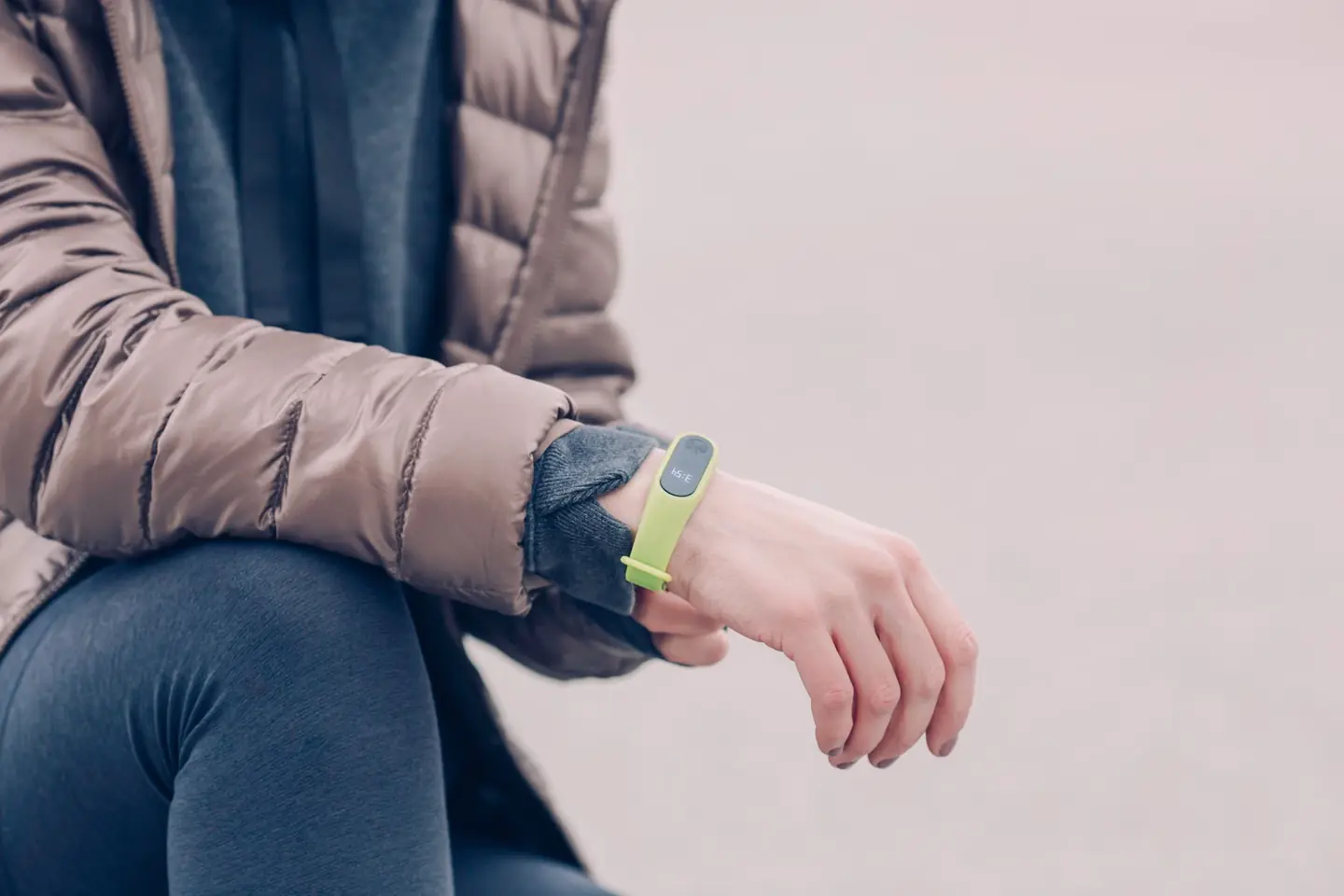
Heart rate while running does not have a single value that is valid for everyone. An easy run, a climb on hot days, or a intervals session can push your pulse to very different numbers without that meaning, by itself, that something is wrong. What is useful is not chasing a fixed number, but understanding which range fits the intensity of the effort and how it changes depending on age, fitness, and the training context.
In practical terms, for many recreational runners a steady, comfortable session usually moves roughly between 60% and 75% of maximum heart rate, while harder work can rise to 80% or even 85% in controlled efforts. The reference, then, is a compass and not a rigid traffic light: the same pulse can be very reasonable for one person and excessive for another.
What the pulse depends on when you go out running
Age is only one piece of the puzzle. The best-known formula to estimate maximum heart rate is 220 minus age, but it is a rough approximation. It works as a starting point, although it can fall short or go too far depending on genetics, sporting background, and the individual heart response. There are 45-year-old runners with higher ceilings than expected and 30-year-olds with lower limits than the charts show.
Fitness also matters a lot. Someone who trains regularly usually has a lower resting heart rate and greater cardiac efficiency: the heart pumps more blood with each beat, so it needs fewer beats to move the same pace. That explains why, after weeks of consistent work, the same run can start to feel easier with a lower pulse. The body learns to spend less to do the same.
The environment alters the reading almost as much as fitness does. Heat, humidity, dehydration, altitude, stress, lack of sleep, caffeine, alcohol, and certain medications can raise or change the pulse response. A muggy day in Valencia does not demand the same physiological effort as a cool winter morning, even if the pace on the watch is similar. That is why heart rate should be interpreted together with sensations, not in isolation as a number taken out of context.
What it means to talk about maximum heart rate
Maximum heart rate is the highest number of beats per minute the heart can reach in a true maximal-intensity effort. From that data, training zones are built. The most widely used estimate is still 220 minus age, but studies and exercise physiology guidelines have shown that there are somewhat more refined formulas, such as 207 minus 0.7 times age, which in some cases come closer to reality.
Even so, no formula replaces a stress test or a well-designed field test. The difference between theory and practice can be notable, especially in very trained people, beginners, or those taking medication that changes cardiac response. Age alone does not tell the whole story. Two 40-year-old runners can share the same birthday year and not share the same physiological ceiling.
In practice, thinking in percentages of maximum heart rate is more useful than obsessing over a specific figure. A recovery run usually stays around 50%-60%; a comfortable aerobic workout, 60%-70%; a somewhat livelier effort, 70%-80%; and intense efforts, 80%-90% or above, although this territory already calls for caution. The value of the pulse lies in the zone, not in the isolated number.
Guideline ranges for running with criteria
When talking about a normal pulse while running, the most sensible thing is to separate by intensity. On an easy outing, where conversation is possible and breathing stays controlled, many runners move between 60% and 70% of their maximum heart rate. That range usually serves to build volume without overly punishing the nervous system or the muscles. It is the territory of the miles that build the base.
If the pace picks up, the pulse can climb to 70%-80%, a band in which running already feels more demanding and where talking becomes fragmented. This is where sustained work appears, the approximate threshold for many people and the range that improves aerobic capacity when it is dosed well. It is not a stroll intensity, but neither is it a sprint; it is the point where the effort starts to feel serious.
Above that level come intervals, long strides, and quality sessions. Around 80%-90% of maximum heart rate, the body gets close to the limit of comfortable aerobic work and starts to accumulate fatigue quickly. That zone is not usually the foundation of a weekly training plan for a recreational runner, but rather a punctual tool to improve speed, effort tolerance, and the ability to hold high paces.
What training zones teach us
Heart rate zones serve to translate sensations into data. They do not turn training into a perfect mathematical formula, but they do help bring order. Zone 1, easy, is reserved for warm-ups and recovery. Zone 2, the most cited in endurance work, supports long efforts with moderate wear. Zone 3 raises the tone and usually represents an intermediate step between comfort and sustained demand.
Higher up appear zones 4 and 5, where the body enters a territory of high intensity. There the heart works close to its limits, breathing becomes heavy, and the legs start to pay the price before the watch has marked too many minutes. Training in those ranges has value, but it should not take over everything. Most runners progress better when they combine a lot of moderate aerobic work with small, well-chosen doses of intensity.
For recreational runners, zone 2 is especially valuable because it allows them to add running time with less wear. By contrast, zone 4 or 5 requires a prior base and more careful recovery. The usual mistake is not only going too fast on hard days; it is also turning every session into a race in disguise. Heart rate helps prevent that disorder.
When the pulse is higher than expected
A racing heart does not always mean you are running better. Sometimes it indicates heat, accumulated fatigue, poor hydration, or simply a bad day. In recovery sessions, for example, an unusually elevated pulse is often a clue that the body is not ready to push. The opposite can also happen: paces that feel demanding with a lower-than-expected heart rate, something that sometimes appears when there is fatigue or the measurement fails.
If the pulse shoots up during moderate efforts and, in addition, dizziness, pain or pressure in the chest, irregular palpitations, or difficulty breathing appear, the signal no longer belongs to the training field, but to medical caution. Anyone with cardiovascular disease, relevant history, or repeated symptoms should be especially vigilant. Running is healthy, but it does not make a warning from the body harmless.
It is also worth remembering that warm-up changes the reading a lot. A sudden start, without prior progression, raises the pulse before the stride finds its balance. By contrast, a gentle start stabilizes the cardiovascular system and offers cleaner data. The same session can feel different depending on how it begins, and that explains why the numbers from the first minutes are rarely the most representative.
When the pulse seems too low
A low value is not bad by definition. In trained people, resting heart rate can drop below 60 beats per minute and even approach 40 in very athletic profiles. During an easy run, that efficient heart may take longer to rise and sustain relatively contained numbers. Cardiac efficiency is not a weakness, but an adaptation.
The problem appears if the pulse stays low because the effort is too light for the goal. Someone who wants to work on endurance and remains at an almost walking intensity may not generate the necessary stimulus. In that case, the watch does not correct the training on its own, but it does reveal a mismatch between intention and load. The data is useful precisely because it unmasks the body’s involuntary laziness.
It is also worth interpreting low heart rate within its context. A contained figure after a rest day can be good news; the same figure accompanied by dizziness, unusual fatigue, or a feeling of weakness deserves another reading. Numbers only speak well when they are accompanied by coherent sensations.
How to measure it reliably while running
Manual measurement still exists, but in motion it is not very practical. Taking your pulse at the wrist or neck can work for a quick check before or after running, counting beats for 15 or 30 seconds and then multiplying. However, during the run, accuracy drops and the reading becomes uncomfortable, especially if you want continuous control.
That is why wrist devices and, more reliably, chest straps are the usual allies. Sports watches allow you to save sessions, compare trends, and see how the body responds over the weeks. The real advantage is not the isolated number at the moment, but the series of data. A single workout says little; a whole month says much more.
Even so, no sensor is perfect. Cold, sweat, the position of the watch, or a loose fit can cause strange fluctuations. In very abrupt pace changes, optical measurement also tends to lag a little behind reality. That is why it still makes sense to compare the data with breathing, cadence, and muscle sensation. The watch helps; the runner’s judgment finishes the interpretation.
What role resting heart rate plays
Resting heart rate is the calm snapshot of the cardiovascular system. Ideally, it is taken upon waking and before getting out of bed. In adults, a common range is between 60 and 100 beats per minute, although in active people it can be much lower. A downward trend over weeks is usually associated with improved fitness.
For the runner, this data matters because it offers a background reference. If one morning it is clearly higher than usual, it may reflect fatigue, stress, lack of sleep, or even an incipient infection. It is a silent signal that often warns before the legs do. It does not by itself determine whether you should train or not, but it does help read the body’s overall state.
Day-to-day comparison is more valuable than the raw number. A runner with 48 resting beats is not automatically healthier than another with 62; what matters is the evolution relative to their own average and the coincidence with other signs of well-being or fatigue. The heart, like the rest of the body, also has its memory.
What to do with the data so you do not lose your way
Heart rate is a control tool, not a verdict. It helps adjust paces, understand recovery, and detect excesses, but it does not replace the experience of running. Sometimes the watch shows a high number and, even so, the session fits because the heat is intense or the route has elevation gain. Other times the pulse seems correct and, nevertheless, the body has nothing left. Training is read in several layers.
That is why many runners find it more useful to think in flexible ranges than in exact targets. A run may start a little above the ideal zone and settle later; a short climb can spike the pulse without turning the whole session into an extreme effort. The elasticity of the data avoids the tyranny of the perfect number.
It also helps to review the relationship between pulse and pace. If over the weeks you do the same route at the same heart rate but run faster, the adaptation is going in the right direction. If, on the contrary, to hold the same pace you need more and more beats each time, you may be accumulating fatigue or training in worse conditions. Progress in running is rarely seen in a linear way; it usually appears as a discreet and persistent improvement.
What is worth watching before taking any figure as normal
Not all high readings are the same, and not all low ones mean the same thing. Guideline tables serve as a map, but they do not replace the real terrain. A 35-year-old, a 50-year-old, and a third person returning to running after a long break can share the same track and respond very differently. The heart, after all, does not consult tables before beating.
If heart rate rises easily, disproportionate fatigue appears, or it stays elevated for a long time after finishing, it is worth looking at the whole picture: rest, hydration, stress, heat, weekly load, and recovery. The body speaks as a whole, not in compartments. The runner’s discipline consists of listening to that mix without dramatizing or minimizing it.
On the other side, a moderate or even low figure should not lead you to force things as a rule. The goal is not to chase suffering, but to find the level of effort that builds fitness without wearing it down. When training is done with a head on your shoulders, heart rate stops being an enemy of the session and becomes a fairly reliable witness of what is happening inside.
A useful number when read in context
Normal heart rate while running is, in reality, a moving range. It changes with age, fitness level, the weather, the incline, and the type of session. That is why the most solid references talk about percentages of maximum heart rate: around 50%-70% for easy or moderate efforts, 70%-80% for a livelier aerobic workout, and 80%-90% for intense, occasional sessions. That range explains much more than a single number.
The key is not to set a universal number, but to read the pulse as part of the training landscape. A heart that responds, recovers, and matches the expected pace is usually a good ally. When the sensations also fit, the data gains value. And when they do not fit, it does too: then it points to something that deserves adjustment, rest, or review.
In running, as on the road at dawn, the landscape changes with the light. The pulse is one of those lights. It does not explain everything, but it illuminates quite a lot. And in a sport where the details end up adding minutes or subtracting fatigue, understanding it with nuance is worth more than memorizing a table without context.



Reebok runs large or small: a real fit guide

Hoka Challenger ATR 7 GTX: complete review of the all-terrain shoe

How to clean white sneakers without ruining them

Altus Pirineos 40-liter backpack: analysis, use, and key points

20,000 mm waterproof jacket for men: key points to get it right

Under Armour HOVR Sonic 6: complete review of the shoe

incline treadmills: guide to choosing better

Achilles tendonitis: real recovery time

Pain in the Achilles heel: causes, signs, and relief

What to take for calf pain: real relief and when to worry

 Races3 months ago
Valencia Half Marathon 2026: date and registration

 Reviews and Comparisons4 months ago
Asics Gel-Roadmiles 3 for men: review and current price

 Races3 months ago
Valencia Marathon 2026: entry, ballot and course

 Reviews and Comparisons4 months ago
Asics Gel Sonoma 8 Gore-Tex: complete analysis for trail and rain
- Sneakers3 months ago
Saucony Endorphin Pro 4: full review and verdict

 News5 months ago
Strava API 2026: what changes for clubs, challenges and runner apps?

 Reviews and Comparisons5 months ago
Nike Alphafly 3: opinions, sensations, and real key points

 Reviews and Comparisons4 months ago
Under Armour running shoes review 2025-2026: models and key features

 Sports Equipment4 months ago
Shoe sizes in cm: a clear guide to getting the right fit for your footwear
- Sneakers4 months ago
Adidas Adizero Boston 13 for men: review and verdict
- Sneakers3 months ago
Neutral running shoes with lots of cushioning: the best of 2026

 News4 months ago
Where is the Hoka brand from and why was it born in France