Races
Madrid Half Marathon 2027: date, course and prices
The great popular Madrid race combines atmosphere, a central route, and tiered pricing that makes the bib more expensive over time.

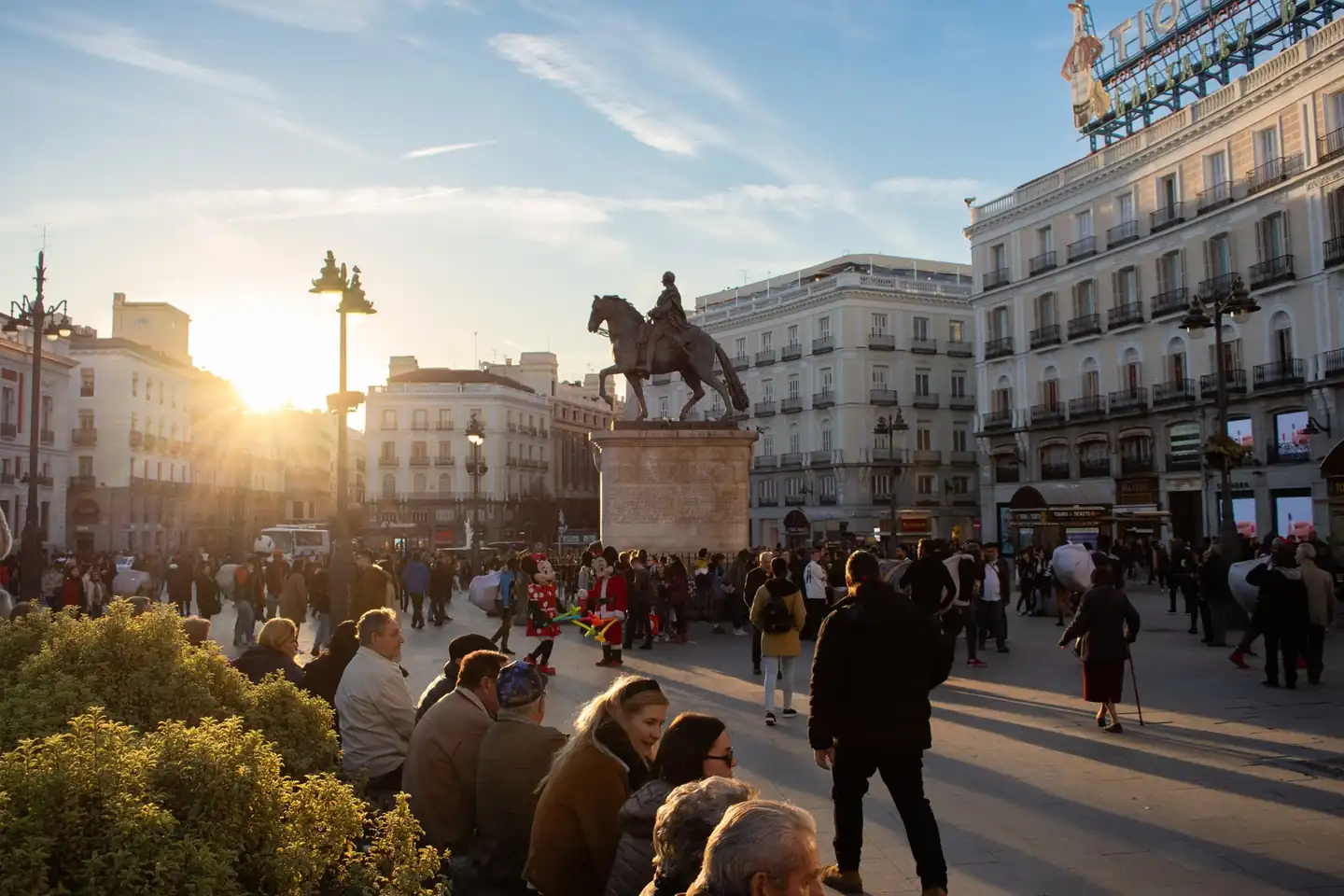
The Movistar Madrid Half Marathon once again places the capital on the map of major urban spring events, with a course that blends wide avenues, recognizable landmarks and a street atmosphere that rarely gives respite. The 2027 edition is set for Sunday, April 4, with the start at 9:15 from Paseo de Recoletos, a spot already associated with the event’s most classic photo and with its finish near Cibeles and Colón.
The race keeps two distances, the half marathon and a 5.8-kilometer run linked to the Profuturo cause, and arrives after a 2026 edition that left a participation record and top-level victories. Its appeal is no accident: Madrid offers a recognizable circuit, fast in several sections and with enough personality to attract both those chasing a personal best and those who want to run through a city closed to traffic and open to spectacle.
A race that has turned central Madrid into its own stage
The Madrid half marathon does not live off a single image, but off a series of connected snapshots. The start at Recoletos, the stretch along the Castellana, the area around the Santiago Bernabéu, the climb toward Plaza de Castilla, the return via Bravo Murillo and the entrance to the city’s cultural axis build a sporting story with the rhythm of a major capital. It is a route designed to showcase Madrid without turning the race into a sightseeing stroll; here there is noise, spectators, turns, pace changes and a demanding finish that punishes anyone who sets off too enthusiastically.
In 2026, the organizers once again confirmed the event’s ability to bring together tens of thousands of runners. The combination of mass participation, an urban course and early-spring dates explains much of its strength. In late March or early April, the weather is usually milder than in the hotter months, and that favors both the recreational experience and the pursuit of serious times. That is why the race has established itself as one of the benchmarks on the national calendar.
Beyond the clock, the appeal lies in the scale. Madrid runs to the sound of an orchestra: music at certain points, crowds on the sidewalks, runners of very different profiles and a finish line that feels like a small urban ceremony. The sensation is of crossing a city at rush hour, but without cars, with the facades acting as a sound wall and the asphalt turned into a sporting runway.
Date, start time and timings worth keeping in mind
The 2027 edition will take place on April 4 and the half marathon will start at 9:15. The 5.8-kilometer race shares the same start time, while para-athletes will set off at 9:10. The maximum time to complete the half marathon is 3 hours from the start of the last wave, a generous margin that makes it possible to accommodate runners at very different paces without losing the event’s popular character.
Bib pickup is concentrated at the Runner’s Expo on April 1, 2 and 3, 2027. That logistics requires a bit more planning than in smaller races, because there is no room for last-minute improvisation. The organizers have also made it clear that race kit is handed out exclusively there, so runners must treat the visit as part of the race ritual itself.
There is also a background detail that carries a lot of weight in this race: the minimum age. To participate, you must have been born in 2009 or earlier. This is a coherent requirement for the distance, the density of the pack and the scale of the event, which demands a minimum level of physical and competitive maturity. This is not an open-entry race without caveats, but a well-established event with clear rules.
A point-to-point course with landmarks and fast stretches
The half marathon course draws a large loop through the heart of Madrid. The start on Paseo de Recoletos places runners on one of the city’s most elegant and visible arteries, opposite the National Library. From there, the route heads north along the Castellana axis, with such recognizable references as the Natural Sciences Museum, the Ministry of Agriculture or the area near the Santiago Bernabéu stadium. The first part has the feel of a long, open avenue, where runners still keep their effort under control.
Then comes Plaza de Castilla, one of the most distinctive points on the course, and the return via Bravo Murillo introduces a more local, more lived-in neighborhood feel, less monumental and more rhythmic. That return toward the center demands smart effort management, because the course does not offer comfortable monotony: there are turns, changes in direction and a profile that, while not mountainous, does leave a noticeable accumulated elevation gain.
The second half becomes more iconic. The Puerta de Alcalá appears as a visual turning point, almost a warning that the monumental city is entering the scene. Then comes the area around Retiro, the train station, Plaza Emperador Carlos V and the stretch that crosses the axis of the Botanical Garden, the Prado Museum and Neptuno before opening onto Cibeles. The finish, once again in Recoletos, works as a classic resolution: a final straight where the runner looks less at the watch than at the finish line.
The profile is not flat, and that matters. The organizers’ reference and specialist listings place the positive elevation gain at around 292 meters, a figure that helps explain why some times come at a higher cost than they might seem on paper. It is a fast course in several sections, yes, but also demanding enough to reward patience and punish haste.
Tiered pricing and registration that punishes delay
The registration system follows the usual model of many major urban events: the price goes up in tiers. For the half marathon, the first block starts at 35 euros for the first 2,000 bibs or until May 11, 2026. Then it rises to 42 euros until June 30, 49 euros until September 30, 59 euros until November 1, 69 euros until January 7, 2027, 80 euros until February 15 and 95 euros from bib 30,001 onward until sold out or on the waiting list.
The message is clear: waiting is expensive. This is not an aggressive tactic, but a way to organize demand in a race that usually fills its spots easily. Those who register early get the lowest tier, while indecision is punished by a stepped increase that can double the initial price. In an event of this size, price also reflects availability and sales pace.
Registration includes basic runner items, such as bib with chip, official T-shirt, aid stations, finisher medal and gear check. In races like this, value is measured not only by the direct cost, but by the sum of services and the urban experience surrounding the bib. The pricing structure also reflects real demand pressure: Madrid has pull, and it knows it.
The short distance also has its own weight
The 5.8-kilometer race is not just a side event. It works as an entry point to the celebration, as a more accessible format and as a solidarity proposal linked to Profuturo, an initiative that promotes digital education to reduce inequality. Its start and finish are also in Recoletos, and the route circles Retiro Park and passes through areas such as Menéndez Pelayo, Paseo de la Reina Cristina and the Atocha/Reina Sofía axis before returning to the starting point.
This format has an obvious purpose: it keeps the event from being limited to half-marathon runners. Families, first-timers or participants who prefer a more moderate effort find here an alternative with the same major-event atmosphere. The result is a broader, more diverse and more visible day, where the event stops being just one race and becomes a full morning of a city in motion.
In addition, the short distance has no small sporting interest. For some runners, covering 5.8 kilometers in an elite urban setting is a first encounter with the crowd, the logistics and the pulse of a major race. For others, it is simply a way to experience Madrid while running without the wear and tear required by the half marathon. In both cases, the course preserves the essence of the race: a historic city turned into a backdrop.
Services, runner expo and the logistics of a major race
The Runner’s Expo concentrates much of the pre-race logistics. That is where the bib is collected and the practical side of registration is handled. This format requires planning travel and timing carefully, especially if the runner is coming from outside Madrid. The organizers themselves insist that bib pickup is not available elsewhere or at another time, a detail that in high-volume races helps avoid confusion and unnecessary lines.
Along the course there will be liquid aid stations around kilometers 5, 10 and 15, plus drink and food at the finish. Free gear check will also be available at Plaza de Colón from 8:00 on race Sunday. The warning about safeguarding personal items is not a minor formality: at mass events, keeping everything orderly and simple saves trouble at the end of the day.
The organizers also cater to the international field and the services linked to an event that receives runners from outside Spain. That detail, though often overlooked, helps explain the event’s size: the Madrid half marathon is no longer just a local race with national reach, but an urban benchmark with European projection. Support from institutions, sponsors, the official sports brand and official media reinforces that structure.
Records, the recent edition and the sporting benchmark
The 2026 edition left two references worth keeping in mind. In the men’s race, Levy Kibet Chematot won in 1:00:49, and in the women’s race, Ludwina Chepngetich took the win in 1:08:30. These are marks that speak to a course fit for fast running, but also to the depth of an event capable of attracting athletes of serious competitive level. The Madrid half marathon therefore is not limited to mass participation; it also has the pulse of pure competition.
The race’s all-time records add another layer of interest. According to the data released by the references consulted, the best men’s time belongs to Ronald Kiprotich Kirui, with 59:38, and the women’s to Winfridah Moraa, with 1:07:22. These are times made possible by a combination of favorable course, international level and competitive dynamism. When an urban race brings those conditions together, the line between popular event and record showcase becomes thinner.
The 25th anniversary, celebrated in the previous edition, also brought symbolic weight: the race is no longer a promise, but a firmly established calendar habit. The early announcement of the 2027 date, with registration opening on March 30, 2026, fits that logic of a mature event that works well in advance to sustain its entry numbers and media visibility.
What makes this half marathon different in a calendar full of half marathons
In Spain there are many half marathons, but few have the mix of scale, visibility and scenery that Madrid offers. The appeal lies not only in the monumental course; it also lies in the way the city lends itself to running. The Castellana opens up space, the historic center adds visual tension and the final stretch, with its references to the Prado and Cibeles, turns the finish into a recognizable scene even for those who do not live in the capital.
The race also benefits from a rarely found balance. It is large enough to have serious infrastructure, but not so cold as to lose its popular pulse. It is fast enough to tempt those chasing a personal best, but not so technical as to exclude less experienced runners. And it is well known enough to attract names from abroad, while still preserving that Madrid feel of a great sporting festival expanded to metropolitan scale.
That is why the Movistar Madrid Half Marathon works as a two-way window: it showcases a city and, at the same time, measures the fitness of thousands of runners in a demanding yet welcoming setting. The asphalt, April light and sequence of monuments create a scene that feels made to be remembered. There is no artifice, just a capital opening itself stride by stride and an event that has already learned how to make the most of every corner.
The major Madrid race that keeps growing without losing its identity
The importance of the event is explained not only by the participants or by the sponsorship of a major brand. It is understood by the way Madrid turns into a course and by the organizers’ ability to maintain an orderly, recognizable and appealing experience. The race has learned to live with the crowd without sacrificing its role as a major urban benchmark, and that balance is not easy to sustain over so many years.
In an increasingly competitive calendar, the Madrid half marathon keeps a very strong case: it offers a serious race, with a visible route and large-scale logistics, within a city that has narrative force of its own. Running it means crossing Madrid in one of its best versions, with just the right amount of noise, suitable likely weather and a finish line that needs no introduction. The race no longer tries to explain why it matters; it simply continues to occupy that place naturally.
And that is its most lasting value. It does not need grandiloquence because the race stands on its own: because of the date, the route, the crowd response, the tiered pricing that signals demand and an identity that combines sport, city and collective memory. Every April, Madrid puts on a bib once again with the same determination with which its great avenues open up.
You may also like: Paris Half Marathon 2026: date, route, and key details.
Where to stay in Madrid
Hotels available 2–5 April 2027.
Affiliate links: if you book through this map we earn a commission, at no extra cost to you.



Reebok runs large or small: a real fit guide

Hoka Challenger ATR 7 GTX: complete review of the all-terrain shoe

How to clean white sneakers without ruining them

Altus Pirineos 40-liter backpack: analysis, use, and key points

20,000 mm waterproof jacket for men: key points to get it right

Under Armour HOVR Sonic 6: complete review of the shoe

incline treadmills: guide to choosing better

Achilles tendonitis: real recovery time

Pain in the Achilles heel: causes, signs, and relief

What to take for calf pain: real relief and when to worry

 Races3 months ago
Valencia Half Marathon 2026: date and registration

 Reviews and Comparisons4 months ago
Asics Gel-Roadmiles 3 for men: review and current price

 Races3 months ago
Valencia Marathon 2026: entry, ballot and course

 Reviews and Comparisons4 months ago
Asics Gel Sonoma 8 Gore-Tex: complete analysis for trail and rain
- Sneakers3 months ago
Saucony Endorphin Pro 4: full review and verdict

 News5 months ago
Strava API 2026: what changes for clubs, challenges and runner apps?

 Reviews and Comparisons5 months ago
Nike Alphafly 3: opinions, sensations, and real key points

 Reviews and Comparisons4 months ago
Under Armour running shoes review 2025-2026: models and key features
- Sneakers4 months ago
Adidas Adizero Boston 13 for men: review and verdict

 Sports Equipment4 months ago
Shoe sizes in cm: a clear guide to getting the right fit for your footwear
- Sneakers3 months ago
Neutral running shoes with lots of cushioning: the best of 2026

 News4 months ago
Where is the Hoka brand from and why was it born in France