Races
Paris Half Marathon 2026: date, route, and key details
Paris is expecting 48,000 runners in a fast, international event with a strong elite field.

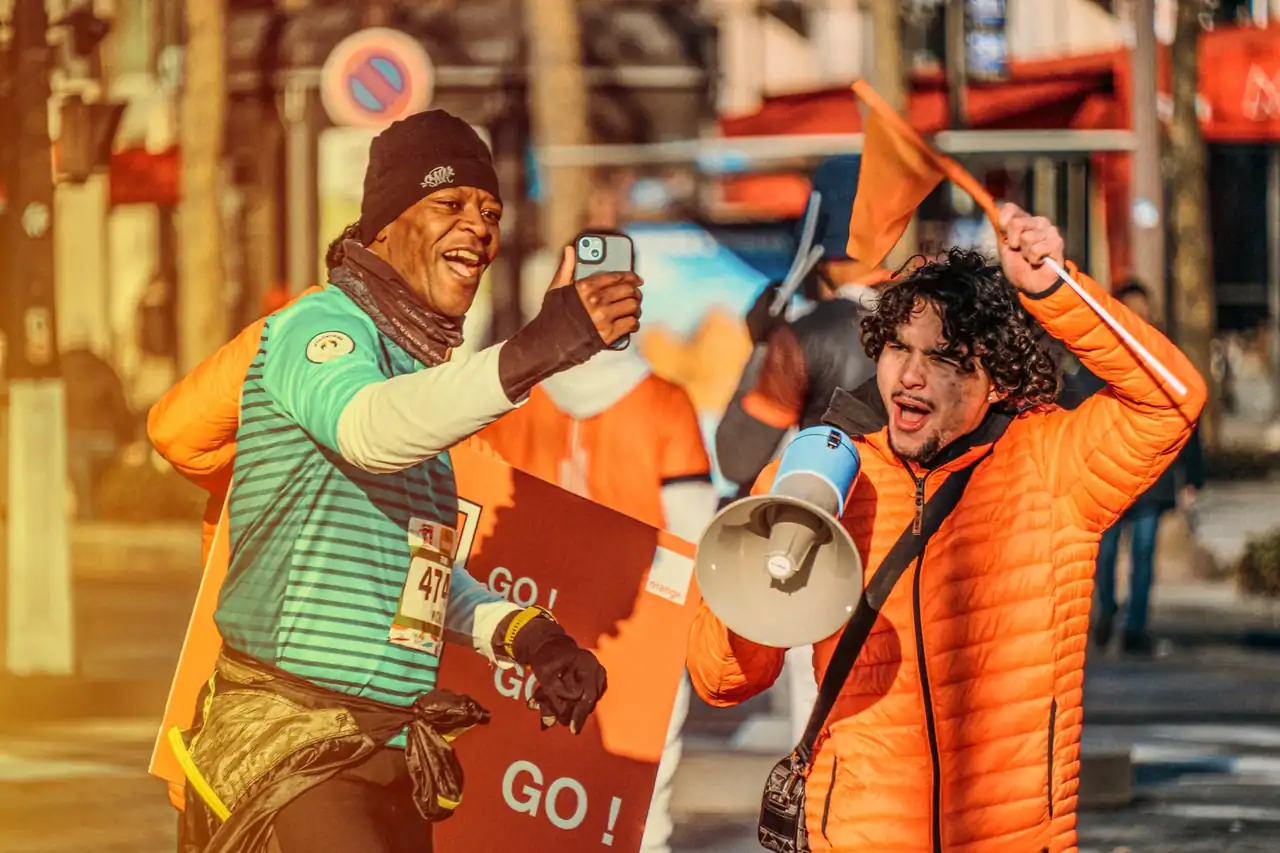
Paris will once again dress itself in sporting wallpaper on Sunday, March 8, 2026, when 48,000 runners take over its avenues in one of the most crowded 21-kilometer races on the planet. The race, known for its fast course and its start in the Bastille area, retains its status as a major urban showcase: wide pavement, brisk pace, and a city that opens itself to the pack as if breathing to the rhythm of each stride.
The 2026 edition also confirms a fact that carries weight in the international running conversation: nearly 35% of participants come from outside France, with representation from more than 120 countries, and the female presence is close to 40%. That mix of mass participation, diversity, and competitive level explains why the Paris event has established itself as a very serious benchmark for those seeking a personal best, atmosphere, and a finish that leaves postcard-worthy images inside the Bois de Vincennes.
A race that combines scale, speed, and an urban showcase
The Semi de Paris has something of both a human river and a metronome. It is not just a huge turnout: it is an event designed to be run fast, with a route that favors steady pacing and reduces the strain usually imposed by a broken profile. That combination leads many runners to see it as an approachable half marathon for a debut at the distance and, at the same time, serious enough to aim for a competitive time.
The event’s popularity is explained not only by the number of bibs. The start in Bastille and the passage through Paris’s broad arteries turn the race into an eminently urban experience, with an almost cinematic sense of scale. Halfway through the course, the Bois de Vincennes appears, a green contrast that softens the race’s intensity and allows runners to breathe in a less concrete setting before returning to the final stretch and the finish near the Parc Floral de Paris.
That change of scenery, from asphalt to trees and back to the final push, is part of the appeal. The race not only measures legs; it also measures how each runner manages the noise, the crowd, and effort in an environment where the clock can deliver a fast time or fall apart in the last kilometers, when emotion weighs as much as the watch.
Date, start, and course: what is already set
The date is clear: March 8, 2026. The organizers place the start on Sunday morning, with a scheduled time from 08:30, although that point remains subject to final confirmation on some sales and communication channels. Logistics in Paris, as in other major European races, often keep details close to the event date, but the overall framework is already established clearly enough to plan the day.
The course starts in the Bastille Square area and begins on Boulevard Henri IV. From there, the pack moves through wide streets of the capital and enters the most visually pleasant section between kilometers 5 and 15, when the route crosses the Bois de Vincennes. The last six kilometers already run with the Seine as a companion before the race closes on Rue de Lyon or in the finish-line area set by the organizers, within that finishing stretch that usually decides good times and also the occasional domestic drama.
It is a race described by organizers and registration intermediaries as flat and fast, with an overall difficulty rated as easy. In runner language, that means the terrain does not add too many traps and that the main battle is fought through pace control, aid station management, and the ability not to get carried away by early excitement. Paris does not forgive overly aggressive starts, even if the course layout invites you to fly.
A massive field with an international stamp
The numbers help explain the phenomenon. 48,000 runners are not just a volume; they are a temporary infrastructure built on the city, with waves of athletes, companions, volunteers, and fans turning Sunday into a high-density choreography. The figure places the race among the three most attended half marathons in the world, a ranking that puts it well above the average of major European road races.
The international character has also stopped being a decorative detail and has become part of the event’s DNA. More than a third of the field is made up of foreign runners, giving the Semi de Paris the feel of a global gathering of popular running. Paces, accents, club shirts, travel groups, and runners all mix in the French capital with one very specific goal: to complete 21.097 kilometers in a city that knows how to showcase its own stage well.
The female presence, already close to 40%, adds another layer of meaning. This is not a cosmetic detail; it is an indicator of how road running has gained balance in major events and how urban half marathons have ceased to be spaces dominated by a single runner profile. Paris, with its tourist appeal and compact logistics, has become a particularly visible showcase of that shift.
The elite field and the symbolic weight of Jim Walmsley
The conversation about the race is not limited to the mass field. This 2026 edition arrives with an increasingly attractive elite lineup, led by names such as American Jim Walmsley, one of the most recognizable figures in the trail world. His presence adds an interesting angle: the Paris half marathon does not only attract pure road specialists, but also endurance runners capable of generating headlines beyond the strictly urban circuit.
In the men’s race, the sporting spotlight is on Kenyan Kennedy Kimutai, last year’s winner and holder of a personal best of 58:28. His profile fits perfectly with a fast course and a race where the margin between control and blowing up can be minimal. Behind him appear strong rivals such as Timothy Kosgei, Timothy Misoi, and American Edward Cheserek, as well as Belgian Isaac Kimeli, the 2025 world 5,000-meter silver medalist, who will make his distance debut on the streets of Paris.
The women’s race also features top-tier names. Kenyan Jackline Cherono, winner in 2025 with 1:07:14, returns as the main reference, accompanied by very solid distance runners such as Mercy Chebwogen, Ftaw Zeray, and Sarah Chelangat. That mix of defending champions, ambitious debutants, and high-level distance runners turns the race into more than a big popular festival: it gives it a competitive tension that boosts international attention and makes it appealing for those looking beyond their own watch.
A route designed for flying, but not for improvising
The Paris course looks simple on paper and, precisely for that reason, demands discipline. The start in Bastille can tempt many runners into a first kilometer that is too enthusiastic, and the mass atmosphere often creates the dangerous illusion that everything is going too easily. In a flat half marathon, the cost of starting a bit above one’s means is paid later, when the legs begin to feel the noise of the asphalt and the body asks for a negotiation that does not always arrive in time.
The passage through the Bois de Vincennes acts as a breathing space, but also as a section where concentration must remain high. Between wide avenues and changing visual references, the race offers no major technical difficulties, although it does maintain a continuous sense of motion that can disconnect anyone paying too much attention to the surroundings. Effort management ends up being more decisive than momentary bravery.
In the final part, alongside the Seine and with the finish approaching, the race changes texture. The body begins to hear every meter and the surroundings, despite remaining broad and urban, become more emotional. Paris knows how to produce that feeling of a grand open finish, as if the runner were moving along a conveyor belt of noise, applause, and fatigue. There, the classic running stories repeat themselves: those who pace wisely reap the rewards; those who rush pay the price.
What this edition reveals about European running
The Paris Half Marathon 2026 is not an isolated episode, but a sign of how distance running has changed in Europe’s calendar. Major urban races no longer compete only for the elite podium; they compete to offer a complete experience that blends time, city, logistics, and media reach. Paris delivers on all four fronts and, moreover, does so early in the year, allowing the race to fit as a season goal or as the first serious test of the campaign.
The strength of women’s running, the internationalization of the bib, and the event’s ability to attract names like Walmsley show a race with multiple entry points. For some, it is a chance to run fast through an iconic capital. For others, a sporting getaway with the feel of a major event. And for the athletics showcase, a demonstration that urban half marathons remain the most effective format for bringing together mass participation, elite competition, and storytelling.
The 2026 edition also leaves another underlying idea: major popular events have learned to become complete products without losing their essence. Paris offers pace, scenery, and huge participation, but also an organization that is already thinking about runners from 120 countries and a growing female base. In an increasingly crowded calendar, that mix of scale and character remains the best calling card.
Paris, a city that turns 21 kilometers into a great Sunday of endurance
There are races you run through and races you remember. The Paris half marathon belongs to the second category by the sheer accumulation of factors: early date, fast course, powerful visual backdrop, and a city that works as a living set. It is not just about running in Paris, but about entering its rhythm and leaving it with the feeling of having crossed a moving postcard.
That is why this race retains a special magnetism for both recreational runners and specialists. The Bastille asphalt, the open avenues, the greenery of the Bois de Vincennes, and the finish in the Parc Floral area make up a clear, almost narrative sequence that explains very well why the event keeps growing in interest. It is a half marathon to compete, to test fitness, and to be part of a great choral mass of runners, all at the same time.
The 2026 edition ultimately leaves a strong image: 48,000 bibs, notable international presence, top-level elite fields, and a course that remains synonymous with speed. Paris does not need excessive embellishment to sell its half marathon. It is enough to offer what the city provides when traffic is removed and effort is allowed in: a long avenue, a clear Sunday, and thousands of runners telling the same story in different languages and paces.



How to prevent thigh chafing: causes and real solutions

Women’s running windbreakers: seven jackets and how to choose

Do more workouts get rid of soreness? A guide for runners

Jaén Half Marathon 2026: Record 3,800 Runners Registered

Men’s short running tights: how to choose the right pair

World Triathlon confirms data breach involving medical data

Izan Edo targets podium at Miyazaki World Cup

María Pérez ranks ninth in World Athletics’ 2026 top ten

Dos Santos, Duplantis and Sawe: World Athlete of the Year finalists

San Silvestre Vallecana 2026: 42,000 places, prices and start times

 Races3 months ago
Valencia Half Marathon 2027: date and registration

 Races3 months ago
Valencia Marathon 2026: entry, ballot and course

 Reviews and Comparisons4 months ago
Asics Gel-Roadmiles 3 for men: review and current price

 Reviews and Comparisons4 months ago
Asics Gel Sonoma 8 Gore-Tex: complete analysis for trail and rain

 Sneakers3 months ago
Saucony Endorphin Pro 4: full review and verdict

 News5 months ago
Strava API 2026: what changes for clubs, challenges and runner apps?

 Reviews and Comparisons5 months ago
Nike Alphafly 3: opinions, sensations, and real key points

 Reviews and Comparisons4 months ago
Under Armour running shoes review 2025-2026: models and key features

 Sports Equipment4 months ago
Shoe sizes in cm: a clear guide to getting the right fit for your footwear

 Sneakers3 months ago
Skechers GO RUN Consistent 2.0 analysis: comfort and limits

 News5 months ago
Valencia Marathon 2026 route: key tips to train and run better

 Sneakers4 months ago
Adidas Adizero Boston 13 for men: review and verdict