Routes
Difference between trekking and hiking: key points to distinguish them
Two ways of walking in the mountains, two requirements and different gear. That is how they are clearly distinguished.

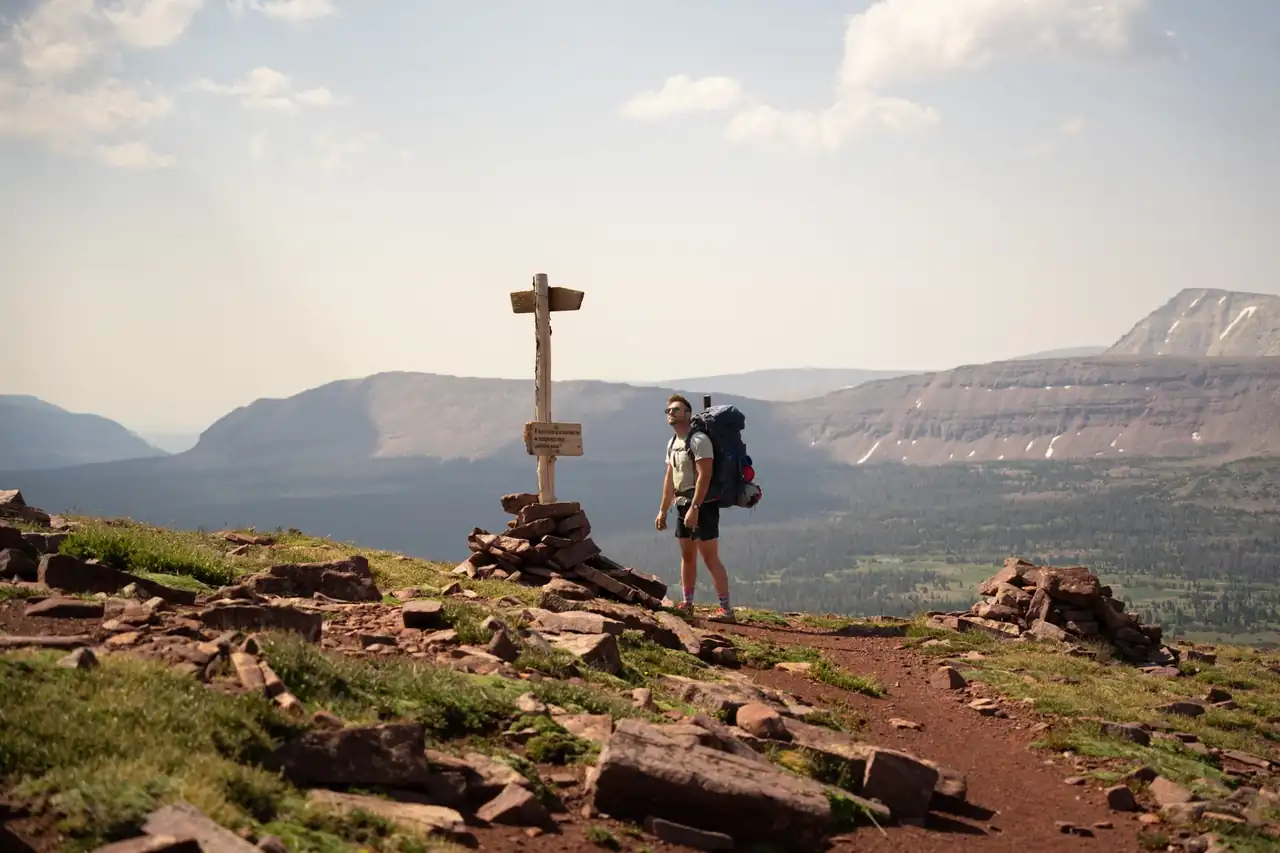
The line that separates a peaceful walk from a demanding trek usually lies in time, terrain, and equipment. In the mountain world, hiking is associated with marked routes, limited duration, and suitability for a wide range of people; trekking, on the other hand, refers to longer itineraries, with more autonomy, more weight on your back, and a higher level of preparation.
They are not opposing disciplines, but different steps within the same culture of walking in nature. The practical difference becomes clear quickly: a few-hour outing on a well-marked trail does not require the same thing as several days of walking, with overnight stays, continuous navigation, and your own logistics. That is the key that helps distinguish them without complications and with criteria that are actually useful.
What makes hiking recognizable
Hiking grows out of well-understood simplicity. It consists of following signposted paths, tracks, or trails, usually in a natural setting, for a day or part of a day. It may include elevation changes, mountain sections, and even moderately technical areas, but it keeps a central idea: go out and come back the same day, with a clear route structure and a reasonable margin for most hikers.
In Spain, the network of certified trails has shaped a very popular practice. PR, GR, and SL routes offer visible references, recognizable markings, and some predictability in navigation. That signage reduces uncertainty and makes the experience more accessible, both for those who go walking for leisure and for those seeking a moderate physical activity in a pleasant setting.
Accessibility is one of its great features. It does not require intense athletic training, although it does call for common sense, suitable footwear, and attention to the surroundings. That is why it works so well as a first contact with the mountains: it allows you to add miles, observe gradients, get used to exertion, and learn to read the terrain without carrying too much gear or relying on complex logistics.
What turns a route into trekking
Trekking enters another register. Here, walking stops being a few-hour excursion and becomes a trek that usually lasts several days, sometimes weeks. Overnight stays stop being a secondary option and become part of the plan. Sleeping in shelters, tents, or intermediate accommodations is part of the activity itself.
In addition to duration, autonomy carries a lot of weight. On a serious trek, walkers usually carry much of what they need to move forward and rest: clothing, food, water, insulation, sleeping system, navigation tools, and safety items. That backpack adds fatigue, forces better energy management, and turns every decision into a piece of the journey. It is not just about walking more; it is about sustaining the march with limited resources.
Navigation also becomes more important. Although some treks follow known trails, others go into remote or less marked areas, where the map, GPS, or compass stop being accessories and become essential allies. The terrain can change suddenly, the weather can be harsher, and the distance between inhabited points can increase. All of that raises the physical and mental demands.
Duration, elevation gain, and terrain: the three clues that guide you best
Duration is the first useful filter for distinguishing both practices. Hiking usually takes place in a single day, even when the route is long or has several linked sections. Trekking, by functional definition, unfolds in several stages and requires thinking about intermediate nights. That single difference changes the backpack, the walking pace, nutrition, and the margin for error.
Accumulated elevation gain also changes the picture. A short route with a steep climb can be tougher than a long, flat walk, so it is not wise to use distance alone as a reference. Even so, trekking usually combines more kilometers, more elevation gain, and more weight. The effort does not come only from the legs; it also comes from the back, shoulders, and mind.
Terrain, for its part, shapes the style of the experience. In hiking, defined paths predominate, with less uncertainty and more infrastructure: signs, markings, shelters, or known access points. In trekking, it is more common to find uneven sections, rocky steps, changes in ground surface, unmarked areas, or passages where navigation takes center stage. Sometimes the landscape seems to invite you to lose your way, and that is precisely where the difference is tested.
Gear does not weigh the same or serve the same purpose
Equipment quickly reveals what kind of outing is being considered. For hiking, in many cases, a compact backpack, enough water, some food, an insulating layer, sun protection, and footwear designed for mountain walking are enough. The idea is to travel light, with what is necessary to spend a few hours outdoors without turning the route into a moving day.
In trekking, however, the kit multiplies. The backpack needs more capacity because it must hold a sleeping bag, tent or lodging system, spare clothes, food, water, first aid kit, headlamp, portable charger, and navigation tools. Weight matters as much as contents. Every kilo counts, and a poorly packed backpack can turn an adventure into a string of discomforts.
The type of footwear that fits best also changes. For hiking, mountain shoes or boots suited to the terrain work very well, with good soles and a comfortable fit. In trekking, footwear becomes more robust and protective, because the walker spends more hours in motion, carries more weight, and is exposed to less predictable ground. The goal is not to impress, but to support the stride without punishing the feet.
Physical and mental preparation: the difference you do not always see
The mountains leave a mark even when the route seems gentle. In hiking, the effort is usually manageable for a large part of the population if the outing is chosen well. That does not remove the need for a minimum level of fitness, hydration, and caution, but it does lower the barrier to entry. It is an activity that can adapt to the pace of a family, a group of friends, or someone who wants to move without a major athletic challenge.
Trekking requires a different foundation. It is not only about walking more; it is about walking with more load, for longer, and with fewer comforts. That demands cardiovascular endurance, leg and core strength, tolerance for fatigue, and the ability to keep making decisions when the body starts to slow down. On long routes, the mind weighs as much as the backpack. Fatigue, weather, and logistics make every step more context-dependent.
That is why trekking tends to attract those looking for challenge and autonomy. It is not limited to accumulating kilometers; it adds a dimension of self-sufficiency that does not appear with the same intensity on a day hike. Hiking, by contrast, is more welcoming for learning, repeating, and enjoying the surroundings without preparation overshadowing the experience. That fundamental difference explains why both activities coexist so well.
Safety and navigation: walking is not just moving forward
Safety changes scale when the outing lasts longer and moves away from inhabited areas. In hiking, following a marked trail and checking the weather forecast is usually enough to reduce many risks. Even so, falls, dehydration, heatstroke, loss of reference points, or sudden weather changes still exist. The mountains do not sign guarantees.
In trekking, the margin for error narrows. Exposure to weather, accumulated fatigue, and greater distances between support points require better planning. It is not enough to know where you are going; you also have to think about how to get back, how to react to a breakdown, how to ration water, or what to do if the terrain changes earlier than expected. Navigation becomes a central part of the trek.
That nuance explains why trekking is more associated with self-sufficiency and hiking with guided navigation. In both cases, it is advisable to let someone know the route, check the weather report, and avoid improvisations that do not match your own level. Walking in nature should never be confused with moving forward blindly. The best scenery can also be treacherous if conditions are underestimated.
Shared benefits, different effects
Hiking and trekking share a huge advantage: they bring the body back to a more human pace. Walking in nature improves cardiovascular fitness, engages major muscle groups, and breaks the inertia of daily life. Fresh air, natural light, and a change of scenery also help lower the pace, something many runners and athletes recognize immediately when they step onto dirt, rock, or forest paths.
The difference lies in the intensity and the type of stimulus. Hiking usually offers a more stable balance between exercise, enjoyment, and recovery. Trekking pushes harder, demands more, and forces better energy management. That prolonged effort can bring a very strong sense of achievement, but it also requires more respect for fatigue and for subsequent recovery.
From a wellness perspective, both practices add value. One is easier to fit into a routine; the other is more demanding and transformative. In a sport like running, where volume, elevation, or technique are often discussed, this difference feels familiar: not every effort suits every profile, and not every goal calls for the same setting. The mountains make that clear with almost brutal honesty.
What to choose according to time, experience, and goal
The best option depends not on the name, but on the context. If the plan is a few-hour getaway, a shared route with more people, a marked trail, or an activity that does not require heavy logistics, hiking is the better fit. It is the natural gateway to the outdoor world and a solid way to build experience without excessive complications.
If what lies ahead is a multi-day journey, with linked stages, the need to carry gear, and a desire to venture into less domesticated landscapes, trekking makes more sense. It is not a superior version of hiking, but a different logic. Its appeal lies in continuity, self-sufficiency, and that feeling of moving forward while the landscape slowly changes, almost as if the path were breathing.
Budget and logistics also matter. Hiking usually requires less investment in technical gear, less planning, and less weight. Trekking increases costs and preparation: more complete equipment, more food, possible bookings, transport to starting points, and, in many cases, more available time. Choosing well avoids frustration and, above all, avoids disguising a demanding route as a casual outing.
How to read a route without confusing its category
Some routes look simple on the map and then behave like a serious test. That is why it is worth looking at several indicators at once: estimated hours, positive elevation gain, total length, type of signage, water sources, shelter possibilities, and the real need to carry overnight gear. A six-hour walk can still be hiking if it starts and ends the same day and follows a marked trail. By contrast, a two-day trek with an overnight stay is clearly in another league.
The confusion usually appears because both terms share the verb walk. But the intention changes a lot. In hiking, the route usually organizes the experience. In trekking, the experience organizes the route. That nuance, which seems small, completely changes how you set out, what you pack, and how you measure fatigue.
The correct label matters less than understanding the real demand. A poorly calculated outing does not become easier by being called one thing or another. The sensible thing is to read the elevation gain carefully, estimate the walking time, and accept that the terrain does not negotiate. In the mountains, precision is worth more than enthusiasm.
A useful boundary for going out better prepared
The difference between trekking and hiking is not a trendy word, but the combination of duration, autonomy, terrain, and gear. Hiking neatly sums up the idea of going out on marked routes, usually for a day, with light gear and simple logistics. Trekking requires more: several days, more weight, more serious navigation, and preparation that is already close to self-sufficiency.
Understanding that boundary helps you choose better and also enjoy more. A trail can be perfect for discovering the mountains at a relaxed pace, while a long trek offers a more immersive, rougher, and more memorable experience. They do not compete with each other. Each occupies its own place, like two different rhythms of the same conversation with nature.
Walking changes a lot depending on how it is done, how long it lasts, and how much one depends on oneself. That is where the most useful and also the most honest difference lies. Those who understand it avoid overloading themselves, plan with judgment, and enter the mountains with expectations aligned with the reality of the terrain. And that, in the end, is what turns any outing into a good day outdoors.
Este artículo contiene enlaces de afiliado: si compras a través de ellos, se genera una pequeña comisión sin coste adicional para ti. Más información.



Reebok runs large or small: a real fit guide

Hoka Challenger ATR 7 GTX: complete review of the all-terrain shoe

How to clean white sneakers without ruining them

Altus Pirineos 40-liter backpack: analysis, use, and key points

20,000 mm waterproof jacket for men: key points to get it right

Under Armour HOVR Sonic 6: complete review of the shoe

incline treadmills: guide to choosing better

Achilles tendonitis: real recovery time

Pain in the Achilles heel: causes, signs, and relief

What to take for calf pain: real relief and when to worry

 Races3 months ago
Valencia Half Marathon 2026: date and registration

 Reviews and Comparisons4 months ago
Asics Gel-Roadmiles 3 for men: review and current price

 Races3 months ago
Valencia Marathon 2026: entry, ballot and course

 Reviews and Comparisons4 months ago
Asics Gel Sonoma 8 Gore-Tex: complete analysis for trail and rain
- Sneakers3 months ago
Saucony Endorphin Pro 4: full review and verdict

 News5 months ago
Strava API 2026: what changes for clubs, challenges and runner apps?

 Reviews and Comparisons5 months ago
Nike Alphafly 3: opinions, sensations, and real key points

 Reviews and Comparisons4 months ago
Under Armour running shoes review 2025-2026: models and key features

 Sports Equipment4 months ago
Shoe sizes in cm: a clear guide to getting the right fit for your footwear
- Sneakers4 months ago
Adidas Adizero Boston 13 for men: review and verdict
- Sneakers3 months ago
Neutral running shoes with lots of cushioning: the best of 2026

 News4 months ago
Where is the Hoka brand from and why was it born in France