Training
Hip mobility exercises to run better and without stiffness
Useful movements to gain range, stability, and control in the hip without straining or causing pain.

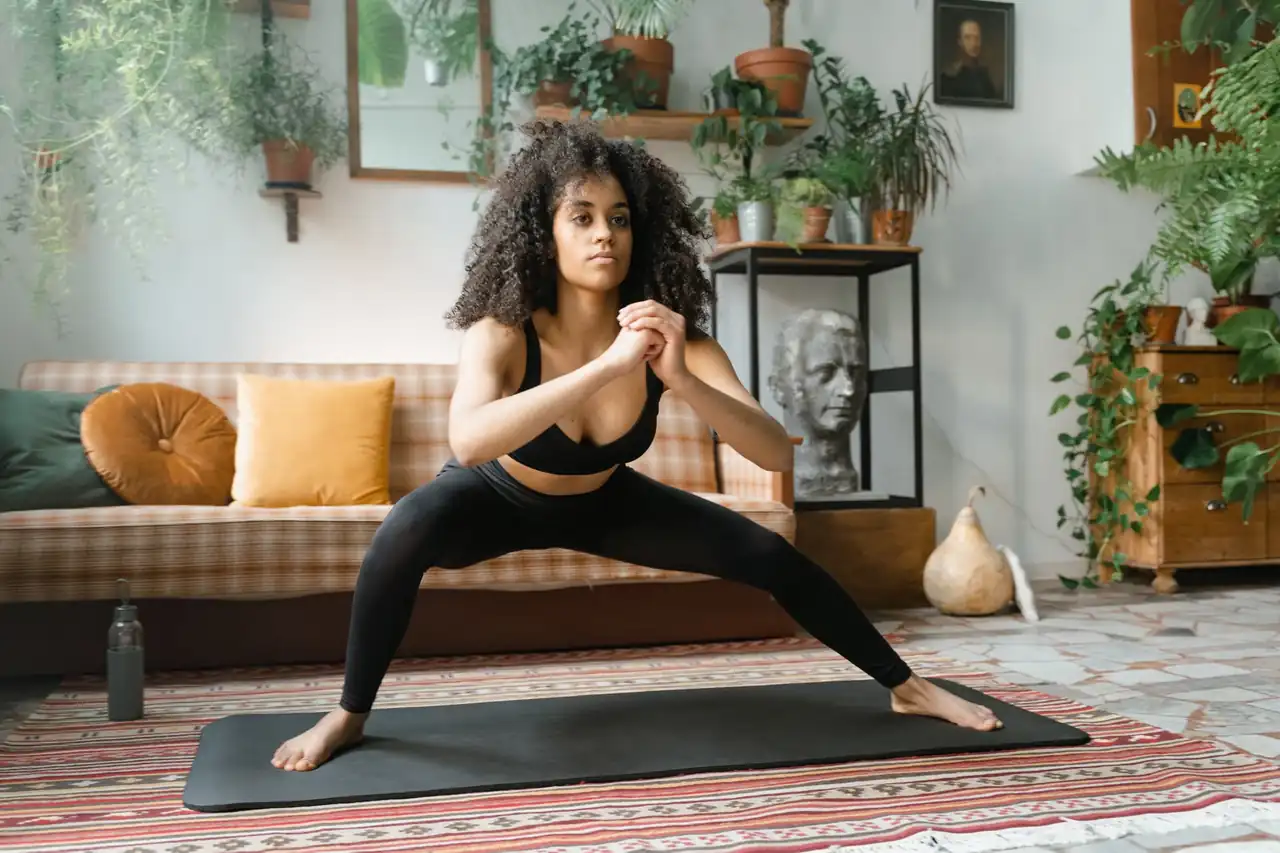
The hips influence much more than it seems in a runner’s stride: they absorb impact, transmit force, and decide whether a knee collapses inward or the torso compensates awkwardly. When that joint loses its ease, the body looks for shortcuts. And those shortcuts are usually paid for with lower-back stiffness, groin discomfort, glute overload, or a feeling of a short stride that shows up even at easy paces.
In that context, hip mobility exercises are not a decorative add-on before training. They are a way to recover useful range of motion, improve pelvic control, and reach each foot strike with less internal friction. The goal is not to force the hips open at all costs or chase acrobatic positions; what matters is moving better, with more quality and fewer compensations.
Why the hips become stiff in runners and active people
The hip is designed to combine flexion, extension, internal rotation, and external rotation. The problem is that modern life, with many hours spent sitting, cuts down that repertoire. Then comes running, repeating a similar and relatively limited pattern thousands of times. If the runner already starts with poor mobility, the movement becomes more mechanical, like a door that only opens halfway and squeaks with every step.
Stiffness does not always mean a lack of flexibility. Often it is a mix of limited joint mobility, muscles that overprotect, poor motor control, and poorly distributed loading habits. Some hips do not hurt when walking, but complain when climbing stairs, squatting, or accelerating. Others, by contrast, seem free until they are asked to rotate under fatigue. That is the nuance that matters: moving the leg is one thing, and moving the hip with stability is something quite different.
In running, that difference becomes visible in small details. A runner with limited hip extension may lean the torso forward to compensate. Someone with restricted rotation may twist the foot too much or overload the tensor fasciae latae. And whoever reaches the end of a run with inactive glutes often loses efficiency right when it is needed most. That is why hip mobility is not just about range, but about movement economy.
What a good mobility routine should aim for
A useful routine does not pursue pain or a heroic stretching sensation. It seeks gentle, controlled, and reversible tension. Real improvement appears when the body learns to use a greater range without losing alignment or trembling like an old building. That is the part many people overlook: gaining mobility without control is of little use if the hip still cannot handle the load afterward.
The best mobility combines three pieces: range, control, and strength at the end of the movement. If you only stretch, the change usually lasts briefly. If you only activate, you may lack freedom to run. And if you force the movement, the joint responds with more protection. The reasonable goal is different: a hip that flexes, extends, and rotates with less resistance, but also with more precision.
That is why the most interesting exercises for runners are not the flashiest ones, but the ones that teach the nervous system to trust. Gentle swings, slow rotations, floor positions, and small loading gestures help the muscle stop acting like a gatekeeper and allow movement to pass through. Over time, that feeling of stiffness decreases and the stride no longer feels cramped.
Movements that create space without punishing the joint
An effective session usually blends low-intensity positions with more active movements. On the floor, the body relaxes and can explore angles that feel uncomfortable while standing. In half-kneeling, the pelvis learns to position itself without so much interference. And standing, the hip learns how to support that new mobility within an athletic posture. That progression matters because it mirrors what happens when running: first it moves, then it stabilizes.
Among the most useful exercises is the half-kneeling hip sway, a position that allows you to work flexion and extension without rushing. The frog position also works very well, with the legs open and the hips close to the floor, always within a tolerable range. Controlled rotation in side-lying brings a different nuance, because it forces the hip to be isolated without the knee or ankle cheating. And the final range work, such as lifting one leg laterally or drawing circles with the foot, adds the component that is often missing: strength at the end of the movement.
What is interesting about these movements is not only that they gain degrees of range. They also teach the pelvis to stop moving like a block. In running, that detail matters a lot. A slightly more stable pelvis allows the gluteus medius to work better, keeps the knee from collapsing inward, and makes each foot strike cleaner. The runner then feels a kind of mechanical relief, as if the stride had regained air.
A useful sequence for working on mobility with purpose
A short, well-designed session can be more valuable than a long routine done in a hurry. It is best to start with positions that lower overall tone and then move on to more demanding movements. First, a half-kneeling support with a gentle pelvic sway forward and backward, aiming for the hip on the trailing side to stretch without arching the lower back. Then, an open variation toward the side to awaken the inner area and the adductors, which are often tighter than they seem.
The key is breathing and slowness. When the exhale is matched to the movement, the body usually yields more easily. If breathing becomes shallow and the face tightens, the system understands there is a threat and responds by closing the movement down. That is why tempo matters as much as posture. In mobility, faster almost never means better.
Later, the frog position can help explore hip opening without loading the spine. What you want to feel is moderate tension in the inner thighs or the front of the pelvis, never sharp pain. Then, internal rotation in a side-lying position or on all fours adds a plane that many runners neglect. The hip should not only open and close; it should also rotate freely. And finally, a motor control gesture, such as slightly lifting one leg and holding it for a few seconds, turns mobility into something more useful for running.
There is no need to obsess over the exact number of repetitions, though quality does matter. Between 5 and 8 slow repetitions per side, or 20 to 40 seconds of holding per position, are usually reasonable guidelines for a general session. What matters is finishing with the feeling of more space and more control, not fatigue or lingering pain.
Common mistakes that slow progress
One of the most common mistakes is confusing mobility with aggressive stretching. The hip does not need to be forced, but persuaded. If a position hurts, breathing is lost, or the pelvis falls apart, the message the body receives is the opposite of what you want. Instead of gaining freedom, muscular protection is reinforced and stiffness may increase the next day.
Another common error is moving only one piece of the system. Some runners work a lot on the front of the hip but never rotation, or they open the leg without teaching the glute to support it. The opposite also happens: very stable exercises are done, but without exploring enough range. Progress appears when both are combined, because a mobile hip without a base becomes messy, and a strong but short hip becomes clumsy.
Rushing also works against you. Mobility adaptations are not always noticeable in a day or even in a week. What is normal is to notice gradual changes in everyday sensations: less stiffness when getting up, better positioning when squatting, more ease warming up before running. That evolution is more reliable than chasing a dramatic opening in a single session. Tissue and the nervous system learn slowly, like someone adjusting a camera focus until everything clicks into place.
How to fit them into the training week
For a runner, hip mobility works best as part of the overall context rather than as an isolated ritual. It can be included in the warm-up for a quality session, in a short block after an easy run, or in a specific session on recovery days. The important thing is that it does not compete with the main workout or leave the joint exhausted before a long run or demanding interval set.
A brief dose, repeated consistently, usually pays off more than a marathon session every two weeks. Three or four 10-minute blocks per week may be enough to notice changes in movement and joint sensation. Those already carrying significant stiffness may need more consistency, but the pattern is the same: little, well, and often.
Timing also matters. Before running, dynamic, controlled, and progressive movements usually work best. After training, or in a separate block, more sustained and breathing-based positions can be used. That distinction prevents the warm-up from becoming heavy and the mobility session from turning into a kind of late punishment. The idea is to add, not subtract.
What signs show the work is paying off
Improvement does not always arrive as a big revelation. Sometimes it shows up in everyday actions: crossing one leg without tightness, bending down with less blockage, climbing stairs more easily, or feeling the stride less compressed when starting to run. In training, the clearest change is usually a more stable foot strike and a cadence that no longer feels forced by the hip.
If movement becomes cleaner, you are heading in the right direction. There is no need to chase maximum range if the body loses control in exchange. A useful hip is one that moves with precision and returns to center without drama. That is the most honest measure of progress: less noise, less compensation, more fluidity.
Sometimes, the runner notices an improvement in sensations first and only later a visible improvement in videos or running analysis. That is normal. The neuromuscular system learns before the eye can detect it. That is why it helps to view mobility as background work. Just as an efficient stride does not come from one workout, a freer hip does not come from a single block of exercises.
When stiffness is a signal and not just a nuisance
Not every hip limitation is due to training habits. Sometimes there is sharp groin pain, clicking with locking, a clear loss of range, or discomfort that gets worse after sitting for long periods. In those cases, general mobility may help you move better, but it should not become an improvised cure-all. The hip is a demanding joint and, when it gives persistent warning signs, it is worth distinguishing simple stiffness from a problem that deserves clinical assessment.
In runners, overloaded hip flexors, tendon irritation, weak glutes, or certain impingement patterns can disguise themselves as a lack of mobility. That is why acute or repeated pain should not be fought by pushing harder. Useful mobility should never worsen symptoms. If a position triggers pain or leaves a strange discomfort that lasts for hours, the body is asking for something else: less load, less range, or a more precise review of the issue.
The line between training and health is thin, especially in such a central joint. That is why the best results come when mobility is understood as one more tool within sensible preparation, not as a universal remedy. The hip appreciates movement, yes, but it appreciates being listened to even more.
The hip as a foundation for a cleaner stride
A hip that moves well changes the whole chain. It improves posture, facilitates extension during push-off, and reduces part of the load that ends up in the lower back, knee, or lateral fascia. In a sport as repetitive as running, small adjustments produce visible effects. Not by magic, but because each foot strike redraws the same map again and again. If the map is better, the journey is less tiring.
Working on hip mobility is an investment in efficiency. It does not make spectacular headlines or promise shortcuts, but it does offer something very concrete: running with less stiffness and more control. That combination is worth more than any exaggerated opening, because it shows up in daily training, on hills, on downhills, and in the last kilometers, when the body usually reveals everything it has hidden during the week.
The good news is that the hip responds. Not always quickly, not always in a linear way, but it responds. Through clean movements, calm breathing, and smart repetition, the runner can recover space where there was once only braking. And in that space there is room for something very valuable: a stride that is freer, more stable, and much less at odds with its own body.



Reebok runs large or small: a real fit guide

Hoka Challenger ATR 7 GTX: complete review of the all-terrain shoe

How to clean white sneakers without ruining them

Altus Pirineos 40-liter backpack: analysis, use, and key points

20,000 mm waterproof jacket for men: key points to get it right

Under Armour HOVR Sonic 6: complete review of the shoe

incline treadmills: guide to choosing better

Achilles tendonitis: real recovery time

Pain in the Achilles heel: causes, signs, and relief

What to take for calf pain: real relief and when to worry

 Races3 months ago
Valencia Half Marathon 2026: date and registration
 Reviews and Comparisons4 months ago
Asics Gel-Roadmiles 3 for men: review and current price

 Races3 months ago
Valencia Marathon 2026: entry, ballot and course

 Reviews and Comparisons4 months ago
Asics Gel Sonoma 8 Gore-Tex: complete analysis for trail and rain
- Sneakers3 months ago
Saucony Endorphin Pro 4: full review and verdict

 News5 months ago
Strava API 2026: what changes for clubs, challenges and runner apps?
 Reviews and Comparisons5 months ago
Nike Alphafly 3: opinions, sensations, and real key points

 Reviews and Comparisons4 months ago
Under Armour running shoes review 2025-2026: models and key features

 Sports Equipment4 months ago
Shoe sizes in cm: a clear guide to getting the right fit for your footwear
- Sneakers4 months ago
Adidas Adizero Boston 13 for men: review and verdict
- Sneakers3 months ago
Neutral running shoes with lots of cushioning: the best of 2026

 News4 months ago
Where is the Hoka brand from and why was it born in France