Training
Squats are strength exercises: why runners need them
The squat strengthens the legs, hips, and core, improves stability, and has great transfer to running.

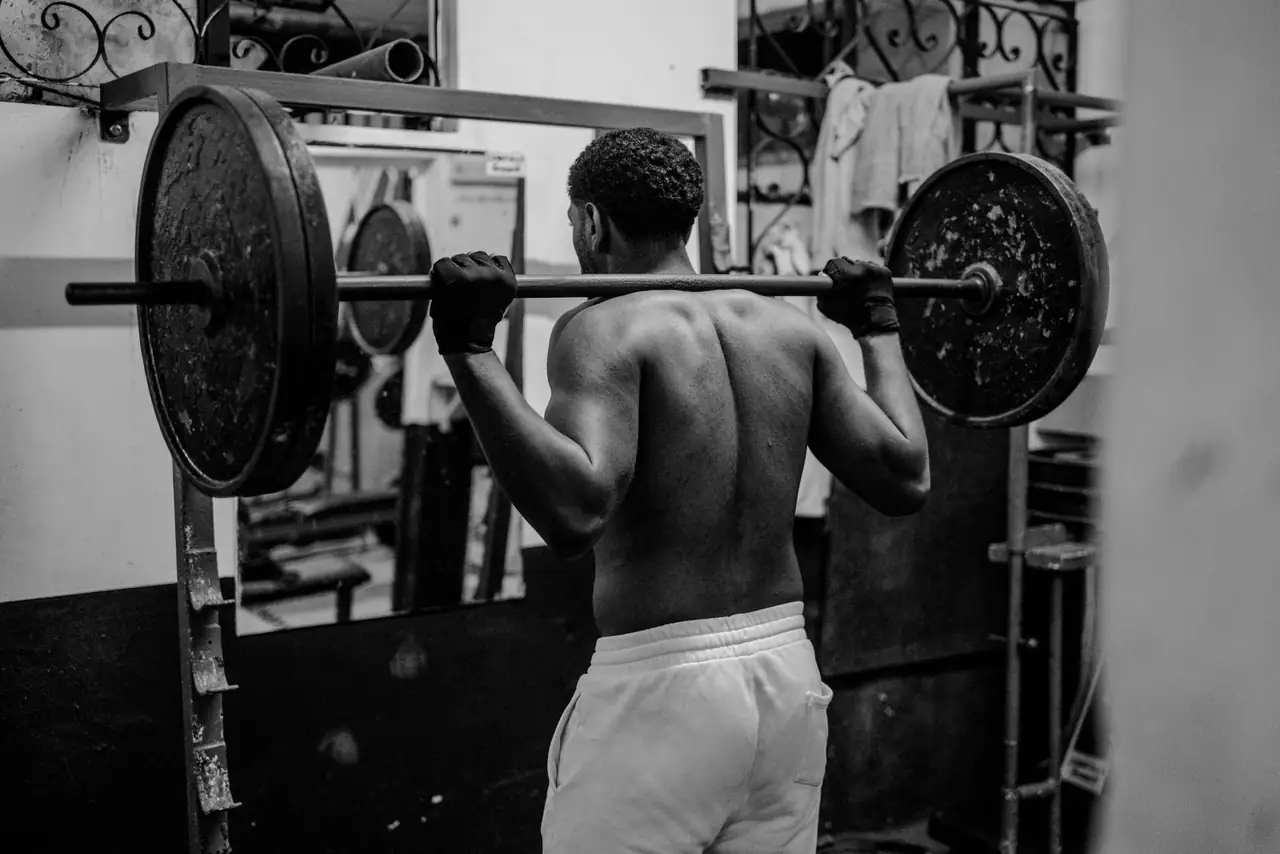
The squat is a basic, familiar movement and a staple of strength routines because it works the legs, hips, and trunk. For runners, its carryover is clear: it requires you to produce force from a stable position, which relates to the way you support yourself with each stride.
Its value is not only in the work of the quadriceps and glutes. A well-executed squat also demands core control, coordination, and ankle and hip mobility, three pieces that make the difference between a useful movement and a clumsy one. That is why it remains a benchmark exercise both in the gym and in programs aimed at running better and with less wear and tear.
A simple movement that trains much more than it seems
Appearances can be deceiving. Lowering and raising the body on two feet seems simple, but the squat combines several physical demands into a single pattern that is useful for runners, recreational athletes, and people looking to improve functional capacity. It is not just a leg exercise; it is a test of balance, postural control, and load tolerance.
In practical terms, it requires the knees to bend, the hips to move back, and the trunk to remain stable while gravity is overcome. That combination makes the squat a very complete movement. When done with clean technique, the body learns to distribute forces, maintain the axis better, and tolerate repeated efforts without breaking down excessively.
In the running world, that ability has direct value. Running is not a succession of light, isolated steps; it is a chain of foot strikes in which each leg supports body weight over and over again. The squat strengthens precisely that base: more force in the support, more stability in the hip, and less energy leak in each stride.
Which muscles are involved and why that matters for running
The squat mainly activates the quadriceps, glutes, and hamstrings, although it also involves the calves, lower back, and deep abdominal muscles. This set of muscles does not work as separate compartments, but as a system that coordinates the lowering and rising of the body. The better these pieces work together, the more efficient the movement becomes.
The glutes play a particularly relevant role. They help extend the hip and stabilize it, which is key for runners who need to maintain good pelvic and knee alignment. When this musculature responds well, the body usually absorbs the load better and running mechanics become more solid. A stable hip is one of the best defenses against accumulated wear and tear.
The core also comes into play more prominently than it might seem at first glance. This is not about doing conventional crunches, but about keeping the trunk firm while weight changes position. That controlled tension improves force transmission between the lower body and the rest of the body. In running, that connection prevents the torso from collapsing with fatigue and helps maintain a more economical posture.
Why the squat transfers so well to running
The runner does not need only aerobic endurance. They need to maintain technique when the legs start to load, when cadence increases, or when fatigue threatens to disrupt mechanics. That is where strength comes in. The squat teaches the body to push more effectively, and that improvement can be reflected in a firmer stride and better running economy.
Running economy, in plain language, is the amount of energy needed to maintain a given pace. If the body uses less energy to go the same speed, the runner usually performs better. Well-designed strength work, including squats, has shown improvements in this area because it fine-tunes neuromuscular coordination and allows better use of the elastic energy of the movement.
There is also an obvious relationship with injury prevention. By strengthening the lower body and trunk control, the squat helps distribute impacts and correct small imbalances that, if maintained over time, can lead to overload. Knees, hips, and ankles are often the areas that benefit most from this improved foundation.
The technique that separates good work from an useless repetition
The squat only delivers what it promises if it is performed with purpose. The feet should be firmly planted, about hip-width apart or slightly wider, and the knees should follow the direction of the feet without collapsing inward. The torso leans slightly, but it does not become a chaotic hinge. The spine stays long and stable, not rigid like a board, but organized.
The descent does not need to be rushed. It is advisable to let the hips travel back while the knees bend, as if sitting down on an invisible chair. Depth will depend on mobility and the goal, but it should never sacrifice alignment or stability. Going lower does not always mean working better; in strength training, range quality matters more than acrobatics.
The ascent should also not be won by jerking. The body should rise with even pressure on the floor, keeping the chest open and the abdomen active. When technique is good, the movement has something of a well-oiled mechanism: it flows, but does not fall apart. The useful repetition is recognized because the body returns to center without abrupt compensations.
Variations that change the stimulus without losing the pattern
Not every squat looks the same as the next, and that is an advantage. The bodyweight version is an excellent gateway, especially for learning the movement and improving mobility. From there, one can progress to the goblet squat with a dumbbell, the front squat, or the back squat, each with different nuances in load distribution and trunk demand.
For runners, the single-leg squat or unilateral variations are especially interesting because they better mimic the reality of running, where each support is made alternately. There is no need to rush into complex exercises without a prior base, but it is useful to understand that unilateral work reveals asymmetries that a bilateral squat may hide. What fails on one leg eventually comes to light when the movement becomes more specific.
There are also changes in tempo, that is, in the speed of the movement. Lowering more slowly, pausing at the bottom, or rising with explosive intent completely changes the internal load. That tool is useful for adjusting the session without needing to chase maximal loads. In many programs, a controlled tempo offers enormous benefit because it forces posture and control under real tension.
How much weight, how many reps, and how often
The squat does not need to become a battle against the barbell to be effective. For runners, the logic is usually more cautious and more productive: moderate or heavy loads, a few quality repetitions, and a steady frequency. Two to three strength sessions per week is usually enough for most recreational profiles, as long as the work is well organized.
Instead of chasing exhaustion, it is better to preserve good technique and finish the set with something left in reserve. Muscle failure is not necessary and, in many cases, can interfere with the next day’s run. Well-placed strength work aims to add without completely draining you. That is especially relevant in weeks with intervals, pace changes, or long runs.
Progression should be gradual. First the pattern is learned, then depth is refined, then loads are added, and later more demanding variations are introduced. That sequence reduces the risk of compensations and makes the built strength more sustainable. The useful squat is the one that can be repeated solidly week after week, not the one that impresses for ten minutes and leaves the body sore for three days.
Mistakes that reduce its value and can take a toll
One of the most common mistakes is turning the squat into a kind of rushed descent, without control on the way down or firmness on the way up. Another very frequent error is allowing the knees to cave inward, which reduces effectiveness and can increase discomfort in joints already stressed by running impact. Alignment matters more than load, especially at the beginning.
It is also easy to stay in too short a range out of fear or lack of mobility. A partial squat can make sense in specific contexts, but if it becomes the only available version, the stimulus remains weak. The same happens with too much weight: if it forces a shorter range, too much torso lean, or loss of foot stability, the exercise stops fulfilling its main function.
Another silent mistake is isolating it from the rest of training. Strength does not compete with running, but it should not invade it without order. If a squat session leaves the legs unresponsive for two days, the problem may not be the exercise, but the dose. Good planning leaves the runner strong, not broken down.
What the evidence says and why the gym is not everything
Studies on strength in runners agree on one essential point: training with loads and explosive stimuli improves running economy and may reduce the risk of injury. The squat appears again and again in programs because it is a basic pattern, easy to progress, and very useful for improving force application. It is not a decoration of training; it is a structural piece.
The evidence also suggests that the greatest benefits come when strength is combined with consistency and patience. No radical changes or endless sessions are needed. What works is regular exposure, sufficiently intense and well separated from the hardest running loads. The improvement may not always be noticeable in a week, but it usually becomes clear over several-week cycles.
In addition, the squat does not live alone. Its value increases when accompanied by unilateral exercises, core work, and some plyometrics or explosive movements, always according to the runner’s level. That mix builds a body better prepared to tolerate impacts and respond quickly. Strength, stability, and elasticity form a triangle that supports performance.
How it fits into a real training week
In a typical runner’s week, the squat fits best on days separated from the most demanding running sessions. It can be placed alongside an easy run or on days when track work will not be compromised. That organization reduces accumulated fatigue and allows each stimulus to retain its quality. Strength adds more when it does not step on the key running session.
The combination also depends on the goal. Someone in a base phase may tolerate a more constant presence of strength work. Someone preparing for a competition may need to lower volume and keep only the essentials. The principle is the same: keep the squat as a support tool, not as a block that disrupts the rest of the week.
Because it is versatile, the squat allows effort to be adjusted without losing usefulness. It can be done with body weight, with a dumbbell, with a barbell, with a slow tempo, or with a pause. That adaptability explains why it has outlasted trends and why it remains a benchmark in gyms, conditioning rooms, and runners’ routines. It is a strength exercise because it develops real, useful, and transferable strength.
How to use squats in your running training
For runners, squats complement endurance training by strengthening the legs and hips while asking the trunk to stay steady as you lower and rise. They can help build the capacity to maintain a controlled stride as fatigue sets in, but they do not replace easy runs, long runs, or running-specific work. Progress depends on a balanced plan, not on one exercise alone.
Start with a version you can perform with control, including a bodyweight squat. Keep your feet grounded, lower only as far as you can maintain a comfortable, stable position, and avoid rushing the way back up. If you add resistance, increase it gradually without letting technique slip. Choose the depth and variation to suit your mobility and experience; there is no need to chase the deepest or heaviest squat possible.
Fit strength work into your week so it does not undermine key sessions. Avoid trying a demanding new load just before a race or important long run, and check how your legs feel before the next workout. Muscle effort is expected, but pay attention to pain, a marked loss of control, or discomfort that changes how you move. Reduce or pause the exercise if these occur; if pain or symptoms persist, consult a healthcare professional. Consistent, manageable progress matters more than finishing every session exhausted.
The foundation that supports more than strong legs
The squat does more than build muscle. It builds a way of moving that is more solid, more coordinated, and more resistant to fatigue. In the running environment, where the body repeats thousands of foot strikes and every small flaw is magnified over the miles, that kind of strength has very concrete value. It strengthens mechanics, not just aesthetics.
That is why it still occupies a privileged place among the most useful strength exercises. Well executed, well dosed, and well integrated into the week, it provides performance, control, and protection. It is an old, almost elemental movement, but it remains one of the most efficient ways to remind the body how to produce force from the ground and how to do it without breaking alignment. In running, that lesson is worth its weight in gold.



Reebok runs large or small: a real fit guide

Hoka Challenger ATR 7 GTX: complete review of the all-terrain shoe

How to clean white sneakers without ruining them

Altus Pirineos 40-liter backpack: analysis, use, and key points

20,000 mm waterproof jacket for men: key points to get it right

Under Armour HOVR Sonic 6: complete review of the shoe

incline treadmills: guide to choosing better

Achilles tendonitis: real recovery time

Pain in the Achilles heel: causes, signs, and relief

What to take for calf pain: real relief and when to worry

 Races3 months ago
Valencia Half Marathon 2026: date and registration

 Reviews and Comparisons4 months ago
Asics Gel-Roadmiles 3 for men: review and current price

 Races3 months ago
Valencia Marathon 2026: entry, ballot and course

 Reviews and Comparisons4 months ago
Asics Gel Sonoma 8 Gore-Tex: complete analysis for trail and rain
- Sneakers3 months ago
Saucony Endorphin Pro 4: full review and verdict

 News5 months ago
Strava API 2026: what changes for clubs, challenges and runner apps?

 Reviews and Comparisons5 months ago
Nike Alphafly 3: opinions, sensations, and real key points

 Reviews and Comparisons4 months ago
Under Armour running shoes review 2025-2026: models and key features

 Sports Equipment4 months ago
Shoe sizes in cm: a clear guide to getting the right fit for your footwear
- Sneakers4 months ago
Adidas Adizero Boston 13 for men: review and verdict
- Sneakers3 months ago
Neutral running shoes with lots of cushioning: the best of 2026

 News4 months ago
Where is the Hoka brand from and why was it born in France