Training
Why squats are useful for runners and how to do them
They strengthen the legs, glutes, and core, and improve the mobility and stability of the entire body.

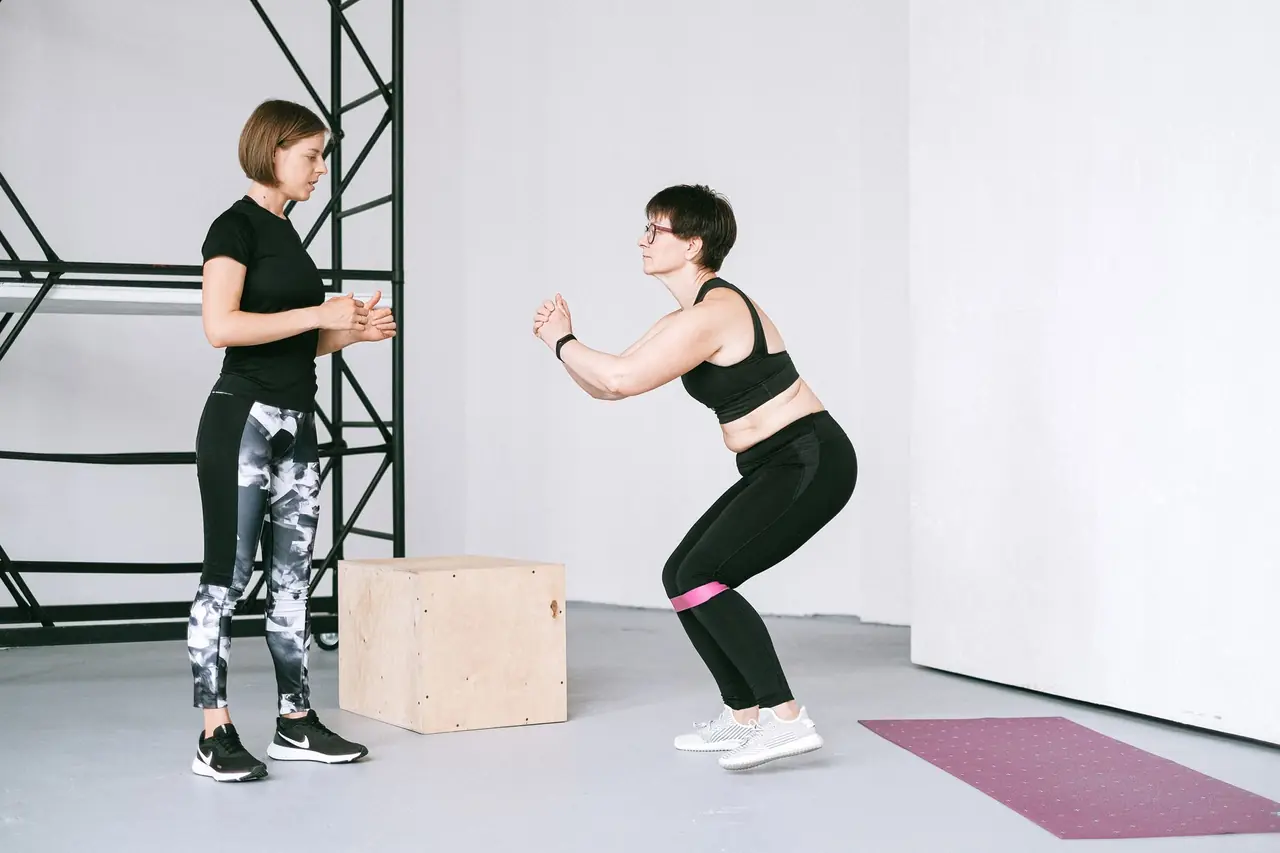
Squats are one of the most complete strength exercises for runners because they bring the legs, hips, trunk, and back together in one movement. Their usefulness goes far beyond building thighs or glutes: they can help you move efficiently, maintain better body control, and handle the everyday and athletic demands of training and racing.
That is why they appear in gym routines, physical preparation, and also in preventive work for runners. They are a foundational exercise for developing strength, stability, and mobility, three elements that often go together when the goal is to perform better and reduce the risk of discomfort from disuse or poor technique.
An exercise that teaches the body to work as a unit
The main virtue of the squat is that it does not isolate a single area. It integrates the quadriceps, glutes, hamstrings, calves, abs, and back muscles in one sequence, so the body learns to distribute the load and stabilize itself while lowering and rising. That coordination is what makes the exercise such a valuable part of functional training.
In practice, this means that not only visible muscles are trained. The stabilizers that keep the pelvis in place, the spine aligned, and the knees on a safe path are also involved. The squat requires control, not just strength, and that combination explains why it is often considered a simple indicator of general physical capacity.
That global character is especially useful in sport and in everyday life. Squatting down to bend over, sitting down and getting up from a chair, lifting weight from the floor, or changing pace while running are actions that share similar patterns. Training that movement improves movement economy and makes seemingly simple tasks demand less relative effort.
What improves in the legs, glutes, and trunk
The workload within the squat depends on stance, depth, and the chosen variation, but the central benefit usually centers on the lower body. The quadriceps receive a significant load in the ascent phase, while the glutes and hamstrings become more prominent when the descent is deeper and the hips move through a greater range.
The glutes carry a lot of the responsibility in hip extension, the action that drives the body upward. In a well-executed squat, they are not a cosmetic extra but a real engine. The better they coordinate, the cleaner the movement will be and the easier it will be to distribute the load between the legs and trunk without unnecessary compensations.
The abs and back also work, though in a less obvious way. Their role is to keep the torso firm, prevent the lower back from collapsing, and support force transfer between the ground and the hips. An active core turns the squat into a safer and more productive movement, because it reduces energy losses and improves posture under effort.
Why it also helps performance outside the gym
The squat does not just build muscle; it can also improve physical qualities that matter to runners and any endurance athlete. It strengthens the force base that supports stride, push-off, and stability during repeated foot contacts. When that base is solid, the body usually tolerates training loads and accumulated fatigue better.
In studies and reviews on strength training, this type of exercise is associated with improvements in power, jumping, and lower-body performance. You do not need to turn the squat into a weightlifting test to benefit from it. Even with body weight, its effect on neuromuscular coordination is notable, especially when practiced regularly with clean technique.
There is also a less visible advantage: the squat forces work through ranges of motion that many people have lost due to sedentary habits. Tight hips, limited ankle mobility, or unstable trunks tend to show up quickly. Practicing the movement with control restores useful mobility and can make other activities feel less awkward, from running to climbing stairs with less of a blocked feeling.
Technique makes the difference between benefit and punishment
The exercise gets a bad reputation when it is done poorly. The truth is simpler: a poorly performed squat does not deliver the same benefit and can overload the back or knees. Correct mechanics begin with a stable base, feet firmly planted, and knees following the line of the feet without suddenly collapsing inward.
The back should maintain a neutral position, without rounding or over-arching. The chest stays open, the abdomen firm, and the hips initiate the descent as if reaching for an invisible chair. Movement quality matters more than forced depth. Going down only as far as the body can control the movement is still better than chasing extra inches at the expense of technique.
Breathing also matters. Inhaling on the way down and exhaling on the way up helps maintain internal trunk pressure. Under heavy loads, that strategy becomes even more relevant. Breathing well is not a minor detail: it contributes to stability, rhythm, and a more solid repetition, as if the body had a small internal frame while working.
Which squat types provide each benefit
Not all variations aim for exactly the same thing. The traditional squat is a good base for building general strength, but other versions shift the emphasis and make it possible to adapt the stimulus to different needs. The goblet squat is often very useful for learning the pattern, because the front load helps keep the torso more upright and makes it easier to control the center of gravity.
The sumo squat, with the feet wider apart and the toes turned out, usually gives more prominence to the hips and inner thigh. It is an interesting option when you want to vary the stimulus or when a wider stance feels more comfortable. The position changes the distribution of effort, which explains why the same movement can feel different depending on the stance used.
The resistance-band squat adds extra control over knee alignment, while the box squat or bench squat helps those who are learning how to sit back without losing balance. Variations are not just decoration: they help adjust difficulty, improve execution, and choose the most useful working angle for each stage.
Why they are so valuable for runners and endurance athletes
For a runner, the squat may seem far removed from the logic of adding mileage, but in reality it fits well with running mechanics. Running requires repeated support, impact absorption, and powerful hip and knee extension. Strengthening those gears helps support the stride better when fatigue starts to disrupt technique.
In addition, strength work for the legs and trunk can serve as a complement to improve pelvic stability, something very useful when excessive oscillation appears or the base becomes weak at the end of long sessions. A solid squat does not promise faster running on its own, but it can help the body better handle the load and maintain more consistent technique.
There is another relevant angle: well-programmed squats can help balance asymmetries between both legs. That detail matters in sports with repeated support and asymmetric movements. Strength does not just add power; it also organizes movement, and that order is noticeable when the body starts responding with less noise and more efficiency.
When it makes sense to lower the intensity and when to increase it
Squats work best when they are adjusted to each person’s real starting point. Beginners usually benefit more from simple versions, with little or no weight, than from trying an intense stimulus too soon. Useful progress comes from stable technique, not from speeding up the load too early.
Once the pattern is mastered, the exercise allows many forms of progression. You can increase depth, add external load, slow the descent, or work with brief pauses at the bottom. Each adjustment changes the type of effort, just like the same road feels different in traffic, wind, or rain.
When the movement loses cleanliness, it is time to ease off. Knees collapsing inward, heels lifting, or a rounding back are signs that the body is compensating. The squat stops being good when it turns into a fight against your own posture. At that point, reducing difficulty usually helps more than insisting on repeating mistakes.
The bad reputation of knees and what biomechanics and practice say
The squat has carried for years the suspicion of being harsh on the knees. However, evidence and clinical practice point to an important nuance: the problem is not the exercise itself, but how, how much, and in what context it is performed. A well-controlled movement can help maintain joint function, while a careless one does increase the risk of discomfort.
The knees need strength, mobility, and the ability to bear load progressively. The squat contributes precisely to that when the technique respects the body’s natural alignment. Far from damaging the joint, when properly planned it forces it to adapt in an orderly way, which can be useful for maintaining effort tolerance and function in the medium term.
That does not mean it is valid for everyone at any time. Previous injuries, persistent pain, or mobility limitations call for caution. The point is not to turn the squat into a dogma, but to understand whether the body is prepared for that pattern and which version makes the most sense to work with.
A simple, portable, and surprisingly complete tool
Another strong reason to do squats is their enormous accessibility. They do not need a room full of machines or complex infrastructure. Using only body weight, they already provide a useful stimulus, something uncommon in a training world that is increasingly dependent on equipment.
They can be done at home, in a park, in a gym, or even during a short break in a sedentary workday. That portability makes them a practical, almost elemental resource. The body becomes its own tool, and that makes it easier for the movement to appear more often in your routine, without logistical excuses or dead time.
Their simplicity, however, should not be confused with ease. The squat is a basic movement, but not a simplistic one. Its apparent naturalness hides a high technical demand, and that is part of its value: the better it is executed, the more it reveals about a person’s movement quality.
Why squats can benefit runners
For runners, squats are a practical way to train the quads and glutes, along with hip and trunk control. These abilities contribute to repeated foot contacts and the push-off in each stride. Squats do not replace running or guarantee injury prevention, but they can complement your training and help build a stronger physical base.
Start with a variation you can perform with control, such as a bodyweight squat, and keep the movement steady and comfortable. Keep your feet supported, lower only as far as you can control, and avoid letting your knees suddenly collapse inward. You do not need to aim for maximum depth or add weight if your form suffers. If you are new to strength work, increase the challenge gradually.
Plan strength sessions so they do not disrupt your key runs. If your legs feel heavy, ease off or allow more time before a long run, an interval workout, or a race. Some muscle fatigue can occur when you start or change a routine; stop if the exercise causes sharp pain, changes the way you run, or symptoms persist. In those cases, consult a healthcare professional. Adjust your range of motion if you feel discomfort, and prioritise clean form over doing more repetitions.
When it is most interesting and why it remains a classic
Squats are especially valuable when you want a solid strength base, a more resilient lower body, and a better relationship between mobility and control. They help build muscle, move better, and train patterns the body uses every day. That combination explains why they still occupy a central place in almost any serious physical preparation program.
They are also useful for a broader reason: they force you to respect the body as it is, with its leverages, limitations, and strengths. They do not promise miracles or automatic results. They offer something more valuable: measurable, technical, and transferable progress, the kind that leaves a mark on performance and the way you move.
That is why the squat has survived trends, seasonal routines, and quick fixes. It is still here because it works, because it teaches, and because it gives the body a basic lesson that is sometimes forgotten: strength is not just pushing more weight, but knowing how to position yourself well to do it. That is a large part of its real value.



How to prevent thigh chafing: causes and real solutions

Women’s running windbreakers: seven jackets and how to choose

Do more workouts get rid of soreness? A guide for runners

Jaén Half Marathon 2026: Record 3,800 Runners Registered

Men’s short running tights: how to choose the right pair

World Triathlon confirms data breach involving medical data

Izan Edo targets podium at Miyazaki World Cup

María Pérez ranks ninth in World Athletics’ 2026 top ten

Dos Santos, Duplantis and Sawe: World Athlete of the Year finalists

San Silvestre Vallecana 2026: 42,000 places, prices and start times

 Races3 months ago
Valencia Half Marathon 2027: date and registration

 Races3 months ago
Valencia Marathon 2026: entry, ballot and course

 Reviews and Comparisons4 months ago
Asics Gel-Roadmiles 3 for men: review and current price

 Reviews and Comparisons4 months ago
Asics Gel Sonoma 8 Gore-Tex: complete analysis for trail and rain

 Sneakers3 months ago
Saucony Endorphin Pro 4: full review and verdict

 News5 months ago
Strava API 2026: what changes for clubs, challenges and runner apps?

 Reviews and Comparisons5 months ago
Nike Alphafly 3: opinions, sensations, and real key points

 Reviews and Comparisons4 months ago
Under Armour running shoes review 2025-2026: models and key features

 Sports Equipment4 months ago
Shoe sizes in cm: a clear guide to getting the right fit for your footwear

 Sneakers3 months ago
Skechers GO RUN Consistent 2.0 analysis: comfort and limits

 News5 months ago
Valencia Marathon 2026 route: key tips to train and run better

 Sneakers4 months ago
Adidas Adizero Boston 13 for men: review and verdict