Training
Treadmill Training: Technique, Paces, and Mistakes
Rhythm, incline, posture, and safety: key factors for making the most of the treadmill without compromising training quality.

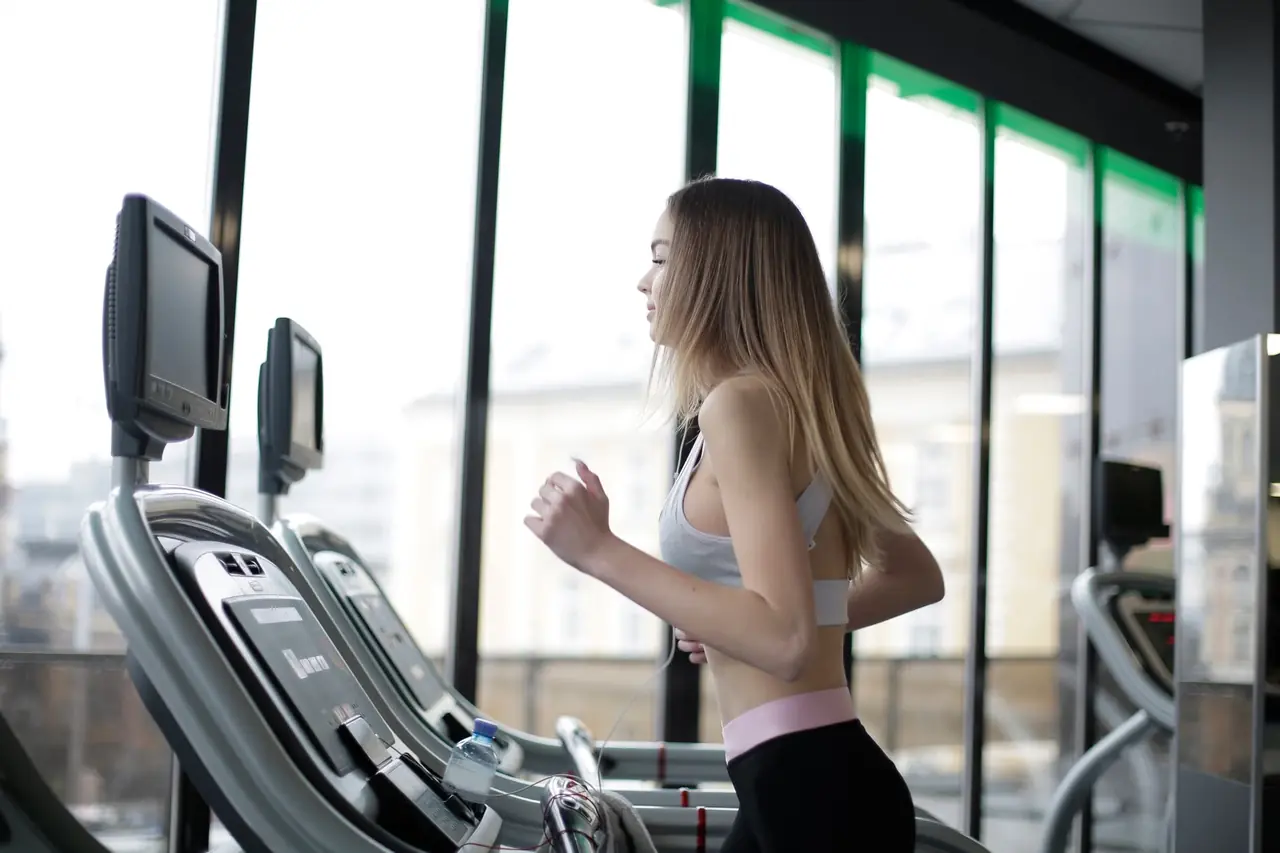
The treadmill remains the most versatile cardiovascular machine in both the gym and at home because it allows you to adjust the load with almost surgical precision. Changing speed, increasing the incline, or working in blocks turns a flat session into a useful workout for losing weight, building endurance, or adding quality without depending on the weather or traffic.
Its main advantage is not only convenience. The cushioned belt reduces some of the impact compared with asphalt and offers a stable environment, something especially valuable for anyone returning to running, logging high weekly volume, or needing better control over effort. Used well, the treadmill is not a poor substitute for the outdoors; it is a training tool with its own logic, capable of refining aerobic, muscular, and technical work.
What a treadmill session really contributes
The first benefit is obvious: it makes it possible to dose effort with a precision that is hard to achieve on the street. On an urban route, traffic lights, elevation changes, wind, pavement, and turns all play a role; on the treadmill, by contrast, intensity can be maintained continuously. That makes it useful for both easy sessions and short intervals, controlled runs, or long progressive workouts.
It also changes the relationship with the body. The moving surface helps maintain a more regular stride and reduces the need to react to terrain irregularities. Even so, it should not be idealized: running on a treadmill requires maintaining clean technique, because the lack of external references can cause the runner to become disorganized, shorten posture, or lean on the handrails. The machine helps, but it does not correct on its own.
Another interesting point is muscular cost. At the same pace, a slight increase in incline makes the glutes, hamstrings, and calves work harder. That variation makes the session more complete and prevents the workout from becoming a purely mechanical jog. The result is a mix of cardio and strength endurance that, when well planned, contributes a lot without needing to overcomplicate things.
How to adjust pace and incline without losing control
Incline is probably the most underrated parameter. A 1% or 2% incline is usually enough to bring the feeling closer to outdoor running and compensate for the absence of air resistance. Beyond that, the workout clearly changes: with moderate gradients, cardiovascular demand increases and the posterior chain also becomes more involved. Increasing the incline is not just making the exercise harder; it gives it a different emphasis.
In brisk walking sessions, an incline of between 5% and 8% can raise effort substantially without needing to run. In continuous running, working up to 4% is usually manageable for short or medium blocks, though tolerance depends on each person’s level. More important than a rigid number is progression: alternating flat phases and inclined phases every few minutes allows the session to be sustained without emptying yourself too soon.
Pace should be chosen with a clear goal in mind. A gentle speed is useful for warming up, recovering, or accumulating minutes; a brisk pace demands more from breathing and core stability; running already requires better technical coordination. On a treadmill, the common mistake is to start too fast because of the misleading sensation of control. The body receives fewer external interruptions, and that can invite you to accelerate too early. Caution here does not reduce ambition; it makes it sustainable.
Posture, foot strike, and gaze: technique that prevents drift
Body position makes the difference between a useful session and one full of flaws. It is advisable to keep the torso upright, the shoulders relaxed, and the gaze forward, not at the feet or to the side of the room. Leaning too far forward often ends in neck tension or excessive reliance on the belt. A stable posture is worth more than a flashy stride.
How you step also matters. The belt moves on its own and that can encourage a very short, almost dragging foot strike, with little hip drive. The correct movement aims for a natural landing of the foot under the center of gravity, without overloading the heel or slamming the forefoot down. The goal is not to imitate a perfect textbook technique, but to avoid movements that break fluidity and reduce efficiency.
The handrails deserve a separate mention. Holding on occasionally can be useful to find your rhythm or stabilize yourself at the start, but turning that support into a habit changes the real load of the exercise, reduces trunk work, and distorts intensity. In demanding sessions, it also steals part of the training value. The treadmill should support the effort, not support the runner.
Which muscles work and why incline changes the distribution
Walking or running on a treadmill mainly activates the quadriceps, hamstrings, glutes, and calves, as well as the abdominal and lower back muscles that stabilize the trunk. At low speeds, the focus falls more on posture control and gentle propulsion; as speed increases, neuromuscular demand rises and the body needs to coordinate each support and takeoff phase more effectively.
Incline shifts part of the load toward the glutes and posterior chain. That is why walking on an incline can feel surprisingly hard, even without running impact. By contrast, running on flat ground maintains a more elastic, cyclical sensation, with greater use of rebound. The same machine can feel like two different machines depending on the angle you set.
This muscular distribution explains why the treadmill is useful both for improving endurance and for adding stimulus to areas that are often underused in purely aerobic routines. It does not build muscle like weights do, but it does require repeated work, which tones and strengthens, especially when combined with incline and consistent sessions.
Routines that work better than aimless jogging
The treadmill handles block-based workouts very well. A gentle block to raise the heart rate, another slightly faster one to consolidate the stride, and a final recovery phase make for a complete session without needing to improvise. That format has a clear advantage: it prevents the clock from being hijacked by monotony and forces you to work with a specific intention.
Intervals also fit well. Alternating effort segments with short recoveries allows you to raise the cardiovascular stimulus without excessively prolonging fatigue. For beginners, small changes in pace and incline can be used; for more advanced profiles, the combination of incline and speed amplifies the work without leaving the control the machine provides. The treadmill rewards a structured session.
Even walking has value when done with purpose. A brisk walk, with firm posture and moderate incline, can be an excellent entry point for sedentary people or for days when the body does not call for impact. That is not a lesser workout; it is another way to accumulate work, improve aerobic base, and lower the barrier to regular exercise.
Safety and sensations: what should not be ignored
The absence of slopes and obstacles makes the treadmill more predictable than an outdoor run, but it does not eliminate risk. The most common issue is a false sense of ease that leads to uncontrolled speeding up or prolonging the session too much. Discomfort in the ankles, knees, or back can also appear when technique gets messy or when progression is too abrupt. Safety depends as much on the machine settings as on the user’s judgment.
For people with a history of joint issues, the stable environment can be an advantage, although it is important to remember that every case has its own limits. If a very long stride, excessive incline, or high speed causes pain, the problem is usually not the treadmill itself, but the chosen combination. The key is to respect the body’s response and not confuse work with punishment.
Hydration matters too, even in sessions that seem easy. In a warm or poorly ventilated room, sweating starts quickly and the perception of effort rises more than expected. Having water nearby and not waiting until you are thirsty helps sustain the session better, especially in long workouts or those with inclines. A simple gesture can prevent performance from collapsing halfway through.
Shoes, surface, and running feel
Shoes that work outdoors usually work on the treadmill too, but the choice can be refined if use will be almost exclusively indoors. Since the belt itself provides more cushioning, some runners prefer slightly lighter and less structured models. That is not a rule, but a matter of feel and session length. On the treadmill, comfort matters more than material stiffness.
Perception of support also changes. The lack of wind, the reduced space, and the fixed visual reference alter the feeling of effort. At similar paces, the treadmill may feel easier at first and more repetitive later. That monotony is one of its limits, but also an advantage if the goal is to focus on breathing, cadence, or trunk stability.
That is why many runners use it as a laboratory. It serves to test paces, get used to cadences, hold threshold blocks, or work on incline without the interference of the environment. It does not replace the richness of the outdoors, but it does allow you to fine-tune details that outside get blurred among cars, turns, and uneven surfaces.
When it fits best into a runner’s week
The treadmill fits especially well in weeks with little time, bad weather, or a need to control effort. It is also useful when you want to do something very specific, such as a hill session, a measured warm-up, or a recovery run with a gentle incline. Its value lies in precision and repetition, two qualities that are very useful in well-structured running.
As a training base, it can help you accumulate minutes without depending on the outdoors; as support, it allows you to adjust loads without punishing the joints as much; as a technical resource, it helps you maintain paces without surprises. That versatility explains its presence in gyms, sports centers, and homes. Few machines offer so much room for adjustment with such a short learning curve.
The strongest point, in performance terms, is that it forces you to respect the plan. There are no traffic lights or downhills that grant free rest, and no surface changes that alter progression. If used intelligently, the treadmill becomes a kind of physical metronome: it marks rhythm, order, and continuity. And in training, that continuity is worth almost as much as intensity.
The treadmill as a serious tool, not a backup plan
For years it was seen as an emergency resource for rainy days or for people who could not go outside. That view has become outdated. A well-used treadmill offers a real lever for improving endurance, strengthening the legs, controlling load, and training with a level of safety that the outdoors does not always provide. Its value does not depend on fashion, but on how precisely it is used.
The runner who understands it as a specific tool gets more from it: cleaner sessions, measurable paces, incline work, gentle recovery, and an ideal environment for refining details. The runner who reduces it to aimless walking usually stays on the surface of the machine. Between those two ways of using it lies a huge distance, almost the same as that between walking by inertia and training with intention. The treadmill does not work miracles, but it does organize effort with a clarity that is hard to match.
That is why it still occupies a central place in modern cardio. It is not the most exciting, the most varied, or the most photogenic. But few tools let you control movement, load, and time so well. In training, sometimes that matters more than spectacle.
Este artículo contiene enlaces de afiliado: si compras a través de ellos, se genera una pequeña comisión sin coste adicional para ti. Más información.



Reebok runs large or small: a real fit guide

Hoka Challenger ATR 7 GTX: complete review of the all-terrain shoe

How to clean white sneakers without ruining them

Altus Pirineos 40-liter backpack: analysis, use, and key points

20,000 mm waterproof jacket for men: key points to get it right

Under Armour HOVR Sonic 6: complete review of the shoe

incline treadmills: guide to choosing better

Achilles tendonitis: real recovery time

Pain in the Achilles heel: causes, signs, and relief

What to take for calf pain: real relief and when to worry

 Races3 months ago
Valencia Half Marathon 2026: date and registration

 Reviews and Comparisons4 months ago
Asics Gel-Roadmiles 3 for men: review and current price

 Races3 months ago
Valencia Marathon 2026: entry, ballot and course

 Reviews and Comparisons4 months ago
Asics Gel Sonoma 8 Gore-Tex: complete analysis for trail and rain
- Sneakers3 months ago
Saucony Endorphin Pro 4: full review and verdict

 News5 months ago
Strava API 2026: what changes for clubs, challenges and runner apps?

 Reviews and Comparisons5 months ago
Nike Alphafly 3: opinions, sensations, and real key points

 Reviews and Comparisons4 months ago
Under Armour running shoes review 2025-2026: models and key features
- Sneakers4 months ago
Adidas Adizero Boston 13 for men: review and verdict

 Sports Equipment4 months ago
Shoe sizes in cm: a clear guide to getting the right fit for your footwear
- Sneakers3 months ago
Neutral running shoes with lots of cushioning: the best of 2026

 News4 months ago
Where is the Hoka brand from and why was it born in France