Training
What speed to walk on the treadmill: paces, goals, and mistakes
Rhythms, incline, energy expenditure, and common mistakes for adjusting the treadmill safely and making the most of each session.

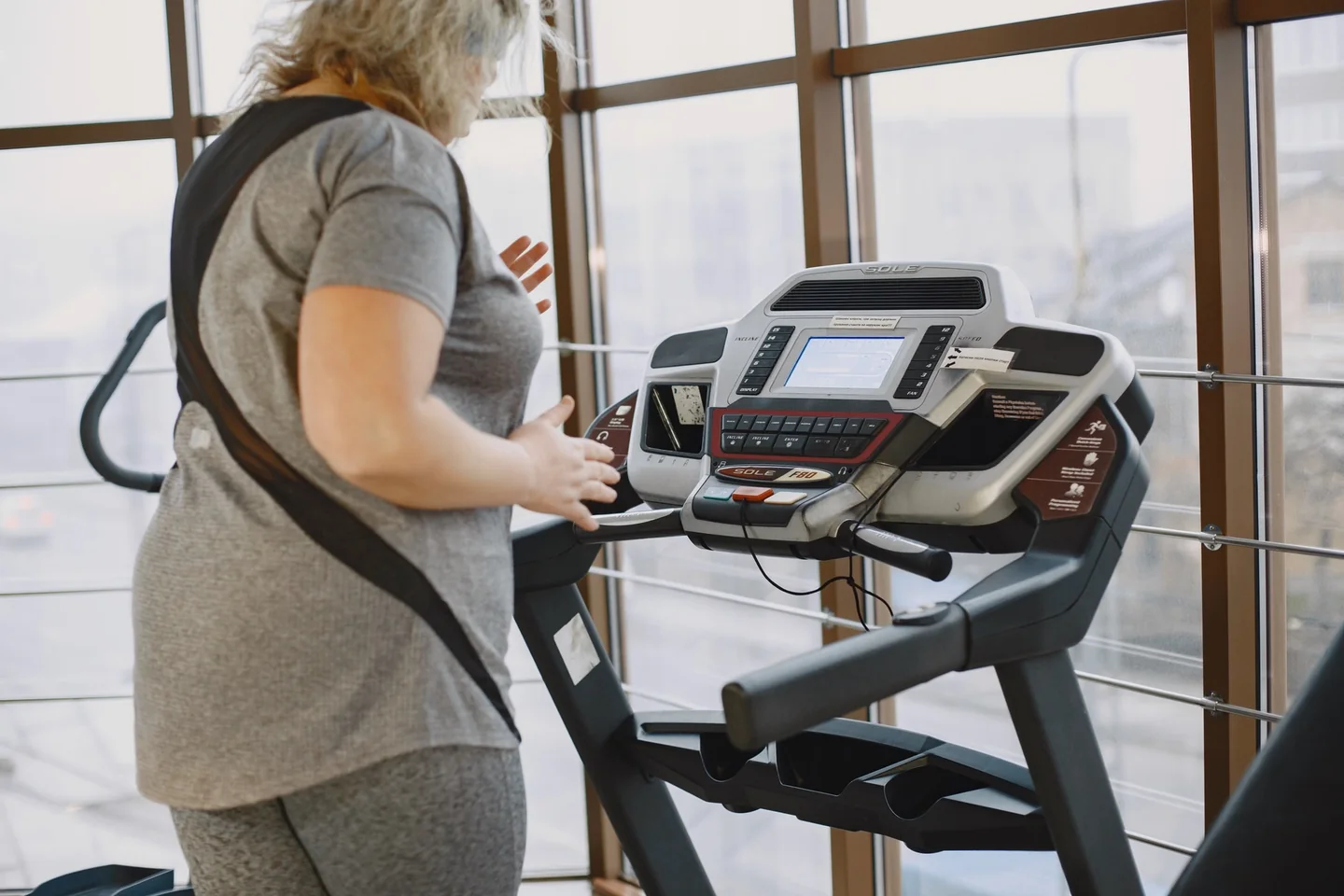
Walking on a treadmill is not a lesser form of training: when properly adjusted, it can be a very precise tool for building cardiovascular health, energy expenditure, and consistency without stressing the joints. The right speed usually falls between 4 and 6 km/h for a comfortable walk, although in more active people it can rise to 6.5 or 7 km/h while still being considered walking. The exact number depends on stride length, fitness level, age, the goal, and also whether you are looking for a gentle stroll, a continuous session, or a more demanding effort.
There is no universal pace, but there are useful references. In practice, a very light treadmill walk is usually below 4 km/h; a normal walk, between 4 and 5.5 km/h; and a brisk walk, between 5.5 and 6.5 km/h. From there, many people begin to approach jogging, although the transition depends not only on speed, but also on cadence, arm swing, and the sensation of effort. The key is that the treadmill allows you to walk with stable posture, controlled breathing, and a technique that does not fall apart from going too fast.
What speed fits each type of walk
Gentle walking, meant to move the body without fatigue, usually falls between 3 and 4 km/h. It is the pace of a relaxed stroll, useful for recovery, warm-up, or for those who are resuming activity. At this pace you can talk normally, and the sensation should be almost that of a comfortable movement, without pushing the pace or shortening the stride too much.
Standard walking is normally between 4 and 5.5 km/h. It is the most practical range for most people who want to walk with purpose, burn calories, and maintain sustained activity for 20, 30, or 45 minutes. Here you already notice a clearer effort from the legs and glutes, but breathing remains relatively steady. For many users, this is the sweet spot: enough intensity to feel the session, without entering an uncomfortable zone.
Brisk walking usually ranges from 5.5 to 6.5 km/h, and in runners or people very accustomed to exercise it can go a bit higher. In this zone, arm swing becomes more important, step frequency increases, and posture must be especially well aligned. If technique becomes abrupt, if there is excessive bouncing, or if the body starts leaning forward to keep up with the pace, the treadmill is already asking for a speed reduction or a more moderate incline adjustment.
The pace changes according to the goal
Walking to activate does not require the same speed as walking to train. Before a running session, for example, a treadmill set at 4.5 or 5 km/h for 5 to 10 minutes can serve as effective warm-up, especially if combined with joint mobility work. In that context, the goal is not to tire yourself out, but to gradually raise body temperature, lubricate the joints, and wake up the muscles.
Walking for weight loss usually requires a bit more consistency than pure speed. A pace of 5 to 6 km/h, sustained for 30 to 60 minutes, already creates a noticeable stimulus, especially if repeated several times a week. Energy expenditure depends not only on speed, but also on time, body weight, incline, and consistency. A well-sustained walk can be more useful than a short, overly intense session that ends up being abandoned.
Walking for recovery calls for caution. After a run, a long outing, or an especially demanding leg day, many runners choose a very gentle treadmill pace, between 3 and 4.5 km/h, to loosen up without forcing the body. This work helps move blood, release tension, and avoid the feeling of stiffness. On days like that, less is often more: the body appreciates a gentle stimulus, not another test.
Incline can be more valuable than increasing speed
Incline is one of the most underrated treadmill tools. Raising the incline between 2% and 6% can increase effort without needing to run, which is especially useful for walking harder without breaking technique. In practical terms, a 5 km/h walk with some incline can feel more demanding than a flat walk at 6 km/h.
To work the glutes and calves, moderate incline is often more interesting than accelerating uncontrollably. A 3% or 4% grade already changes the mechanics clearly, requires better propulsion, and improves the posterior chain’s work. That said, if the incline is very high and the body bends forward, the benefit is diluted. The back should stay long, the core active, and the foot strike firm.
In longer sessions, a slight incline can make the exercise more efficient without increasing impact too much. It is a way of adding density to the workout, as if the path had a slight hidden hill. For those who use the treadmill daily, alternating flat sections with inclined ones keeps the stimulus more alive than always repeating the same speed on a straight line.
How to tell whether the pace is right
The body gives fairly clear signals. If you can speak in full sentences while walking, the intensity is low or moderate. If breathing speeds up but still does not force you to cut sentences short, the intensity is good for sustained aerobic work. If talking becomes too difficult or the stride becomes awkward, the treadmill is probably too fast for that moment or that day.
Posture also reveals the adjustment. When the speed is reasonable, the shoulders stay relaxed, the gaze is forward, and the foot lands smoothly. If the person starts holding the rails tightly, rounding the back, or striking the belt too hard, the pace is no longer helping. On a treadmill, just like on the street, walking well matters more than walking fast.
Step frequency is another useful indicator. An effective walk usually has a livelier cadence than a park stroll, but not so high that it looks like a short jog. In many cases, the comfortable zone appears when movement feels continuous and the foot lands under the body, not too far in front. That economy of motion protects the muscles better and makes the session more sustainable.
The role of age, weight, and fitness level
Benchmarks change from person to person. A young, active adult accustomed to training may walk at 6.5 km/h naturally, while another person, older or less accustomed, will find enough stimulus at 4 km/h. Body weight also matters: a moderate speed can represent a very different load depending on strength, technique, and joint tolerance.
Those returning to movement after a break should start with very conservative paces, even below 4.5 km/h if needed, and increase gradually. Walking more slowly does not mean training worse; in fact, a comfortable, well-tolerated treadmill promotes adherence, which is what ultimately makes the difference. Improvement usually comes through accumulation, not one-afternoon heroics.
For people with overweight, treadmill walking is especially valuable because it allows speed, incline, and duration to be controlled quite precisely. Starting too fast often ends in frustration or discomfort. By contrast, consolidating 20- to 40-minute sessions at a manageable pace can build a solid base for later progress toward more intense walks.
What runners gain from a well-used treadmill
For runners, walking on a treadmill is not a plan B. It is also part of weekly training, especially for recovering after hard sessions, accumulating volume without excessive impact, or working on deload days. Many runners underestimate the value of a firm walk at 5 or 6 km/h with a slight incline, when in reality that combination can help keep the body active without adding unnecessary punishment.
During high-load weeks, treadmill walking works like a kind of release valve. It allows you to keep moving when the legs do not want to run, but you still should not remain still. It is a useful resource in high-volume periods, in bad weather, or when the schedule is tight and does not allow you to train outdoors.
It also has technical value. Walking with intention improves hip stability, posture, and overall support mechanics. A runner who knows how to walk well usually has better body awareness, and that shows when it is time to accelerate, brake, or recover between workouts. In a discipline where repeated movement rules, every detail adds up.
How to keep the treadmill from tricking your effort
The moving belt can create a false sense of ease. Because the ground moves beneath the feet, some people tolerate paces that would feel more demanding outdoors. That is why you should not obsess only over the number on the display. Two walks at 5.5 km/h can be very different if one is done with good technique and the other while hanging on the rails and letting the machine do half the work.
Taking too long a stride is one of the most common mistakes. On a treadmill, when trying to go faster, many people overreach and end up braking with the foot strike instead of propelling forward. The most efficient approach is usually a slightly shorter, quicker, and more stable stride. That reduces unnecessary impact and helps maintain control of the movement.
Another frequent mistake is looking down or leaning the torso forward. The screen should be checked with a glance, not with the whole head dropped. Looking forward promotes balance, a relaxed neck, and better chest opening. At a certain pace, poor posture turns a simple exercise into a battle against your own mechanics.
Speed, time, and intensity: the combination that works best
Walking fast for a short time is not equivalent to walking regularly for more minutes. For cardiovascular health and weight control, consistency matters more than a one-off effort. That is why a 30-minute session at 5.5 km/h can be more valuable than a 10-minute one at 7 km/h if the latter leaves the user exhausted and is not repeated often.
Total weekly volume matters a lot. Accumulating between 150 and 300 minutes of moderate activity per week is a widely used public health benchmark. The treadmill makes it easier to reach that goal even when it is cold outside, raining, or time is short. There is no need to turn every session into a stress test; just find a sustainable point and repeat it.
The best speed is the one you can repeat. This simple but decisive idea avoids absurd comparisons with other users or generic charts. There are days to walk at 4 km/h and days to hold 6 km/h comfortably. Real progress is usually seen in the ability to maintain the same pace for longer, feel less fatigue, and recover faster when finished.
Signs that it is better to dial it down
Pain in the shin, foot, or hip should not be normalized. A walk that leaves persistent discomfort may be demanding too much, or the treadmill may not be set up properly. It is also worth checking footwear, surface, and incline. On a machine designed to make movement easier, warning signs deserve immediate attention.
Excessive fatigue is another clear clue. If breathing becomes very heavy or recovery takes too long, the pace may be above what the day allows. Not every session has to leave a deep mark. Walking also does its job when it feels gentle, almost domestic, like turning on a dim light instead of a spotlight.
Losing coordination often appears before the person admits it. If the arms stop matching the stride, if the body bounces, or if the foot lands in a messy way, lowering the speed is not going backward; it is adjusting. In training, fine-tuning is also progress.
A practical reference to guide you without obsessing over the number
As a starting point, a treadmill at 4 km/h is good for relaxed walking; between 4.5 and 5.5 km/h you get a useful pace for most people; and between 5.5 and 6.5 km/h you enter a vigorous walk that already requires good technique. Adding a 2% to 4% incline can increase the stimulus without needing to run. That combination covers most home and sports uses.
The best setting is not decided on the console alone. It also depends on the goal of the day, how the legs felt when you woke up, the time available, and previous experience. On the treadmill, just like in any well-planned workout, the number matters, but context rules. Walking is not about accumulating kilometers by inertia: it is about dosing load intelligently.
The advantage of the treadmill is that it offers precision. It lets you repeat, compare, and correct. But that precision only helps if it is used wisely. A well-chosen pace turns a home machine into a very versatile tool; a poorly chosen pace turns it into a belt that drags more than it trains. The difference lies in those few kilometers per hour that seem small and yet completely change the experience.
The most useful walk is the one that fits your day and does not break your technique
Walking on a treadmill works best when the speed supports the body instead of forcing a battle. For most people, the most sensible range is between 4 and 6 km/h, with room to go lower or higher depending on fitness and the purpose of the session. Incline, when used well, adds quality without needing to push the belt to the limit.
The ideal session is not always the fastest or the longest, but the one that leaves a feeling of useful work, control, and continuity. In the end, that is the value of a well-adjusted walk: it may look simple from the outside, while inside it builds a foundation of health, endurance, and consistency that often matters more than any occasional sprint.
Este artículo contiene enlaces de afiliado: si compras a través de ellos, se genera una pequeña comisión sin coste adicional para ti. Más información.



How to prevent thigh chafing: causes and real solutions

Women’s running windbreakers: seven jackets and how to choose

Do more workouts get rid of soreness? A guide for runners

Jaén Half Marathon 2026: Record 3,800 Runners Registered

Men’s short running tights: how to choose the right pair

World Triathlon confirms data breach involving medical data

Izan Edo targets podium at Miyazaki World Cup

María Pérez ranks ninth in World Athletics’ 2026 top ten

Dos Santos, Duplantis and Sawe: World Athlete of the Year finalists

San Silvestre Vallecana 2026: 42,000 places, prices and start times

 Races3 months ago
Valencia Half Marathon 2027: date and registration

 Races3 months ago
Valencia Marathon 2026: entry, ballot and course

 Reviews and Comparisons4 months ago
Asics Gel-Roadmiles 3 for men: review and current price

 Reviews and Comparisons4 months ago
Asics Gel Sonoma 8 Gore-Tex: complete analysis for trail and rain

 Sneakers3 months ago
Saucony Endorphin Pro 4: full review and verdict

 News5 months ago
Strava API 2026: what changes for clubs, challenges and runner apps?

 Reviews and Comparisons5 months ago
Nike Alphafly 3: opinions, sensations, and real key points

 Reviews and Comparisons4 months ago
Under Armour running shoes review 2025-2026: models and key features

 Sports Equipment4 months ago
Shoe sizes in cm: a clear guide to getting the right fit for your footwear

 Sneakers3 months ago
Skechers GO RUN Consistent 2.0 analysis: comfort and limits

 News5 months ago
Valencia Marathon 2026 route: key tips to train and run better

 Sneakers4 months ago
Adidas Adizero Boston 13 for men: review and verdict