Reviews and Comparisons
This is how it performs in its third generation
Complete analysis of its feel, fit, stability, and durability after its third evolution, with real-world uses and clear limits.

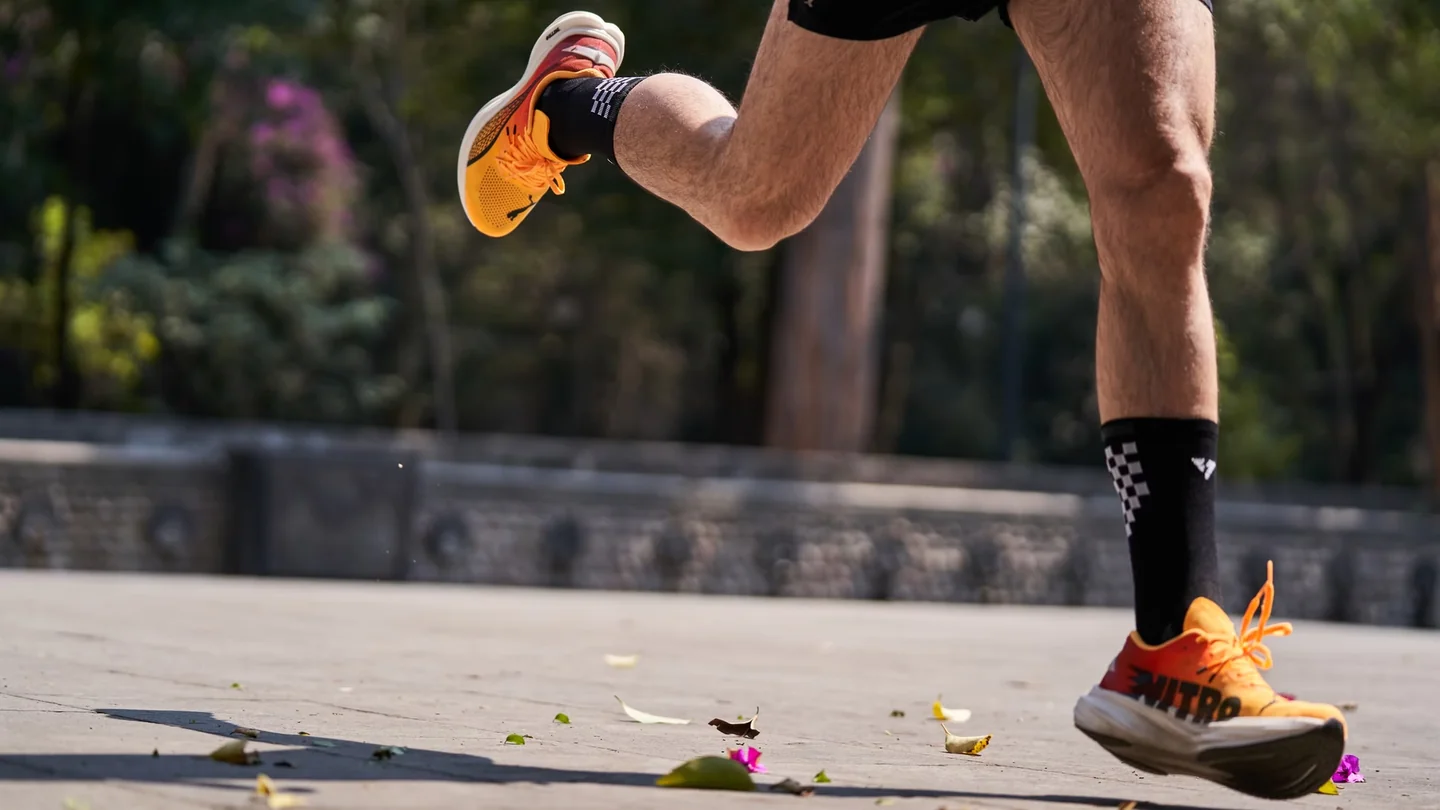
The third generation of this shoe cemented a very specific idea: you can still be light, lively, and fun without falling into fragile sensations or a nervous geometry. Against the drift of many fast models toward plates, extreme foams, and ever more aggressive platforms, this version opted for a simpler recipe: soft foam, immediate response, contained weight, and a base that’s a little kinder for most runners.
In practice, the result is a shoe that’s very easy to understand. It’s not a pure racer, but it’s not a conventional daily trainer either. It lives in that in-between territory that so often turns out to be the most useful: enough spark for pace changes and short intervals, enough calm for upbeat runs and longer sessions at a steady pace. That’s where its real value lies, in that versatility of uses that keeps it from being boxed in.
A quieter evolution, but a more mature one
The third installment doesn’t break with the previous formula; it refines it. If earlier versions had already earned a reputation for offering a very soft and responsive feel, almost like a fast shoe from another era, they also carried two much-commented weak points: durability that could be improved and a fit that was a bit short or narrow for certain feet. The new version corrected that imbalance quite a bit without changing the model’s character.
The most visible change is in the upper and the platform. The last now conveys a more secure fit through the midfoot, the base gains a bit of stability, and the foot feels less exposed to unnecessary lateral movement. That doesn’t turn the shoe into a rigid block, far from it; it simply gives it a more orderly presence when the runner stops going on autopilot and starts changing pace or support.
There’s also an aesthetic and conceptual shift. Previous generations had a somewhat experimental, even irreverent look. This version, by contrast, moves closer to the visual language of the rest of the FuelCell line. It loses a bit of graphic personality, yes, but it gains catalog coherence and a more understandable look for the average runner. It’s one of those decisions that won’t thrill everyone, though it usually makes the product easier to use.
The foam is still the center of everything
The heart of the model is the FuelCell foam. Its feel shows up from the very first step with a very particular softness: it compresses easily, but it doesn’t sink in a chaotic way. That difference is key, because it avoids the empty-mattress effect that so often turns a soft shoe into an imprecise companion. Here the transition is fluid, natural, and quite lively.
While running, the overall sensation is one of freedom. There’s no plate dictating the movement, no aggressive lever in the forefoot, and no abrupt correction of the stride. The runner is in charge. For anyone who doesn’t want the shoe to impose a specific way of running, that’s a clear virtue. In exchange, you lose the mechanical acceleration of the more radical models, and at very high paces there are options with more punch.
It works best in quality workouts with pace changes, tempo runs, and long intervals. It can also move comfortably through easy runs, although it doesn’t fully show its personality there. Its best comfort zone usually appears at lively but sustainable paces, when the foam returns energy without demanding too much technique and without punishing the legs when the session goes on longer than expected.
The midsole height isn’t trying to impress on paper. We’re not looking at a maximalist shoe. And that makes sense, because a contained base helps keep agility and reduces the feeling of being perched on a layer that’s too high or too soft. The moderate drop favors a fairly clean transition for both midfoot strikers and heel strikers.
Fit, last, and upper: the most relevant change is up top
The upper was one of the most visible changes compared with previous releases. New Balance reinforced the fabric and added a more solid internal structure, which greatly improves the feeling of support in the midfoot. It’s still a relatively snug fit, but it no longer gives quite so clearly that impression of short length that some runners associated with the previous version.
The foot is held well without feeling squeezed. That nuance matters a lot in a fast shoe, where too much lateral movement creates insecurity, especially on turns or when picking up the pace. The heel, the fixed tongue, and the way the lacing tension is distributed help the whole setup work in an orderly way. There are no unnecessary luxuries, but there is a lot of coherence.
Breathability remains a very serious asset. The material lets air through easily and the shoe works very well in warm months or indoor sessions. It also includes reflective details, useful for heading out at dawn or as evening falls. In a market full of fast models with very busy visual presence, this one keeps a clean, almost tool-like look, without disguises.
The tongue and laces also add to the package. The feel over the instep is more forgiving, pressure is distributed better, and midfoot lockdown has improved. The laces could be a little more generous in some cases, but the whole no longer causes those usual complaints from earlier versions. And in a shoe of this profile, that kind of fit marks the line between a likeable model and one that really earns a place in the weekly rotation.
How it really behaves when you run
One of its less obvious virtues is that it doesn’t get clumsy when the pace drops. Many fast shoes shine at threshold and fade as soon as the pace eases. This one doesn’t. It can handle easy runs with enough cushioning and, when it’s time to push, it doesn’t need a long warm-up to get going. That range of use is broader than you’d usually expect in its category.
Stability improved thanks to a slightly wider base and a more worked-out outsole design. The runner doesn’t feel the shoe pushing abruptly to one side, something that did happen in models that were too soft or too narrow. The overall sensation is neutral, accessible, and easy to manage, without becoming a rigid structure. That’s where much of its appeal lies for a broad audience.
Weight remains one of its defining traits. In a standard men’s size it comes in at around 210 grams, a very competitive figure for the level of cushioning and coverage it offers. That number matters not just on the scale; it translates into a feeling of freer legs, especially when the session drags on and every gram seems to multiply in the final stretch of the workout.
Its range of use is good, but not unlimited. It can cover everything from short runs to half marathons for many runners, and even handle some fast 10Ks. On the other hand, when the goal is to string together many kilometers at lively paces or ask for maximum protection in a marathon, there are more robust and more forgiving options. It never tries to be armor; its charm is somewhere else.
Traction, wear, and real-world lifespan
The outsole was one of the areas that saw the most work. Compared with earlier versions, rubber coverage increases in impact zones and leaves less foam exposed in the areas with the most abrasion. That improves both wear resistance and the feeling of security underfoot. It still isn’t a particularly aggressive outsole, but the balance between flexibility and coverage is better resolved.
On dry ground, grip does the job without drama. In wet conditions, the story is more nuanced: it offers acceptable traction, though it doesn’t stand out against benchmark compounds that really make a difference on wet pavement. In other words, it’s fine for running normally when the ground is wet, but it’s not the shoe you’d choose if you were looking for maximum confidence in persistent rain.
Durability improved, though it still isn’t that of a heavy training shoe. That’s the price of lightness and of some exposed foam in certain areas. Across different tests and real-world use, a reasonable reference for its lifespan is around 560 kilometers before performance starts to suffer more clearly. That’s not a bad figure for a fast shoe, but it should be judged within its category.
The upper also inspires more confidence than before. The fabric seems less prone to tearing and the internal reinforcements add structure. Even so, anyone with a very aggressive stride or a higher body weight should keep in mind that this isn’t a model designed to rack up thousands of kilometers without showing signs of fatigue. Its strength is delivering a lot of enjoyment over a reasonable usage window, not lasting like an old pickup truck.
What kind of runner it makes the most sense for
The key is understanding its role within a rotation. This shoe fits best with runners who value lightness more than firmness and flexibility more than pronounced guidance. Anyone who enjoys soft sensations, free transition, and a feel close to the ground will find a very convincing companion here. Anyone who prefers a more structured base or a plated model will probably look elsewhere.
It performs especially well in varied sessions. The same pair can go out for easy runs, pace changes, track intervals, or tempo runs on the road. That versatility gives it a lot of value in an increasingly fragmented running wardrobe, full of overly specific models. It’s also interesting for anyone who doesn’t want a clunky shoe for fast training, but one that leaves room to run naturally.
For lighter runners and those of medium weight, it usually shows its best side. There the foam compresses easily without losing too much control and the overall sensation stays fresh for longer. For heavier runners, the stride can feel a bit more sunken and forefoot protection may fall short on very long runs. That’s not an absolute flaw, but it is an important clue when interpreting its behavior.
Its place in the rotation is pretty clear. It can coexist very well with a more cushioned shoe for long runs and with a more aggressive one for racing or pushing to the limit. In fact, that’s probably its best ecosystem: being the agile middle ground, the model that makes quality days more enjoyable without needing a plate or relying on the latest superfoam on the market.
What it brings compared with other options on the market
Compared with other fast shoes without a plate, its value lies in balance. There are firmer alternatives, others that are more explosive, and some with better traction, but few combine in one package such a light feel, such natural flexibility, and such a forgiving touch at lively paces. That doesn’t automatically make it the best in its segment, but it does make it one of the easiest to recommend for a wide range of runners.
Against models more focused on pure performance, it loses a bit of direct propulsion. In return, it gains ease of use. It doesn’t demand as much, it doesn’t punish as much, and it doesn’t require as much technical precision to feel good. That’s a real advantage for recreational runners who don’t want the shoe to dictate the path, but to respond without too many conditions beforehand.
Against a classic daily trainer, it adds an extra dose of liveliness. That changes the everyday experience a lot, because it breaks the monotony of ordinary training. There are comfortable shoes that do the job, and others that also invite you to speed up without thinking too much about it. This one belongs to the second group. It’s not a lab tool, but it’s not just a decent shoe either. It has a clear personality, and in a saturated catalog that’s already quite a lot.
Price also matters in the equation. Its launch was set at around 130 dollars in the United States, a reasonable figure for the kind of performance it offers. In Spain and the rest of Europe the cost can vary depending on the store and promotions, but the underlying idea doesn’t change: it’s not a cheap shoe, though it usually delivers far more spark than its label suggests on paper.
A shoe that understands very well the balance between real use and speed
The most interesting thing about this third generation is that it doesn’t try to impress at any price. Its virtue isn’t in the easy headline, but in the sum of small improvements: a soft foam that doesn’t get messy, a slightly safer base, a better-resolved upper, and an outsole that finally supports the whole thing with more sense. When those pieces fit together, the feeling while running is one of an unusual naturalness in a market obsessed with gimmicks.
That approach makes it more useful in the long run than many noisy launches. It doesn’t depend on a specific tech trend or on a geometry designed to grab attention on the shelf. It follows a more classic, almost artisanal logic for a fast shoe: low weight, good response, enough protection, and freedom of movement. It’s a recipe that doesn’t need fireworks to work.
In a catalog that’s increasingly full of specialized models, that clarity of purpose is worth a lot. The third generation stopped being just a shoe with a fast soul and became a truly usable option for many runners in everyday life. That change doesn’t make it less interesting; on the contrary, it makes it more complete. And in a model like this, that maturity is usually the difference between a good curiosity and a shoe that ends up taking real space in the rotation.
You may also like: Mizuno Wave Rebellion Flash 3: analysis of the lightweight supertrainer.



How to prevent thigh chafing: causes and real solutions

Women’s running windbreakers: seven jackets and how to choose

Do more workouts get rid of soreness? A guide for runners

Jaén Half Marathon 2026: Record 3,800 Runners Registered

Men’s short running tights: how to choose the right pair

World Triathlon confirms data breach involving medical data

Izan Edo targets podium at Miyazaki World Cup

María Pérez ranks ninth in World Athletics’ 2026 top ten

Dos Santos, Duplantis and Sawe: World Athlete of the Year finalists

San Silvestre Vallecana 2026: 42,000 places, prices and start times

 Races4 months ago
Valencia Half Marathon 2027: date and registration

 Races4 months ago
Valencia Marathon 2026: entry, ballot and course

 Reviews and Comparisons4 months ago
Asics Gel-Roadmiles 3 for men: review and current price

 Reviews and Comparisons4 months ago
Asics Gel Sonoma 8 Gore-Tex: complete analysis for trail and rain

 Sneakers3 months ago
Saucony Endorphin Pro 4: full review and verdict

 News5 months ago
Strava API 2026: what changes for clubs, challenges and runner apps?

 Reviews and Comparisons5 months ago
Nike Alphafly 3: opinions, sensations, and real key points

 Reviews and Comparisons4 months ago
Under Armour running shoes review 2025-2026: models and key features

 Sports Equipment4 months ago
Shoe sizes in cm: a clear guide to getting the right fit for your footwear

 Sneakers3 months ago
Skechers GO RUN Consistent 2.0 analysis: comfort and limits

 News5 months ago
Valencia Marathon 2026 route: key tips to train and run better

 Sneakers4 months ago
Adidas Adizero Boston 13 for men: review and verdict