Reviews and Comparisons
Kailas Fuga EX BOA: analysis of the fit, traction, and stability in the mountains
A precise, stable mountain shoe with serious grip, designed for changing terrain and long hours of use.

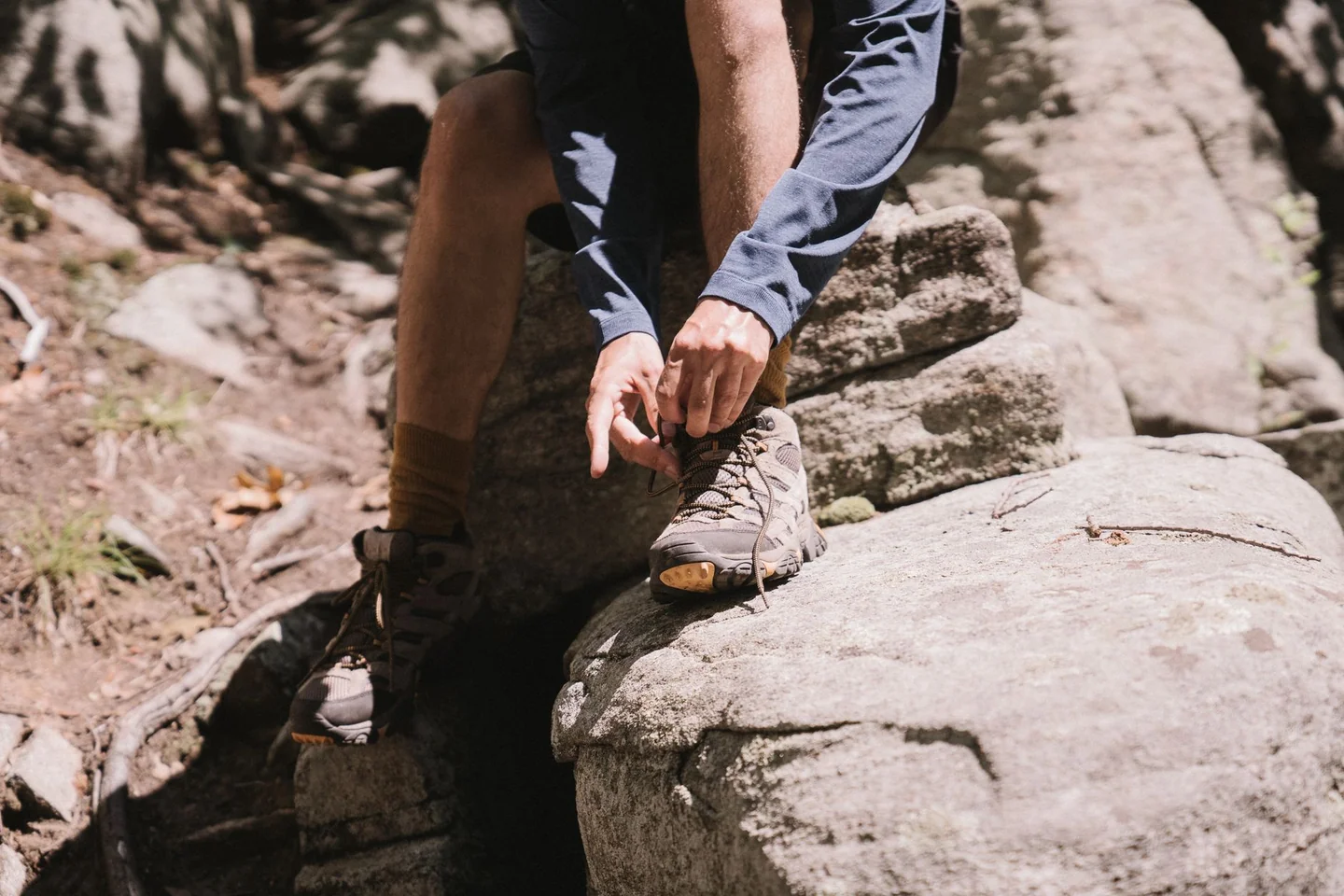
Imagen: Katya Wolf / Pexels
The Kailas Fuga EX BOA has carved out a place in technical trail running thanks to a very specific idea: offering control without making the stride feel heavy. It doesn’t try to dazzle with extreme sensations, but rather to reliably solve what really matters when the path mixes rock, compact dirt, loose descents, and damp sections. In that terrain, where the foot needs confidence more than embellishment, its proposal makes sense.
Its combination of micro-adjustable fit, Vibram Megagrip outsole, and widened platform places it in a very useful profile for anyone who runs in the mountains often and doesn’t want to fight with their gear. It’s not a shoe with soft sensations or a fierce response, but it is a very well-resolved tool for moving safely across variable and demanding routes.
A focus designed for terrain that changes with every step
In trail running, the shoes that convince most are usually the ones that know how to read the terrain without overdramatizing it. The Fuga EX BOA comes in with a pretty clear philosophy: stability, traction, and precise fit. That trio makes it interesting both for long training sessions and for mountain outings where you never know if you’ll link together track, rock, narrow trail, or a descent with a somewhat treacherous surface.
Its behavior fits especially well on mixed routes, the kind that alternate runnable sections with technical areas. It doesn’t aim to be a pure pace shoe or a mountain racer, and precisely for that reason it ends up being convincing for many runners. Instead of promising extreme speed, it focuses on something more valuable in the mountains: that the foot feels well held, that the stride doesn’t fall apart, and that the support remains reliable when fatigue sets in.
That vocation for balance is noticeable in the whole package. The shoe doesn’t stand out for a single spectacular trait, but for the way everything fits together: the upper wraps, the midsole supports, the outsole bites, and the geometry avoids nervous sensations. It’s a less flashy approach than others, but more useful in the day-to-day life of a mountain runner.
BOA as the central piece of the fit
The standout feature of this version is its BOA Fit System, a millimetric adjustment closure that changes the wearing experience quite a bit compared with traditional laces. The dial lets you tighten or loosen quickly, distribute pressure better, and keep the foot more still inside the shoe, something that in technical trail translates into more security on descents and uncertain foot placements.
That kind of closure isn’t just a matter of comfort. On long routes, when the foot swells and the stride starts to lose precision, being able to micro-adjust the fit without stopping for long is practical. It reduces internal movement, improves the feeling of control, and avoids that vague discomfort that appears when the instep is too loose or the heel starts to wobble inside.
It’s also worth understanding its character. BOA doesn’t behave like a conventional lace, nor does it convey the same visual logic or the same freedom to improvise. Its strength is something else: precision. For anyone who values closing the shoe with one hand, fine-tuning tension on the move, and forgetting about constant readjustments, the system fits very well. It’s not a minor detail; in the mountains, a good fit can make the difference between running smoothly or constantly correcting the shoe.
Serious traction on rock, loose dirt, and wet surfaces
The outsole is one of the model’s strongest arguments. The Vibram Megagrip compound remains a benchmark when the terrain gets complicated, especially on wet rock, technical steps, and areas where the shoe needs to do more than just go along for the ride. It doesn’t work miracles, but it does offer grip well above average in many mountain contexts.
The lug pattern is designed to respond in multiple directions, something key in trail because foot placement doesn’t always come straight on. On climbs, the forefoot gains bite and helps propel you forward; on descents, the pattern favors more controlled braking. The outsole works with mixed-terrain logic, not with the obsession of a single surface. And that’s one of its virtues: it doesn’t fall short on track, nor does it become clumsy in rougher sections.
Its performance is especially noticeable on the kind of terrain that makes up most training runs and many mountain races: compact trails, dry or wet rock, forest tracks, dusty sections, and small irregularities. In deep, sticky mud, as with almost any model with this approach, there are more specific options. But in the real mountains, the ones with varied use and constant changes, the outsole does its job with real skill.
A wide base that brings calm on compromised foot placements
Stability doesn’t depend only on foam firmness or upper hold. In this model there’s clear work in the platform geometry, with a base that gives more room in the heel and forefoot. You notice that when the terrain gets messy, because the shoe offers a more planted and less nervous feeling than others with a similar profile.
The heel especially helps with that sense of control. On descents and imprecise foot placements, a well-set base acts like a sturdy table on uneven ground: it doesn’t eliminate the instability of the environment, but it does reduce the chance of the foot rolling outward or the stride going into panic mode. That composure is very welcome when fatigue sets in, when technique is no longer perfect and the shoe has to correct part of the movement.
The key is that this stability doesn’t translate into excessive rigidity. The Fuga EX BOA keeps a sufficiently natural behavior so it doesn’t feel bulky. That allows it to move fluidly on runnable sections and not turn into a block. The result is a calmer, less aggressive transition, and quite effective for anyone alternating technical trail with more runnable stretches.
Midsole with balanced cushioning and a protective feel
The midsole foam has been designed to provide protection without killing ground feel. In terms of sensation, it doesn’t fall into exaggerated softness or the dryness of some very hard mountain shoes. Its middle ground is precisely what makes it useful: it cushions enough to add miles, but keeps a stable feel so you don’t lose precision in technical areas.
That’s especially important in trail, where a midsole that’s too soft can feel comfortable at first and then become imprecise when the trail narrows or breaks apart. Here the reading is more mature. The shoe protects against repeated impacts, supports you through long transitions, and keeps a certain responsiveness that helps prevent you from sinking into the stride. It doesn’t push like a pure racing shoe, but it doesn’t feel flat either.
The result is a very reasonable profile for runners who combine frequent training with long mountain sessions. It works well on continuous outings, at sustained paces, and also in medium- and long-distance races where the priority isn’t just going fast, but arriving with less wear and tear. That is, probably, the best definition of its behavior: efficiency before spectacle.
A ventilated, technical upper ready for mountain wear and tear
The upper combines technical mesh and synthetic overlays with a very clear intention: to hold without suffocating the foot. The balance between ventilation and structure is well resolved, and you notice it on long outings or hot days, where an upper that’s too closed can turn the shoe into a little oven. Here, airflow helps and the foot breathes with quite a bit of dignity.
The presence of reinforcements in areas exposed to abrasion also makes sense for the intended use. In trail, the upper takes rock, dust, lateral impacts, and more torsion than a road shoe. That’s why it matters that the mesh isn’t just light, but also durable. The overall feeling is one of serious construction, with well-placed pieces and no excess material that would hinder mobility.
In addition, the interior with a finish designed to repel sand and small particles adds a real bonus on dry, loose routes. It may not seem like a decisive catalog detail, but in the mountains it is quite a big deal: less debris getting in means fewer blisters, fewer interruptions, and a cleaner feeling throughout the run. That kind of solution often goes unnoticed when it works well, which is exactly what happens here.
Useful protection for loose tracks and dusty trails
Compatibility with gaiters adds a layer of functionality that fits the model’s spirit very well. On dry routes, with fine sand, gravel, or dusty sections, keeping particles out of the shoe greatly improves comfort. It’s not an accessory in the trivial sense of the word; on certain terrain, it’s almost a natural extension of the footwear.
That kind of detail reveals a very practical product vision. It’s not about inflating the spec sheet with flashy features, but about solving small problems that later become big annoyances during a long run. The protection is well measured: enough to handle the intended use, without falling into the overprotection that sometimes makes mountain shoes clumsy.
On very aggressive terrain, with hard edges and hours of continuous impact, there may be models with more extreme defense. But in the mixed use it was designed for, the combination of fit, stable base, and competent outsole makes the shoe feel complete and coherent, without obvious weak points in its concept.
Which type of runner fits it best
The Fuga EX BOA makes a lot of sense for anyone who prioritizes precision, confidence, and good support over soft or explosive sensations. It isn’t designed for runners looking for a silky feel or a clearly maximalist response. Its language is different: that of a shoe that goes with the flow, that supports you, and that cleanly handles whatever you put in front of it.
That brings it close to very specific but fairly common trail profiles. Runners who train often in the mountains, who mix races and volume outings, who move through terrain with constant changes, and who value a well-controlled stride more than a spectacular foam. It’s a workhorse shoe, one that convinces more through consistency than through any single standout trait.
It can also work especially well for those who appreciate a well-secured instep or feel uneasy when the foot has too much freedom inside. BOA lets you fine-tune that point with quite a bit of precision, and that can improve the experience both on descents and in long sessions, where fit stops being a secondary issue and becomes part of real performance.
What the data says and what it feels like on the run
The numbers help place it. According to available references, the weight is around 272 to 285 grams depending on size and source, with an 8 mm drop. It doesn’t fall into the lightweight racing category, but it doesn’t go heavy either. It’s a very reasonable range for a versatile trail shoe with technical ambitions and enough structure to rack up real miles.
The midsole height and the overall package point to intermediate cushioning, more protective than aggressive. In practice, that translates into a stride that doesn’t punish too much but also doesn’t disconnect you from the ground. In the mountains, that middle point is often the smartest one, because a shoe that’s too absorbent can hide the terrain and make you lose precision exactly when you need it most.
In the Spanish market, the price has moved around 190 to 212 euros depending on the channel and the time of purchase. It’s a high figure, though consistent with the presence of Vibram Megagrip, the BOA closure, and the construction aimed at technical terrain. It’s not a cheap shoe or an impulse buy; it’s a proposal for anyone who values a well-tuned solution and accepts paying for that combination of features.
A sober profile that gains value the more demanding the route becomes
The most interesting thing about this model is that it doesn’t try to solve everything with a single argument. Its strength lies in the sum of several sensible decisions: a highly grippy outsole, a high-precision closure, a stable base, and an upper that’s sufficiently ventilated and durable. When they come together, the shoe gains a lot of coherence, and that coherence is what you notice most in the mountains.
It’s not a shoe that seduces through exuberance. It’s more the kind that convinces as the kilometers go by and you realize it hasn’t failed at the important things. In trail, that kind of reliability has enormous value. The runner stops thinking about the foot and can focus on reading the route, managing effort, and deciding better where to place each step.
Compared with softer or more minimalist alternatives, it comes out stronger on technical terrain and wet rock. Compared with more radical racing models, it delivers less spark, but gains margin for error and ease of use. That middle position doesn’t always stand out in a catalog, but in the real mountains it’s often where it makes the most sense.
The mountains reward those who avoid unnecessary gestures
In trail running, the value of a shoe is measured less by what it promises and more by what it prevents: a bad landing, a slip, a forced correction, a discomfort that grows over hours. The Kailas Fuga EX BOA understands that logic well and responds with a package very much oriented toward control and confidence. It doesn’t want to impress, it wants to perform.
Its personality is very close to that idea of elegant utility that is so appreciated in the mountains. It fits with precision, grips with authority, and keeps stability when the terrain stops being kind. If the goal is to run mixed trails with a shoe that’s secure, well locked down, and capable of performing consistently, this is a very serious option.
If what you’re looking for is an extremely soft feel, a more playful response, or a pure racing shoe, there will be more suitable options. But on routes where the mountain calls the shots, the difference between a solid decision and an impulse buy usually becomes visible right when the legs are already heavy and the ground starts speaking louder than the runner’s preferences.
Este artículo contiene enlaces de afiliado: si compras a través de ellos, se genera una pequeña comisión sin coste adicional para ti. Más información.



How to prevent thigh chafing: causes and real solutions

Women’s running windbreakers: seven jackets and how to choose

Do more workouts get rid of soreness? A guide for runners

Jaén Half Marathon 2026: Record 3,800 Runners Registered

Men’s short running tights: how to choose the right pair

World Triathlon confirms data breach involving medical data

Izan Edo targets podium at Miyazaki World Cup

María Pérez ranks ninth in World Athletics’ 2026 top ten

Dos Santos, Duplantis and Sawe: World Athlete of the Year finalists

San Silvestre Vallecana 2026: 42,000 places, prices and start times

 Races4 months ago
Valencia Half Marathon 2027: date and registration

 Races4 months ago
Valencia Marathon 2026: entry, ballot and course

 Reviews and Comparisons4 months ago
Asics Gel-Roadmiles 3 for men: review and current price

 Reviews and Comparisons4 months ago
Asics Gel Sonoma 8 Gore-Tex: complete analysis for trail and rain

 Sneakers4 months ago
Saucony Endorphin Pro 4: full review and verdict

 News5 months ago
Strava API 2026: what changes for clubs, challenges and runner apps?

 Reviews and Comparisons5 months ago
Nike Alphafly 3: opinions, sensations, and real key points

 Reviews and Comparisons4 months ago
Under Armour running shoes review 2025-2026: models and key features

 Sports Equipment4 months ago
Shoe sizes in cm: a clear guide to getting the right fit for your footwear

 Sneakers3 months ago
Skechers GO RUN Consistent 2.0 analysis: comfort and limits

 News5 months ago
Valencia Marathon 2026 route: key tips to train and run better

 Sneakers4 months ago
Adidas Adizero Boston 13 for men: review and verdict