Reviews and Comparisons
The keys to the Puma Fast-R Nitro Elite 3 for running faster
Extreme lightness, an extended plate and a very aggressive geometry explain why this model is aiming high in racing.

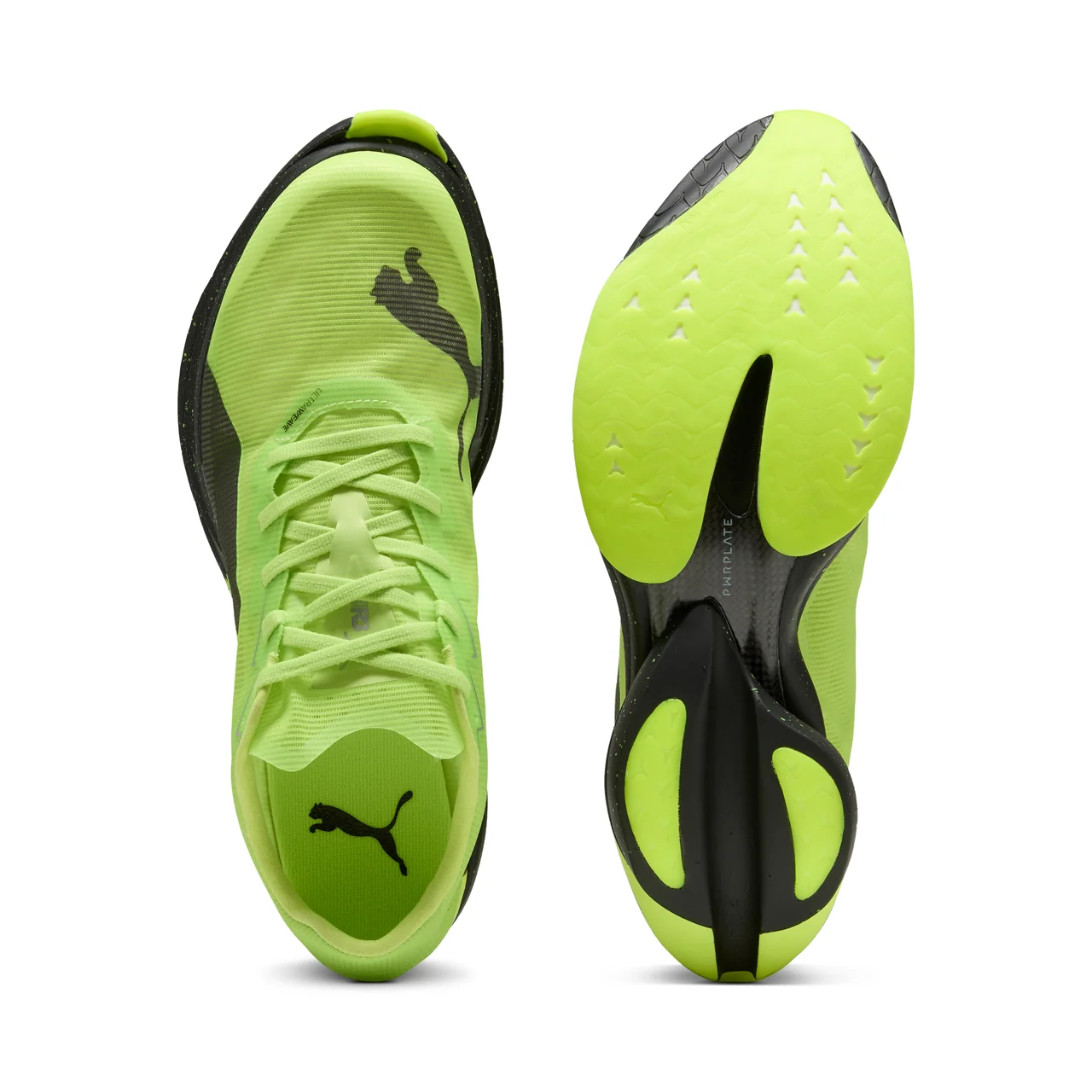
Image: PUMA
The third generation of Puma’s racer isn’t trying to please everyone. It’s designed to push the pace, reduce energy loss and turn every stride into a more efficient action. In a market saturated with plated shoes, this bet stands out for an uncommon recipe: a next-generation foam, a very pronounced geometry and a minimal build that prioritizes speed over versatility.
The result is a very specific racing model, closer to a precision tool than to a comfortable shoe for racking up miles. Its official launch price is set at 300 euros in the United States and 260 pounds in the United Kingdom, a high figure even within the super shoe segment. In return, it offers a very direct sense of propulsion, restrained weight and a response that can make a difference in 5K, 10K, half marathon and marathon.
A commitment to efficiency before comfort
The big argument for this model is running efficiency. Puma backed its development with lab studies that place the improvement in running economy above several benchmarks in the segment. Translated into runner language, that means the same effort can hold a slightly higher pace or, looked at another way, that a target pace can feel less costly on a muscular level. In competition, that detail matters more than any aesthetic claim.
The design philosophy becomes clear as soon as you look at the silhouette. There’s a very cut-down heel, a prominent forefoot and a transition that pushes toward a midfoot or forefoot strike. That architecture isn’t meant to soften the motion, but to channel it. Like a well-laid rail, the shoe wants energy not to be lost in unnecessary movements and for the runner to make better use of each landing.
That approach has an obvious consequence: it’s not a neutral shoe in terms of feel. When the body is working with it and the technique is sharp, the experience can be brilliant. When the landing gets messy, the platform leaves less room for error than other, more conventional rivals. That’s part of its personality and also part of its value; it doesn’t hide what it is, and precisely for that reason it feels so special for high-level racing.
The foam and plate that set the pace
The heart of the model is the combination of Nitro Elite and PWRPLATE. The foam, made with A-TPU, is designed to return a large part of the energy it receives without slipping into a soft or spongy feel. It doesn’t aim to sink the foot into a cloud, but to deliver a lively, firm and elastic response. In this kind of shoe, that difference matters a lot because the rebound sensation has to show up quickly, not several steps later.
The carbon plate also plays a more ambitious role than simple reinforcement. Its extension toward the front adds leverage at toe-off and helps the runner feel a more direct drive forward. It’s an unusual solution, almost laboratory-like, that responds to a clear idea: turn the stride cycle into a shorter transition between landing and propulsion.
The cut-out midfoot geometry is another decisive trait. Puma has reduced the feeling of a solid block and exposed part of the plate through a large lower opening, something that lightens the whole and, at the same time, sharpens the aggressive character of the stride. It’s not a structure meant for strolling. It’s a system created for running with race-day sensations, high pace and a relatively clean technique.
Weight, stack and drop: the numbers that explain its character
One of the most visible improvements over the previous generation is the weight reduction. Independent measurements place it at around 173 grams in a reference men’s size, while the brand states about 170 grams for men and 147 grams for women. For a high-stack shoe, with quite a bit of foam underfoot, that’s a striking and very relevant figure. The jump from the previous version is so big that it clearly changes the feel while running.
The stack height also helps explain why it feels so fast and so serious at the same time. Puma keeps around 40 mm in the heel and 32 mm in the forefoot according to the official spec, with an 8 mm drop. It’s a very balanced combination for racing, because it doesn’t force an extreme mechanics, but it does favor a lively transition. The foot isn’t glued to the ground, but on a platform carefully worked to preserve return and protection during long efforts.
That balance between volume and aggressiveness is key for longer distances. In a half marathon or a marathon, the body doesn’t just need speed; it also needs protection against accumulated punishment. That’s where the forefoot cushioning, overall stiffness and the ability to stay fresh in the final kilometers come into play. This model tries to solve that equation without losing its pure racing character.
The fit: precise, light and a bit demanding
The Ultraweave upper is clearly aimed at cutting grams. It’s an ultra-thin, highly breathable mesh with just enough reinforcement in the collar and lacing area so as not to compromise lockdown when the intensity rises. The idea is obvious: let the foot breathe, keep the shoe from becoming a burden and let the whole package keep up with the pace without adding unnecessary bulk. Visually, the lightness almost looks fragile; in motion, it performs solidly.
The fit tends to be snug and a little long for some runners, though not uncomfortable if the size is right. Those with wider feet may feel more pressure through the midfoot, because the last is designed to hold firmly, not to offer extra room. It’s a choice that makes sense for the intended use: in fast races, lockdown usually matters more than roominess.
There are also small details that reinforce that logic of precision. The tongue is minimal, the internal padding is sparse and the lacing system aims to close the whole package securely without adding weight. Even the fact that some units include two types of laces responds to that race-day preparation idea. There are no superfluous embellishments; everything serves performance.
Traction, stiffness and stability: a tool for going to the limit
One of Puma’s strongest points remains grip. PumaGrip rubber offers very serious traction both in dry conditions and on wet asphalt, something especially valuable in long races or on days with uncertain weather. In competition, reliable grip avoids tiny braking moments, builds confidence through corners and helps maintain a fluid stride when the surface isn’t fully cooperating. In a shoe this light, that extra security is very noticeable.
The trade-off shows up in stability. The heel is narrow, the rear structure gives way easily and the base doesn’t forgive messy landings. For a runner who lands heavily on the heel or needs more lateral support, the experience can feel nervous. On the other hand, anyone who lands on the midfoot or forefoot will find a platform much more in tune with high pace and movement economy.
Overall stiffness is also part of its DNA. It’s not a flexible shoe and it doesn’t try to be. The sensation is that of a very taut block working in favor of propulsion, with little tolerance for abrupt technique changes or a chaotic landing. That stiffness, far from being a flaw in itself, is the price paid for such a pronounced response. What it loses in friendliness, it gains in a sense of drive.
What it feels like to run in it when the pace is already serious
On easy runs, this Puma can feel almost too serious. Its personality really shows when the pace picks up and the runner settles into a racing cadence. That’s when a quicker release from the ground appears, a very clear feeling of lightness and visible help to hold the pace without the legs sinking as much as you’d expect in the final kilometers. It’s not magic; it’s geometry, foam and plate working together at the same time.
What’s most interesting is that the shoe doesn’t just favor explosive takeoffs. It also keeps a convincing behavior when fatigue starts to bite. In a marathon, that second mechanical wind can be decisive, because the body usually loses efficiency long before the desired pace has disappeared from the mind. A shoe that helps preserve posture and rebound when wear sets in can be worth more than a couple of grams less on the scale.
That said, its best version appears when the runner enters its ideal zone. If the strike is centered and the technique stays stable, the shoe seems to accelerate on its own. If there are doubts, if the foot lands outside that line or if the landing breaks down from fatigue, the feel can become drier and less forgiving. It’s a reminder that super shoes don’t replace a runner’s biomechanics; they amplify them.
What distances it suits best and who it makes the most sense for
Its natural territory runs from 5K to marathon. In short races, the immediate response suits it beautifully because it lets you accelerate with very little drag. In the half marathon and marathon, the mix of cushioning, stiffness and return becomes even more valuable, since the challenge isn’t just to go fast, but to sustain a high pace without muscular cost skyrocketing. That’s where its design shows the strongest arguments.
Not every runner profile will get the same performance, though. It fits better with neutral runners, technically sound, used to racing in demanding gear and able to keep a clean mechanics even when doubts appear. It also favors those who land on the midfoot or forefoot and want a very clear sense of propulsion in every stride. For that profile, the whole package is almost addictive.
For heavier runners or those with a greater need for stability, the equation changes. The narrow base and the lightly structured heel can make the effort feel more uncomfortable as the miles build up. It’s not a shoe meant to correct landings or to offer refuge when form falls apart. Its job is to enhance what already works, not fix it.
Price, durability and the real cost of such an extreme shoe
The $300 launch price puts it at the top end of the market. It’s not an outrageous amount within super shoes, but it is enough to make you think carefully about how it will be used. In a model like this, price shouldn’t be measured by everyday miles, but by specific opportunities: a target marathon, an important half marathon or a series of key sessions where performance really matters.
Durability is also aligned with that idea. The brand suggests an approximate lifespan of 200 miles, around 300 kilometers. That’s little for a training shoe, but reasonable for a racing piece that aims for minimum weight and maximum response. Visible wear on the outsole and upper appears quickly if it’s used too far outside its natural terrain. In other words: it wants to race, not age slowly.
That balance between performance and lifespan is part of the deal. The more radical a racing shoe is, the more likely it is to give up on durability. Here Puma’s bet is clear and transparent. It doesn’t aim to be the companion for everything, but the sharp-edged piece reserved for the days when a runner wants to squeeze out their best version. In that logic, the cost makes more sense.
What sets it apart from other super shoes
The big difference is its character. There are models with more cushioning, others with a gentler transition and some with a more stable overall feel. This Puma, by contrast, follows a more incisive line. Its feel is firm without being hard, very responsive without feeling soft, and with a geometry that invites you to run in a specific zone of the stride. It’s not a generic speed shoe; it’s a very marked interpretation of what it means to go fast.
Against rivals with more balanced profiles, its advantage is immediacy. The runner feels propulsion sooner and perceives a more aggressive interaction with the foam and plate. That can become a very serious asset for anyone who values the sensation of drive over comfort. In exchange, everyday coexistence with it is more delicate and demands greater tolerance for stiffness.
Its merit, in truth, isn’t just in the technology, but in how it combines it. There are many carbon shoes, many with lightweight foams and many with high stack heights. The hard part is putting all that together without the whole thing feeling heavy or clumsy. Puma achieves a very particular mix here: lightness, propulsion and a clearly competitive profile. That identity, so specific, is exactly what makes it stand out.
A super shoe built for the runner who accepts the compromise
This model represents a very pure idea of performance. It doesn’t aim to be the most comfortable, nor the most stable, nor the most durable. It aims to be very fast, and that’s where it concentrates its best virtues. The foam returns energy with confidence, the plate amplifies toe-off and the cut-down chassis favors a transition that punishes less when the runner is on form. Everything revolves around a single goal: run faster with less effort.
That’s why its reading feels as much like a tool as a statement of intent. Puma has made it clear that it wants to play in the league of the best racing shoes on the market, and it does so with its own proposal, without fully copying the language of its rivals. That bold approach may divide opinions, but it also explains why the model draws so much attention: in a sector where many new releases look alike, here there is a clear personality.
The final key is understanding what kind of runner it was designed for. Anyone looking for a shoe for everything will probably look elsewhere. Anyone seeking a racing companion with fierce response, minimal weight and a behavior very focused on speed will find here one of the market’s most serious arguments. On the road, sometimes winning seconds depends less on softness than on precision. And this Puma, precisely, is made for that.



How to prevent thigh chafing: causes and real solutions

Women’s running windbreakers: seven jackets and how to choose

Do more workouts get rid of soreness? A guide for runners

Jaén Half Marathon 2026: Record 3,800 Runners Registered

Men’s short running tights: how to choose the right pair

World Triathlon confirms data breach involving medical data

Izan Edo targets podium at Miyazaki World Cup

María Pérez ranks ninth in World Athletics’ 2026 top ten

Dos Santos, Duplantis and Sawe: World Athlete of the Year finalists

San Silvestre Vallecana 2026: 42,000 places, prices and start times

 Races3 months ago
Valencia Half Marathon 2027: date and registration

 Races3 months ago
Valencia Marathon 2026: entry, ballot and course

 Reviews and Comparisons4 months ago
Asics Gel-Roadmiles 3 for men: review and current price

 Reviews and Comparisons4 months ago
Asics Gel Sonoma 8 Gore-Tex: complete analysis for trail and rain

 Sneakers3 months ago
Saucony Endorphin Pro 4: full review and verdict

 News5 months ago
Strava API 2026: what changes for clubs, challenges and runner apps?

 Reviews and Comparisons5 months ago
Nike Alphafly 3: opinions, sensations, and real key points

 Reviews and Comparisons4 months ago
Under Armour running shoes review 2025-2026: models and key features

 Sports Equipment4 months ago
Shoe sizes in cm: a clear guide to getting the right fit for your footwear

 Sneakers3 months ago
Skechers GO RUN Consistent 2.0 analysis: comfort and limits

 News5 months ago
Valencia Marathon 2026 route: key tips to train and run better

 Sneakers4 months ago
Adidas Adizero Boston 13 for men: review and verdict