Reviews and Comparisons
US size 8 in Spain: the real equivalent and how to get it right
Real equivalencies, measurements, and brand differences to buy without error between sizing systems.

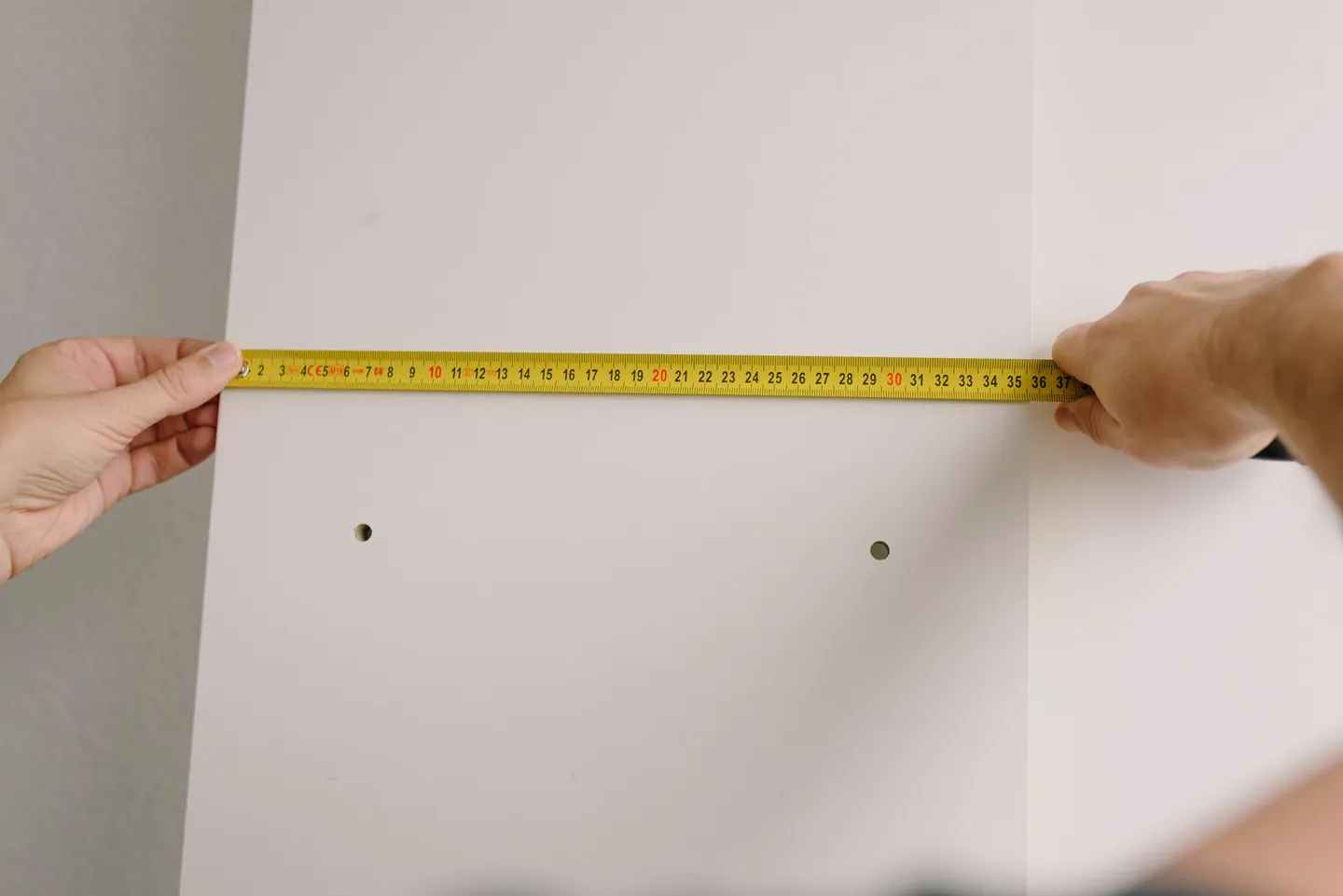
Imagen: Ksenia Chernaya / Pexels
The US size 8 does not mean the same thing in every garment or in every Spanish catalog. In women’s clothing, it usually corresponds to a European size 40, while in footwear it may be equivalent to a EU 39 or 40, depending on whether it is women’s shoes, the brand’s last, or the type of product. In Spain, the most consistent reference is still the European numbering, but the American label appears more and more often in online stores and international platforms.
That difference between systems explains why an apparently simple purchase sometimes ends in a return. A size 8 can be a comfortable medium size in a jacket, a roomier size in a coat, or a different starting point in shoes. The key is not to memorize a single number, but to read the correct sizing system and compare it with concrete measurements of chest, waist, foot, or inside length, depending on the product.
What an American size 8 means in the Spanish market
In women’s fashion, the most common equivalent of US size 8 in Spain is a EU 40. That relationship appears fairly consistently in general ready-to-wear garments and is repeated in many conversion charts from international brands. In many guides, the American 8 is also translated as an L or a European 8, although that letter-based equivalence depends more on the cut than on the strict numerical standard.
The translation, however, is not always automatic. Sizes are not an exact science between brands: one manufacturer may cut the pattern more closely, raise the rise, narrow the shoulders, or allow more room in the hips. That is why the same size 8 can fit tightly in one brand and loosely in another, even if both are labeled US. In women’s clothing, that margin of variation is usually around one size up or down, something especially noticeable in fitted garments.
In men’s clothing, the number 8 is not usually used as a general reference. Where it does appear frequently is in women’s wear, footwear, or special systems used by some international brands. So when someone looks for an equivalence in Spain, it is best to first check whether they are comparing clothing, shoes, or jewelry, because the jump between systems changes completely.
Approximate measurements for size 8 in women’s clothing
The most commonly used charts place women’s size 8 at approximate measurements of 88 cm bust, 68 cm waist, and 96 cm hips. These figures serve as a reference guide and help explain why the most repeated equivalent in Europe is size 40. In other words: it is not just a matter of the label, but of body proportions and garment pattern.
In practice, these measurements are useful because they allow the garment to be compared with the real body. US size 8 usually fits figures that do not need extreme room at the waist and that do require enough space in the hips and bust. When the fabric contains elastane or the design is straight, the feel changes; when the fabric is stiff, that same size can behave like a smaller size. The material matters more than it seems.
The type of garment also has to be taken into account. In a coat, a little extra room can be desirable to wear a sweater underneath. In a party dress, on the other hand, the same size leaves less margin and the equivalence with a Spanish 40 may fall short if the bust or hips are at the upper limit of the chart. That is why serious guides do not rely on the number alone, but on body and garment measurements.
How to convert a US size 8 to Spain
The most practical way to get oriented is to start with the European system. In women’s clothing, US size 8 usually corresponds to EU 40, which in Spain is commonly translated as a size 40. That relationship appears in most international fashion conversions and is repeated in everyday garments, from shirts to jackets. Even so, the match should be understood as an average, not as a rigid rule.
To check whether that equivalence really fits, the most useful data are bust, waist, and hip measurements. If size 8 corresponds to 88 cm bust, 68 cm waist, and 96 cm hips, then the comparison with a Spanish 40 is consistent. The number only guides; the centimeter decides. That is the rule that avoids the most problems in international shopping.
There is a second important nuance: some American brands run larger than the European standard, while others run small. That means a person who wears a 40 in Spain may end up needing an 8, a 10, or even a 6 depending on the brand. The best reading is always the one in the product’s specific listing, because that is where the sizing system stops being theoretical and becomes real.
The same size does not match the same way in clothing and footwear
One of the most common sources of confusion comes from mixing clothing with footwear. In women’s shoes, the US size 8 does not translate directly to a 40; instead, it usually falls around a EU 39 or a EU 40, depending on the manufacturer and the last. In other words, the foot speaks its own language, different from the one used in garment sizing.
In that area, foot centimeters also come into play. A women’s US 8 usually comes close to an inner length of around 25 centimeters, although the value can vary a bit by brand. That small difference is enough for a shoe to rub the toe, pinch the instep, or feel too loose at the heel. In footwear, half a size changes the wearing experience much more than the label suggests.
That is why reliable shoe comparisons in Spain usually include foot length, European size, and, when appropriate, US size. Anyone buying online from an American website should not stop at the 8: they need to check whether the brand is talking about women, men, youth, or even unisex sizing. Each system uses a different logic and an identical number can hide very different measurements.
Why equivalences vary so much between brands
The answer lies in the garment pattern. Not all companies use the same mold, cut the waist the same way, or place the bust and hips in the same position. A size 8 is not a worldwide uniform, but a commercial convention that moves within approximate ranges. Large chains also adapt their sizing to the audience that buys most often and to the drape they expect from the fabric.
This is especially noticeable in American brands with a somewhat roomier cut and in European brands with more fitted silhouettes. In a Spanish store, a 40 may feel tighter than an imported 8 from a North American brand, or the other way around, depending on the design. The result is that two garments with the same label can feel different when worn, as if one had its waist measured with a ruler and the other with a more flexible eye.
The difference also appears by product category. A dress, a blazer, and a coat share numbering but not the same level of ease. The coat leaves space for lining and inner layers; the dress does not always do that. The more structured the garment, the more important the pattern and the less reliable it is to read only the size number.
How to measure the body to avoid getting the equivalence wrong
Body measurement remains the most solid method for clearing up doubts. For the upper body, the tape should pass around the fullest part of the bust, without tightening. The waist is measured at the narrowest part of the torso and the hips at the widest area, keeping the tape level. These three figures are the ones that best match women’s size 8.
If the goal is to compare with a specific garment, it is also worth adding a reference measurement from the garment laid flat. A dress can be measured from armpit to armpit, trousers at the waist and rise, and a jacket at the shoulders and sleeve length. Comparing the body and the garment avoids relying on vague interpretations, especially in international purchases where returns can be cumbersome.
In the case of footwear, the process changes: measure the foot length from heel to the longest toe, ideally at the end of the day, when the foot has gained some volume. That measurement is then matched against the manufacturer’s size chart. Not all American brands use the same distance for size 8, so a couple of millimeters can be the difference between a correct purchase and a box that goes back into the closet unworn.
What happens with special sizes and alternative systems
Some brands work with their own numbering. Some convert their catalog to standard European sizes, but others use internal scales, special ranges, or letter-based equivalences. That situation is common in jewelry brands, technical apparel, and capsule collections. In those cases, size 8 may appear as a secondary reference or even change meaning depending on the country of sale.
There are also garments with adjustable sizing, especially in costume jewelry, accessories, or designs with elastic waists. There, the number loses part of its weight because the garment adapts to a wide range of measurements. The size stops being an exact boundary and becomes a range. In international commerce, that range can make buying much easier, but it can also hide fit differences that only become apparent once the item is tried on.
Another common case is garments classified as petite, regular, or tall, categories that affect length more than circumference. A petite size 8 does not necessarily correspond exactly to a regular 8, even if they share the same numerical base. In Spain, that difference is especially noticeable in sleeves, rise, and leg length, where just a few centimeters completely change how the clothing falls.
Size 8 in online shopping: what is really worth reading
Buying a garment with American sizing from Spain requires looking beyond the number. The product page usually includes the conversion chart, exact measurements, and sometimes a note about whether the item runs large or small. That information is more valuable than any generic equivalence, because it puts the specific garment ahead of the abstract system.
It is also worth checking the fabric. A pair of trousers made from stiff cotton does not behave like one with stretch fabric. A lined blazer does not drape like a flowing blouse. Size 8, in that sense, is only the starting point for a more detailed reading. Just as on a road the direction matters more than the kilometer number, in clothing the construction of the garment matters more than the printed number.
In Spain, where European numbering is still the most recognizable, the clash with the American scale is felt most in cross-border shopping. That is why the most useful equivalence to remember is simple: US 8 in women’s clothing usually equals EU 40. From there, the real measurements, the cut of the garment, and the honesty of the size guide do the rest of the work.
The value of knowing these equivalences before buying
Understanding size equivalence reduces returns, avoids frustration, and improves the reading of any international purchase. It also saves time. Someone who knows that a women’s size 8 in the United States is close to a Spanish 40 can immediately rule out impossible options and focus on the garments that are actually likely to fit.
That does not mean the number is absolute. It means, rather, that it works as an orienting map between sizing systems. A useful map, yes, but not a perfect one. The difference between a flawless garment and one that does not close at the hips usually lies in a combination of centimeters, fabric, and pattern. And in fashion, as in almost everything, details are not decoration: they are the structure of the result.
Anyone shopping from Spain in US stores eventually learns a simple lesson: the 8 does not live alone. It depends on the country, the product, the last, and the brand. In women’s clothing, the strongest clue remains the European 40; in footwear, the equivalent shifts with more nuance; and in both cases, the best defense against mistakes is to measure before ordering. The correct size is confirmed by data, not by intuition.
When a number says more than it seems
Size numbering seems like a cold, almost bureaucratic language, but in reality it translates something very human: how a garment fits the body. US size 8, converted to Spain, generally comes close to a women’s 40, although that textbook answer is only the beginning. Then come the brand, the fabric, the type of cut, and the real shape of the wearer.
That small amount of disorder, far from being a flaw, explains why size charts, equivalences, and measurement guides still exist. Size is an approximate promise; experience, by contrast, is written by the body. That is why it is best to read the label for what it is: a useful reference, never an absolute guarantee. And in the case of US size 8 in Spain, that reference usually points quite clearly to the European 40, with the exceptions imposed by each brand and each garment.
Choosing the Right Size for Running Clothes and Shoes
When buying running shoes, don’t assume a US size 8 always converts to the same EU size: the fit can vary with the shoe type, last and brand. Check the size chart for the specific model and, where available, compare it with your foot length or the shoe’s internal measurement. Trying shoes on with the socks you normally run in gives you a better sense of the fit than relying on the label alone.
The same care applies to technical clothing. A top or tights that feel too tight may restrict comfortable movement, while a jacket may need extra room if you’ll wear it over other layers. Check each item’s measurements and cut rather than relying on your usual size. If a shoe rubs or causes pain during training, stop wearing it and consult a professional if the discomfort persists.
You may also like: US size 7 in Spain: equivalences, measurements, and common mistakes.



Reebok runs large or small: a real fit guide

Hoka Challenger ATR 7 GTX: complete review of the all-terrain shoe

How to clean white sneakers without ruining them

Altus Pirineos 40-liter backpack: analysis, use, and key points

20,000 mm waterproof jacket for men: key points to get it right

Under Armour HOVR Sonic 6: complete review of the shoe

incline treadmills: guide to choosing better

Achilles tendonitis: real recovery time

Pain in the Achilles heel: causes, signs, and relief

What to take for calf pain: real relief and when to worry

 Races3 months ago
Valencia Half Marathon 2026: date and registration

 Reviews and Comparisons4 months ago
Asics Gel-Roadmiles 3 for men: review and current price

 Races3 months ago
Valencia Marathon 2026: entry, ballot and course

 Reviews and Comparisons4 months ago
Asics Gel Sonoma 8 Gore-Tex: complete analysis for trail and rain
- Sneakers3 months ago
Saucony Endorphin Pro 4: full review and verdict

 News5 months ago
Strava API 2026: what changes for clubs, challenges and runner apps?

 Reviews and Comparisons5 months ago
Nike Alphafly 3: opinions, sensations, and real key points

 Reviews and Comparisons4 months ago
Under Armour running shoes review 2025-2026: models and key features

 Sports Equipment4 months ago
Shoe sizes in cm: a clear guide to getting the right fit for your footwear
- Sneakers4 months ago
Adidas Adizero Boston 13 for men: review and verdict
- Sneakers3 months ago
Neutral running shoes with lots of cushioning: the best of 2026

 News4 months ago
Where is the Hoka brand from and why was it born in France