Reviews and Comparisons
US and Spain women’s shoe size guide
Clear equivalences, centimeters, and keys to choose well when buying women’s footwear between different sizing systems.

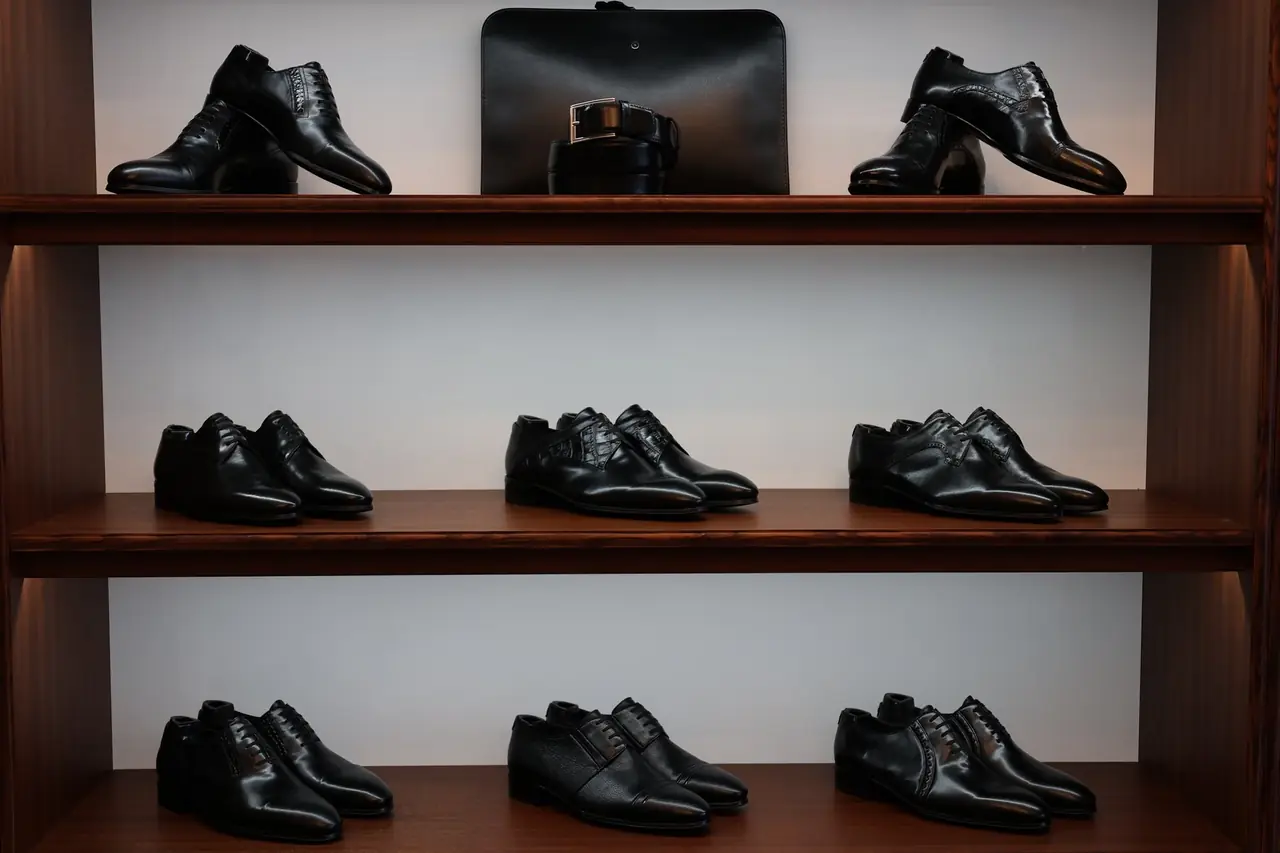
The jump between American and European numbering usually concentrates the confusion into a single buying decision: getting the real foot size right. In women’s footwear, a difference of just half a size can change the fit, rub against the instep, or leave too much room in the toe box. That is why, beyond the number printed on the label, what matters most is the length in centimeters and the specific shape of the last.
In practice, a women’s size in the United States is usually about 1.5 sizes above the equivalent European size. So a European 36 is roughly a US 5, a 37 is close to a 6, a 38 is around a 7, and a 39 usually corresponds to an 8. It is not an exact rule for every brand, but it is a very useful reference for buying with less room for error and understanding why two stores may label the same shoe differently even when it looks similar at first glance.
Real equivalence starts with the foot, not the box
Conversion charts help, but they do not replace measuring the foot. In women’s sizing, the European number is based on a system linked to foot length, while the American system uses its own scale, with small variations between manufacturers. That is why one person can wear a 38 in one brand and a 38.5 or 39 in another without any mistake: sizing works as a guide, not an absolute rule.
The most reliable data is the length in centimeters from the heel to the longest toe. Measuring that distance makes it possible to translate any scale more accurately, especially when shopping online and there is no chance to try the shoes on. In the case of women’s sizing, the most commonly repeated references in size guides place a 35 at around 22.4 cm, a 36 at about 23 cm, a 37 near 23.7 cm, a 38 at around 24.4 cm, a 39 at about 25.1 cm, a 40 at around 25.8 cm, and a 41 near 26.5 cm. From there, the correspondence with the United States usually advances by one size for each small increase in length.
The correct reading avoids a very common mistake: looking only at the usual size and forgetting the type of shoe. A sneaker, a strappy sandal, a pointed pump, or a ballerina flat do not behave the same way. The foot expands throughout the day, materials give differently, and the construction of the last can make the same size comfortable in one model and too tight in another. That is why the equivalence between Spain and the United States should be read like a map, not like a single highway.
Practical size chart for women
The most widely used conversions between European and American women’s sizing make it fairly easy to move between two very common systems. Although each brand keeps its own margin of variation, this relationship is especially useful for international shopping, more sensible returns, and quick comparisons between models. In digital retail, it also helps filter sizes when the website shows only US numbering.
An orientative and functional equivalence is as follows: European 35 corresponds approximately to US 4 or 4.5; 36 to 5 or 5.5; 37 to 6 or 6.5; 38 to 7 or 7.5; 39 to 8 or 8.5; 40 to 9; and 41 to 10. In some more refined charts, intermediate half sizes appear, especially when the store works with half sizes or with models that use a more precise last. That explains why a 38 may be translated as 7.5 by one manufacturer and as 7 by another, without either reference necessarily being wrong.
In women’s shoes, comfort margin matters as much as the size number. If the foot is between two sizes, the option that leaves a little space in front usually wins, especially if the material is rigid or the shoe will be worn for several hours. By contrast, in open designs or those with adjustable straps, a minimal amount of extra length can be compensated for better than in a closed, narrow shoe. The key is not to confuse a snug fit with pressure.
How to read a chart without losing sight of the centimeters
The European number may match common usage, but centimeters are the central piece of the comparison. A size 38 does not measure the same in all products on the market, even if the jump between sizes follows a similar logic. In widely used reference guides, women’s size 38 is around 24.4 cm, 39 around 25.1 cm, and 40 around 25.8 cm; that seven-millimeter difference between adjacent sizes explains why a somewhat wide foot may need a larger size even if the length seems to fit.
It is also worth remembering that foot width changes the perception of fit. Two people with the same length can feel very different in the same shoe. A narrow last compresses the forefoot more quickly, while a roomier last tolerates a close size better. In the United States, some brands also specify widths such as narrow, medium, or wide, something less visible in European retail but relevant if you shop on international websites. Length alone does not explain everything.
The most accurate conversions are made by comparing the actual measurement with the brand’s chart. That step avoids a significant portion of returns. If one store says its 39 equals 25.1 cm and another associates that same 39 with a slightly different length, the useful data is not the isolated number, but the combination of length, instep shape, and toe-box type. The label matters less than the inside of the shoe.
The homemade measurement that prevents the most mistakes
Measuring the foot at home remains the most useful method for choosing women’s shoes with less chance of error. All you need is a sheet of paper, a pencil, and a ruler. The foot should be placed on the paper with the heel straight and body weight naturally distributed. Then mark the tip of the longest toe and measure the distance carefully. It is worth repeating the process with both feet, because it is not uncommon for one to be slightly larger.
The time of day changes the result. In the afternoon, the foot is usually more expanded than when you first get up. That seemingly small detail makes the difference between a comfortable fit and pressure that appears halfway through the day. That is why technical guides recommend taking the measurement at that point in the day, preferably with the same type of sock or without one, depending on the shoe’s real use. Buying shoes is also about buying room for natural expansion.
When the measurement falls between two sizes, the larger one usually works better. In everyday use, a little extra space is more manageable than a size that is too small. The foot needs to move, flex, swell, and breathe. If it is too tightly confined, rubbing appears on the big toe, pressure builds on the metatarsal area, and fatigue worsens the longer you walk. By contrast, a small amount of extra room can be corrected with insoles, while a short size is rarely fixable.
Why two brands can give different answers
There is no perfect standardization between manufacturers, and that is where much of the confusion comes from. Two shoes labeled with the same 38 can be built on different lasts, with longer toe boxes, tighter heels, or materials that give more or less easily. In the real market, sizing is a common reference, but not an identical promise. That diversity is not a flaw in the system; it is a consequence of how footwear is designed and made.
The material influences the fit just as much as the printed size. Leather, nappa, canvas, or technical fabrics react differently to wear. A rigid model keeps its shape more and requires more caution with sizing, while a more flexible one may adapt better to the foot after a few hours. In an online purchase, that difference is more noticeable than in a physical store, where walking and movement quickly reveal whether the shoe works or gets in the way.
The style of the shoe also matters. A heeled shoe flatters the silhouette, but concentrates pressure in the front; a ballerina flat spreads support more evenly; a sneaker usually gives more room in the forefoot; an open sandal tolerates small variations better. That is why the same Spain-to-U.S. equivalence must be read with the model in view. The size does not act alone: it goes hand in hand with shape, use, and material behavior.
The difference between buying by habit and buying by measurement
Relying only on the size you always wear is one of the most common causes of returns. Habit gives a false sense of security. A usual 39 does not guarantee that every 39 will be right, just as a US 8 does not behave the same in a knee-high boot as in a tiny sandal. Footwear, more than clothing, punishes shortcuts.
Comparing systems is especially useful for online shopping and travel. Anyone moving between stores in different countries needs to translate their measurement quickly in order not to buy blind. In that context, knowing that a woman with 24.4 cm usually falls around a European 38 and a US 7 saves time, but also disappointment. Technical information, when used well, works like a silent translator between storefronts.
The most reliable guides do not promise absolute precision; they promise a consistent approximation. And that is already a lot. If the goal is to buy comfortable women’s shoes, the smartest strategy combines three elements: foot length, the brand’s chart, and the specific model. Everything else is nuance, but in footwear nuances matter. One millimeter here, a toe there, and everything changes like a door rubbing against its frame.
What to do with half sizes, high insteps, and asymmetric feet
Half sizes solve part of the problem, but not every case is so conveniently handled. Some feet fall between two sizes, others have a high instep, and some have a clear difference between the left and right foot. In those situations, the US or European size reference loses accuracy if taken in isolation. What matters is the combination of length, volume, and the shoe’s ability to adapt.
If one foot is slightly larger than the other, the reference should always be the larger one. That simple rule avoids many problems. A shoe that fits the smaller foot can pinch the larger one from the very first wear; by contrast, a small amount of extra room on the smaller foot is usually easier to tolerate. In fashion and comfort, balance is rarely found in the prettiest number, but in the most practical one.
Feet with a high instep usually need more attention than feet that are simply long. Sometimes the problem is not the toe or the heel, but the middle of the shoe, where leather or fabric compresses. That is why the correct size is not always the shortest or the longest, but the one that allows you to put the shoe on and take it off without excessive friction. The foot is not a straight line; it is an anatomical structure with volume, height, and movement.
How to interpret the equivalence if you buy sports shoes or dress shoes
In sports footwear, the fit usually requires a bit more room than in a dress shoe. The foot expands with running, brisk walking, or prolonged wear, and it needs space to move without hitting the toe box. In active-use models, a small amount of extra length may be reasonable, while in a pump or loafer the fit can be more close-fitting. The country-to-country equivalence stays the same, but the tolerance changes.
In dress shoes, a close size may seem correct when trying them on and become uncomfortable after an hour. Harder materials, less flexible soles, and sharper toe shapes reduce the practical margin. A size 38 that in theory corresponds to about 24.4 cm may feel fine if the last is wide, but may be too short if the toe is narrow and rigid. The number guides you; experience makes the final call.
Smart buying does not seek the exact number as if it were a closed mathematical formula. It looks for a stable combination of length, volume, use, and design. That is why the best approach is to compare the European size with the American one, check the brand’s specific chart, and consider the type of shoe. Anyone who reduces everything to a single datum exposes themselves to predictable mistakes; anyone who gathers several clues will get much closer.
The measurement to check before paying
In the international footwear market, centimeters are the most honest currency. Sizing changes from country to country, but the foot always occupies the same physical space. If you know the exact length, translating between Spain and the United States becomes much less ambiguous. A 25.1 cm women’s foot usually comes close to a European 39 and a US 8; a 24.4 cm foot moves around a European 38 and a US 7. That is the backbone of the conversion.
The best reading is the one that does not get carried away by haste. A minute of checking prevents a returned package and a bad experience. Women’s footwear, especially when bought from a distance, works like a conversation between measurements and shapes. If a number promises too much, it is worth verifying. If a size seems doubtful, the best clue is usually the foot’s actual length and the manufacturer’s specific chart.
The equivalence between Spain and the United States for women is not mysterious, but it does have nuances. A 36 is around a 5, a 37 around a 6, a 38 around a 7, a 39 around an 8, and a 40 around a 9; even so, the last, the material, and the shape of the shoe can shift that reference. That is why the safest purchase is not the fastest one, but the one that combines a known number with a well-taken measurement. That is where, almost always, the margin of success lies.
Getting the right shoe size matters for running
When buying running shoes in US sizing, a conversion from European sizes is a useful guide, but it cannot guarantee a good fit. Foot length in centimetres and the shape of the shoe are more helpful reference points: sizing can vary between brands, and a familiar number may not feel the same when you run.
Check the specific brand’s size chart and, if possible, try the shoes on with the socks you wear for training. Make sure the heel feels secure and your toes have room to move without hitting the front of the shoe. Bear in mind that feet can spread during the day, and the shape of the shoe affects how it feels. A comfortable fit can help prevent rubbing and discomfort on your runs.
You may also like: Equivalent of US size 11 in Spain for a child.
Este artículo contiene enlaces de afiliado: si compras a través de ellos, se genera una pequeña comisión sin coste adicional para ti. Más información.



How to prevent thigh chafing: causes and real solutions

Women’s running windbreakers: seven jackets and how to choose

Do more workouts get rid of soreness? A guide for runners

Jaén Half Marathon 2026: Record 3,800 Runners Registered

Men’s short running tights: how to choose the right pair

World Triathlon confirms data breach involving medical data

Izan Edo targets podium at Miyazaki World Cup

María Pérez ranks ninth in World Athletics’ 2026 top ten

Dos Santos, Duplantis and Sawe: World Athlete of the Year finalists

San Silvestre Vallecana 2026: 42,000 places, prices and start times

 Races3 months ago
Valencia Half Marathon 2027: date and registration

 Races3 months ago
Valencia Marathon 2026: entry, ballot and course

 Reviews and Comparisons4 months ago
Asics Gel-Roadmiles 3 for men: review and current price

 Reviews and Comparisons4 months ago
Asics Gel Sonoma 8 Gore-Tex: complete analysis for trail and rain

 Sneakers3 months ago
Saucony Endorphin Pro 4: full review and verdict

 News5 months ago
Strava API 2026: what changes for clubs, challenges and runner apps?

 Reviews and Comparisons5 months ago
Nike Alphafly 3: opinions, sensations, and real key points

 Reviews and Comparisons4 months ago
Under Armour running shoes review 2025-2026: models and key features

 Sports Equipment4 months ago
Shoe sizes in cm: a clear guide to getting the right fit for your footwear

 Sneakers3 months ago
Skechers GO RUN Consistent 2.0 analysis: comfort and limits

 News5 months ago
Valencia Marathon 2026 route: key tips to train and run better

 Sneakers4 months ago
Adidas Adizero Boston 13 for men: review and verdict