Reviews and Comparisons
FR to EU shoe size equivalence: a clear and complete guide
Practical guide to converting French shoe sizes to European sizes and getting the right fit when buying footwear without surprises.

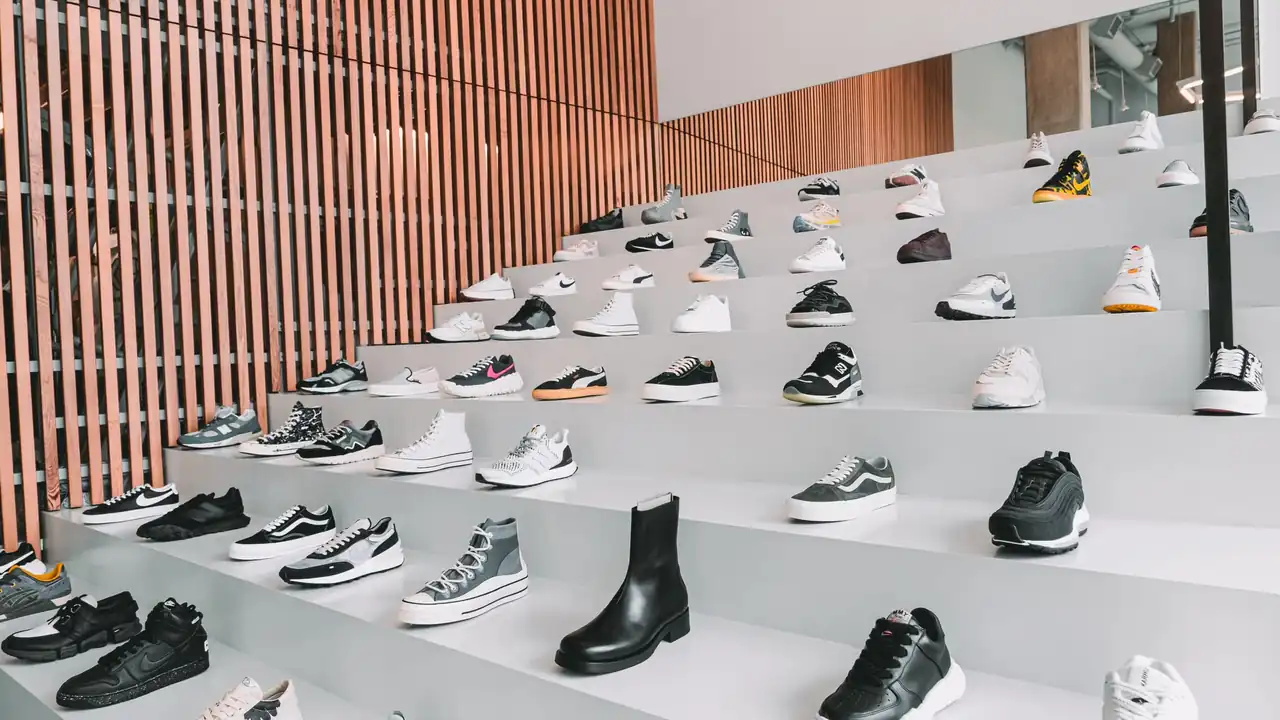
Imagen: Ono Kosuki / Pexels
The equivalence between French and European sizing often raises doubts because it does not always follow an intuitive rule in online stores. In practice, the FR and EU systems are very close, but they are not identical across all manufacturers, and that slight difference is enough for a shoe to end up too tight or a little loose.
The useful takeaway is this: in adult footwear, a French size is usually practically the same reference as the European one or, depending on the brand and model, may vary by small fractions. The real difference appears when converting it using foot length, because the size describes not only a number, but also a last, a width, and a fit that change from one brand to another.
Why French sizing still appears in shoes sold in Spain
The French system has not disappeared from the shop window, even though in Spain shoes are bought and labeled almost always with European sizing. Many international brands manufacture in France or work with continental patterns, and that is why FR still appears in product pages, boxes, and technical guides. For the consumer, that means one simple thing: it is not enough to look at the number; you should understand what it represents.
European sizing is commonly associated with the Paris point system, a historical scale that calculates footwear from the inner length of the last. French sizing, in reality, is part of that same continental family, so both systems overlap, brush against each other, and are often confused. Hence a 42 FR and a 42 EU are read as approximate equivalents, although the final result depends on the manufacturer, the shape of the toe box, and the amount of room each model allows.
In sports, mountain, or running footwear, precision matters even more. A few millimeters can change foot support, pressure on the toes, or heel hold. That is why many brands do not stop at the number and add centimeters, half sizes, or their own charts. That information, although it may seem secondary, is often more reliable than generic conversion between countries.
Foot measurement matters more than the number on the box
Measuring the foot in centimeters remains the most reliable method for reducing mistakes. It is not a formality: it is a way to translate an abstract system into physical reality. A foot does not understand abbreviations, but it does understand length, width, and clearance in the toe box. If that foundation is wrong, any conversion between FR and EU becomes shaky ground.
Home measurement works well if done carefully. You only need a sheet of paper, a wall, and a pencil. Place the heel against the wall, mark the longest toe, and measure from the edge of the paper to the mark. Doing it at the end of the day usually gives a more realistic result, because the foot expands slightly with heat, walking, and effort. In snug footwear, that detail prevents returns and chafing.
Measuring both feet is essential. They are not the same in most people, and always choosing the larger foot reduces the margin of error. It is also advisable to add a small comfort allowance, especially in trainers and boots. That extra space should not be excessive; just a few millimeters are enough for the foot to breathe without sliding around inside the shoe.
How French sizing translates to European sizing in practice
The FR to EU conversion is usually straightforward in most adult shoes: typically the numbers match or stay very close. Thus, a French 40 usually corresponds to a European 40 in many brands, and the same happens with sizes like 38, 41, or 42. That closeness explains why in continental retail both codes are used almost as if they were the same language.
But that apparent match should not lead to complacency. Some brands make shoes with narrower lasts, others with wider ones, and some add a slight size variation depending on the type of footwear. A dress shoe with a pointed toe does not behave the same as an everyday trainer. The same number may feel tighter in an elegant model than in a trainer with flexible mesh.
The key is to cross three data points: number, centimeters, and shoe shape. When the three align, the purchase usually works out well. When only the number is considered, surprises increase. The consumer who compares the FR label with the EU one without checking foot length is exposed to a small error in appearance, but enough to ruin comfort on a long walk, a workday, or a light run.
In children’s footwear the issue changes somewhat. The foot grows quickly and the size cannot be treated as a fixed number for long. An equivalence that fits today may be too small in just a few months. That is why, for boys and girls, frequent measurement matters more than loyalty to a specific number. Charts help, but they do not replace tracking the foot’s actual size.
The margin between a proper fit and an annoying mistake
A shoe that is too tight does not just squeeze: it alters the stride, loads the forefoot, and encourages blisters, black toenails, and strain in the front of the foot. In sports, that excess pressure can be felt within minutes. In daily use, the problem builds up until it becomes a constant discomfort, almost invisible at first and quite obvious by the end of the day.
Too much room is not harmless either. Footwear that is too large allows the foot to move inside, rub with each step, and lose stability. The heel lifts and drops, the tongue shifts, and the sole does not support the foot where it should. In that situation, the feeling of security breaks down and the shoe becomes a small friction chamber.
The right size lets the foot move without giving it too much space. There should be some breathing room at the front, enough for the toes to spread naturally, but not so much looseness that the shoe falls out of sync with the stride. That difference is especially important in running and hiking, where the foot swells with effort and needs a bit more room than an office shoe.
What changes between women’s, men’s, and children’s sizes
Size charts are not universal when sex and age come into play. In the Anglo-Saxon market, for example, US sizing distinguishes between men and women with a numerical separation that complicates comparison. On the continent, by contrast, the European and French systems are more neutral, even though the last still varies according to the design.
In women’s footwear, the same foot length may be shared by several models that fit differently. A flat shoe, a sandal, and a training shoe rarely offer the same fit feel, even if they share the same number. The same is true for men, especially in footwear with a rigid structure or narrow toe box. Size helps, but it does not replace design.
In childhood, monitoring must be even more frequent. The foot changes quickly and what fits today may be too small in a matter of weeks if the size is very close to the limit. That is why children’s charts often include broad ranges, with approximate centimeter equivalents. That breadth is not a mistake; it is a way to reflect natural growth without turning every purchase into a guessing game.
Why brands do not size the same even if they share a country of origin
Size is a reference, not an absolute promise. Two pairs with the same number can feel different because the last, sole curvature, internal volume, and flexibility of the materials are not identical. A rigid material requires more precision; a softer one tolerates small differences better. That is why a 41 may feel perfect in one brand and slightly short in another.
Running shoes illustrate this problem well. A model with elastic mesh may forgive half a size, while a structured trainer in synthetic leather or with side reinforcements may feel tighter from the first wear. In hiking footwear, the situation becomes even more complicated, because the boot must work with technical socks, steep descents, and changes in temperature.
The manufacturer’s technical sheet is more valuable than a generic chart. When the internal length in centimeters is provided, that data is usually the most useful. If width and last type are also known, the purchase becomes more precise. In practice, a good conversion does not come from a single number, but from the sum of small clues that define the actual fit.
Common mistakes when comparing French and European sizing
The first mistake is assuming that all numbers mean the same thing. The temptation to see a repeated figure and accept it as correct is strong, but footwear does not work like a standard T-shirt. A size 42 can vary by brand, line, and even country of manufacture. Confusion increases if the purchase is made online, without the possibility of trying the pair on properly for a few minutes.
Another common mistake is focusing only on length and forgetting width. Some feet are not long or short, but wide, high in the instep, or with very pronounced toes. In those cases, the problem is not solved by simply going up a size, because the length improves but the fit may worsen at the heel. The shape of the foot and the shape of the shoe need to work together.
It is also a mistake to buy with only one use case in mind. The same pair should not be chosen the same way for a meeting, a hike, or a long run. Needs change, the foot responds differently, and comfort requirements vary. In sports footwear especially, it is wise to think about the moment of greatest effort, not just the instant you first put the shoe on.
The role of conversion in online shopping and returns
E-commerce has made an old problem visible: buying without touching. In the past, the salesperson could correct the choice on the spot. Now, the decision depends on a mix of charts, intuition, and prior experience with a specific brand. FR to EU conversion helps, but it does not eliminate uncertainty because each model behaves like its own territory.
That is why returns have become a central part of the shopping experience. An informed consumer does not just compare sizes; they also check whether the seller allows easy exchanges, whether the sizing guide includes centimeters, and whether the description mentions a narrow or wide last. That information, seemingly minor, saves time and reduces the frustration of receiving a pair that does not fit.
The best defense is still comparing with a shoe that already works well. Measuring the insole of a comfortable model, checking how much space remains in front of the longest toe, and noting the exact size that has worked best before is often more reliable than trusting only the printed number. Foot memory, in the end, is worth more than the label.
A useful equivalence, but never a blind one
The conversion between French and European sizing serves as a compass, not a verdict. It helps you orient yourself, reduces mistakes, and allows for more confident shopping, but it does not replace trying the shoe on or observing the actual fit. In footwear, as in so many material things, the body has the final say and the number only tries to keep up.
A successful purchase comes from a calm combination: measure well, check the manufacturer’s chart, understand whether the pair is narrow or wide, and let the foot have a little room without losing support. That combination turns an uncertain purchase into a reasonable choice. And in a shoe, what is reasonable can usually be felt from the first step: no pressure, no slipping, no rubbing.
There is less distance between FR and EU than it seems, but that small gap still matters. That is where the day’s comfort, heel rest, and toe freedom are decided. A correct number, read in context, prevents footwear from becoming a burden. And that, for a foot, is already a lot.



How to prevent thigh chafing: causes and real solutions

Women’s running windbreakers: seven jackets and how to choose

Do more workouts get rid of soreness? A guide for runners

Jaén Half Marathon 2026: Record 3,800 Runners Registered

Men’s short running tights: how to choose the right pair

World Triathlon confirms data breach involving medical data

Izan Edo targets podium at Miyazaki World Cup

María Pérez ranks ninth in World Athletics’ 2026 top ten

Dos Santos, Duplantis and Sawe: World Athlete of the Year finalists

San Silvestre Vallecana 2026: 42,000 places, prices and start times

 Races3 months ago
Valencia Half Marathon 2027: date and registration

 Races3 months ago
Valencia Marathon 2026: entry, ballot and course

 Reviews and Comparisons4 months ago
Asics Gel-Roadmiles 3 for men: review and current price

 Reviews and Comparisons4 months ago
Asics Gel Sonoma 8 Gore-Tex: complete analysis for trail and rain

 Sneakers3 months ago
Saucony Endorphin Pro 4: full review and verdict

 News5 months ago
Strava API 2026: what changes for clubs, challenges and runner apps?

 Reviews and Comparisons5 months ago
Nike Alphafly 3: opinions, sensations, and real key points

 Reviews and Comparisons4 months ago
Under Armour running shoes review 2025-2026: models and key features

 Sports Equipment4 months ago
Shoe sizes in cm: a clear guide to getting the right fit for your footwear

 Sneakers3 months ago
Skechers GO RUN Consistent 2.0 analysis: comfort and limits

 News5 months ago
Valencia Marathon 2026 route: key tips to train and run better

 Sneakers4 months ago
Adidas Adizero Boston 13 for men: review and verdict