Reviews and Comparisons
How has this mountain running model evolved to run more safely?
A leap in quality in fit, grip, and stability to gain confidence on technical terrain and on long rides.

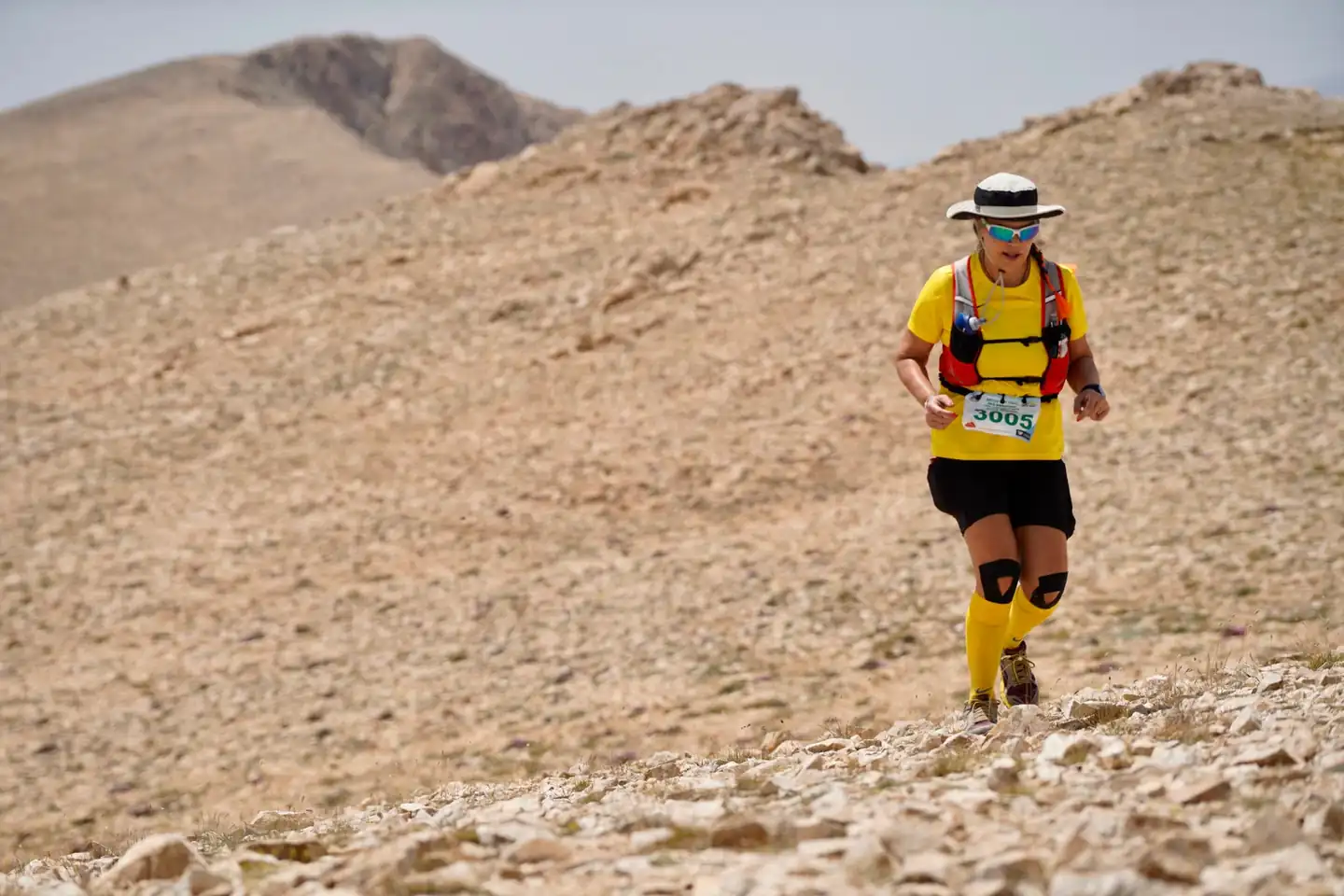
The most important improvement in a mountain model is not always visible at first glance. Sometimes the silhouette does not change, nor the foam, nor even the weight on the spec sheet. What changes is something more subtle and decisive: the way the foot feels held when the trail breaks apart, the security on a descent with loose stone, or the confidence to keep the pace without constantly correcting every landing. In trail running, that feeling matters as much as the grams or the millimeters of the midsole.
In this evolution, the big news is precisely that. The redesign aims to fix the weakest point of the previous version and turn an already competitive shoe into a more coherent option for moving confidently in the mountains, especially when the distance gets longer and the terrain demands precision. The result is a more refined profile, with better midfoot support, a balanced cushioning base, and a outsole capable of responding without drama on fast routes, moderately technical sections, and long outings.
A finer adjustment to gain confidence on the terrain
The big leap is in the closure system. Compared with a classic lace-up, the dual-dial solution distributes pressure better and secures the foot with a more technical understanding of fit. It does not turn the shoe into an armored boot, but it does reduce that small amount of looseness that is immediately noticeable in the mountains, especially on uneven footing and on descents where the foot tends to slide forward.
That change, which may seem minor on paper, alters the whole experience. When the foot is held more securely, the shoe works as a more solid block and the stride loses some of that inner-noise feeling that becomes tiring over the miles. In long races, where fatigue magnifies any imperfection, a more even lockdown acts like the fine tuning of a well-made tool: it does not dazzle, but it prevents many small mistakes.
The perception of the upper also changes. The upper prioritizes ventilation and lightness, but it no longer feels as loose or as imprecise as in the first release. The last still leaves reasonable room in the toe box, something very useful for those who appreciate freedom for the toes, although the overall package now conveys a slightly more contained feel. It is an improvement that favors those looking to run fast without giving up a more stable sensation.
The midsole as the foundation for a more ambitious use
The foam is one of the model’s pillars. The midsole offers an interesting balance of cushioning, responsiveness, and apparent durability. It is neither excessively soft nor does it have the nervous rebound of a road shoe, but it does return energy with enough liveliness so the stride does not sink in. That mix fits mountain running very well, where efficiency matters more than the brilliance of a first impact.
With a height of around 30 millimeters, the platform aims to protect without raising the center of gravity too much. That matters a lot when the terrain alternates between compact tracks, rooty trails, and rocky sections where a platform that is too tall can take away composure. The feeling is of cushioning that is firm and friendly at the same time, designed to log hours without turning each footstrike into a battle against the shoe itself.
In long races, that consistency makes the difference. A foam that responds without becoming unstable makes it possible to run with less muscular tension and save energy for the sections that truly punish. The midsole does not need to steal the spotlight; it only needs to support, delay fatigue, and keep you moving. In this case, the proposal follows a very convincing logic for mountain marathons and short or medium ultras where pace still matters.
Grip and outsole: the part that turns confidence into pace
The outsole uses a solution already well known in trail running for a simple reason: it works. The combination of Vibram Litebase and a restrained lug pattern reduces weight without completely sacrificing traction. It is not trying to be an extreme outsole for deep mud, but rather a versatile base for dry ground, rock, mixed tracks, and trails where grip needs to be consistent, not spectacular.
On compact surfaces, the response is very solid. The rubber bites with assurance and the lug layout helps you read the ground better at faster steps. In more broken areas, where precision depends as much on the eye as on the sole of the foot, the outsole maintains enough connection to the terrain to avoid forcing an awkward stride. That makes the model a very logical option for anyone running in the mountains with the intention of going fast without sacrificing too much protection.
What is interesting is that grip stops being a visible problem. When a shoe conveys that traction is under control, the runner can focus on the line, the breathing, and the effort. Over long distances, that peace of mind is gold: it reduces corrections, saves mental energy, and lets the terrain become part of the background rather than the obstacle.
More security without giving up a lively feel
The greatest merit of this evolution is that it does not stop at fixing a single flaw. The new closure, the balanced midsole, and the lightweight outsole build a rounder package. The shoe is still fast, but now it conveys a more mature feeling, less fragile and better prepared to treat the mountains as a changing environment rather than a perfect test track.
That becomes especially noticeable when terrain variations appear. On flowing sections, the model moves easily and does not force you to fight the platform. On more open descents, the improved lockdown reduces the sense of losing control. And in long sessions, where fatigue often amplifies small shortcomings, the extra stability helps maintain cleaner technique for longer.
It is not an armored shoe, and it does not aim to be one. Its language remains light, technical, and more running-oriented than hiking-oriented. The balance lies in offering a reasonable dose of protection without dulling the liveliness of the ride. That combination explains why it works better on runnable terrain, with reasonably friendly mountains, than in extremely broken ground or on very aggressive descents.
Just enough protection to run far, but not for everything
There is still room for improvement in the toe box and the upper. The upper is not the most robust in the segment and, although the model breathes well and does not feel bulky, it still does not convey the armored feeling some runners look for when the route is full of sharp stone and repeated impacts. It is a clear bet on reducing weight, and any bet like that has a cost.
That does not make it fragile, but it does make it less suitable for those who prioritize absolute protection. In the mountains, where every hit and every scrape count, there are use cases that demand more material and more shielding. Here the overall feeling is different: a cleaner build, designed for running and not for surviving anything and everything. That difference matters when compared with tougher and heavier models.
Durability also raises reasonable long-term doubts. Not because of any obvious weakness, but because the upper is designed with a very fine balance between lightness and support. In trail running, time eventually reveals whether that balance stands up well to wear or falls short after many days of use. For now, what it offers is a convincing read for training and racing where weight matters as much as the material’s resistance.
Which type of runner benefits most from this proposal
Its ideal ground is runnable trail with a mountainous character, but without excessive harshness. It works well on tracks, flowing trails, mountain marathons, and long races where pace still matters. It also makes sense in mountain sessions where you want a fast shoe but one that is somewhat more contained than a pure racing model.
On the other hand, it loses some of its purpose when the route becomes a field of continuous obstacles, with very technical descents, loose rock, and a need for a more substantial structure. In those scenarios, runners often appreciate a more stable chassis, a more protected toe box, and a more aggressive grip feel. This shoe prefers fluidity over toughness.
That places it in a very specific spot in the market. It is not competing to be the most radical or the most cushioned, but to offer a balance between speed, precision, and enough comfort to rack up many kilometers. It is a serious answer for those who value running with lively sensations, but without paying the price of an insecure last or an outsole that is too aggressive for all-around use.
What this evolution says about the brand in the mountains
The change reflects a clear maturity in the brand’s strategy. Signature traits such as the wide toe box and low-drop philosophy remain, but the focus is no longer ideological; it is functional. The goal seems less about defending an abstract idea of running and more about offering a useful tool, refined to perform in an increasingly demanding segment.
There is also an important lesson in listening to users. When an initial launch leaves good ideas but does not fully come together because of fit or overall solidity, the next version has to respond in that area. Here, the improvement to the closure system is not decoration, but the piece that organizes the rest of the design. That kind of correction does change the real user experience.
The final result is more believable. It no longer feels like a half-promising proposal, but like a shoe with clear arguments to compete in the mountains without hiding its limits. And in a market saturated with adjectives, that is more valuable than it seems: a visible improvement on the foot, not just on the spec sheet.
A model that gains where it once lost ground
The final reading is quite clear: this evolution fixes the weakest point and strengthens what already worked. The midsole remains an important asset, the outsole maintains reliable traction, and the new fit adds security at key moments. The package becomes more complete and also more in line with its vocation as a shoe for going far without losing spark.
Its value lies not only in improving, but in how it improves. It does not reinvent the concept; it polishes it. And in trail running, that is often wiser than making a sharp turn. When the base was already good, fine-tuning the lockdown, reducing the feeling of looseness, and maintaining the balance between weight and protection can be the difference between a correct shoe and one that is truly recommendable for demanding use.
Even so, it is not a universal solution. The toe box could protect more, the upper is not the most durable, and the more precise fit may not suit every foot equally well. But as a fast mountain model, with a focus on medium and long distances, it comes out strengthened. The evolution is not loud; it is effective. And in trail footwear, that is often what matters most.



How to prevent thigh chafing: causes and real solutions

Women’s running windbreakers: seven jackets and how to choose

Do more workouts get rid of soreness? A guide for runners

Jaén Half Marathon 2026: Record 3,800 Runners Registered

Men’s short running tights: how to choose the right pair

World Triathlon confirms data breach involving medical data

Izan Edo targets podium at Miyazaki World Cup

María Pérez ranks ninth in World Athletics’ 2026 top ten

Dos Santos, Duplantis and Sawe: World Athlete of the Year finalists

San Silvestre Vallecana 2026: 42,000 places, prices and start times

 Races3 months ago
Valencia Half Marathon 2027: date and registration

 Races3 months ago
Valencia Marathon 2026: entry, ballot and course

 Reviews and Comparisons4 months ago
Asics Gel-Roadmiles 3 for men: review and current price

 Reviews and Comparisons4 months ago
Asics Gel Sonoma 8 Gore-Tex: complete analysis for trail and rain

 Sneakers3 months ago
Saucony Endorphin Pro 4: full review and verdict

 News5 months ago
Strava API 2026: what changes for clubs, challenges and runner apps?

 Reviews and Comparisons5 months ago
Nike Alphafly 3: opinions, sensations, and real key points

 Reviews and Comparisons4 months ago
Under Armour running shoes review 2025-2026: models and key features

 Sports Equipment4 months ago
Shoe sizes in cm: a clear guide to getting the right fit for your footwear

 Sneakers3 months ago
Skechers GO RUN Consistent 2.0 analysis: comfort and limits

 News5 months ago
Valencia Marathon 2026 route: key tips to train and run better

 Sneakers4 months ago
Adidas Adizero Boston 13 for men: review and verdict