Reviews and Comparisons
The North Face Vectiv Eminus: the most sensible gateway into trail running
A comfortable, stable and versatile option to get started in the mountains without giving up protection or grip.

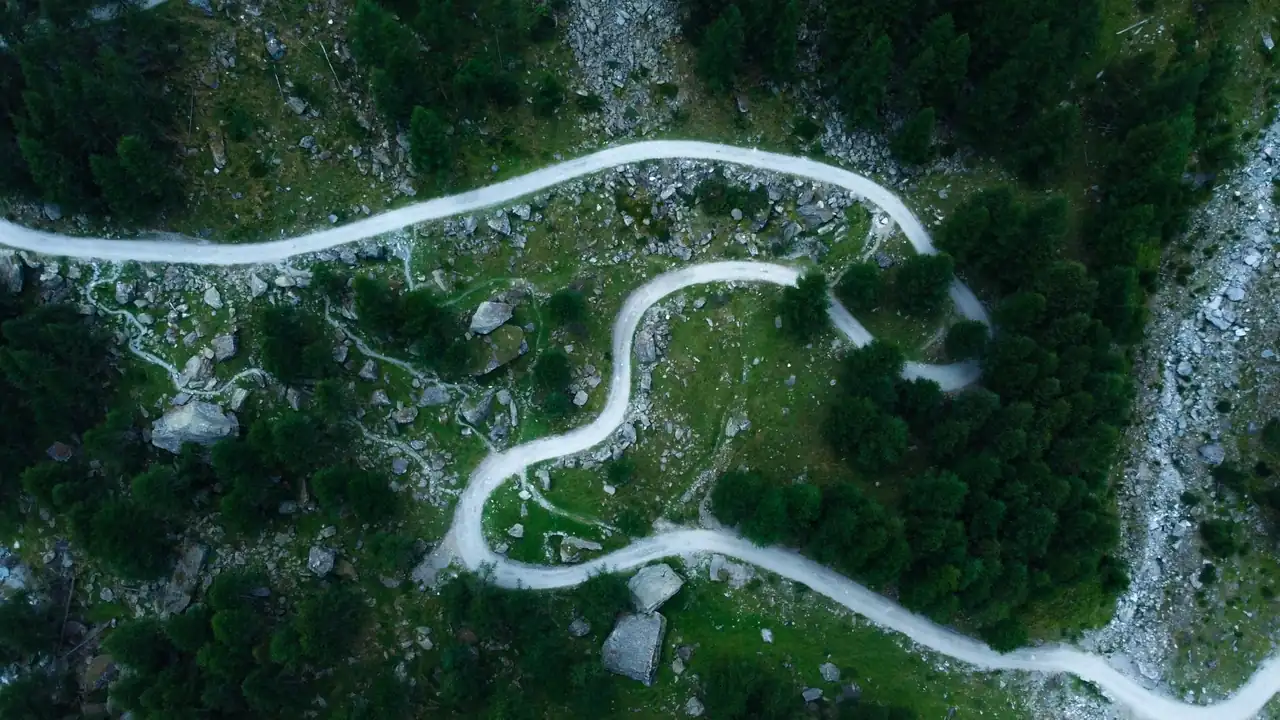
Imagen: Pixabay / Pexels
The North Face Vectiv Eminus occupies a very clear place within the brand’s catalog: it is the friendliest option for anyone who wants to leave the pavement and head into the mountains without making too big a leap in technical demands or price. Its approach is designed for easy runs, compact trails, and mixed outings where comfort matters more than aggressiveness.
In a market that is increasingly full of plates, foams with flashy names, and profiles very much geared toward competition, this model stands out for something less showy and more useful: doing the basics well. It cushions with confidence, protects just enough, and offers a stable ride that inspires trust from the very first step-in. That explains why it often appears among recommendations for people starting out in trail running or for those looking for a simple training shoe on easy terrain.
A philosophy designed for running without complications
The Vectiv Eminus does not try to impress with extreme numbers or a radical approach. Its logic is that of an entry-level mountain shoe: to accompany without demanding too much. In practice, that means it works best when the goal is to add kilometers regularly, keep comfortable paces, and move along non-technical trails, forest roads, or routes where the terrain does not force you to correct every footstrike.
That character makes it especially interesting for runners coming to trail from road running and who still do not want something too specific. It also suits those who alternate dirt paths and urban stretches, because its behavior does not feel clumsy on hard surfaces or uncomfortable when the ground becomes uneven. Its virtue lies in the transition: you can tell it belongs in the mountains, but it does not live shut away there.
There is also an important nuance in its personality: it is a sturdy shoe without feeling heavy. It does not give the sensation of a rigid block or an overly stiff model. Rather, it behaves like a calm training companion, one of those shoes that do not ask for the spotlight and that, precisely for that reason, end up being useful in more situations than you might first imagine.
What Vectiv technology brings to this model
The hallmark of this family is Vectiv, a system that combines a partial plate and a rocker geometry to encourage a smoother transition from landing to toe-off. It is not an explosive solution or a plate designed to squeeze out high paces, but rather a discreet mechanical aid that aims to make the stride feel more complete.
In this case, the plate is located mainly in the forefoot and is made of TPU, a durable plastic material that adds protection and a certain firmness without making the whole shoe overly stiff. The practical effect is easy to understand: the foot is a little better protected against impacts with stones or trail irregularities, and the stride gains a touch of stability that is appreciated when the ground is not uniform.
The midsole uses single-density EVA, a classic choice compared with more complex solutions. In exchange for not chasing gimmicks, it offers consistent cushioning that is easy to read. With 30 mm in the heel and 24 mm in the forefoot, the 6 mm drop places this shoe in a very reasonable zone for general use: enough to provide comfort for heel strikers, but without losing the feeling of controlled contact with the ground.
Cushioning, support, and running feel
The first impression when putting them on is usually marked by comfort. The whole package gives off a friendly feel, with padding that wraps the foot without excess and a base that helps maintain stability when the terrain stops being predictable. It is not a soft shoe in the spongy sense of the word, but it is protective and pleasant for training during medium-distance outings.
That balance between protection and responsiveness is one of its main strengths. The Vectiv Eminus does not aim to deliver a flying sensation or compete with more reactive models, but it also does not sink underfoot the way some shoes very focused on passive comfort do. The result is a solid-feeling run, where each landing feels fairly contained and the foot does not wobble around.
The presence of the rocker, that rolling effect that helps forward motion, adds fluidity to the whole. It does not turn the shoe into a fast tool, but it does prevent the stride from becoming flat or heavy. That small help in transition is especially useful in recreational trail running, where the accumulation of steps over changing terrain can take more of a toll than it seems at first glance.
An upper that prioritizes comfort over armor
The upper follows the same overall philosophy. It is built with a breathable mesh and seamless overlays that prioritize a comfortable fit over extreme protection. You can feel that in the hand and also when you slide your foot in: the sensation is closer to that of a comfortable training shoe than to a very rigid mountain boot.
The heel collar and tongue are well padded, something that makes a difference on long outings or during extended use. Comfort in these areas matters a lot, because a small rub can ruin an otherwise solid experience. Here, the construction helps the foot go in easily and stay secure without excessive pressure.
There is also a toe cap reinforcement that protects against hits with stones or loose roots. It is not armor, and it does not try to be. It is sensible protection, the kind that is never out of place in a shoe for mixed terrain and that gives a reasonable margin when the trail gets a bit more chaotic. The whole package gives the impression of footwear that is well resolved for everyday use, but with enough trail language not to feel out of place away from the pavement.
The SurfaceCTRL outsole and the terrain where it fits best
The outsole uses the brand’s own SurfaceCTRL compound, a rubber designed to provide traction in both dry and wet conditions with decent durability. On compact trails and firm paths, the performance is convincing. The shoe bites well into the ground, maintains a generous contact surface, and conveys confidence without asking the runner for too many concessions.
The lugs, at 3.5 mm, are large and fairly widely spaced. That layout helps moderate mud not to clog as easily, and allows the shoe to cope better on somewhat broken trails. In return, it does not reach the aggressive grip level offered by more specialized models for soft, wet, or very muddy terrain. Its natural ground is on the more runnable side of the mountains.
That is why it is so important to place it correctly: it works best on roads, compact trails, and non-technical routes. In that context, traction is reliable and the whole package makes sense. If the ground becomes very loose, if there are excessively wet rocks, or if the route goes fully into thick mud, the model still performs, but it no longer stands out with the same clarity. It is not designed for deep mud or for very broken descents that demand a more aggressive outsole.
Runner profile and everyday uses
The Vectiv Eminus is clearly aimed at those who value comfort more than extreme precision. It is a logical choice for neutral runners who want a stable, easy-to-wear shoe that is versatile enough for regular outings. It does not force you to change your technique or ask for a very specific running style, and that broadens its potential audience.
It also suits those who combine running and hiking in the mountains, or runners who head out without obsessing over pace. Its profile makes it comfortable on long days, in easy sessions, and on those days when the body appreciates a friendly base underfoot. Some shoes push you forward; this one, more than anything, accompanies you.
Its use is not limited to training. The door to trail concept suits it well, because it handles the initial kilometers on asphalt or in the park without drama before entering dirt paths. That double life makes it an interesting ally for anyone who leaves from home and does not always have a clean transition to the mountains. In that scenario, the mix of cushioning, stability, and moderate grip makes a lot of sense.
What it feels like compared with other options from the brand
Within the Vectiv family, this model occupies the most accessible step in spirit. It does not seek the explosiveness of the more performance-oriented versions or the aggressiveness of the models designed for racing. Its value lies in offering a calmer, more controlled, and less demanding experience for recreational runners or for those just getting into trail running.
Compared with alternatives from the same house with a more technical focus, the Vectiv Eminus gives up a little bite and response in exchange for greater ease of use. That is not a disadvantage in itself; in fact, for a large part of the public, it may be exactly what they need. The mountains do not always call for a sharp weapon. Sometimes they call for a shoe that does not complicate the outing and lets you run without constantly thinking about the terrain.
The overall feeling is that of a stable, comfortable, and logical shoe. It moves well when speed is not the absolute priority and when the goal is to accumulate kilometers with a reasonable degree of protection. At that point, its proposal makes sense and has a fairly well-defined identity, something that is not always found in entry-level models.
Price, positioning, and real value
When it hit the market, its reference price was around 130 euros, a reasonable figure for a trail shoe with a partial plate, proprietary outsole, and careful construction. Over time and depending on the store, it can be found at a discount, which makes it much more attractive for anyone looking for a serious option without moving into the higher price ranges.
Its value does not depend only on cost, but on what it delivers in return. It offers a balanced combination of cushioning, protection, and traction, with a construction that does not rely on unnecessary embellishments. That places it in an interesting spot among entry-level mountain shoes: it is not the cheapest, but it is one of the models that best justifies its price through performance and overall coherence.
For many runners, that relationship between cost and real-world use matters more than any performance label. A shoe that performs well day to day, that does not bother you, and that gets the job done without surprises usually stays in a runner’s rotation longer than another one that looks more spectacular on paper. And in that sense, the Vectiv Eminus has very solid arguments.
Who it makes the most sense for, and where it should not be pushed
There are profiles for which this shoe fits almost naturally. The first is the road runner who wants to make the leap to the mountains with a wide margin of comfort and safety. The second is someone with mountain experience who needs a calm shoe for training on roads and easy trails. The third is anyone looking for a versatile model for mixed outings from home.
It can also be appealing to medium-weight runners who value generous cushioning without going to the extreme. The platform, rocker, and partial plate create a package that is stable enough to inspire confidence on non-technical terrain. That combination makes more sense when the priority is movement control rather than pure speed.
What you should not do is ask it for what it never promised. It is not the best choice for very technical races, broken descents, constant mud, or demanding mountain paces. It is also not designed for anyone looking for a radically lightweight feel. Its territory is elsewhere: sustained outings, compact trails, and that part of trail running where the foot needs less spectacle and more company.
A shoe that understands everyday mountain running well
In a category saturated with increasingly extreme proposals, the Vectiv Eminus reminds us that trail running is also built from normality. Its proposal is sensible, balanced, and easy to understand: good cushioning, a comfortable fit, a plate that adds protection, and an outsole that responds well where it really matters for this type of use.
It does not aim to dominate headlines or sell an idea of over-the-top performance. Its merit lies in something less noisy and more lasting: allowing a runner to enter the mountains with a sense of control, without having to learn to live with a shoe that is too aggressive or too complex. For many profiles, that is worth more than a long list of technologies.
That is why it still makes sense as a reference within The North Face’s entry-level range. It is an honest shoe, one of those that do what they should and do not pretend to be something else. In trail running, where the reality of the terrain usually puts every model in its place, that technical honesty ends up being a first-rate virtue.
Este artículo contiene enlaces de afiliado: si compras a través de ellos, se genera una pequeña comisión sin coste adicional para ti. Más información.



How to prevent thigh chafing: causes and real solutions

Women’s running windbreakers: seven jackets and how to choose

Do more workouts get rid of soreness? A guide for runners

Jaén Half Marathon 2026: Record 3,800 Runners Registered

Men’s short running tights: how to choose the right pair

World Triathlon confirms data breach involving medical data

Izan Edo targets podium at Miyazaki World Cup

María Pérez ranks ninth in World Athletics’ 2026 top ten

Dos Santos, Duplantis and Sawe: World Athlete of the Year finalists

San Silvestre Vallecana 2026: 42,000 places, prices and start times

 Races3 months ago
Valencia Half Marathon 2027: date and registration

 Races3 months ago
Valencia Marathon 2026: entry, ballot and course

 Reviews and Comparisons4 months ago
Asics Gel-Roadmiles 3 for men: review and current price

 Reviews and Comparisons4 months ago
Asics Gel Sonoma 8 Gore-Tex: complete analysis for trail and rain

 Sneakers3 months ago
Saucony Endorphin Pro 4: full review and verdict

 News5 months ago
Strava API 2026: what changes for clubs, challenges and runner apps?

 Reviews and Comparisons5 months ago
Nike Alphafly 3: opinions, sensations, and real key points

 Reviews and Comparisons4 months ago
Under Armour running shoes review 2025-2026: models and key features

 Sports Equipment4 months ago
Shoe sizes in cm: a clear guide to getting the right fit for your footwear

 Sneakers3 months ago
Skechers GO RUN Consistent 2.0 analysis: comfort and limits

 News5 months ago
Valencia Marathon 2026 route: key tips to train and run better

 Sneakers4 months ago
Adidas Adizero Boston 13 for men: review and verdict