Reviews and Comparisons
This is the APL model that has attracted so much attention and why
A look at the design, technology, and price of this APL model, key to understanding its current appeal.

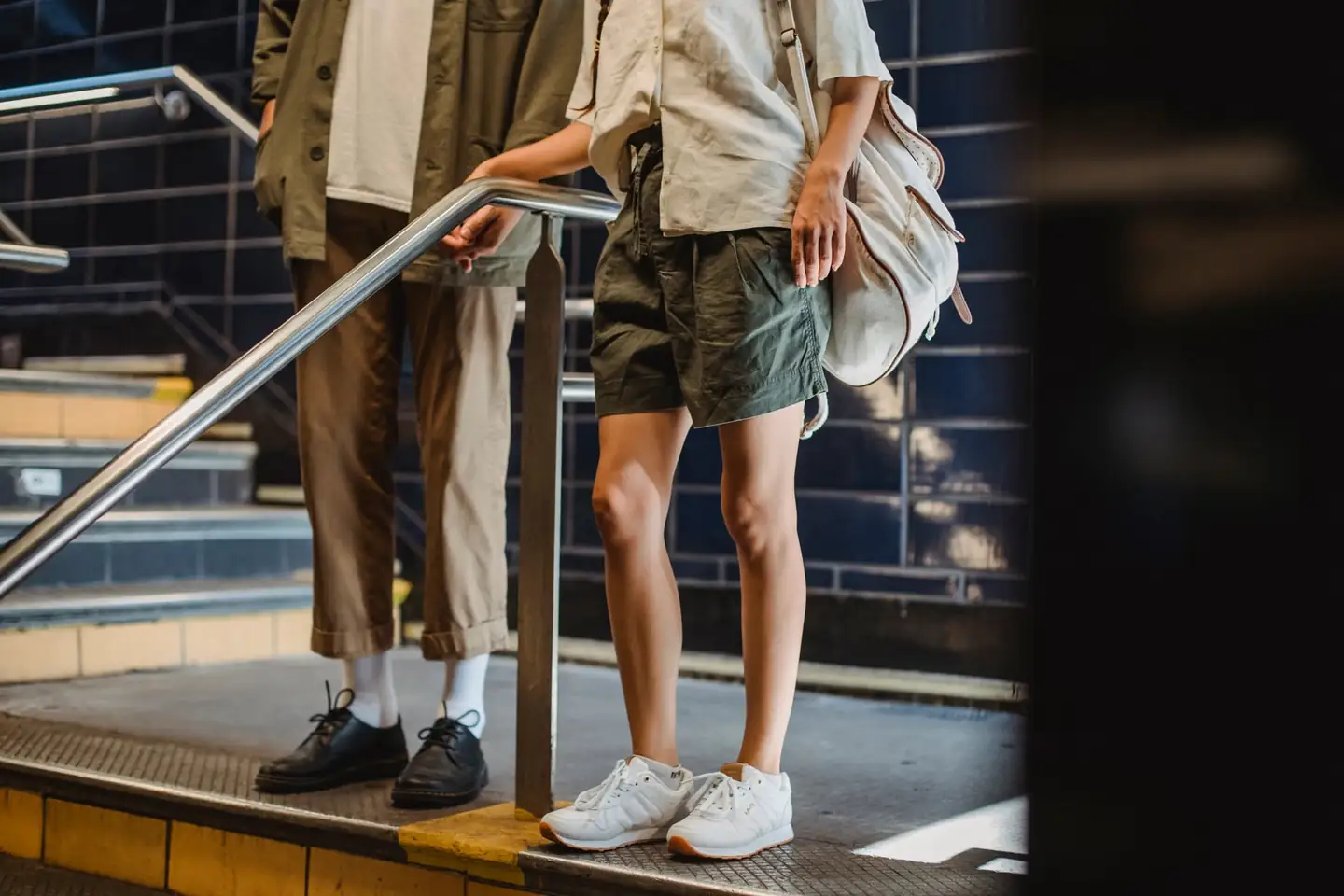
APL has carved out its own space in a saturated market of sneakers that promise much the same thing: more bounce, more comfort, more style. The difference is that this Los Angeles brand turned the mix of performance and premium aesthetics into its calling card, and it did so with a narrative that began in basketball and ended in urban culture, sporty luxury, and media conversation.
The model that has drawn the most attention combines a lightweight construction, a sock-like fit, and a midsole designed to cushion without losing a responsive feel. It is not a sneaker meant to go unnoticed, nor is it a purely technical tool; its appeal comes from that middle ground where a sports shoe begins to behave almost like a design object.
The history of APL helps explain why its name carries so much weight. The brand was founded in 2009 by twins Adam and Ryan Goldston, former collegiate athletes at the University of Southern California. Its first major splash came with the Concept 1, a basketball model that featured a compression spring system and was ultimately banned by the NBA in 2010 for offering an unfair competitive advantage. It was the first time the league had ever barred a sneaker for performance reasons, and that decision, far from cooling interest, multiplied it.
Since then, APL has cultivated a very specific identity: high-end athletic footwear with a luxury language. It does not just make sneakers for running or training; it aims for each model to have visual presence, clean finishes, and the feeling of a product cared for down to the last detail. That combination, in an industry where many brands compete on nearly identical performance, has given it visibility disproportionate to its size.
From the NBA ban to a cultural phenomenon
APL’s notoriety cannot be explained by technology alone. It is explained, above all, by the story. When a sneaker gets banned by the NBA, it stops being just a product and becomes part of a story that mixes innovation, controversy, and prestige. That episode turned the brand into a rarity: an independent project capable of unsettling the big industry and placing a technical debate at the center of media attention.
The brand also knew how to tap into the interest of athletes, celebrities, and entertainment figures. Among its followers are names associated with sports, fashion, and show business, from Sofia Richie to members of the Kardashian family, as well as appearances by John Cena and visible collaborations or alliances in other high-profile circles. In 2021, Oprah Winfrey included the Lusso Slides on her Favorite Things list, another reputational boost that reinforced the idea that APL was not just any niche brand, but one with broad ambitions.
That multiplying effect has a lot to do with the current era. The occasional runner, the gym-goer, and the urban sneaker buyer no longer look only at the sole or the weight; they also look at the story, the image, and the kind of life the model projects. APL has understood that sensitivity better than many larger brands, and that is why its sneaker pairs often circulate in both sporting settings and fashion editorials or luxury stores.
How the most talked-about model is built
The technical appeal of this model rests on its upper, where APL uses a near-seamless knitted mesh known by the brand as TechLoom. The result is a flexible, breathable vamp that is visually very clean, with a texture that feels more like a precision-knit piece than a conventional sneaker. The idea is to reduce weight and add fit without cluttering the design with unnecessary reinforcements.
That approach creates a very specific sensation when you put it on: the foot is wrapped, held gently in place, and the whole shoe feels light even before you start walking. Hollow laces, elastic panels at the tongue and collar, and external bands that strengthen the lateral structure complete this effect of controlled wrapping. It does not squeeze like a racing boot, but it also does not offer the relaxed looseness of a traditional casual sneaker.
At the same time, the midsole uses FutureFoam, a foam formulation developed by the brand to seek a balance between cushioning, energy return, and softness underfoot. APL has spoken of a long development process of about 24 months, which fits the model’s premium positioning. It is not trying to be a rigid platform or just a soft cloud; it aims to offer a smooth transition, a gentle touch, and a response that follows the motion without taking over.
Added to that is a padded insole and a geometry with horizontal channels that promote flexion. Taken together, the design feels closer to a comfortable, continuous walking experience than to an aggressive sneaker for hard intervals or sharp pace changes. That is important, because its fame can sometimes make people think of extreme performance when, in reality, its strength lies in balance.
Why its fit divides opinions so much
One of the most repeated points in reviews and product pages is the snug fit. For many users, the model feels narrow or even half a size small, especially if the foot is wide or if a roomier toe box is preferred. For others, however, it fits true to size for medium-width feet and performs well if you choose your usual size. That duality is no small detail: it explains why not everyone has the same experience with the sneaker.
The reason lies in its construction. The sock-like upper, the enveloping hold, and the emphasis on lightness sacrifice some interior space. On a narrow or medium foot, that can translate into a precise and pleasant feel; on a wider foot, it can become unnecessary pressure. The lesson is simple: this is not a universal mold, but a design with a very marked personality.
The user profile also matters. Someone looking for a sneaker to walk a lot, travel, or spend hours on their feet will often value that feeling of embrace and soft support. Someone wanting it for intense training, direction changes, or more abrupt efforts may find that the structure does not provide the level of firmness they would expect from a more classic running or training model. Its virtue lies in controlled comfort, not in hardness.
The weight figure and what it says about how it behaves
Across different market references, this model appears at around 7.7 to 8 ounces, though the figure can vary slightly depending on size and source. In one specific women’s size, a weight close to 9 ounces has been recorded, which is logical when measurement systems change. In any case, this is not a heavy or clunky sneaker. Its look may suggest solidity, but on foot it behaves more lightly than it appears.
That lightness matters because it shapes the everyday experience. A lightweight sneaker tends to feel less tiring on long walks and makes each step seem more agile, especially in urban settings. However, low weight is not everything: if it is combined with a base that is too soft or with limited support, the sensation can become unstable. Here APL tries to avoid that problem with a structure that distributes pressure and an 8-millimeter drop, intermediate enough not to force an extreme posture.
The result is a geometry that works well for relaxed walking, daily commutes, and mixed use where the sneaker has to perform without demanding too much from the body. It is not trying to completely change your stride; it is trying to accompany it smoothly. And that nuance, in such a competitive segment, matters more than it might seem.
Where it truly shines and where it falls short
Its natural setting is the street. It works especially well for walking, getting around the city, running errands, traveling, or logging hours of wear with a soft feel underfoot. It can also fit very easy runs or low-demand gym sessions, as long as the fit is comfortable and the user does not expect a particularly firm base for powerful efforts.
On asphalt and regular surfaces, it moves with ease, helped by a two-piece rubber outsole that provides enough traction for urban use. That setup makes a lot of sense in a sneaker that does not want to be a brick. What it gains in smoothness it loses in capability off-road: it is not designed for trail, uneven surfaces, or sudden terrain changes.
The limitation also appears when the intensity increases. For intervals, sprints, or sessions where lateral stability and immediate response are priorities, the forgiving design may fall short. The cushioning is generous, but not especially firm; the structure is comfortable, but not aggressively supportive. It is a sneaker that understands long walks better than demanding track work.
Aesthetics as part of the argument
If this model has generated so much conversation, it is not just because of how it feels, but because of how it looks. APL’s signature is in the clean finishes, the taut lines, and a visual identity that blends sport with an almost architectural feel. The upper’s knit, the sober or contrasting color combinations, and the absence of ornamental excess reinforce that image of a very measured product.
In a market where many athletic sneakers seem designed to fade into the background, APL does the opposite: it offers pieces that are recognizable from a distance. Its aesthetic value is part of its functional value, because many people no longer separate what they wear to move from what they wear to dress. That shift in habits explains why a sneaker like this appears so often in casual settings as well as in men’s and women’s fashion editorials.
The brand has also known how to build complete product families around that idea. Models such as TechLoom Pro, Streamline, Zipline, Superfuture, and Concept X show that APL does not improvise a single eye-catching silhouette, but has developed a recognizable language. That language is what fuels the interest: when someone buys one of its sneakers, they are not just buying foam and rubber; they are buying membership in a very specific aesthetic.
The price and the real question about its value
Market data places this model in the high range, with references in the United States around $350 and occasional discounts that have brought it down to about $315. In Europe, observed figures move across broad ranges, with references that easily exceed 250 euros and in some channels reach values close to 360 dollars or their local equivalent. This is not a cheap indulgence or an impulse buy.
That positioning forces a cold look at the whole package. At this price, buyers expect careful materials, solid execution, and a different proposition. In that sense, APL delivers a well-finished product, visually distinctive and comfortable for everyday use. The question arises when it is compared with pure running shoes or more versatile training models, which sometimes offer a better ratio of technical performance to cost.
That is why the real discussion is not just whether it is good or bad, but for whom it makes sense. If you value a mix of comfort, design, and exclusivity, the price fits better. If you want a highly complete sports tool or a pure performance purchase, the outlay makes you look more closely at other options. That ambiguity is precisely one of the reasons for its fame: it forces you to decide what matters more in a sneaker, use or image.
What reviews say and why they matter more than the slogan
User opinions tend to repeat several messages quite consistently. They talk about high comfort, a very striking design, and a fit that can feel narrow. There are also comments about moderate arch support and occasional notes about squeaking from the sole while walking. These are not anecdotal details when they keep appearing: they help paint the product’s real profile beyond the brand’s messaging.
What is interesting is that reviews do not present it as a miracle sneaker or as a disappointment. Rather, they place it in a fairly precise middle space: a comfortable sneaker for daily use, eye-catching and premium-feeling, but not the best choice if the priority is technical stability or demanding sports performance. That practical honesty is, in the end, what adds the most value.
In a market so saturated with identical messages, that kind of reading is worth gold. Real experience usually begins where advertising ends, and in this case the user ends up finding a sneaker that performs very well in its own lane, but does not pretend to do everything. That honesty makes it more interesting, even for someone who will never buy it.
Why a sneaker like this reflects the current moment in running and urban footwear
The interest this model generates goes beyond a single brand. It says a lot about how sports footwear consumption has changed in recent years. Today, people expect a sneaker to work for walking, traveling, dressing well, cushioning long hours, and sometimes running a little. The boundaries between performance, fashion, and everyday use have blurred, and APL operates right there, at that intersection.
That shift also explains the success of hybrid proposals. It is no longer enough for a sneaker to be fast or soft; it has to tell a visual story, feel good all day, and fit into an urban lifestyle. The APL model that has drawn so much attention fits that logic like a glove: it is not the most radical, nor the cheapest, nor the most stable, but it is one of the most recognizable.
In that sense, its journey helps explain an uncomfortable truth for many manufacturers: contemporary sports products no longer compete only on the stopwatch or in the lab. They also compete on the street, in photos, in perception, and in how a person feels wearing them for hours. APL has managed to turn that mix into a defining trait, and that is why its most discussed model continues to generate conversation long after launch.
A sneaker that is not trying to please everyone
The popularity of this model comes precisely from its lack of compromise with the average. It has a very defined design, a clear philosophy, and an audience that values the balance of luxury, comfort, and visual presence. It does not try to be universal or compete with the entire sports catalog on the market. That decision, risky but coherent, has given it character.
Anyone who approaches it finds a sneaker light, soft, eye-catching, and technically distinctive. Anyone expecting a roomier fit, stronger support, or a more training-oriented option may come away with a different impression. And that is one of the keys to its fame: the sneakers that truly spark conversation are often the ones that force people to take sides, not the ones that merely get the job done.
APL has turned that polarization into an advantage. The model that has received the most attention is not the cheapest, the most versatile, or the most extreme, but it is one of the most recognizable from the latest wave of premium footwear. Its success is explained by the combination of a singular story, careful construction, and an aesthetic that does not go unnoticed. In a market full of decent options, that is already a lot.



How to prevent thigh chafing: causes and real solutions

Women’s running windbreakers: seven jackets and how to choose

Do more workouts get rid of soreness? A guide for runners

Jaén Half Marathon 2026: Record 3,800 Runners Registered

Men’s short running tights: how to choose the right pair

World Triathlon confirms data breach involving medical data

Izan Edo targets podium at Miyazaki World Cup

María Pérez ranks ninth in World Athletics’ 2026 top ten

Dos Santos, Duplantis and Sawe: World Athlete of the Year finalists

San Silvestre Vallecana 2026: 42,000 places, prices and start times

 Races3 months ago
Valencia Half Marathon 2027: date and registration

 Races3 months ago
Valencia Marathon 2026: entry, ballot and course

 Reviews and Comparisons4 months ago
Asics Gel-Roadmiles 3 for men: review and current price

 Reviews and Comparisons4 months ago
Asics Gel Sonoma 8 Gore-Tex: complete analysis for trail and rain

 Sneakers3 months ago
Saucony Endorphin Pro 4: full review and verdict

 News5 months ago
Strava API 2026: what changes for clubs, challenges and runner apps?

 Reviews and Comparisons5 months ago
Nike Alphafly 3: opinions, sensations, and real key points

 Reviews and Comparisons4 months ago
Under Armour running shoes review 2025-2026: models and key features

 Sports Equipment4 months ago
Shoe sizes in cm: a clear guide to getting the right fit for your footwear

 Sneakers3 months ago
Skechers GO RUN Consistent 2.0 analysis: comfort and limits

 News5 months ago
Valencia Marathon 2026 route: key tips to train and run better

 Sneakers4 months ago
Adidas Adizero Boston 13 for men: review and verdict