Reviews and Comparisons
Best wide toe box running shoe brands for women
The brands that best accommodate wide feet combine a roomy toe box, removable insoles, and stable soles.

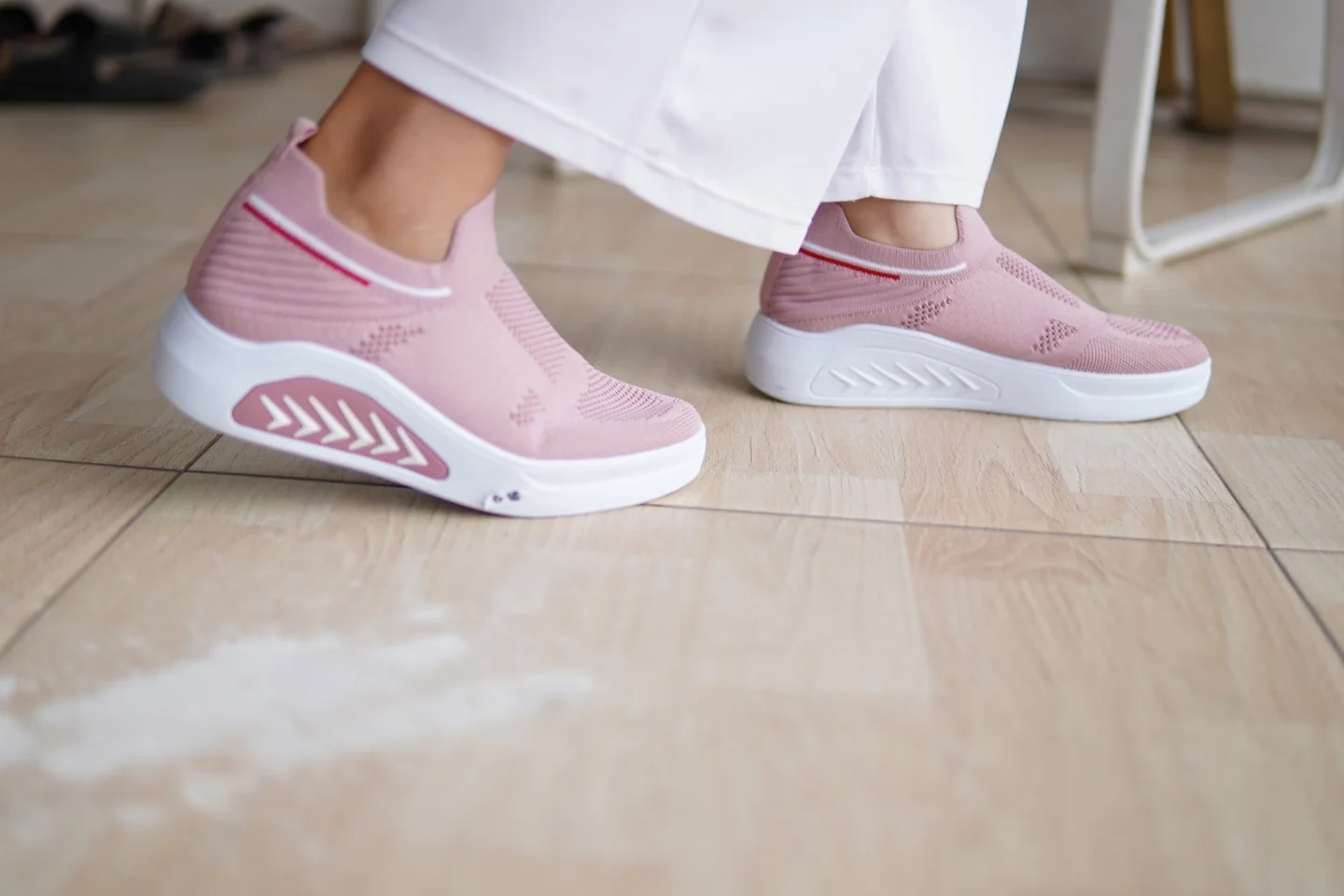
Choosing running shoes with more room in the forefoot can make a real difference when walking or running, especially during longer sessions. Brands catering to wider feet have refined their designs: it is not just about adding width, but also providing more interior volume, a roomy toe box, flexible materials and a stable base. For running, you also need to check that the shoe holds your foot securely and is designed for the activity.
Among the most highly regarded brands are Skechers, Pikolinos, Pitillos, Doctor Cutillas, G Comfort, Propet, AllRounder by Mephisto, and some Fluchos and Mustang lines. Each interprets special width in a different way, with models ranging from urban use to long walks, including options compatible with orthopedic insoles, seam-free versions, and lighter designs for everyday wear.
What distinguishes a good sneaker with a wide last
Not every sneaker that looks roomy truly is. Useful width is concentrated mainly in the metatarsal area and the toe box, where the toes need to spread out without being compressed. When that part fails, the foot looks for an exit wherever it can: it slides forward, rubs against the seam, swells, and ends up tired even if the size, on paper, is correct.
A wide last works best when it is paired with other elements. A removable insole allows you to gain interior space or insert a custom insole; an upper with no internal seams reduces friction; and a shoe with a wide-based sole helps distribute weight more evenly. These may seem like small details, but they are decisive for sensitive feet, bunions, hammer toes, or swelling at the end of the day.
In this area, specialized brands usually stand out because they do not improvise. Some prioritize soft leather, others the elasticity of the fabric, and others bet on cushioning technologies that reduce impact without making the sneaker overly soft. What matters is not only that the foot fits inside, but that it stays held naturally, like a well-fitted chair where neither support nor space is lacking.
The brands that best solve wide feet
Skechers has become a very visible reference thanks to the width of several of its models and its broad catalog of sizes and finishes. Its Relaxed Fit, Arch Fit, Glide-Step, Go Walk, Slip-ins lines and some BOBS or Sport variants often appear among searches for roomy footwear. The brand works a lot on lightness, memory foam, and easy fit, which makes it especially popular for walking, traveling, or getting through long days without feeling squeezed.
Pikolinos, on the other hand, brings a more artisanal approach and a very recognizable leather. Its casual-inspired models and some barefoot or natural-last offerings have gained ground among women who want a shoe that is kinder to the real shape of the foot. The brand fits well with users who value the flexibility of the upper and the feel of noble materials, especially for everyday use.
Pitillos and Doctor Cutillas occupy a very solid place in Spanish comfort footwear. Their sneakers and shoes in special widths usually stand out for combining generous fit, cushioned insoles, and finishes designed to avoid pressure on sensitive areas. In many cases, the appeal is not in a sporty look, but in discretion: understated models, easy to pair, and designed to last without becoming an uncomfortable compromise.
G Comfort and Propet clearly represent the idea of technical footwear for delicate feet. The former usually bets on wide lasts, practical closures, and soft materials with good adaptability; the latter works very well for compatibility with orthotic insoles and the absence of internal seams, something key when foot sensitivity no longer allows compromises. These are brands that often appear in specialized stores because they solve specific problems, not just aesthetic preferences.
AllRounder by Mephisto and some Fluchos lines complete the picture with models more focused on stability. Their better-gripping soles, cushioning, and support while walking are useful for women who need a firm stride, especially if the intended use includes many urban miles or long walks. In this segment, comfort is measured not only by softness, but by how the sneaker responds when the step is repeated again and again.
What each brand offers depending on foot type
Not all needs are solved with the same pattern. A wide foot with sensitive toes does not need the same thing as a wide foot with a high instep, nor does it match the case of someone who uses custom insoles. That is why some brands work better on internal depth, while others stand out in the toe box or in ease of adjustment through Velcro, elastic laces, or side zippers.
For bunions and mild deformities, the key is lateral space and a soft upper. Brands with elastic fabrics, soft leather, or seam-free panels usually reduce rubbing quite a lot. By contrast, for feet that swell throughout the day, a last that does not tighten at the end of the afternoon is more important, with some tolerance for changing volume. In those cases, a slightly longer size does not always solve anything; sometimes it just leaves the heel loose and makes stability worse.
When orthotic insoles are used, the right brand must offer real depth. A removable insole is not enough if the instep then feels overly sunken or the toe box becomes too low. The best options combine a removable insole, a stable heel counter, and enough height in the upper so that the adaptation does not reduce the foot’s useful space.
How to read labels without being misled by the name
The expressions special width, wide last, relaxed fit, or wide toe box do not mean exactly the same thing. Commercial language is useful, but it can be confusing if taken literally. A sneaker may feel roomy because of its elastic fabric, even if its structure is not truly wide. Another may be very spacious in length and yet narrow in the forefoot.
The best clue is usually in the combination of shape and technical specs. If a brand mentions removable insoles, breathable materials, a seam-free interior, adjustable closure, and a stable sole, the chances of getting it right increase. It is also worth checking whether the model retains volume in the front, because a more rounded toe box spreads the toes better than an overly narrow pointed toe.
There is another detail that makes a difference: depth. A shoe may look wide from the outside, but if the footbed is very flat, the foot ends up riding up on itself. That low-ceiling feeling is one of the most tiring, especially in summer or during long days. That is why the best special-width brands do not just widen; they also create vertical space where the foot can breathe.
Sport, urban, and walking models: not all demand the same thing
In sports sneakers, cushioning and stability matter just as much as width. A model for walking a lot in the city needs a firm base, soft response, and a fit that does not let the foot slide with each stride. Skechers, Propet, and some G Comfort lines work very well with that idea of footwear that is easy, light, and somewhat adaptable to repeated movement.
In urban models, the priority is usually balancing appearance and comfort. This is where Pitillos, Doctor Cutillas, and part of Pikolinos’ catalog come in strong, where a gentler shape does not give up a sober finish. These are sneakers that work with jeans, straight-leg pants, or transitional-season clothing, and do not seem forced to explain that they are designed for delicate feet. That matters more than it may seem: many users are looking for comfort, yes, but also discretion and a clean aesthetic.
For walking and prolonged use, materials and ventilation matter. Technical mesh, elastic fabrics, and soft leather with perforations can make the difference when the foot heats up or swells. In that area, overly rigid footwear acts like a closed box, while a well-designed shoe lets air circulate and better follows the body’s rhythm.
What signs show that a brand truly fits you
The first test is simple: the toes should be able to move without bumping into each other or the front. If you feel immediate pressure on the sides when you put on the sneaker, the model does not fit even if it looks nice or the size is the usual one. The foot does not understand marketing; it understands space, support, and friction.
The second sign is subtler: how the foot feels after a full day. Proper footwear does not leave deep marks, does not cause burning in the forefoot, and does not force you to change the way you walk. If by the end of the day the feeling is relief rather than wanting to kick them off as soon as you walk through the door, the last is on the right track.
The third clue is at the heel. If a wide sneaker makes the foot wobble, it is no good. Special width has to free the forefoot without losing support in the back. That is the line between comfort and poorly understood looseness, a difference that becomes very noticeable when walking fast, climbing stairs, or making long trips around the city.
The brands that most often appear in searches by women with delicate feet
In shopping searches, Skechers usually leads by volume, but not by exclusivity. Its broad catalog, the use of technologies such as Memory Foam, Arch Fit, or Slip-ins, and the variety of styles make many women see it as a starting point. Alongside it, Pitillos and Doctor Cutillas provide a more classic response, while G Comfort and Propet cover more technical needs.
Pikolinos gains ground when the priority is leather and visual and tactile flexibility. Its models fit well for those who do not want to give up a more natural look, with warm finishes and a less sporty feel. AllRounder by Mephisto, meanwhile, appears as a higher-end option for those looking for support and a sole that follows movement better without sacrificing elegance.
The Spanish market has also strengthened its offering with special-width lines from traditional manufacturers. This has meant that the search is no longer limited to finding a shoe that does not pinch, but to choosing among different degrees of width, closure type, material, and cushioning. The range has widened, and with it the chance of getting it right without resigning yourself to a generic model.
How to interpret prices, features, and expectations
In this segment, price often reflects more than the brand. An approximate range between 60 and 130 euros is common in mid- and high-quality models, although there are offers below that and higher-end options in technical lines or with premium materials. Paying more does not always mean getting it right, but there is usually a correlation between construction, sustained comfort, and durability.
The cheapest sneakers can work very well if the foot does not need too many special adjustments. On the other hand, when there are bunions, orthotic insoles, or great sensitivity to rubbing, it is worth scrutinizing depth, the insole, and the structure of the upper. Cheap footwear that fails in those areas ends up costing more in discomfort, marks, and early replacements.
Intended use also matters. For daily walking around the city, a light and stable sneaker may be enough. For standing at work, travel, or long days away from home, the margin for error shrinks and internal quality matters more than the outer design. The right brand is the one that solves the specific problem of the foot, not the one that catches the most attention in the shop window.
The real map of comfort starts with the foot, not the label
Choosing among the brands with the widest-last options is not about looking for a rare size, but about understanding the shape of your own foot. There are wide feet, yes, but also feet with high insteps, long toes, sensitive metatarsals, or a need for more volume for insoles. Each nuance changes the equation and explains why two women with the same size may need different sneakers.
The best brands do not just make more width; they make space better. When the toe box respects anatomy, the base supports firmly, the insole adapts, and the material follows without biting, walking stops being a constant negotiation. At that point, the footwear disappears from consciousness, which is the most honest proof that it has done its job.
The current offering allows for informed comparison, something that was much harder a few years ago. Today, the difference between a mediocre option and a good one lies in visible and measurable details: useful space, fit, flexibility, and response to the step. That is where specialized brands gain ground, because they have understood that a comfortable foot is not a luxury, but a way to carry the day better.
How to choose a wide fit for running
A roomy toe box can let your toes spread without pressure on a run. But a shoe that feels comfortable for walking is not automatically suitable for running: check that it is designed for the activity and that the heel and midfoot feel secure without being tight. Brands such as Skechers, Pikolinos, Pitillos, Doctor Cutillas, G Comfort, Propet and AllRounder by Mephisto offer different options, but fit and intended use can vary from one model to another. Choose by the individual shoe, not the brand name alone.
Try shoes later in the day or after being on your feet, when they may feel fuller, and wear the socks you normally run in. Make sure your toes can move, your foot does not slide during changes of direction, and there are no pressure points. If you use your own insoles, check that they fit without taking up too much of the available room. A stable base and a sole suitable for running matter too: extra width alone does not guarantee a functional fit.
Break in a new pair on a short, easy run before taking it on a long run or into a race. Watch for rubbing, redness, repeated pressure or discomfort that changes your stride. If these occur, stop or adjust the session and review the fit, lacing and socks; do not compensate with a size so large that your foot moves around. Avoid continuing to wear shoes that repeatedly cause discomfort. If pain or symptoms persist, consult a healthcare professional.
Este artículo contiene enlaces de afiliado: si compras a través de ellos, se genera una pequeña comisión sin coste adicional para ti. Más información.



How to prevent thigh chafing: causes and real solutions

Women’s running windbreakers: seven jackets and how to choose

Do more workouts get rid of soreness? A guide for runners

Jaén Half Marathon 2026: Record 3,800 Runners Registered

Men’s short running tights: how to choose the right pair

World Triathlon confirms data breach involving medical data

Izan Edo targets podium at Miyazaki World Cup

María Pérez ranks ninth in World Athletics’ 2026 top ten

Dos Santos, Duplantis and Sawe: World Athlete of the Year finalists

San Silvestre Vallecana 2026: 42,000 places, prices and start times

 Races3 months ago
Valencia Half Marathon 2027: date and registration

 Races3 months ago
Valencia Marathon 2026: entry, ballot and course

 Reviews and Comparisons4 months ago
Asics Gel-Roadmiles 3 for men: review and current price

 Reviews and Comparisons4 months ago
Asics Gel Sonoma 8 Gore-Tex: complete analysis for trail and rain

 Sneakers3 months ago
Saucony Endorphin Pro 4: full review and verdict

 News5 months ago
Strava API 2026: what changes for clubs, challenges and runner apps?

 Reviews and Comparisons5 months ago
Nike Alphafly 3: opinions, sensations, and real key points

 Reviews and Comparisons4 months ago
Under Armour running shoes review 2025-2026: models and key features

 Sports Equipment4 months ago
Shoe sizes in cm: a clear guide to getting the right fit for your footwear

 Sneakers3 months ago
Skechers GO RUN Consistent 2.0 analysis: comfort and limits

 News5 months ago
Valencia Marathon 2026 route: key tips to train and run better

 Sneakers4 months ago
Adidas Adizero Boston 13 for men: review and verdict