Health and Nutrition
Best running shoes for Morton’s neuroma: what to look for
Keys to choosing footwear that relieves the forefoot, leaves room for the toes, and reduces pain.

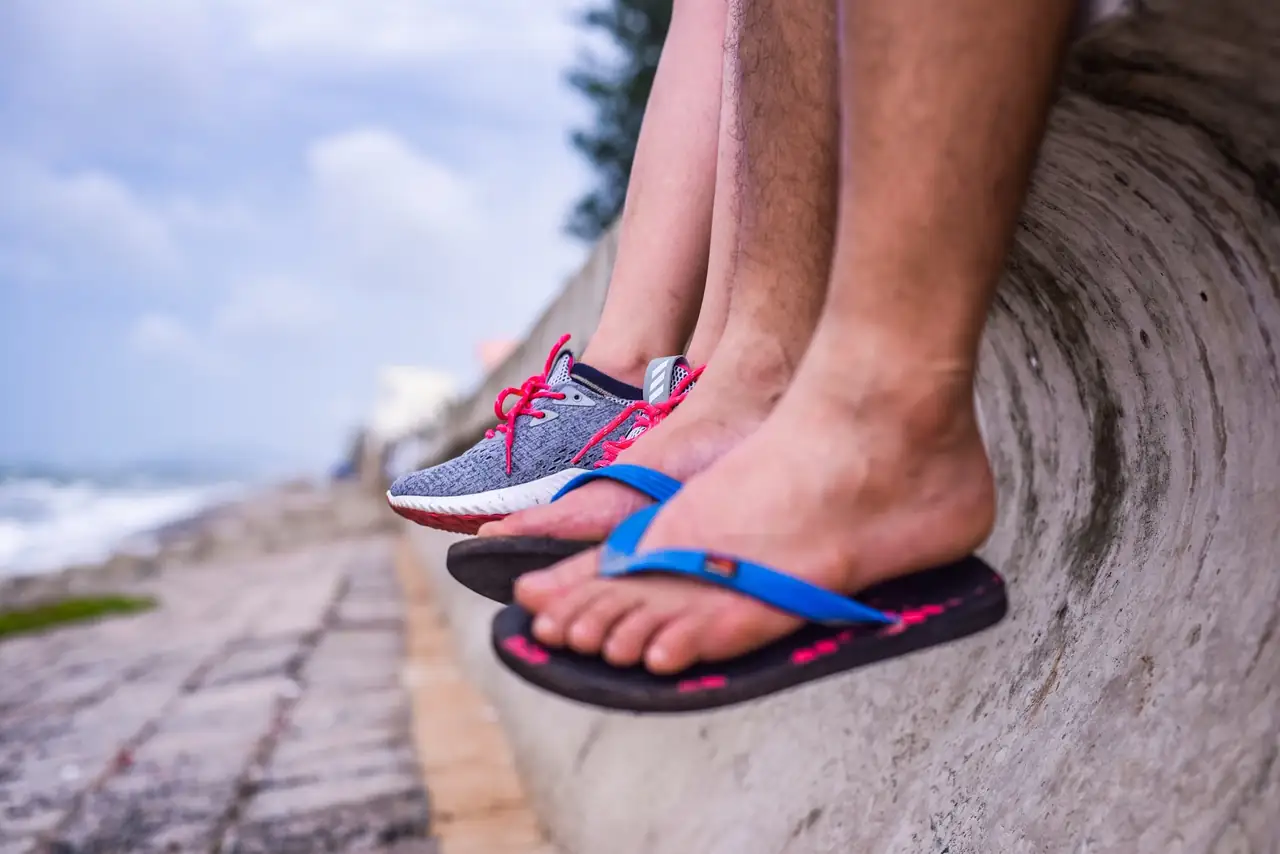
Forefoot pain can change the way you run, walk, and even stand. For runners, footwear matters: a narrow toe box, an overly stiff sole, or a fit that squeezes the toes can make every step uncomfortable. When choosing shoes for Morton’s neuroma, the priority is not appearance but reducing pressure on the interdigital nerve and allowing enough room at the front of the foot.
The best choice usually shares a simple idea: less pressure, more usable volume, and a stable base. In practice, this means a wide toe box, good cushioning, a flexible forefoot sole, and soft materials. There is no universal model, but there are a series of features that make a clear difference for people with pain between the toes, a pebble-in-the-shoe sensation, tingling, or burning when walking or running.
What happens in the forefoot when pain appears
Morton’s neuroma is not a mysterious lump in the foot, but an irritation and thickening of a nerve that is usually located between the third and fourth toes, although it can also affect the second interdigital space. When the metatarsals squeeze together and the load is concentrated too much on the front of the foot, that nerve becomes trapped between bones, tissues, and the shoe itself. The result is pain that can feel like a stabbing sensation, an electric current, or a small stone inside the shoe.
Foot mechanics matter just as much as shoe design. A narrow shoe pushes the toes inward, reduces metatarsal space, and forces the forefoot to work under more tension. In runners and active people, that pressure multiplies with every stride, every downhill section, or every long day standing. The more compressed the forefoot is, the easier it is for the nerve to become irritated and for the pain to become persistent.
In that scenario, choosing footwear well is not a matter of passing comfort. It is a way to reduce repeated mechanical stimuli, soften friction, and give the foot a more natural shape. A suitable shoe does not fix the cause on its own, but it can break the vicious cycle that turns an occasional annoyance into a daily limitation.
The features that really matter
A wide toe box is the first serious requirement. The toes should not be compressed into a wedge shape. They need room to spread and settle, especially in the final phase of support, when the forefoot bears much of the load. A wide last reduces compression on the metatarsals and allows the step to be distributed better. If the shoe pinches in the toe area, the relief you are looking for never really arrives.
The second key point is balanced cushioning. This is not about floating on a cloud, because a base that is too soft can also reduce control and encourage unstable movements. What usually works best is a midsole capable of absorbing impacts without sinking too much, especially for people who spend many hours walking, running, or standing on hard surfaces. The idea is simple: reduce harshness at landing without losing support.
It is also worth looking at the sole. For Morton’s neuroma, models with enough flex in the forefoot usually work better, so the shoe follows the foot’s natural movement instead of fighting it. A sole that is too hard or an inflexible forefoot can increase tension exactly where it is least wanted. Added to that is another important detail: a stable base, with good hold at the midfoot and heel, prevents the foot from sliding inside the shoe and rubbing more than necessary.
Soft materials and seams without rough edges also matter. Genuine leather, flexible fabrics, and clean finishes reduce friction and local irritation. In a sensitized foot, a poorly placed seam can feel like sand inside the sock. True comfort begins when the inside of the shoe stops fighting the skin.
What the sole should be like depending on the use
For everyday walking, a sole with moderate cushioning and some thickness can be an ally. The goal is not to completely isolate the foot from the ground, but to distribute pressure from the step and protect the forefoot on city walks, smooth surfaces, or long days. People who have pain when walking often notice relief with low- or moderate-drop models, as long as they do not pinch in the front.
For running, however, the criteria change slightly. The most suitable running shoe for this issue usually has a wide last, good front protection, and a smooth transition. Many runners with interdigital pain worsen with narrow models, even if they are technically designed for running. The problem is not always cushioning, but how the foot fits inside the shoe. If the toes are squeezed together and the load is concentrated in a very small area, pain appears sooner than the training plan would suggest.
The terrain also matters. On asphalt, a slightly more flexible and cushioned sole may be enough. On gravel paths or uneven trails, however, a somewhat firmer protection is useful so that small stones do not hit the same area again and again. The best shoe is not the softest or the hardest, but the one that distributes the load best for the actual use.
Which models usually work best and which ones are worth avoiding
In general, the models that tend to fit best are sporty cuts with a generous toe box, stable support, and adaptable materials. Many anatomical shoes and some sandals with ergonomic footbeds also work well, as long as they do not leave the forefoot exposed to excessive pressure. In summer, a well-designed sandal can be kinder to the foot than a closed, narrow shoe, especially if there is inflammation or sensitivity in the metatarsal area.
By contrast, loafer-style designs, some stiff ballet flats, pointed shoes, and high heels are usually poor companions. Not because they are necessarily uncomfortable for everyone, but because they crush the forefoot and concentrate the load on the interdigital nerves. Models with little hold also do not help, as they allow the foot to move inside the shoe and increase friction. A beautiful shoe that pinches the toes stops being elegant as soon as it starts to hurt.
It is also wise to approach the transition toward more minimalist shapes with caution. For some people, especially during active pain phases, a very thin sole or too direct an experience of the ground can worsen symptoms. The foot needs adaptation, not heroics. Reasonable protection is usually more useful than the opposite extreme, both for runners and for people who want to keep walking without giving up movement.
The role of toe space and insoles
Many of the best results come when wide toe boxes are combined with well-designed insoles. Not all insoles help in the same way. The most useful ones are usually those that unload the metatarsals and distribute pressure without creating a new pressure point. An insole that is too soft may not do enough; one that is too stiff can worsen the feeling of pressure. What matters is that it follows the foot’s anatomy instead of forcing it.
In some cases, a small metatarsal pad or a base that slightly raises support behind the metatarsal heads can relieve pain quite a bit. That said, the adjustment must be careful. The goal is to open space for the nerve, not to push the foot into an artificial posture. When the insole works, the user notices a very specific sensation: part of the stabbing pain disappears, support becomes more tolerable, and the foot stops asking to take the shoe off after only a few minutes.
Toe spacers also often appear as a complementary resource, especially at rest or at home. They do not replace proper footwear, but they help recover some separation between the toes and reduce overall forefoot compression. In feet that have been confined for years, that small opening may seem insignificant, although it often makes the difference between continuing to build irritation or starting to decompress.
Running, mountains, and a sensitive forefoot
In runners, interdigital pain often worsens with mileage, downhill sections, and training on uneven terrain. The forefoot works like a natural shock absorber, and if the shoe does not help or compresses, the problem is triggered sooner. On asphalt, the foot may tolerate repetition better, but on trails the story changes: stones, slopes, and uneven footing turn each stride into a small negotiation with the ground.
That is why runners with sensitivity in this area often benefit from shoes with a wide last, good hold, and enough protection under the forefoot. A sole that is too thin can make every little stone feel like a hammer blow; one that is excessively stiff can prevent a smooth step. The balance lies in protecting without constraining, supporting without enclosing. And above all, avoiding any design that narrows the metatarsal area.
During an active pain phase, it also helps to review total weekly load, surface, and volume of support. Changing models is not enough if the same stress pattern is repeated. The right footwear reduces the aggression, but the context of use ultimately decides whether the foot improves or becomes chronic. In that sense, patience and judgment matter as much as the brand or the price.
Practical signs of a good choice
A shoe suitable for this problem usually gives a very specific sensation when you put it on: the toes are not crowded, the forefoot is not compressed, the inside does not rub, and the foot feels held without being tight. If walking brings quick relief, that is a good sign. If, on the other hand, pain increases within the first half hour or the discomfort returns with every step, the model is not helping enough.
Another useful clue is how it behaves during the day. A well-chosen shoe allows swelling not to escalate as the hours pass. The problem does not magically disappear, but the sensation of pressure, burning, or tingling is reduced. The real test is not how the shoe looks, but how the foot responds after wearing it.
It is also wise to be cautious with impulse purchases based only on words like comfort, cushioning, or support. Those labels are of little use if the last does not respect the shape of the foot. The best reference is still very concrete: space in front, hold in the middle, soft materials, and support that does not concentrate all the load in the most delicate part of the forefoot.
A useful criterion to avoid mistakes when buying
The most sensible selection starts with anatomy, not marketing. For Morton’s neuroma, the purpose of footwear is to reduce compression in the interdigital space, stabilize the step, and soften impact. From there, each user profile will need different nuances: someone who walks many hours will need more cushioning; a runner will need a better fit; a person with a wide foot will appreciate a generous toe box without bothersome seams.
Age, body weight, surface type, and foot sensitivity also matter. A runner doing short runs on asphalt is not the same as someone who spends the whole day standing in a store, clinic, or office. Nor is a foot that has had cramped toes for years the same as one with a recent injury. The best shoe is the one that reduces the conflict between the foot and the ground in that specific case.
That is why, with this condition, it is often more useful to think in shoe families than in miracle models. Wide running shoes, anatomical shoes, stable sandals, and some extra-wide lasts enter the conversation with better credentials than narrow, hard, or pointed designs. The forefoot needs room to breathe. When it has it, the pain often drops several notches.
How to choose running shoes with Morton’s neuroma
When choosing running shoes, start with the fit around your forefoot: your toes should not feel squeezed or pushed together. A toe box with usable space may reduce compression, while a stable base and comfortable hold around the midfoot and heel can help prevent your foot from sliding inside the shoe. Try shoes on with the socks you normally wear for training, and notice any rubbing or pressure in a specific spot.
Cushioning should soften impact without making your foot sink or feel unstable. Flexibility matters too: a sole that moves with the forefoot may feel more comfortable than one that is excessively stiff. No shoe works for everyone, and no single feature guarantees relief. Pay attention to how the shoes feel when walking and, if comfortable, during a gentle test jog. Hills—and especially descents—can add load to the front of the foot, so notice how it responds in different conditions.
Watch for burning, tingling, sharp discomfort, or the feeling of a stone beneath your toes, either during a run or afterwards. If these symptoms appear or worsen, do not try to solve the problem by tightening your laces or pushing through the session: reduce or pause the workout and reassess the fit and training load. While your forefoot is sensitive, it may be sensible to avoid long runs or routes with lots of downhill running for a while. If pain persists, limits your running, or affects everyday activities, consult a healthcare professional. Footwear may help reduce pressure, but it does not replace an assessment.
The balance between protection, space, and everyday life
Choosing the right footwear for Morton’s neuroma is, at its core, a negotiation between three needs: protect the foot, give it space, and maintain functional walking. If one of those pillars fails, the body notices immediately. Too much pressure on the toes, too much stiffness, or too much instability all lead to the same place: a forefoot that protests with every step.
The advantage is that today there are many more options than there were a few years ago. There are everyday shoes with wide lasts, sporty models with a roomier toe box, technical sandals, and comfortable shoes that no longer force you to choose between health and daily use. The key is to look beyond the label and read the shoe the way the foot itself does: from the inside, from the pressure, from the relief, or from the discomfort.
Good footwear does not cure on its own, but it can change the course of pain. In a problem as sensitive to space and compression as this one, that change is significant. Sometimes it is not felt as a big immediate improvement, but as something more subtle: less burning at the end of the day, less need to loosen the shoe, less fear of taking the next step. And that is where the difference begins between enduring the walk and moving normally again.
Medical reference: Foot Injuries and Disorders, MedlinePlus (U.S. National Library of Medicine).



How to prevent thigh chafing: causes and real solutions

Women’s running windbreakers: seven jackets and how to choose

Do more workouts get rid of soreness? A guide for runners

Jaén Half Marathon 2026: Record 3,800 Runners Registered

Men’s short running tights: how to choose the right pair

World Triathlon confirms data breach involving medical data

Izan Edo targets podium at Miyazaki World Cup

María Pérez ranks ninth in World Athletics’ 2026 top ten

Dos Santos, Duplantis and Sawe: World Athlete of the Year finalists

San Silvestre Vallecana 2026: 42,000 places, prices and start times

 Races4 months ago
Valencia Half Marathon 2027: date and registration

 Races4 months ago
Valencia Marathon 2026: entry, ballot and course

 Reviews and Comparisons4 months ago
Asics Gel-Roadmiles 3 for men: review and current price

 Reviews and Comparisons4 months ago
Asics Gel Sonoma 8 Gore-Tex: complete analysis for trail and rain

 Sneakers3 months ago
Saucony Endorphin Pro 4: full review and verdict

 News5 months ago
Strava API 2026: what changes for clubs, challenges and runner apps?

 Reviews and Comparisons5 months ago
Nike Alphafly 3: opinions, sensations, and real key points

 Reviews and Comparisons4 months ago
Under Armour running shoes review 2025-2026: models and key features

 Sports Equipment4 months ago
Shoe sizes in cm: a clear guide to getting the right fit for your footwear

 Sneakers3 months ago
Skechers GO RUN Consistent 2.0 analysis: comfort and limits

 News5 months ago
Valencia Marathon 2026 route: key tips to train and run better

 Sneakers4 months ago
Adidas Adizero Boston 13 for men: review and verdict