Health and Nutrition
Biological Age and Running: What It Measures and How Running Influences It
The body’s internal clock doesn’t always move at the pace of the calendar. Running can make a difference, but not on its own.

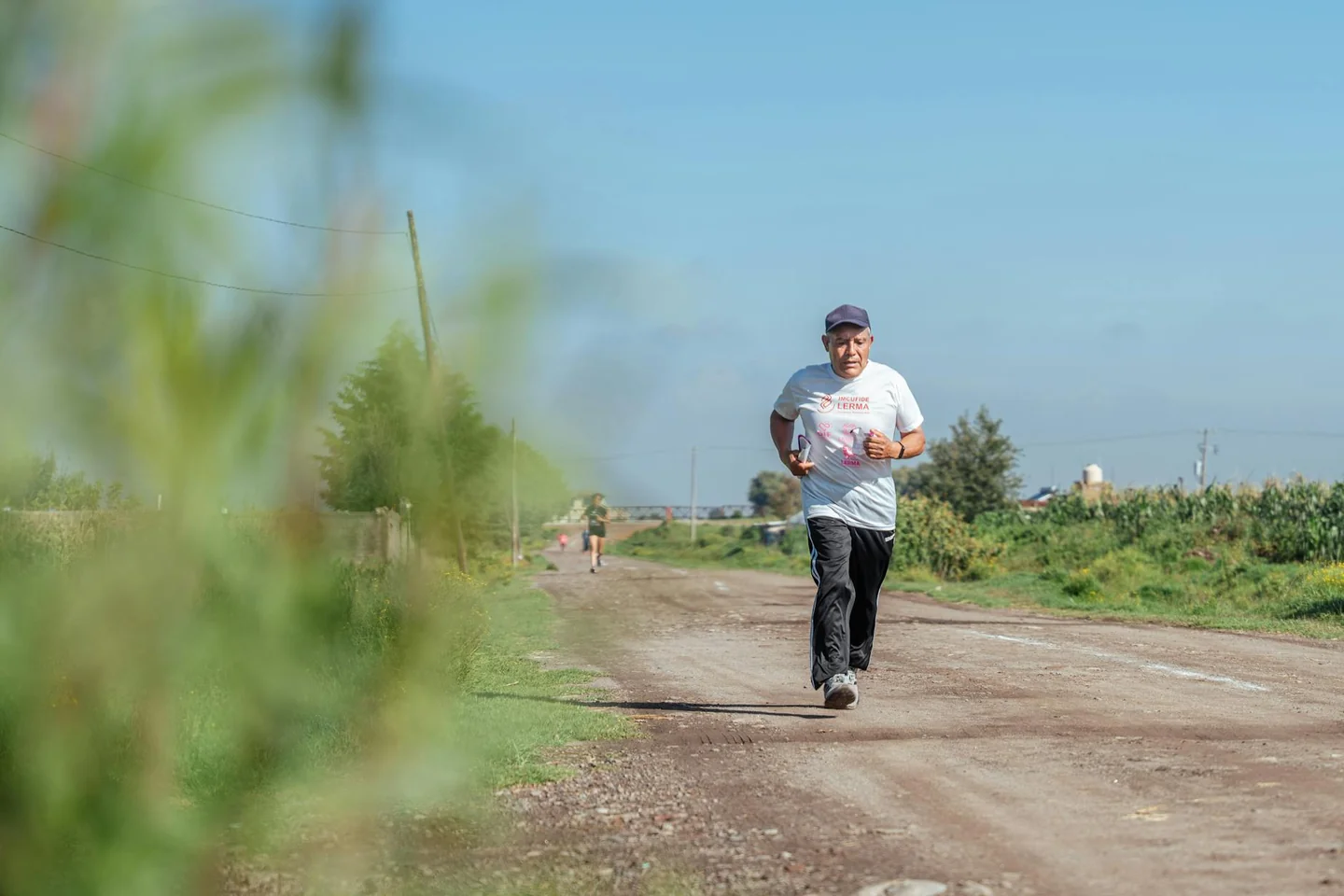
Biological age isn’t measured by candles or by your date of birth: it shows in how the heart, lungs, muscles, and even the immune system respond when the body carries years on its shoulders. In the case of running, the most repeated evidence points to a clear idea: running regularly is associated with slower biological aging, especially when the habit is maintained for months and years, not as a one-off effort.
The most cited studies focus on telomeres, structures that protect the ends of chromosomes and tend to shorten over time. People who move frequently, and especially those who maintain sustained aerobic activity, usually show more favorable biological markers than sedentary people. The useful takeaway for runners is both sober and powerful: consistent training matters more than occasional heroics.
Calendar age and body age: two clocks that don’t always match
Chronological age is simple: it adds up the years since birth. Biological age, on the other hand, tries to translate the real wear and tear of tissues and the efficiency of the body’s systems. Two people who are 45 can share birthdays and live at opposite ends when it comes to physical condition, recovery, aerobic capacity, or baseline inflammation. One climbs stairs without thinking; the other runs out of breath before reaching the second flight.
That contrast explains why in sport there’s so much talk about physiological age or fitness age. It’s not a trendy label, but a way of getting closer to how the body ages from the inside. Factors like VO2 max, resting heart rate, body fat percentage, sleep, stress, and exposure to sedentary behavior change that internal snapshot. And running, when integrated wisely, usually pushes that image toward a younger profile.
In practice, that doesn’t mean a runner gets permission to ignore the rest of their habits. The body doesn’t file its problems in separate folders. Accumulated fatigue, poor nutrition, smoking, alcohol, and lack of rest all end up appearing in the same biological report. Running helps, yes, but it doesn’t erase a disordered life.
What science says about running and biological aging
One of the most cited studies in this field analyzed thousands of adults and found that physically active people showed longer telomeres than sedentary ones. In some analyses, the difference was equivalent to several years of biological advantage. In practical terms, that suggests the active body preserves its repair machinery and its ability to withstand wear and tear better.
Other studies have reached a similar idea by different routes. Regular aerobic exercise is linked to lower chronic inflammation, better metabolic control, more stable blood pressure, and better vascular health. These aren’t isolated benefits: they add up like layers of varnish on wood that, without protection, dries out sooner. Running doesn’t stop time, but it can help the body arrive better equipped at each decade.
The way that evidence is interpreted also matters. The results don’t say you need to run marathons or train at elite paces to notice changes. In fact, in several analyses the best profiles appear among those who meet moderate, consistent recommendations, not among those who turn every session into a survival test. The body improves with stimulus, not with punishment.
Why running influences biological age
Running acts on several fronts at once. It increases cardiac efficiency, improves lung capacity, helps the body use glucose, helps preserve muscle mass, and reduces part of the inflammation associated with sedentary living. That combination makes the body work with less friction, like an oiled hinge that stops squeaking with every movement.
In addition, running forces the body to adapt repeatedly. Every outing activates internal signals that stimulate tissue repair and maintenance. Over time, those signals translate into a better cardiovascular profile and a cleaner metabolic response. It’s not magic or the exclusive genetics of a few: it’s physiological adaptation, the cardiovascular system’s favorite language when it receives regular stimuli.
There’s also a less visible but equally important component: stress management. Running, especially at sustainable paces, can lower daily mental load, improve sleep, and regulate appetite. When those factors line up, the body stops living in a state of permanent alert. And an organism that is less inflamed, more rested, and better oxygenated ages at a different pace.
Consistency matters more than the pace of each workout
The most eye-catching headlines usually focus on specific numbers: 10 minutes a day, 75 minutes a week, 30 or 40 minutes per session. They’re useful references because they turn theory into understandable habits. But the real decisive variable isn’t the isolated number, but regularity maintained over time. Running enthusiastically for one week and disappearing three months later leaves a much poorer mark than going out two or three times a week all year long.
That nuance matters because the body adapts through continuity. Cardiovascular improvement, muscle recovery, and metabolic efficiency don’t come from a single memorable workout. They come from the sum of modest efforts, repeated until they become habit. The result is less spectacular for the ego, but much more valuable for health. Consistency ages better than uncontrolled intensity.
That’s why veteran runners with the best functional appearance are not necessarily the ones who log the most miles, but the ones who have managed to sustain the habit without breaking down. Sometimes they run slowly, other times they combine running and walking, and many weeks they prioritize getting out over pushing hard. That approach, less glamorous, is usually the one that protects the body most in the long run.
How much exercise is needed to notice changes
Public health recommendations usually place the useful minimum at around 150 minutes of moderate activity per week or 75 minutes of vigorous activity. In running, that can translate into three or four short outings, or slightly longer sessions spread out sensibly. What matters isn’t hitting an exact number on a watch, but reaching a sufficient dose of movement so the body has a reason to adapt.
In observational studies, even modest amounts have shown favorable associations. Ten minutes a day may seem like little, but it places the body in a different dynamic than sedentary living. That small margin, repeated with discipline, already changes the biological conversation. The difference between not moving and moving a little is huge; the difference between moving a little and moving well is, in many cases, what separates a habit from a real improvement.
That said, more isn’t always better. Increasing volume abruptly can raise fatigue, inflammation, and injury risk. In terms of biological age, poor planning can eat into part of the benefit. That’s why runners with more experience talk so much about balance: enough stimulus to move forward, enough caution to keep doing it in five, ten, or twenty years.
Which body markers usually improve first
The changes don’t appear all at once. The first sign often comes in the sense of daily energy. Sleeping better, walking with less heaviness, or noticing steadier breathing when climbing hills are early signs that something is getting organized inside. Then come more measurable improvements: lower resting heart rate, better endurance, greater ease recovering after effort, and in some cases better weight control.
Over the weeks, insulin sensitivity also tends to improve, which helps regulate blood sugar. That point is key because metabolism doesn’t only affect performance, it also affects cellular aging. A more efficient metabolism reduces part of the wear associated with inflammation and excess visceral fat, a type of accumulation that acts like background noise for health.
In aerobic runners, another common improvement is recovery capacity. It’s not just that running feels easier; it also takes less time to return to normal after an effort. That detail, which seems minor, says a lot about biological age. A body that recovers quickly is usually a younger body in functional terms.
What happens when running is combined with strength, sleep, and nutrition
The relationship between running and aging isn’t well understood if it’s separated from the rest of lifestyle. The strongest evidence points to a combination of factors: physical activity, enough rest, reasonable nutrition, and low exposure to toxins. When those elements line up, the body has more room to repair tissues and fewer reasons to enter a state of chronic wear.
Strength deserves a separate mention. Maintaining muscle helps support posture, protect joints, and preserve function over the years. A runner who only adds miles but neglects strength can end up with a competent engine and a fragile body. By contrast, combining running with basic muscle work usually improves running economy and the ability to age without losing physical independence.
Sleep, for its part, acts as a nighttime workshop. That’s where adaptations are consolidated, appetite is regulated, and part of the hormonal response is adjusted. Sleeping too little for weeks can neutralize much of the training benefit. That’s why the anti-aging effect of running isn’t measured only on the pavement; it’s also cooked up between sheets, plates, and stable schedules.
Can walking have a similar effect?
The answer is yes, though with nuances. Walking regularly, especially at a good pace and without long periods sitting, brings very notable benefits for cardiovascular and metabolic health. For people starting from zero, carrying extra weight, dealing with joint discomfort, or having a low fitness base, walking can be the smartest gateway to sustained movement. The body doesn’t distinguish between heroic gestures and small habits when what matters is repetition.
This doesn’t diminish the value of running; it simply broadens the map. Running has a greater stimulus capacity because it raises heart rate more and demands more from the cardiorespiratory system. But the decisive point remains moving. Anyone who walks every day, takes the stairs, gets up often, and avoids being glued to a chair is already changing their biology in a healthier direction.
In other words, the goal isn’t to find a perfect sport, but an active life pattern. Running is often one of the most effective tools for improving biological age, but it doesn’t act like a single switch. It works best when it’s part of a fabric of habits that support one another.
When changes start to show
The first positive sensations can appear within a few weeks. Deeper sleep, less labored breathing, or a better feeling on waking usually come before visible improvements in body composition or performance. The body, in fact, gives notice fairly quickly when it stops being trapped in the inertia of sedentary living.
The most stable transformations take more time. Between one and three months, if there is regularity, clearer changes usually appear in endurance, pulse control, and perceived effort. Deeper biological markers, such as those linked to inflammation, metabolism, or telomeres, need broader horizons and consistent behavior. Biology rewards patience, not shortcuts.
That’s why it’s misleading to sell exercise as a lever with immediate effect. Yes, improvements are noticed quickly, but the benefits that really matter, the ones tied to biological age, are built in silence. Just as a building doesn’t stand because of its facade paint, health doesn’t depend on one inspired week, but on the structure repeated year after year.
The mistakes that most undermine the anti-aging benefit
The most common mistake is starting too hard. Wanting to run fast before building a base ends in fatigue, overload, or injury. And when injury forces you to stop, the thread of continuity breaks. The body needs time to adapt tendons, muscles, joints, and the cardiovascular system. Ignoring that process usually comes at a high cost, both in performance and overall health.
Another common mistake is using running as permission to neglect everything else. Running after sleeping badly, eating worse, and piling up stress doesn’t make up for the whole picture. The body doesn’t keep such a simplistic ledger. A good workout doesn’t neutralize a bad lifestyle on its own. It can help, but it doesn’t work miracles.
Nor should training be confused with constant wear and tear. Running every day at high intensity doesn’t rejuvenate more; in some cases, it ages worse. Biological improvement usually comes with sustainable doses and enough recovery. Less drama in the sessions and more continuity on the calendar usually gives better results.
Why runners who age better don’t seem obsessed with the clock
There’s a pattern that repeats in many mature runners in good shape: they train with a certain modesty and enormous discipline. They don’t chase every session as if it were a final. They don’t turn every outing into an exam. And yet, they keep adding years with a level of functionality that surprises people. Their advantage isn’t in a single gesture, but in the architecture of their habit.
That architecture usually includes recovery, mobility, some strength work, and a healthy tolerance for off days. In other words, they know how to live with the idea that the body changes. The calendar moves forward, but functional loss doesn’t have to move at the same pace. That’s where the real promise of running lies: not making age disappear, but delaying the deterioration that sometimes comes with it.
That’s why talking about rejuvenation is useful if it’s done precisely. Running doesn’t turn anyone into a teenage version of themselves. What it can do is preserve useful muscle, a more efficient heart, and a sense of physical capacity that many people rightly associate with a younger internal age. The body doesn’t become young; it becomes more capable.
What it really means to have a lower biological age
Having a biological age lower than your chronological age isn’t a vanity trophy. It means, above all, that the body preserves its room to maneuver better. It responds more effectively to effort, recovers sooner, tolerates the passage of time better, and, in general, accumulates fewer signs of accelerated wear. It’s a quiet advantage, but enormous when viewed over decades.
In that sense, running offers one of the most accessible ways to change that internal marker. It doesn’t require complex equipment, memberships, or laboratories. Just a reasonable progression and the decision to sustain the habit without drama. From there, the body starts to read the message: there is enough movement to keep investing in repair.
The most honest journalistic reading is this: running can be associated with a more favorable biological age, but the real improvement depends on consistency, recovery, and the overall set of habits. The calendar will keep moving forward; the interesting question is how each body wants to arrive at the next decade. And in that answer, running usually carries more weight than it seems.
The runner’s internal clock and the health you can’t see in the mirror
The mirror often misleads by excess or by default. A runner can look fit and still carry a poor biological profile because of stress, bad recovery, or unsustainable habits. The opposite can also happen: people without an athletic appearance who, nevertheless, show a functional age notably better than their looks suggest. That’s why biological age matters so much in sport and public health: it looks where the photo can’t reach.
In running, that internal clock shows up in simple gestures. Climbing a hill without gasping, finishing a run and feeling ready the next day, keeping the pulse steady on easy runs, or preserving energy at the end of the day. They’re discreet signs, almost domestic, but they say much more than an isolated number. The health that matters is the one you feel while living, not just when measuring.
And that’s the main virtue of running understood properly: it creates a more flexible biology, less rigid, less dependent on the sofa and inertia. It doesn’t promise infinite longevity or artificial youth. It promises something more realistic and more valuable: a body that ages with better tone, more autonomy, and a resilience more like that of someone who is still in the game.
Biological age, at its core, is a story of repetition. What you do every day ends up leaving more of a mark than what is extraordinary. Running, when sustained wisely, becomes a way of writing that story with less wear and more room to keep moving forward.



How to prevent thigh chafing: causes and real solutions

Women’s running windbreakers: seven jackets and how to choose

Do more workouts get rid of soreness? A guide for runners

Jaén Half Marathon 2026: Record 3,800 Runners Registered

Men’s short running tights: how to choose the right pair

World Triathlon confirms data breach involving medical data

Izan Edo targets podium at Miyazaki World Cup

María Pérez ranks ninth in World Athletics’ 2026 top ten

Dos Santos, Duplantis and Sawe: World Athlete of the Year finalists

San Silvestre Vallecana 2026: 42,000 places, prices and start times

 Races3 months ago
Valencia Half Marathon 2027: date and registration

 Races3 months ago
Valencia Marathon 2026: entry, ballot and course

 Reviews and Comparisons4 months ago
Asics Gel-Roadmiles 3 for men: review and current price

 Reviews and Comparisons4 months ago
Asics Gel Sonoma 8 Gore-Tex: complete analysis for trail and rain

 Sneakers3 months ago
Saucony Endorphin Pro 4: full review and verdict

 News5 months ago
Strava API 2026: what changes for clubs, challenges and runner apps?

 Reviews and Comparisons5 months ago
Nike Alphafly 3: opinions, sensations, and real key points

 Reviews and Comparisons4 months ago
Under Armour running shoes review 2025-2026: models and key features

 Sports Equipment4 months ago
Shoe sizes in cm: a clear guide to getting the right fit for your footwear

 Sneakers3 months ago
Skechers GO RUN Consistent 2.0 analysis: comfort and limits

 News5 months ago
Valencia Marathon 2026 route: key tips to train and run better

 Sneakers4 months ago
Adidas Adizero Boston 13 for men: review and verdict