Health and Nutrition
Extensor tendon exercises for foot pain: a runner’s guide
Gentle routines, warning signs, and recovery tips to relieve pain on the top of the foot.

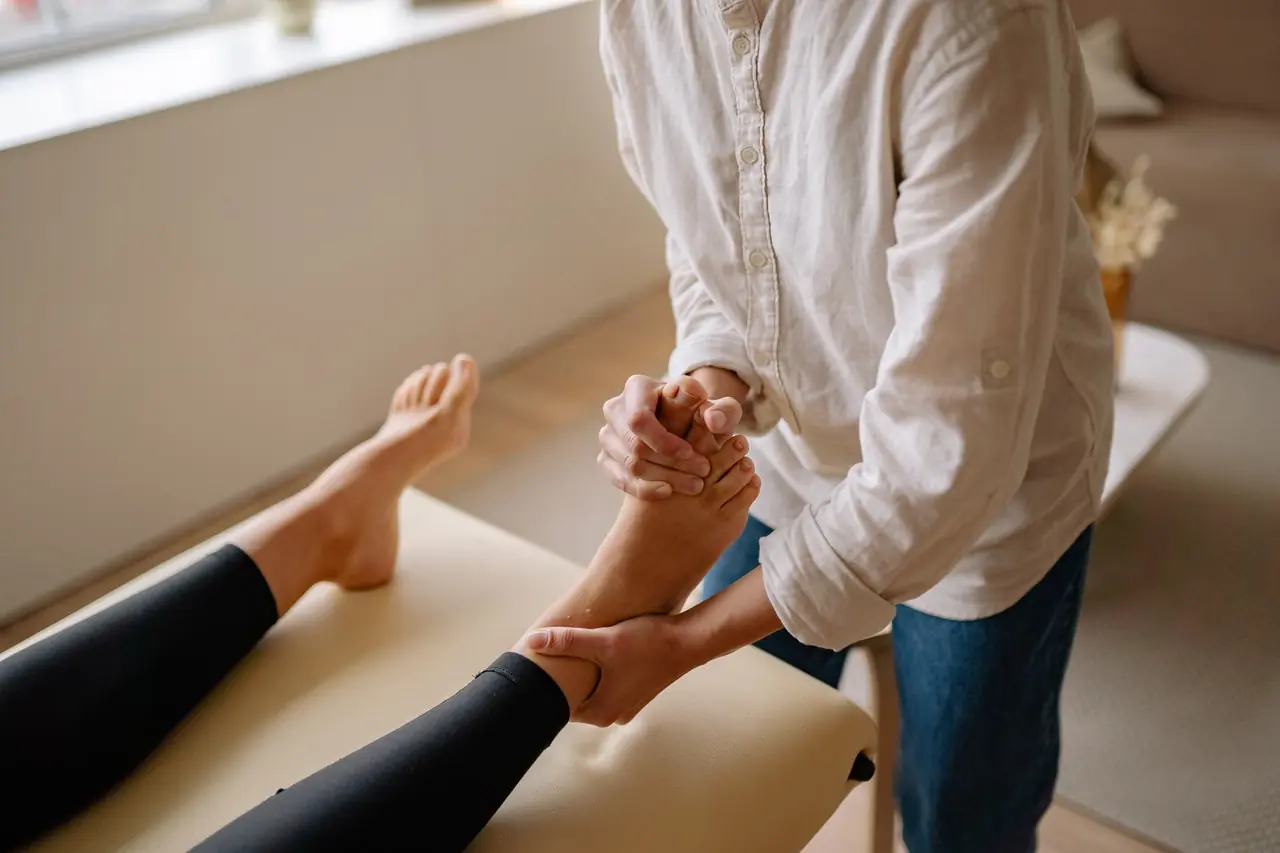
Pain on the top of the foot can begin as a mild twinge and end up showing up with every stride. In runners, it is often linked to overload of the extensor tendons, which may be aggravated by tight shoes, sudden training changes and hills. Recovery is usually better supported by a structured, gradual return to loading, with gentle, well-chosen exercises, than by stopping all movement.
Useful routines for this problem are not meant to punish the tissue, but to restore its tolerance. That is why the exercises for extensor tendonitis of the foot should start with mobility and light stretching, progress toward pain-free activation, and finish with strength and control. Skipping phases usually lengthens the process; respecting them, on the other hand, helps the tendon tolerate walking, running, and braking without protesting.
Which structure is irritated when the top of the foot hurts
On the top of the foot run several tendons that lift the toes and help clear the ground during the swing phase. The best known are the tibialis anterior, the extensor hallucis longus, and the extensor digitorum longus. When they are overloaded, friction against the shoe and the repeated work of running make them sensitive, like a cable beginning to rub inside a sheath that is too narrow.
That pain is not always pure inflammation. In many cases, especially if it has lasted weeks or months, it is more accurate to speak of tendinopathy than tendinitis, because the tissue has adapted poorly to the effort. The difference matters: while the acute phase calls for reducing irritation, the longer process requires restoring mechanical capacity with mobility, strength, and control.
Location also helps guide the problem. Top-of-foot pain usually worsens when lifting the toes upward, when the laces press on the area, or when running uphill. By contrast, if the discomfort is very deep, pinpointed over a bone, or increases markedly when weight-bearing, it is worth thinking about other causes, including a stress fracture, which should not be confused with a simple overloaded tendon.
How to recognize that the load is going the wrong way
The classic pattern is fairly recognizable: discomfort at the start of training, stiffness after stopping, and pain that grows when volume increases without enough adaptation. People who run on a treadmill with an incline, frequently run hills, or switch to stiffer shoes often notice pressure on the top of the foot sooner. The tissue receives a kind of repeated hammering, small but constant, until it stops tolerating it.
Shoes also matter. Laces that are too tight can directly compress the tendons and the skin on the top of the foot, which is especially bothersome if the foot swells with exertion or if the tongue is thin. A shoe that is too tight does more than feel uncomfortable: it can turn every step into an irritating gesture, just as an overly tight wrist strap keeps reminding you of its presence with every movement.
The progression is usually slow. At first the runner thinks it is just a passing strain, but the pain returns the next day just as easily. That capricious behavior at the beginning is often the clue that complete immobilization is not necessary, but rather that activity must be regulated and the tendon allowed to accept stimuli again without exceeding its threshold.
Mobility and gentle unloading in the first few days
When the area is irritable, the goal is not to stretch hard or do intense sets, but to reduce sensitivity. Ankle and toe movements, performed through a comfortable range, help keep the foot from stiffening. In this phase, the desired sensation is relief and gliding, not heroic stretching or fatigue.
A simple and useful movement is to sit with the foot supported and slowly move it up and down, as if you were drawing a breath in the ankle. This gentle work keeps the joint active and prevents the foot from staying in defense mode. If pain clearly increases while doing it, it is wise to reduce the range; the practical rule is not to make what is already sore worse.
A very light massage over the leg muscles, not over the most painful point on the top of the foot, may also help. The tibialis anterior and the muscles at the front of the leg often take part in the overload, and unloading them a little can be useful. The key is simple: touch, move, and relieve, not press as if you wanted to erase the discomfort at once.
Stretches that do fit into a sensitive phase
Among the exercises for extensor tendonitis of the foot, the classic stretch is done by placing the top of the foot on the floor with the toes pointing backward, as if one were sitting partially on the heels. That movement creates a gentle tension on the front of the ankle and the top of the foot. It should feel like a contained stretch, never like a whip crack.
Another option is to place the top of the foot on a towel or a soft surface and let the ankle seek a slight plantar-flexed position. Holding for 10 to 15 seconds, breathing, and releasing is enough at first. Repeating it several times a day is usually more sensible than insisting once for a long time, because the tendon appreciates brief, frequent stimuli more than long, aggressive loads.
It is best to avoid intense stretching if the pain is very active. In irritated tendons, excessive tension can flare the area up again and delay improvement. Better a moderate and stable sensation than an obsessive search for elasticity. The goal is not to gain gym-style flexibility, but to recover a sufficient range of motion that is useful for running.
Activation and strength without turning the foot into a battlefield
When walking is already reasonable and the pain stays under control, it is time to reintroduce active work. A basic exercise consists of repeatedly lifting the toes, seated or standing, without speed or bouncing. That movement activates the extensors and restores coordination to the top of the foot, as long as it is done with light, controlled effort.
It can also be useful to practice dorsiflexion against minimal resistance, using a very soft elastic band or even gravity alone. The priority is not the number of repetitions, but the quality of the movement. If the foot compensates, if the knee moves too much, or if sharp pain appears, the load is still too much. Strength helps when it teaches the tissue to tolerate more, not when it forces it to defend itself.
In somewhat more advanced phases, raising the heels with bilateral support and a calm rhythm can provide general stability to the foot-and-leg chain. Although it does not work the extensors alone, it improves the overall mechanics of the stride. Runners often forget that the top of the foot does not work in isolation: it depends on how the ankle, the arch, and the calf share the effort.
How to organize a realistic routine without overdoing it
The best routine is not the most eye-catching one, but the one that fits into daily life without creating more problems. In an early phase, a few minutes of mobility and gentle stretching once or twice a day are enough. Later, when the pain settles and walking stops hurting, activation exercises can be done almost daily, as long as the foot’s reaction the next day remains acceptable.
That next-day follow-up is key. A tendon moving in the right direction usually tolerates the stimulus and responds with mild discomfort or even a feeling of release. If pain increases on waking, limping appears, or the area is more sensitive than before, the message is clear: the load was excessive. The point is not to give up, but to step back one level.
For runners, the return to training also has to be monitored. Hills, incline intervals, and long runs on hard surfaces demand too much from a tendon that is still rebuilding. The comeback should feel more like a staircase than a leap. First walk without pain, then jog gently, and only later recover pace and elevation changes.
What is worth avoiding so the injury does not drag on
There is a common trap with this kind of problem: keep training almost as usual and compensate with occasional stretching. That rarely works. If every run leaves the top of the foot more irritated, the injury stays alive and the tendon never fully consolidates its adaptation. In that case, running becomes a constant drip that wears away the stone.
It is also wise to avoid shoes that press on the top of the foot, especially if they have a thin tongue or a low-volume fit. Sometimes the problem is not the shoe itself, but how it is laced. Changing the lacing pattern, loosening the upper, or choosing models with more volume can greatly reduce local pressure. Small mechanical adjustments can change the pain quite a bit.
Another common mistake is using heat or cold as the only solution. Cold can soothe in a moment of acute irritation, and heat can relax when the discomfort is more chronic, but neither replaces active work. They are supports, not the core of treatment. Without well-dosed load, the tendon keeps learning the wrong way.
When it makes sense to think about physical therapy
If the pain does not improve after several days of relative unloading or if it limits walking, professional assessment becomes important. In an injury on the top of the foot, it is worth checking whether the problem is truly tendon-related or whether another structure is involved. Functional examination helps distinguish between a simple overload, persistent irritation, or a condition that requires more caution.
Clinical treatment may include manual techniques, ankle mobility control, gait retraining, and guidance on load progression. In some settings, complementary resources such as dry needling, electrolysis, or diathermy are used, but their usefulness depends on the case and the phase. What remains decisive is the dosing of effort, because without that the tendon returns to the starting point.
It is also important to review biomechanics. A very stiff foot, a high arch, or a way of running with excess tension in the front of the ankle can perpetuate the overload. Sometimes the symptom is on the top of the foot, but the cause is cooked a little higher up or a little lower down. The body works in chains, not in sealed compartments.
Recovery, timelines, and warning signs
Improvement times vary a lot. In mild cases, relief can come in two to four weeks if the load is adjusted early. In more persistent cases, the process may take several more weeks. What makes the difference is not the calendar itself, but how the tissue responds to the stimulus and how consistently that response is respected.
There are signs that should not be overlooked. If the pain is very localized on a bony point, if it increases clearly when jumping, if marked swelling appears, or if walking becomes progressively harder, it is important to rule out other causes. A stress fracture can initially resemble tendinopathy, but it needs a different approach and a different pace.
Persistent night pain or a gradual worsening despite reducing activity also deserves attention. That no longer sounds like a simple household or sports overload. In running, ignoring these signs usually comes at a cost: the tendon can become chronic, the stride is altered, and the runner ends up compensating with other areas, from the ankle to the knee.
Exercises to help runners return from foot extensor pain
If the top of your foot hurts, do not try to solve it by tightening your laces or running through the pain to “warm it up”. Temporarily reduce or pause hills, speed sessions and long runs. If walking is painful too, avoid running while bearing weight remains uncomfortable. You may be able to maintain fitness with low-impact activity, but only if it does not trigger symptoms during the session or afterwards. Check your shoe fit and loosen the laces over the sensitive area.
Once the foot is less irritable, begin with comfortable ankle and toe movements, without forcing a stretch. Then gradually add foot and ankle strength and control exercises, keeping the effort tolerable. Symptoms should not noticeably worsen while you exercise or remain worse afterwards or the next day. If they do, make the exercise easier or return to a gentler stage; pain is not a training target.
To resume running, wait until walking and everyday tasks are tolerable, then try an easy, short run on flat ground. Leave enough time between sessions to assess how the foot responds before increasing distance, pace or hills; change only one factor at a time. If pain returns, go back to the activity level you could manage comfortably. Very localised pain over a bone, marked pain when bearing weight, significant swelling or persistent symptoms should be assessed by a healthcare professional. The cause cannot be confirmed from the pain location alone.
What usually works best when the foot starts accepting load again
The best sequence combines a simple idea with a lot of discipline: first calm, then move, then strengthen, and finally reintroduce running. Gentle stretches help keep the tissue from stiffening; light activation restores communication to the system; strength and control consolidate recovery. There are no flashy shortcuts, but there is a very clear logic.
Along that path, the exercises for extensor tendonitis of the foot are more valuable when understood as part of a transition, not as an isolated remedy. The tendon needs to learn again how to handle daily work and the impact of running. If done patiently, the top of the foot stops being an alarm point and goes back to behaving like a discreet, almost invisible, part of the runner’s mechanics.
The final lesson is less dramatic than it seems: pain on the top of the foot is rarely solved by simply enduring it. It is better solved when load is organized, the shoes stop aggravating it, and movement is rebuilt methodically. In a sport where every step counts, caring for the tendon means caring for the whole stride.
Medical reference: Tendinitis, MedlinePlus (U.S. National Library of Medicine).



How to prevent thigh chafing: causes and real solutions

Women’s running windbreakers: seven jackets and how to choose

Do more workouts get rid of soreness? A guide for runners

Jaén Half Marathon 2026: Record 3,800 Runners Registered

Men’s short running tights: how to choose the right pair

World Triathlon confirms data breach involving medical data

Izan Edo targets podium at Miyazaki World Cup

María Pérez ranks ninth in World Athletics’ 2026 top ten

Dos Santos, Duplantis and Sawe: World Athlete of the Year finalists

San Silvestre Vallecana 2026: 42,000 places, prices and start times

 Races3 months ago
Valencia Half Marathon 2027: date and registration

 Races3 months ago
Valencia Marathon 2026: entry, ballot and course

 Reviews and Comparisons4 months ago
Asics Gel-Roadmiles 3 for men: review and current price

 Reviews and Comparisons4 months ago
Asics Gel Sonoma 8 Gore-Tex: complete analysis for trail and rain

 Sneakers3 months ago
Saucony Endorphin Pro 4: full review and verdict

 News5 months ago
Strava API 2026: what changes for clubs, challenges and runner apps?

 Reviews and Comparisons5 months ago
Nike Alphafly 3: opinions, sensations, and real key points

 Reviews and Comparisons4 months ago
Under Armour running shoes review 2025-2026: models and key features

 Sports Equipment4 months ago
Shoe sizes in cm: a clear guide to getting the right fit for your footwear

 Sneakers3 months ago
Skechers GO RUN Consistent 2.0 analysis: comfort and limits

 News5 months ago
Valencia Marathon 2026 route: key tips to train and run better

 Sneakers4 months ago
Adidas Adizero Boston 13 for men: review and verdict